Barbell Lunge
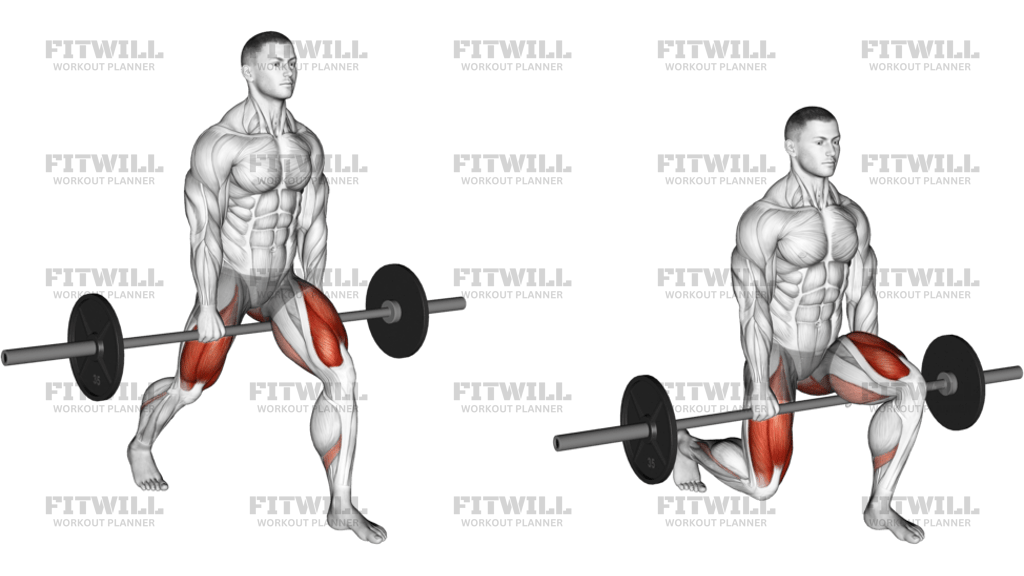
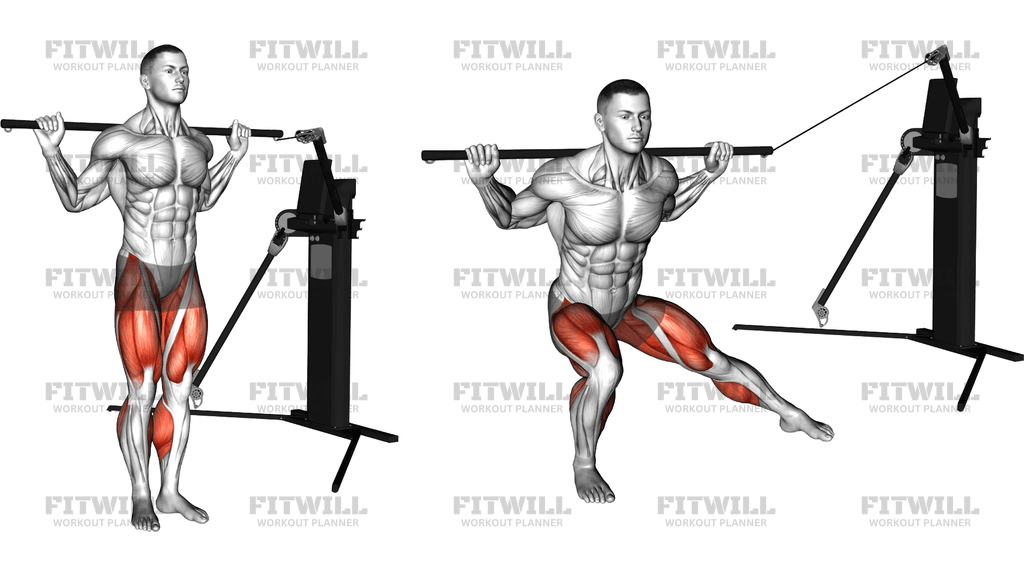
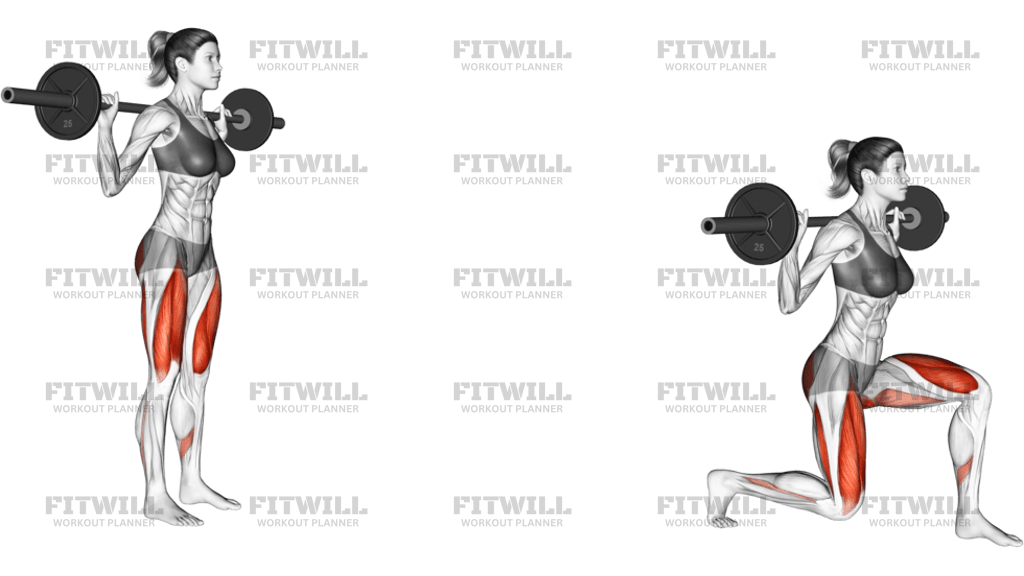
The Barbell Lunge shown here uses a barbell in the back-rack position while you step into a long lunge and lower the rear knee toward the floor. It is a unilateral lower-body strength exercise that challenges the quads, glutes, adductors, and the trunk muscles that keep your torso stacked over the hips. Because the load sits on the upper back, the exercise also rewards good brace, steady foot pressure, and clean balance from rep to rep.
This movement is especially useful when you want to build leg strength without relying on bilateral squats alone. The lunge pattern exposes side-to-side differences, so the front leg must produce most of the drive while the back leg mainly helps guide the descent and provide balance. That makes Barbell Lunge a strong choice for athletes and lifters who need single-leg strength, better stride control, and more stable knees and hips under load.
The setup matters more here than in many machine-based leg exercises. The bar should sit securely across the upper traps or rear delts, the ribs should stay down, and the feet should start under the hips before you step. A stance that is too narrow makes balance shaky; a stance that is too short usually sends the front knee too far forward and turns the movement into a shallow split squat. A controlled step back with the torso tall keeps the front foot planted and lets the hips and knees do the work.
On each rep, lower straight down with control until the rear knee is close to the floor and the front thigh is working through a deep, usable range. The front shin can travel slightly forward, but the heel should stay down and the knee should track in line with the toes. Drive through the whole front foot to stand back up, finishing with the hips and knees extended without leaning backward or bouncing out of the bottom.
Barbell Lunge is commonly used in strength blocks, lower-body accessory work, or athletic programs where single-leg loading is important. It can be programmed after the main squat or deadlift variation, or used on its own when you want a simpler pattern with a big training effect. Keep the load honest, keep the descent smooth, and stop the set if the pelvis twists, the front heel lifts, or the bar starts drifting off-center.
Because the bar is fixed on your back, small errors in foot placement and torso angle show up quickly. That is useful feedback: if one side feels unstable, shorten the range slightly, reduce load, and make every rep look the same before adding weight. When performed well, Barbell Lunge builds stronger legs, cleaner coordination, and better control in split-stance positions that carry over to sport and everyday movement.
[ Workout Log & Planner ]
Put your next workout in Fitwill
Keep your plan and training log ready when you are.


Instructions
- Place the barbell across your upper traps or rear delts, stand tall, and set your feet about hip-width apart.
- Brace your midsection, keep your chest lifted, and fix your gaze forward before you move.
- Step one leg back into a long split stance so the front foot stays flat and the back heel rises naturally.
- Lower straight down by bending both knees until the rear knee hovers just above the floor.
- Keep the front knee tracking over the toes and the torso stacked over the hips as you descend.
- Pause briefly at the bottom without bouncing, then drive through the front foot to rise.
- Press the floor away and bring the back leg forward only after you are standing tall again.
- Reset your stance, breathe, and repeat on the same side for the planned reps before switching legs.
Tips & Tricks
- A bar that sits too high on the neck will make the descent feel unstable; keep it on the traps or rear delts instead.
- Use a long enough step back that the front heel stays planted and the front knee does not jam far past the toes.
- If your torso tips forward, reduce the load and think about keeping the ribs stacked over the pelvis on every rep.
- Let the rear knee travel down, not backward; reaching behind you usually shortens the range and steals work from the front leg.
- Keep both hips facing forward so the pelvis does not twist toward the stepping leg at the bottom.
- If balance is the limiting factor, slow the lowering phase and keep your eyes fixed on one point ahead.
- Do not bounce off the bottom position; the pause should be brief but controlled so the front leg does the work.
- The front foot should stay tripod-loaded through the big toe, little toe, and heel to keep the knee tracking cleanly.
Frequently Asked Questions
What muscles does the Barbell Lunge work most?
It primarily trains the quads and glutes of the front leg, with the adductors, hamstrings, and trunk muscles helping to stabilize the split stance.
Should the bar rest on my neck or on my shoulders?
Keep the bar on the upper traps or rear delts, not on the neck itself. A stable back-rack position makes it easier to stay upright and balanced.
How far back should I step in the Barbell Lunge?
Step back far enough that the front heel stays down and the front knee can bend without collapsing forward. If the stance feels cramped, lengthen the step slightly.
Is the rear knee supposed to touch the floor?
No, it should hover just above the floor unless your mobility and setup allow a very light touch. The goal is a controlled bottom position, not a hard knee drop.
Why does the Barbell Lunge feel more unstable than a squat?
Because each leg has to control its own balance and force production. Small errors in foot placement, hip position, or bar path become obvious immediately.
Can beginners do this exercise safely?
Yes, but start very light and practice the split stance first. If balance is an issue, use bodyweight or dumbbells before loading a barbell.
What is the most common mistake in the Barbell Lunge?
A short step that pushes the front knee too far forward and makes the torso collapse. A longer step and a tall chest usually fix that pattern.
How can I make the Barbell Lunge harder without adding much weight?
Slow the lowering phase, add a brief pause near the bottom, or increase the range slightly while keeping the front heel planted.