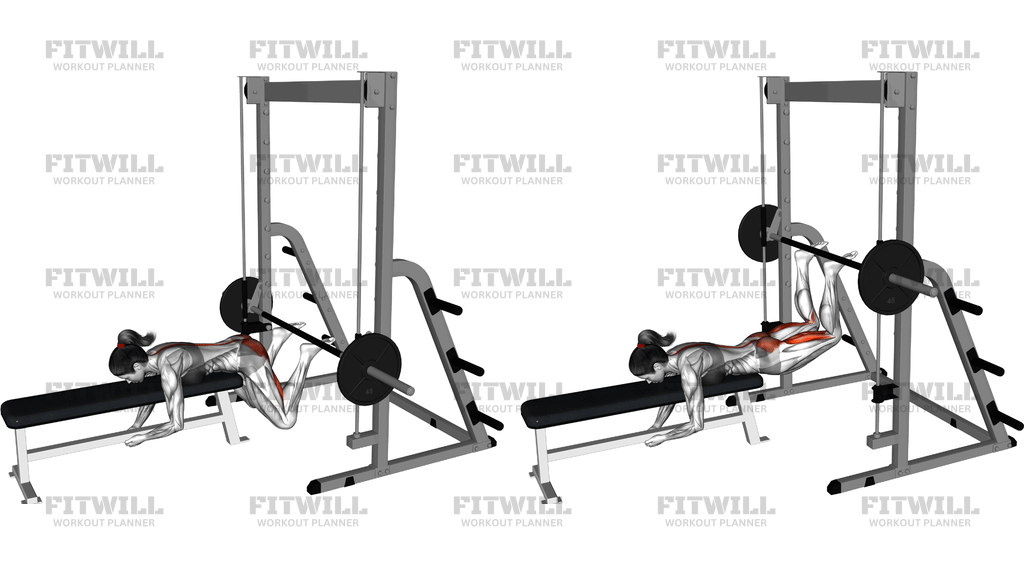
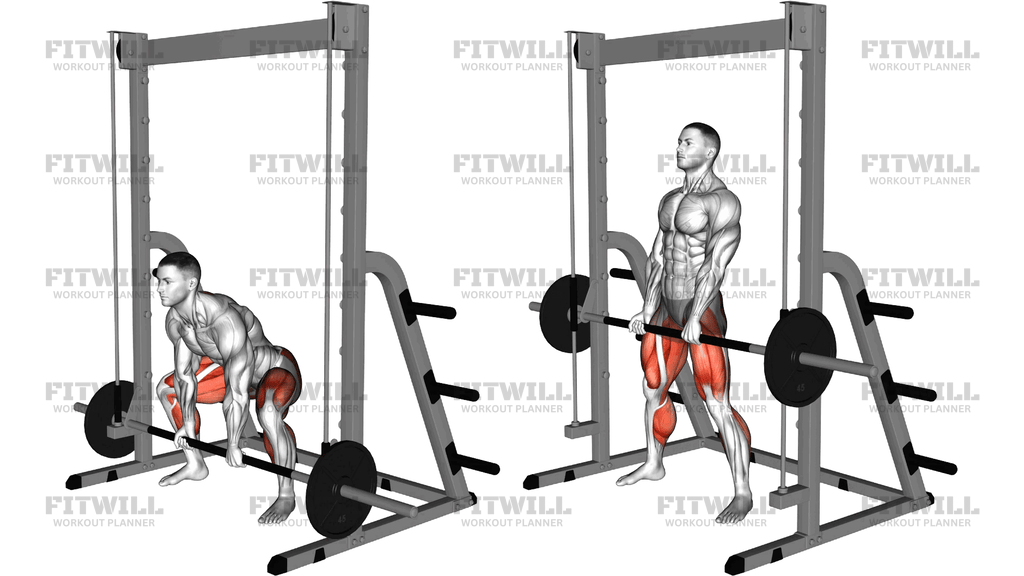
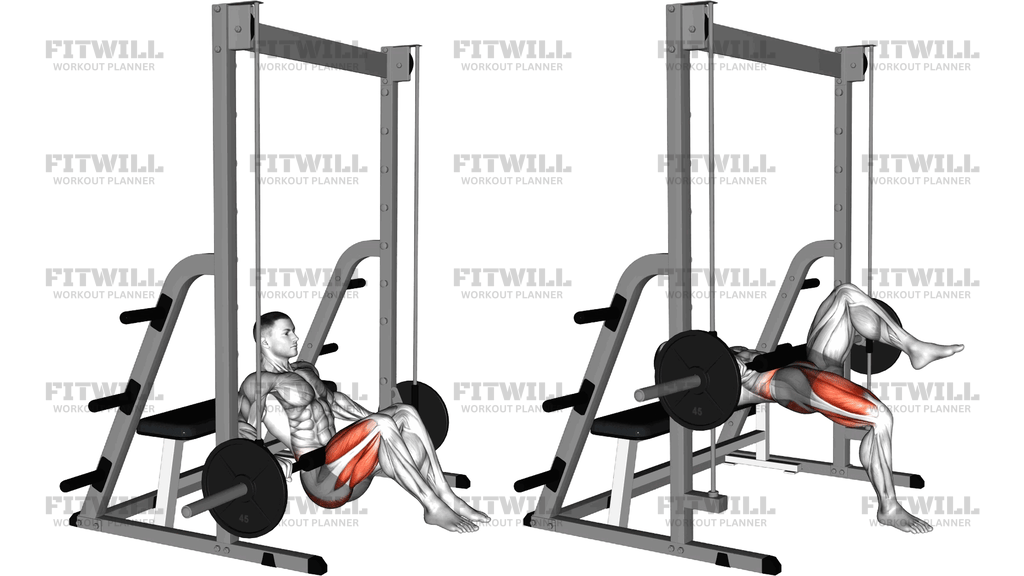
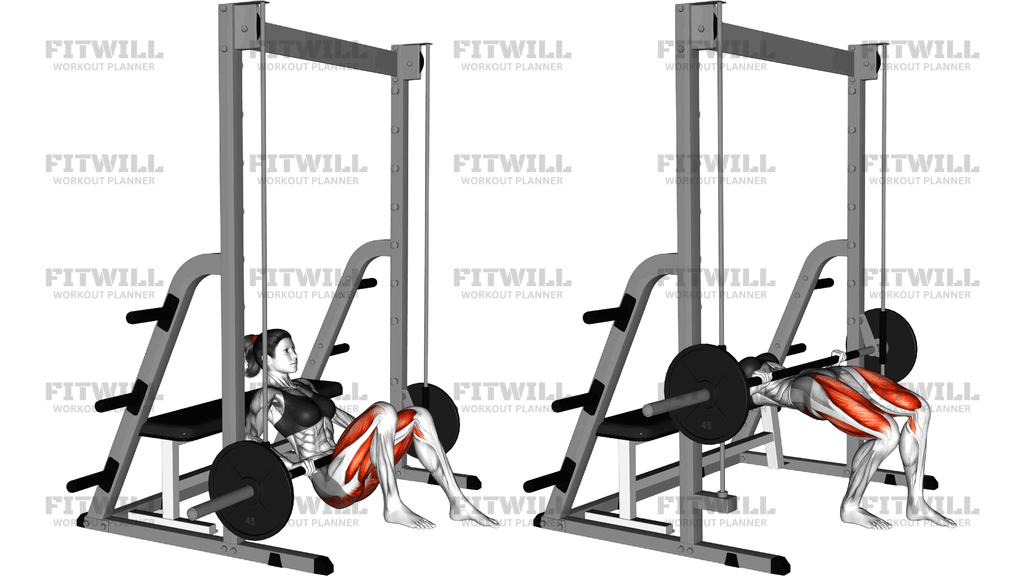
Smith Bent Knee Good Morning
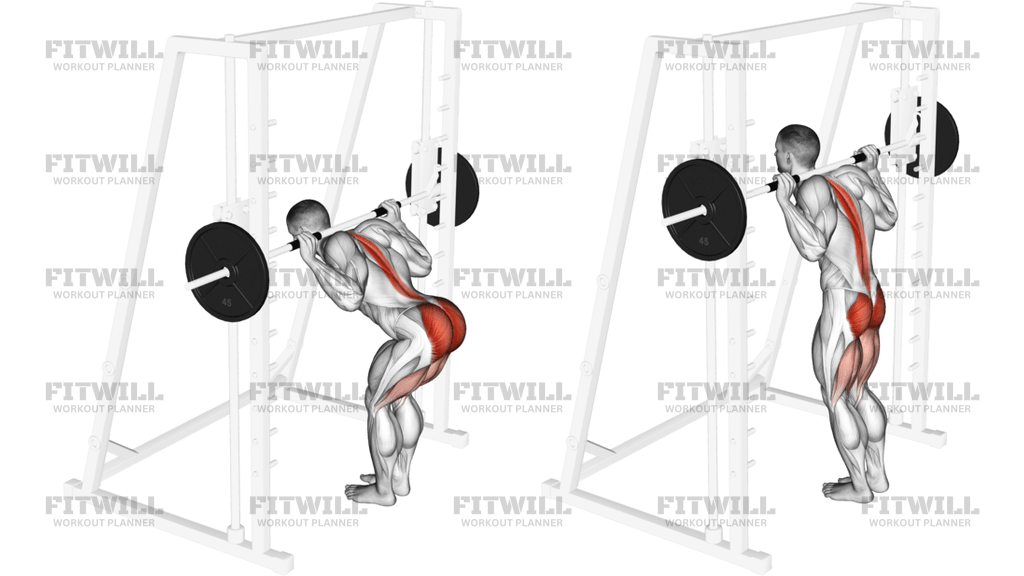
Smith Bent Knee Good Morning is a guided hip-hinge exercise that loads the glutes and hamstrings while asking the trunk to stay braced and organized. The Smith machine keeps the bar path consistent, which makes this variation useful for learning how to push the hips back, keep the knees softly bent, and control the torso angle without having to balance a free bar.
The bent-knee version shifts the emphasis away from an exaggerated squat pattern and toward a hinge. That means the hips travel back, the shins stay mostly quiet, and the torso folds forward as the posterior chain takes over. The main training effect comes from the glutes, with the hamstrings, spinal erectors, and deep core muscles helping keep the spine long and the movement smooth.
Setup matters more than load here. The bar should sit across the upper traps or rear delts, not on the neck, and your stance should let you keep your whole foot planted while the bar stays centered over midfoot. A small bend in the knees should remain nearly constant through the rep so the movement does not turn into a squat or a shallow bodyweight bow.
On each repetition, brace before you hinge, then send the hips back until the hamstrings limit the descent and your torso reaches a position you can still control. At the bottom, the spine should stay long rather than rounding, and the bar should travel on the machine's fixed track instead of drifting forward. Drive back up by squeezing the glutes and bringing the hips forward, finishing tall without leaning back or snapping the lower ribs open.
This exercise works well as an accessory lift for posterior-chain strength, glute-focused training, or hinge practice before heavier compound work. It is usually best performed with moderate or lighter loads and deliberate tempo so the target muscles do the work. If your lower back takes over, shorten the range, reduce the load, and reset your stance before the next rep. When performed cleanly, Smith Bent Knee Good Morning is a simple way to train hinge mechanics with very repeatable form.
[ Workout Log & Planner ]
Put your next workout in Fitwill
Keep your plan and training log ready when you are.


Instructions
- Stand inside the Smith machine and place the bar across your upper traps or rear delts, then set your feet about hip-width apart with a slight toe-out.
- Unrack the bar, take a small step forward or back so it sits over your midfoot, and keep a soft bend in your knees.
- Lift your chest, stack your ribs over your pelvis, and take a breath to brace your trunk before you start the hinge.
- Push your hips straight back while letting your torso tip forward as one unit, keeping the knees at the same small bend.
- Keep the bar path close to a vertical line over midfoot as you descend, and stop when the hamstrings feel fully loaded without your back rounding.
- Pause briefly in the stretched position if you can keep tension and spinal position under control.
- Drive your feet into the floor and bring your hips forward to return to standing, squeezing the glutes at the top.
- Finish tall without leaning backward, then re-rack the bar carefully before starting the next set.
Tips & Tricks
- Keep the knees softly bent from the start and resist the urge to bend them more as you descend; this is a hinge, not a squat.
- If the bar sits on your neck, lower it slightly onto the upper traps or rear delts so it feels secure without pressure on the cervical spine.
- Think about moving the hips back until the hamstrings stop you, not about reaching the bar toward the floor.
- The bar should stay centered over your midfoot; if it drifts forward, reset your stance or shorten the range of motion.
- Use a flat, stable shoe so you can feel the whole foot planted during the hinge and the return.
- Keep the ribs stacked over the pelvis at the top; overextending to finish usually shifts the work into the lower back.
- Light and moderate loads usually produce better glute work here than grinding heavy reps with a short, sloppy range.
- Exhale only after you have driven back to standing, not while you are still losing torso position on the way down.
Frequently Asked Questions
What muscles does Smith Bent Knee Good Morning work?
It mainly trains the glutes and hamstrings, with the spinal erectors and deep core helping you keep the torso braced and the hinge controlled.
Is Smith Bent Knee Good Morning a squat or a hinge?
It is a hinge. The knees stay softly bent while the hips travel back and the torso folds forward under control.
Where should the bar sit on Smith Bent Knee Good Morning?
Place it across the upper traps or rear delts, not on the neck. It should feel secure enough that you can hinge without having to hold the bar up with your hands.
How bent should my knees be?
Keep a small, fixed bend in the knees through the whole rep. If the knees keep bending more as you descend, the movement is drifting toward a squat.
How low should I go on Smith Bent Knee Good Morning?
Lower only until the hamstrings are stretched and your back can still stay long. Depth is secondary to keeping the hinge position clean.
Is Smith Bent Knee Good Morning beginner-friendly?
Yes, if you start light and learn the hinge first. The fixed bar path can make it easier to practice than a free-bar version.
What should I do if I feel it mostly in my lower back?
Shorten the range, reduce the load, and keep the ribs stacked over the pelvis. The movement should feel loaded in the posterior chain, not cranked through the lumbar spine.
Can I use Smith Bent Knee Good Morning as a replacement for barbell good mornings?
Yes, it can be a good alternative when you want a more guided path and easier balance. Keep the load moderate and prioritize the hinge pattern over chasing max weight.