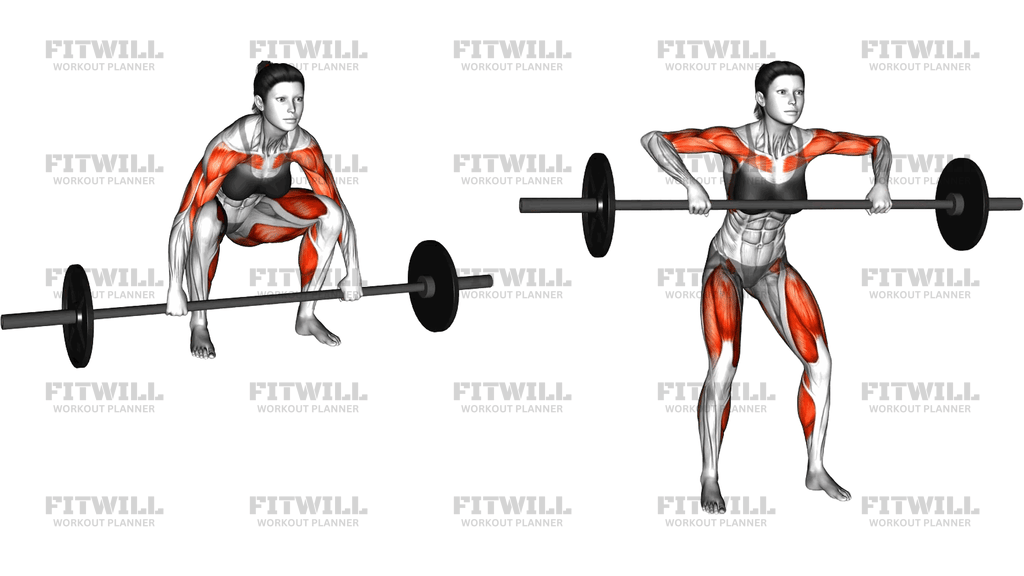
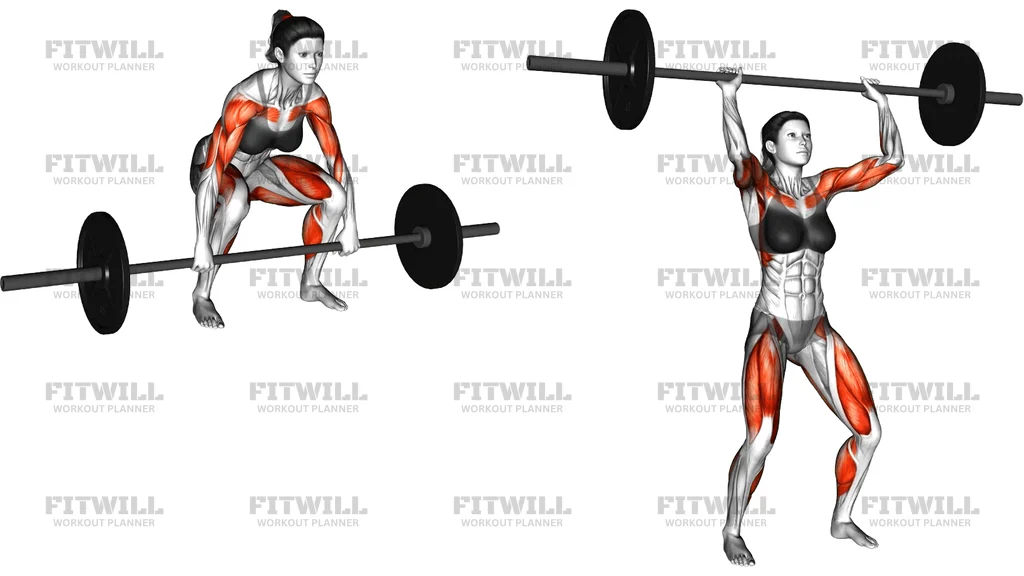
Barbell Sumo Deadlift From Deficit
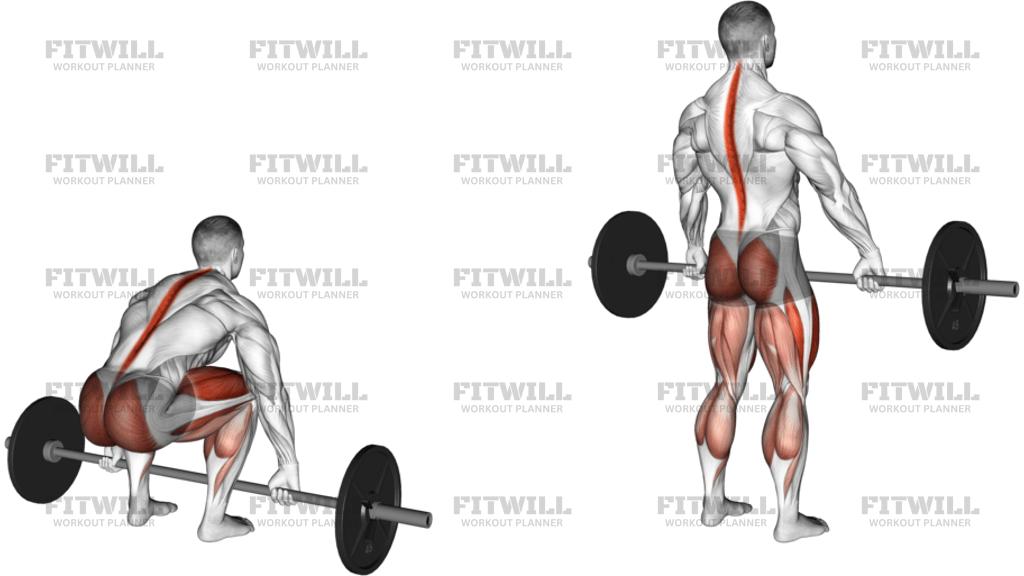
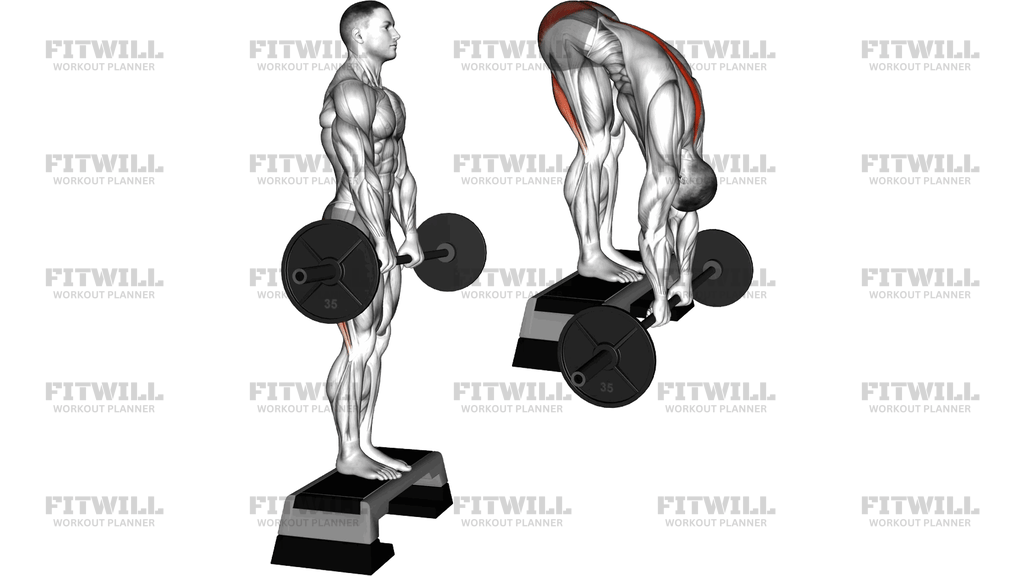
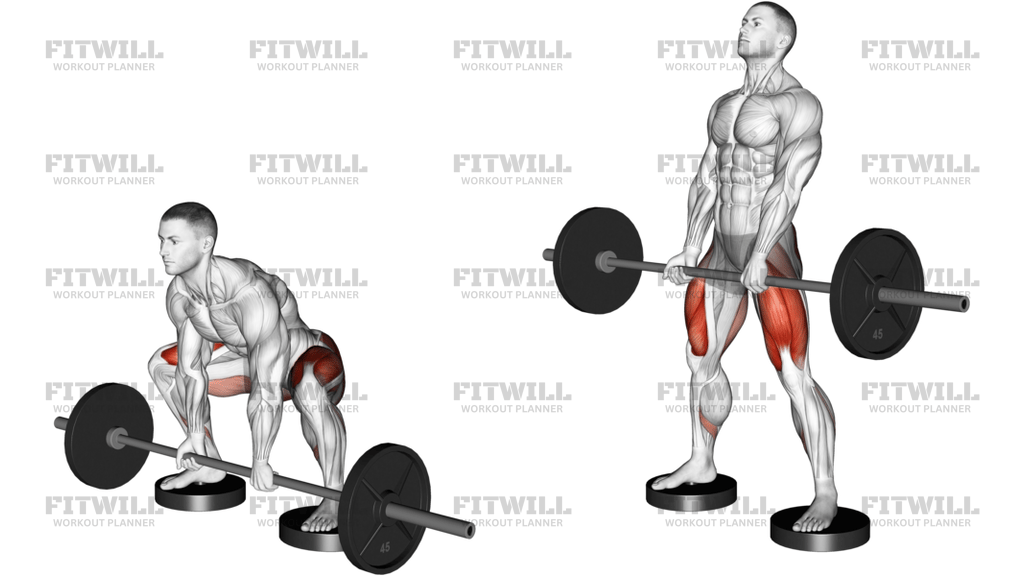
Barbell Sumo Deadlift From Deficit is a lower-body strength variation that combines a wide sumo stance with a raised standing surface. The deficit increases the range of motion, so each rep starts lower and asks more from the hips, glutes, inner thighs, and quads while the core works hard to keep the torso braced and the bar path close.
The setup matters because the bottom position is where this lift is won or lost. Stand on low plates or blocks with the feet turned slightly out, place the bar between the legs over the midfoot, and wedge the torso between the thighs with the shoulders just in front of the bar. If the stance is too narrow or the bar drifts forward, the pull turns into a compromised hinge instead of a strong sumo start.
To lift well, pull the slack out of the bar before it leaves the floor, then drive the feet down and push the knees out as the bar rises along the legs. The hips and knees should extend together, not in separate stages, and the bar should stay close enough to graze the shins and thighs. At the top, finish tall with the glutes tight, then lower the bar under control and reset your breath before the next rep.
This variation is useful when you want more starting strength, more leg drive, and more work through the adductors and glutes without changing the deadlift pattern completely. The extra depth also exposes weak positions quickly, which makes it a good accessory when you want honest feedback on position, tempo, and tension rather than just moving heavy weight.
Keep the reps deliberate and repeatable. A small deficit is usually enough to challenge the start position without making the setup unstable, and stable footwear matters because the feet are already elevated. Barbell Sumo Deadlift From Deficit rewards patience, a tight wedge, and a bar path that stays anchored to the body more than it rewards speed.
Use it as a technique builder when you want the first pull off the floor to feel more disciplined, or as a strength accessory after your main deadlift work. If the knees cave in, the chest drops, or the bar starts drifting away from the shins, reduce the load and rebuild the wedge before adding more weight. The best reps look controlled from the floor to lockout and feel strong without any wasted motion.
[ Workout Log & Planner ]
Put your next workout in Fitwill
Keep your plan and training log ready when you are.


Instructions
- Stand on two low plates or blocks with your feet wider than shoulder width and your toes turned slightly out.
- Place the barbell between your feet so it sits over your midfoot, then hinge down and grip the bar inside your knees.
- Set your hips low enough to feel tension in the inner thighs, keep your shins nearly vertical, and let your shoulders sit slightly in front of the bar.
- Pull your chest long, brace your torso, and take the slack out of the bar before you break it from the floor.
- Drive your feet into the plates and push your knees out as the bar rises straight up along your legs.
- Keep the bar close to your shins and thighs until you stand tall with hips and knees finishing together.
- Squeeze your glutes at the top without leaning back or shrugging the shoulders.
- Lower the bar under control back to the floor, reset your stance on the deficit, and rebrace before the next repetition.
Tips & Tricks
- Use a low deficit; if the plates are too tall, your hips will drop and your back will round before the bar moves.
- Turn the toes out just enough to let the knees track over them without collapsing inward.
- Think about pulling the bar toward your shins before it leaves the floor so the lats stay tight.
- If the hips shoot up faster than the bar, reset your wedge and start the rep again.
- Keep the bar brushing the legs; a forward swing usually means the chest fell and the bar left the body.
- Finish the lockout by standing tall, not by leaning backward and overextending the lower back.
- Use flat, stable footwear so the elevated stance does not wobble under load.
- Pause on the floor between reps when fatigue makes the start position sloppy.
Frequently Asked Questions
What muscle does Barbell Sumo Deadlift From Deficit target most?
It most strongly trains the hips, glutes, inner thighs, and quads, with the core and upper back helping you stay braced and organized.
Can beginners perform this exercise?
Yes, but beginners should keep the deficit small and the load light until they can hold the wide stance and bar path without losing position.
How high should the deficit be for Barbell Sumo Deadlift From Deficit?
A low deficit is usually enough. If the elevation changes your back angle drastically or makes the bottom unstable, the setup is too aggressive.
Where should my feet and hands be in Barbell Sumo Deadlift From Deficit?
Stand wide with the toes slightly out, then grip the bar inside your knees so your arms hang straight down without crowding the legs.
Should the bar stay close to my legs during the lift?
Yes. The bar should rise straight up and lightly track along the shins and thighs instead of swinging forward away from the body.
What is the most common mistake in Barbell Sumo Deadlift From Deficit?
The most common issue is letting the hips pop up first and turning the lift into a bad hinge instead of a coordinated leg drive.
Can I swap Barbell Sumo Deadlift From Deficit for a regular sumo deadlift?
Yes. The regular sumo deadlift is the easier version if you want to reduce range of motion or simplify the setup.
How should I breathe between reps?
Take your breath at the floor, brace before each pull, and reset after every controlled lower instead of rushing into the next rep.