Barbell Seated Good Morning
Barbell Seated Good Morning is an exercise for glutes, back, legs, and core that uses barbell and Flat bench to build useful training quality through controlled movement. The Barbell Seated Good Morning is a hip-hinge exercise performed while sitting with a barbell across the upper back. The main goal is to perform each repetition with enough control that the target area, posture, and breathing stay consistent from the first rep to the last.
The primary emphasis is glutes, while hamstrings, lower back, and core assist with stability and clean execution. In anatomy terms, the main work centers on the Gluteus maximus, with help from hamstrings, Erector spinae, Rectus abdominis, and Adductor magnus. It mainly works the glutes, lower back, hamstrings, and core stabilizers.
A strong set starts with the setup, because the starting position determines whether the rest of the repetition feels stable or rushed. Sit on a bench with your feet planted and a barbell resting across your upper back. Brace your core and keep your chest open. Hinge forward from the hips while keeping your spine neutral. Keep the body organized before you move so the working muscles can guide the exercise instead of momentum taking over.
During the repetition, use the instructions as direct coaching cues rather than trying to force a bigger range than you can control. Lower only as far as you can control without rounding your back. Drive through your hips and glutes to return to an upright seated position. Drive through your hips and glutes to return to an upright seated position.
The best training effect comes from clean, repeatable reps rather than rushing for a higher count. Use a light load while learning the movement. Keep the bar stable across your upper back, not on your neck. Do not collapse your chest or round your lower back. Move slowly through both the lowering and lifting phases.
Use Barbell Seated Good Morning in the part of the workout where focused technique and controlled tension fit your goal, such as a warmup, accessory block, core session, or targeted strength circuit. Stop short of any range that causes back discomfort. It is usually best as a light to moderate accessory exercise because the seated hinge is demanding. Lean only as far as you can keep a neutral spine and return under control.
[ Workout Log & Planner ]
Put your next workout in Fitwill
Keep your plan and training log ready when you are.


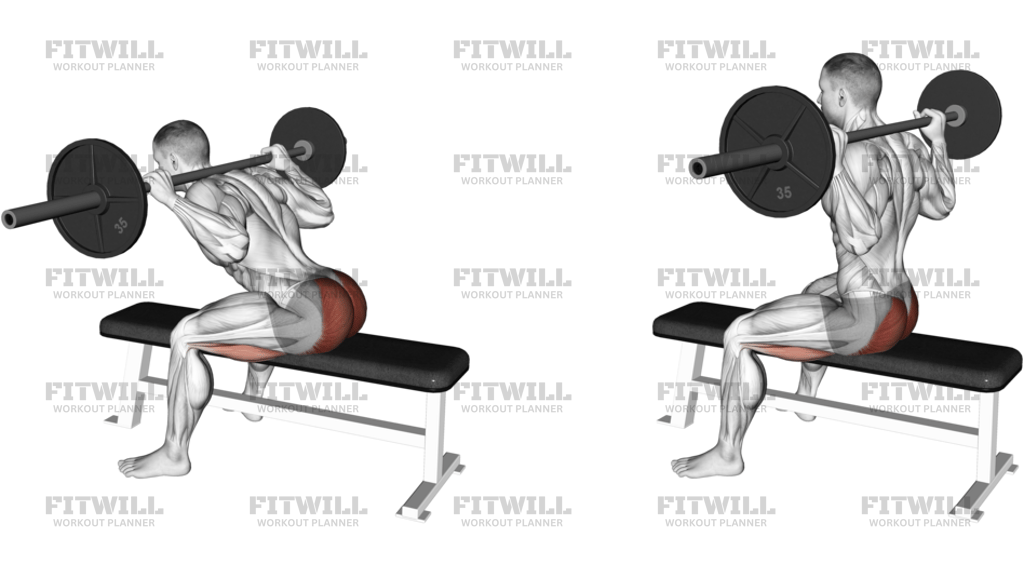
Instructions
- Sit on a bench with your feet planted and a barbell resting across your upper back.
- Brace your core and keep your chest open.
- Hinge forward from the hips while keeping your spine neutral.
- Lower only as far as you can control without rounding your back.
- Drive through your hips and glutes to return to an upright seated position.
- Keep the bar stable across your upper back as you come up.
- Reset your brace before the next slow hinge.
Tips & Tricks
- Use a light load while learning the movement.
- Keep the bar stable across your upper back, not on your neck.
- Do not collapse your chest or round your lower back.
- Move slowly through both the lowering and lifting phases.
- Stop short of any range that causes back discomfort.
- Use a very light bar until the seated hinge feels natural.
- Keep your ribs stacked over your pelvis instead of collapsing onto your thighs.
Frequently Asked Questions
What does the seated good morning work?
It mainly works the glutes, lower back, hamstrings, and core stabilizers.
Is Barbell Seated Good Morning a heavy exercise?
It is usually best as a light to moderate accessory exercise because the seated hinge is demanding.
How far should I lean forward?
Lean only as far as you can keep a neutral spine and return under control.
Where should the bar sit during Barbell Seated Good Morning?
Rest the bar across your upper back like a back squat, not on your neck, and keep it steady as you hinge.
What muscles does Barbell Seated Good Morning target?
It emphasizes the glutes, hamstrings, and spinal erectors while the core helps hold the torso position.
Is Barbell Seated Good Morning beginner-friendly?
It is more technical than it looks. Beginners should use a dowel or empty bar and a short range first.
Why does my back round during the seated good morning?
The range may be too deep or the load too heavy. Shorten the hinge and brace before each rep.