Barbell Shrug
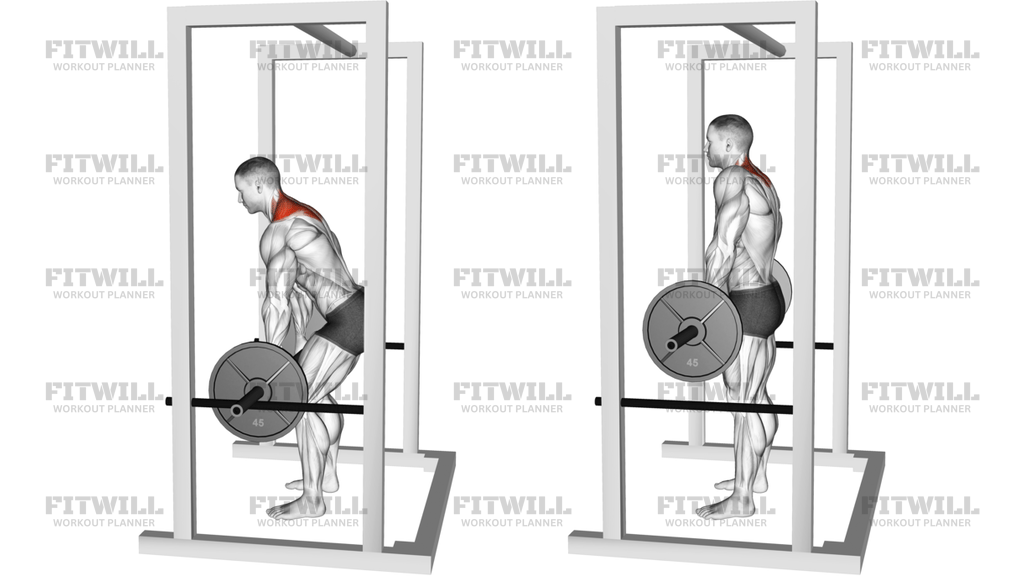
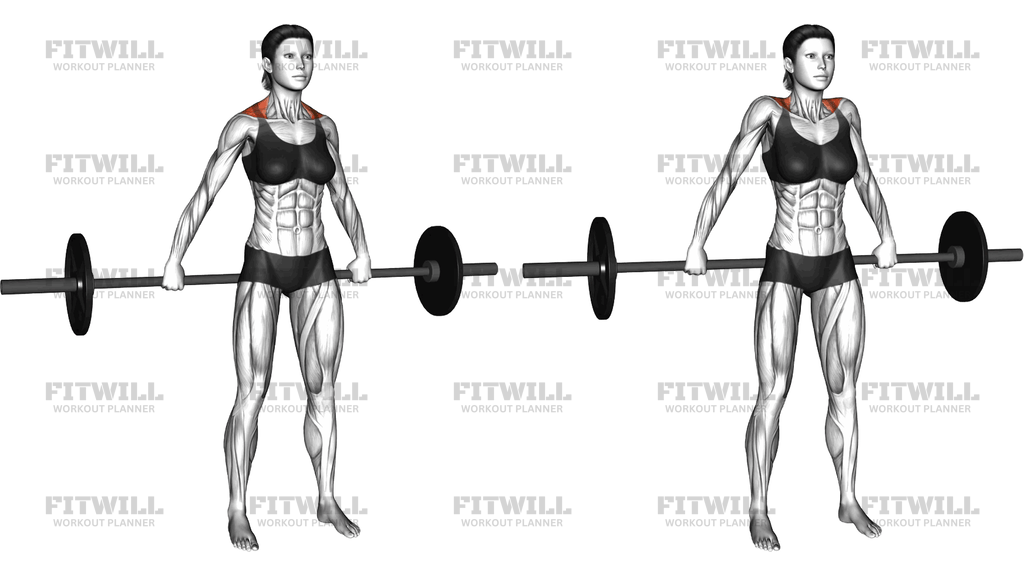
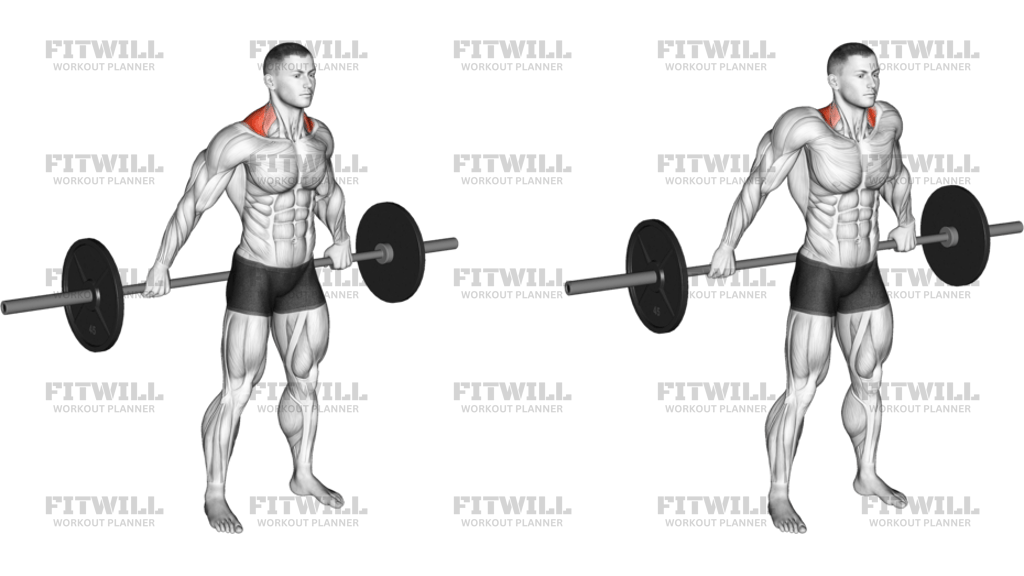
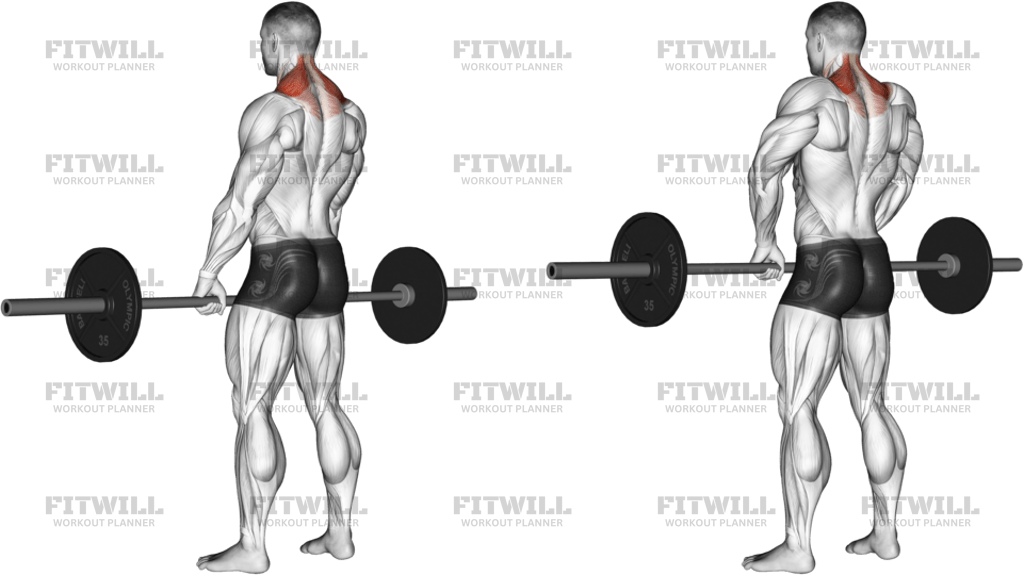
The Barbell Shrug is a direct upper-trap exercise built around one simple action: elevating the shoulder blades while holding a barbell. The bar is usually held in front of the thighs with straight arms, letting the trapezius lift the shoulders against the load while the forearms and upper back stabilize the weight.
This exercise primarily trains the trapezius, especially the upper fibers, with help from the levator scapulae, rhomboids, and grip muscles. It can be loaded heavier than many isolation exercises, but the rep still needs to be strict. Bending the elbows, leaning back, or rolling the shoulders turns a trap exercise into a messy full-body heave.
A good shrug starts from a tall stance with the ribs down, chest open, and bar close to the thighs. From there, lift the shoulders straight up toward the ears, pause briefly at the top, then lower them fully without letting the bar crash down. The movement is short, so the controlled squeeze and controlled lowering are what make each rep productive.
Use Barbell Shrugs after rows, deadlifts, or shoulder work when you want extra upper-trap volume. Straps can be helpful if grip gives out before the traps, but they should not hide sloppy posture. Keep the neck long, avoid circular shoulder rolls, and stop the set when you can no longer lift and lower the shoulder blades without using momentum.
[ Workout Log & Planner ]
Put your next workout in Fitwill
Keep your plan and training log ready when you are.


Instructions
- Stand with your feet about hip width and hold the barbell in front of your thighs with an overhand grip.
- Let your arms hang straight, keep the bar close to your body, and set your chest tall without leaning back.
- Brace your midsection and keep your neck neutral with your gaze forward.
- Lift both shoulders straight up toward your ears while keeping your elbows locked and the bar path vertical.
- Pause briefly at the top and squeeze the upper traps without jutting your head forward.
- Lower your shoulders slowly until they are fully down and the traps are stretched under control.
- Reset your posture at the bottom before starting the next rep.
- Finish the set before grip fatigue makes you bend your elbows or bounce the bar.
Tips & Tricks
- Think shoulder blades up and down, not shoulders rolling forward and backward.
- Use a grip just outside your thighs so the bar clears your legs without pulling your shoulders inward.
- Keep your elbows straight; bent elbows usually mean the arms are helping instead of the traps.
- Pause for a clear one-count at the top if you tend to rush short-range reps.
- Lower the bar with the same control you use to lift it so the traps stay under tension.
- Avoid craning your chin upward, which can make the neck feel compressed.
- Use lifting straps only when grip is the limiting factor and your shoulder motion remains strict.
- Choose a load that lets both shoulders rise evenly instead of one side hiking higher.
Frequently Asked Questions
What muscles do barbell shrugs work?
They mainly work the trapezius, especially the upper traps, with support from the upper back and grip muscles.
Should I roll my shoulders?
No. Lift straight up and lower straight down for a safer, more focused movement.
Can I go heavy on shrugs?
Yes, but only if you can keep your arms straight, posture tall, and reps controlled.
Where should the barbell be during a shrug?
Hold it in front of your thighs, close to the body. Let it travel straight up and down as your shoulders elevate and lower.
Should I bend my elbows on Barbell Shrugs?
No. Keep the elbows straight so the traps, not the biceps or upper arms, do the work.
Are straps useful for Barbell Shrugs?
They can be useful when your grip fails before your traps. Use them only if they help you keep cleaner, stricter reps.
How high should I shrug?
Lift as high as your shoulder blades can move without leaning back, jerking the bar, or pushing your head forward.
Why should I avoid rolling my shoulders?
Rolling adds unnecessary joint motion and does not improve trap work. Straight up and straight down is safer and more focused.