Barbell Wide-Grip Upright Row
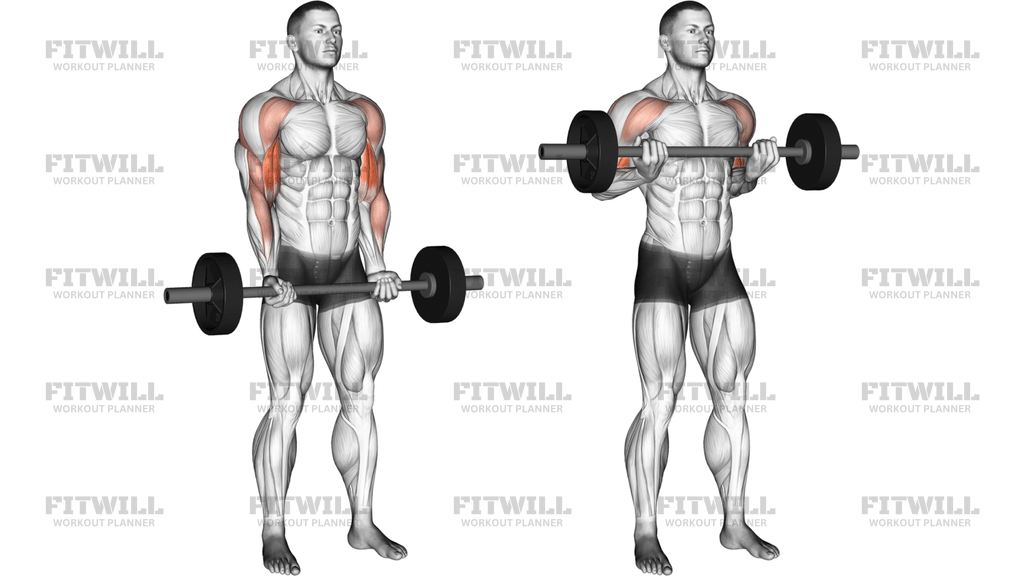
The Barbell Wide-Grip Upright Row is an upright row variation that uses a wider overhand grip to change the shoulder angle. It targets the deltoids and traps, with the biceps and forearms assisting as the elbows lead the bar upward along the front of the body.
The wider grip often makes the movement feel less cramped than a narrow upright row, but it also usually limits how high the bar should travel. A comfortable range is the priority. Pulling to chest height or slightly below is enough for many lifters, especially if higher pulls create shoulder pinching.
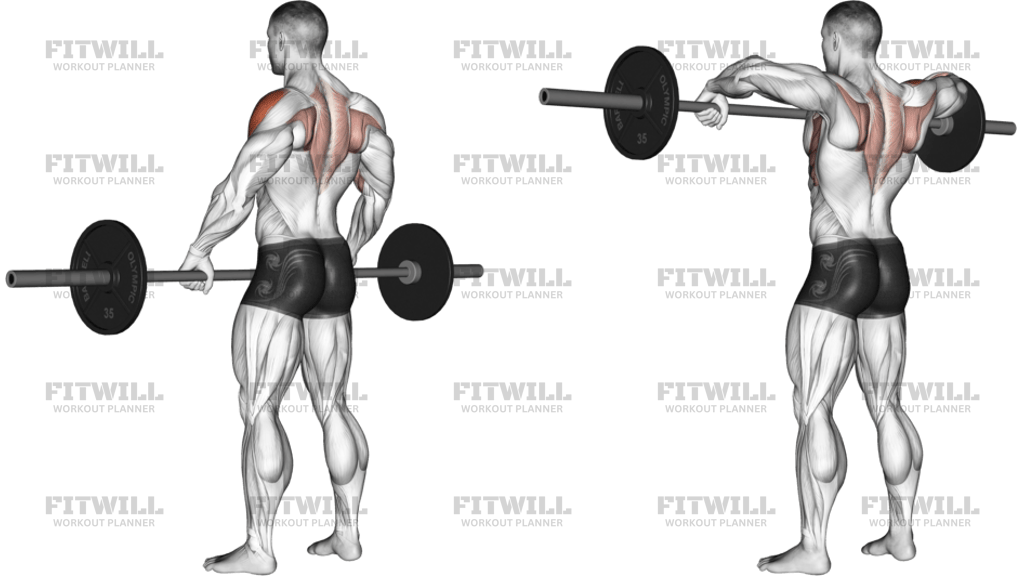
Set up standing tall with the bar in front of the thighs and the hands wider than shoulder width. Brace, pull the elbows outward and upward, keep the bar close, and lower slowly once you reach a pain-free top position. The torso should remain still so the shoulders and traps do the work.
Use this exercise as a controlled shoulder accessory rather than a heavy heave. It is best performed with light to moderate loads and smooth reps. If the wide grip bothers your wrists or shoulders, adjust the grip width or choose lateral raises instead.
[ Workout Log & Planner ]
Put your next workout in Fitwill
Keep your plan and training log ready when you are.


Instructions
- Stand tall with your feet about hip width and hold the barbell in front of your thighs.
- Use a wide overhand grip that feels comfortable on your wrists and shoulders.
- Brace your core and keep your shoulders relaxed before the pull.
- Pull the bar upward close to your torso by leading with your elbows.
- Let the elbows travel out and up without forcing them above shoulder height.
- Stop at a pain-free height near the chest or slightly lower.
- Lower the bar slowly until your arms are extended.
- Reset your posture before starting the next rep.
Tips & Tricks
- Keep the grip wide but not so wide that your wrists bend awkwardly.
- Use a lower pull height if the top of the shoulder feels crowded.
- Keep the bar close to the torso rather than letting it drift forward.
- Avoid hip drive; this is a shoulder row, not a power pull.
- Use a smooth tempo and control the lower.
- Lead with the elbows while keeping the hands relaxed on the bar.
- Choose lighter weight if you cannot keep both sides of the bar level.
- Replace it with lateral raises if upright rows do not agree with your shoulders.
Frequently Asked Questions
What does the wide grip change?
It changes the shoulder angle and often limits the pull height compared with a narrow upright row.
What muscles does it target?
It mainly targets the shoulders, with help from the traps, biceps, and forearms.
How high should I pull?
Pull only as high as feels comfortable, often around chest height or slightly lower.
Is a wide grip safer than a narrow grip?
It can feel better for some shoulders, but comfort and range matter more than grip label.
Should the elbows go above the shoulders?
They do not need to. Stop before any pinching or loss of control.
Can I use heavy weight?
Use light to moderate weight. Heavy loads often turn the movement into a swing.
Where should the bar travel?
Keep it close to the front of the body as it moves from the thighs toward the chest.
What if my wrists hurt?
Narrow the grip slightly, reduce load, or use dumbbells or an EZ bar for a friendlier angle.