Barbell Skier
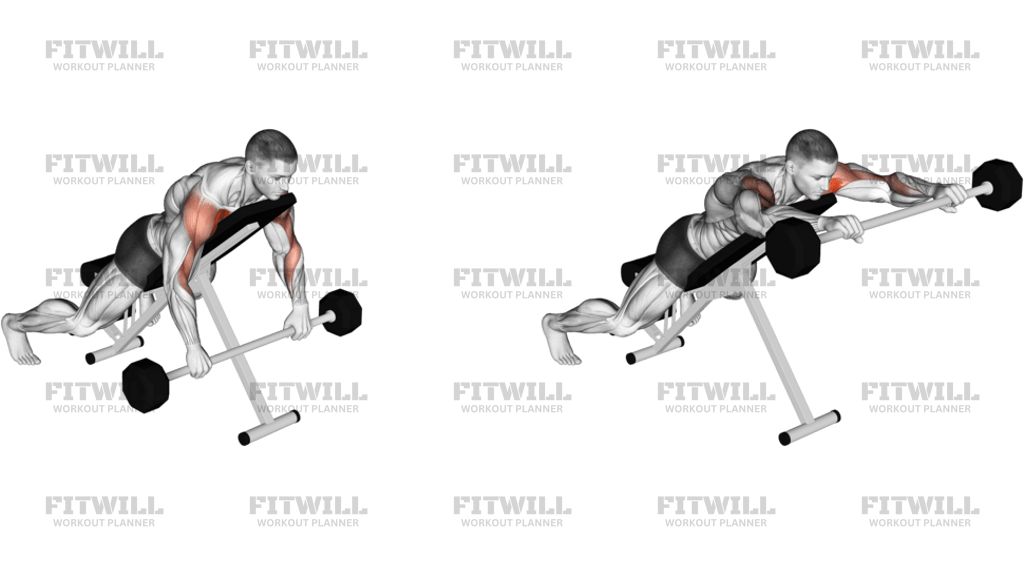
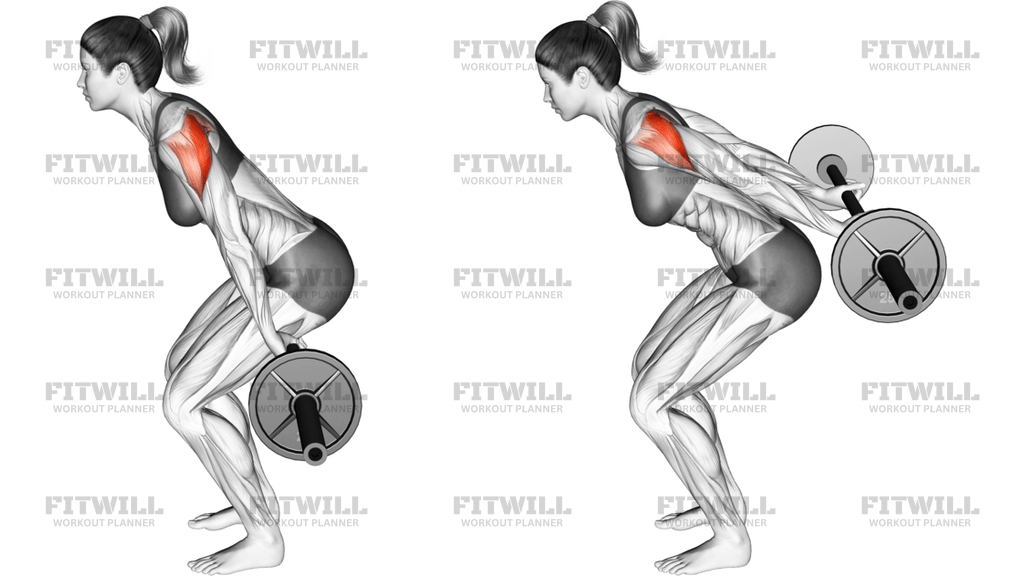
Barbell Skier is a bent-over shoulder-extension exercise that places most of the work on the rear delts while the upper back helps keep the shoulders organized. In the image, the torso stays hinged forward, the knees are softly bent, and the barbell travels behind the body instead of in front of the legs. That setup matters because the movement is small and specific: you are training the shoulders to extend cleanly against leverage, not turning the rep into a row or a swing.
The exercise is useful when you want to build posterior-shoulder control, upper-back stability, and the ability to keep the shoulder blades quiet while the arms stay almost straight. It can fit as accessory work after pressing or pulling, or as a lighter activation drill before heavier upper-body training. The key is to keep the hinge stable and the ribcage stacked so the low back does not take over when the bar moves away from the thighs.
A good Barbell Skier rep begins with a light barbell held with a controlled overhand grip behind the thighs, then a firm hip hinge that sets the torso angle before the pull starts. From there, the shoulders sweep the bar in a short arc behind the hips while the elbows stay only slightly unlocked. The range should feel smooth and repeatable, with no shrugging, no jerking, and no extra torso lift to chase a bigger finish.
Because the bar is moving behind the body, the exercise can feel awkward or shoulder-intensive if you load it too aggressively. Use a weight that lets you keep the neck relaxed, the spine long, and the motion precise from the first rep to the last. If the bar drifts away from the legs, the torso rises, or the lower back starts helping, the set is too heavy or the range is too large for clean execution.
[ Workout Log & Planner ]
Put your next workout in Fitwill
Keep your plan and training log ready when you are.


Instructions
- Stand hip-width with a light barbell held behind your thighs using a shoulder-width overhand grip.
- Hinge at the hips until your torso is angled forward, bend the knees slightly, and keep your spine long and neck neutral.
- Let the bar hang close to the backs of your legs with your weight balanced through the midfoot.
- Brace your abs and keep the elbows almost straight, with only a soft bend.
- Sweep the bar backward in a small arc by extending the shoulders and squeezing the rear delts and upper back.
- Stop when the bar reaches the strongest comfortable end position behind the hips, without shrugging or leaning back.
- Lower the bar slowly along the same path until the arms are again behind the legs and tension stays on the shoulders.
- Keep breathing smooth: exhale as you pull back, inhale on the controlled return.
Tips & Tricks
- Use a very light bar until you can keep the hinge locked in; this movement gets sloppy fast when loaded like a row.
- If the lower back wants to take over, shorten the range and keep the ribs stacked over the pelvis.
- Think of driving the upper arms backward, not yanking the hands farther away from the thighs.
- Keep the shoulders down away from the ears so the traps do not dominate every rep.
- A small elbow bend is fine, but turning it into a row changes the exercise and usually shifts work away from the rear delts.
- Pause briefly where the shoulders are fully extended; a short hold is better than a bigger, swinging finish.
- Stop the set when the bar drifts away from the legs or your torso rises to chase the weight.
- Use slower lowers if you want more time under tension without adding load.
Frequently Asked Questions
What muscles does Barbell Skier work?
It mainly trains the rear delts, with the upper back and traps helping stabilize the shoulder blade position.
Is Barbell Skier a row?
No. The elbows stay much straighter and the shoulder joint does the main work instead of a big elbow pull.
How should the bar path look?
The bar should sweep in a short arc behind the hips while staying close to the body and away from any swinging.
Can beginners do this exercise?
Yes, but only with a very light bar and a clean hip hinge. If you cannot hold the torso angle, it is too heavy.
Where should I feel it most?
You should feel the back of the shoulders and upper back, not a sharp load in the lower back.
Should I keep my elbows locked?
No. Keep them softly bent so the shoulders can move without elbow strain, but do not turn the lift into a curl or row.
What is the biggest form mistake?
Most people shrug, arch, or use momentum to force the bar farther back than their shoulders can control.
Can I swap in another tool?
A light cable or band rear-delt pull can be a safer substitute if you want the same shoulder-extension pattern with less barbell leverage.