Barbell Standing Wide Military Press
Barbell Standing Wide Military Press is a strict standing overhead press performed with a wide grip and a bar path that starts at the upper chest and finishes stacked over the shoulders and midfoot. The wider hand position changes the feel of the lift: the delts still do the main work, but the movement also demands strong upper-back support, trunk stiffness, and clean bar control so the torso does not turn the rep into a standing incline press.
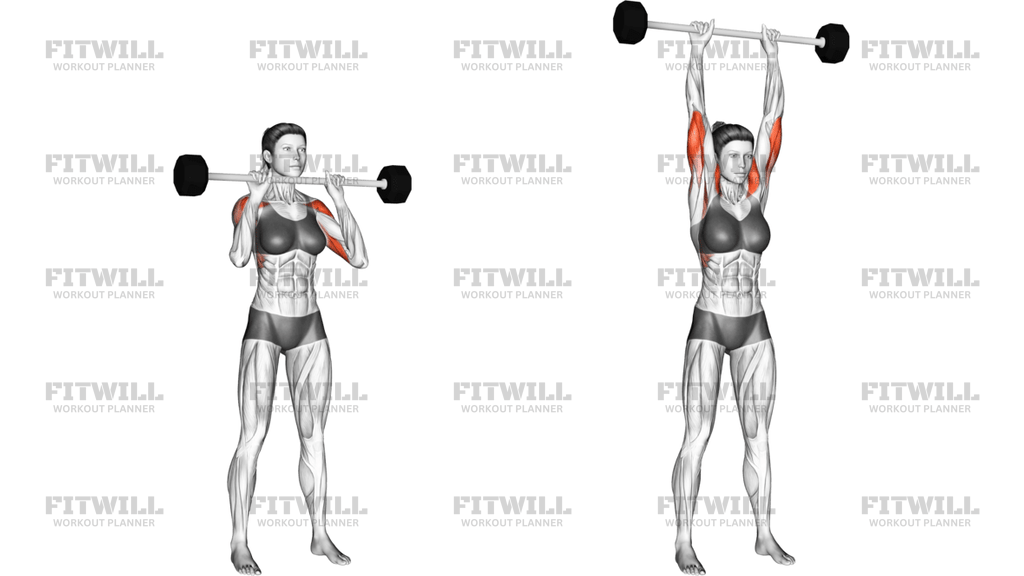
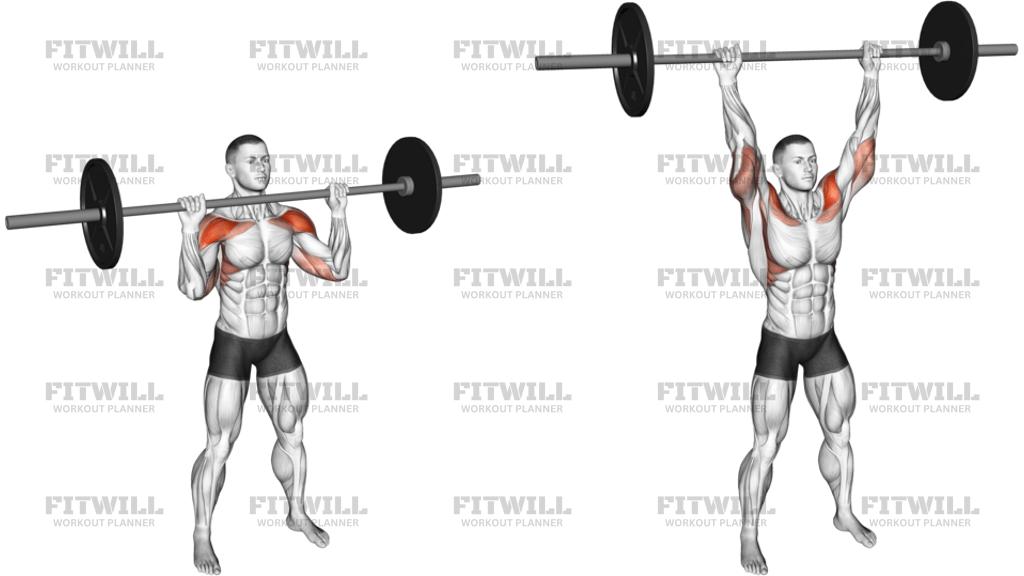
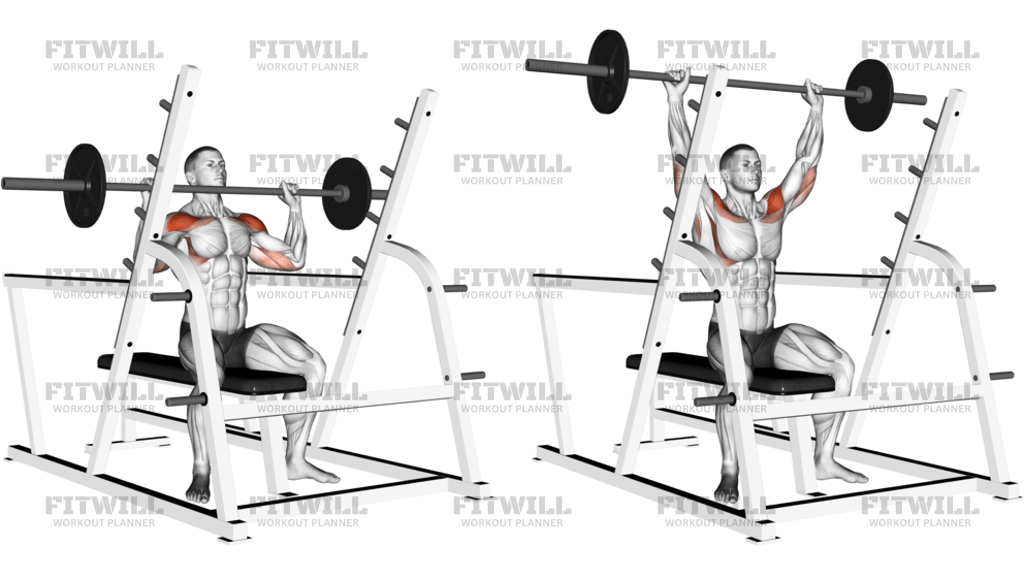
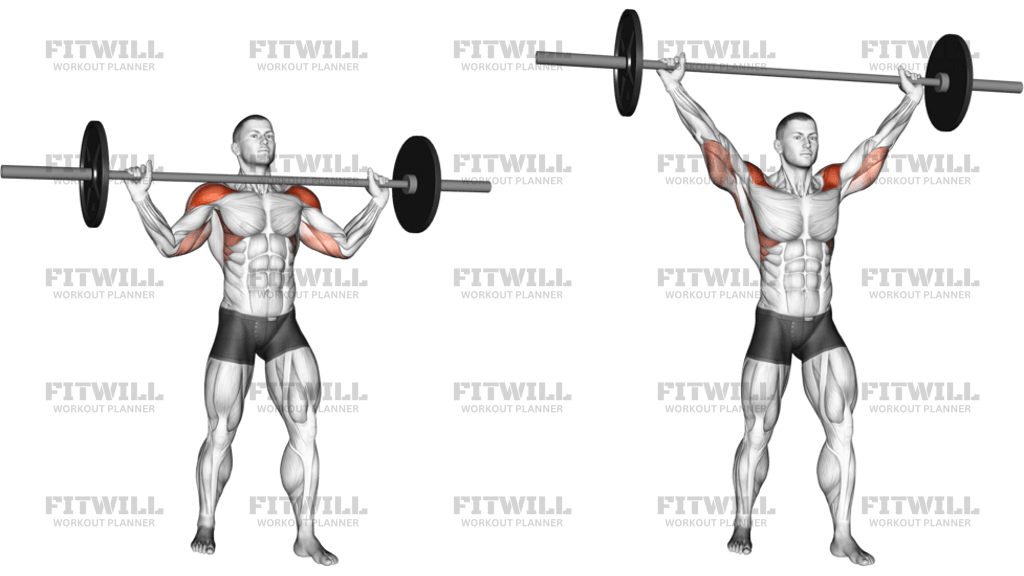
This exercise trains shoulder strength, overhead stability, and the ability to keep the rib cage and pelvis organized while a heavy bar moves past the face. In anatomy terms, the deltoids are the primary movers, with the triceps brachii helping to finish the press and the trapezius and rhomboids helping keep the shoulder girdle stable. The image shows the bar held across the upper chest before being pressed to a fully locked-out overhead position, which is the key pattern to preserve.
The setup matters because the bar has to move close to the body before it travels slightly back into the overhead position. A stable stance, stacked wrists, and elbows under the bar at the start make the press smoother and safer. If the grip is too narrow, the elbows tend to tuck and the press becomes more triceps-dominant; if it is too wide, the shoulders can feel pinched and the bar may drift forward instead of staying over the midline.
Each rep should look deliberate: breathe and brace first, drive the bar up in a controlled arc, let the head move slightly back to clear the bar, then bring the head back through once the bar passes the forehead. At the top, the bar should sit over the shoulders and upper torso, not out in front of the body. Lower it under control to the same upper-chest start position and reset before the next repetition.
Use this press when you want a shoulder-focused barbell strength movement that still challenges full-body tension. It fits well in upper-body strength work, push sessions, or accessory blocks after the main bench or overhead lift. Beginners can learn it with a light load, but the range, grip width, and torso position should stay strict. If the lower back arches hard, the elbows flare painfully, or the bar path becomes inconsistent, the load is too heavy or the setup needs adjustment.
[ Workout Log & Planner ]
Put your next workout in Fitwill
Keep your plan and training log ready when you are.


Instructions
- Stand with your feet about hip-width apart and hold the bar with a wide grip, slightly outside shoulder width, so your forearms stay close to vertical at the bottom.
- Unrack the bar to the upper chest or collarbone area, keep your wrists stacked over your elbows, and set your chest tall without leaning back.
- Brace your abs and glutes before each rep so your ribs stay down and your torso stays stacked over your hips.
- Press the bar upward in a slight arc, moving it past your face while your head shifts back just enough to let the bar pass cleanly.
- Once the bar clears your forehead, drive your head through so the bar finishes over your shoulders and midfoot with the elbows locked out.
- Pause briefly at the top to confirm the bar is stable and the arms are fully extended.
- Lower the bar under control along the same path until it returns to the upper chest position.
- Reset your breath, re-brace, and repeat for the planned number of reps before re-racking the bar carefully.
Tips & Tricks
- Choose a grip wide enough that your forearms are nearly vertical when the bar is on your upper chest; that keeps the press cleaner and reduces wrist drift.
- Do not turn the lift into a standing incline press by leaning the torso back and flaring the ribs to chase extra range.
- Keep the bar close to your face on the way up; if it swings forward early, the shoulders lose a strong pressing line.
- Let the head move back only enough to clear the bar, then bring it through at lockout instead of holding it behind the bar.
- A hard glute squeeze helps stop the lower back from taking over when the bar gets heavy.
- Lower the bar with control to the same upper-chest touchpoint every rep so the set stays consistent.
- If the front of the shoulders feel crowded, slightly narrow the grip and reduce the load before forcing more range.
- Use a rack height that lets you unrack and re-rack without tiptoeing or shrugging the shoulders up to the ears.
- Stop the set when the bar starts drifting forward or the elbows bend unevenly at the top.
- Exhale through the sticking point and take a fresh breath before the next rep instead of pressing while half-braced.
Frequently Asked Questions
What muscles does the Barbell Standing Wide Military Press work most?
The deltoids are the primary movers, with the triceps brachii helping finish the press and the trapezius and rhomboids helping stabilize the shoulder girdle.
How is the wide-grip version different from a standard standing military press?
The wider grip usually shortens the pressing path a bit and shifts the feel more toward the shoulders, while still requiring strong trunk and upper-back stability.
Where should the bar start before each rep?
It should start at the upper chest or collarbone area with the wrists stacked over the elbows and the bar close enough to the body to press in a clean line.
How wide should my grip be on the bar?
Wide enough that your forearms stay close to vertical at the bottom. If the elbows drift too far out or your wrists bend back hard, the grip is probably too wide.
Can I arch my back to get the bar overhead?
A small natural curve is normal, but a big lean-back turns the lift into a compensation pattern and puts more stress on the lower back.
Do I need to press behind my head for this exercise?
No. This version presses in front of the head, moving the bar from the upper chest to a stacked overhead lockout.
Is this a good exercise for beginners?
Yes, if the load is light and the lifter can keep the ribs down, the head path clean, and the bar moving without momentum.
What should I do if the bar keeps drifting forward?
Reduce the load, keep the bar closer to the face on the way up, and make sure the head comes through once the bar clears the forehead.