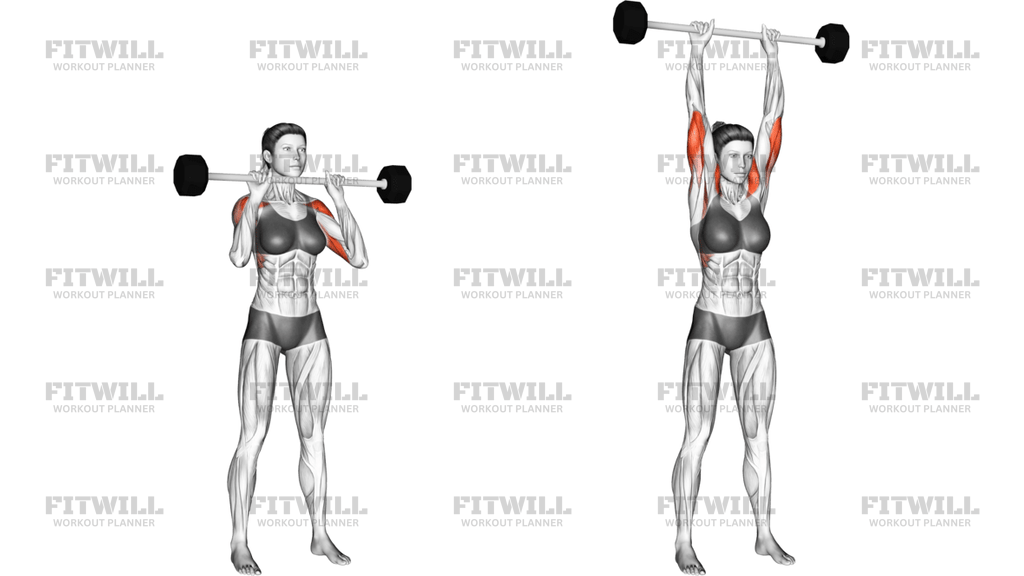
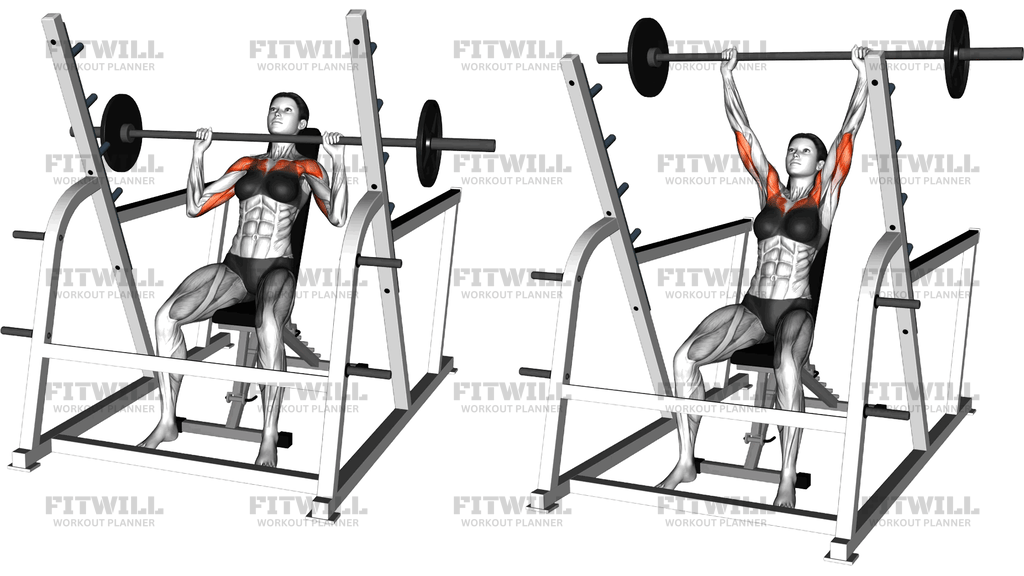
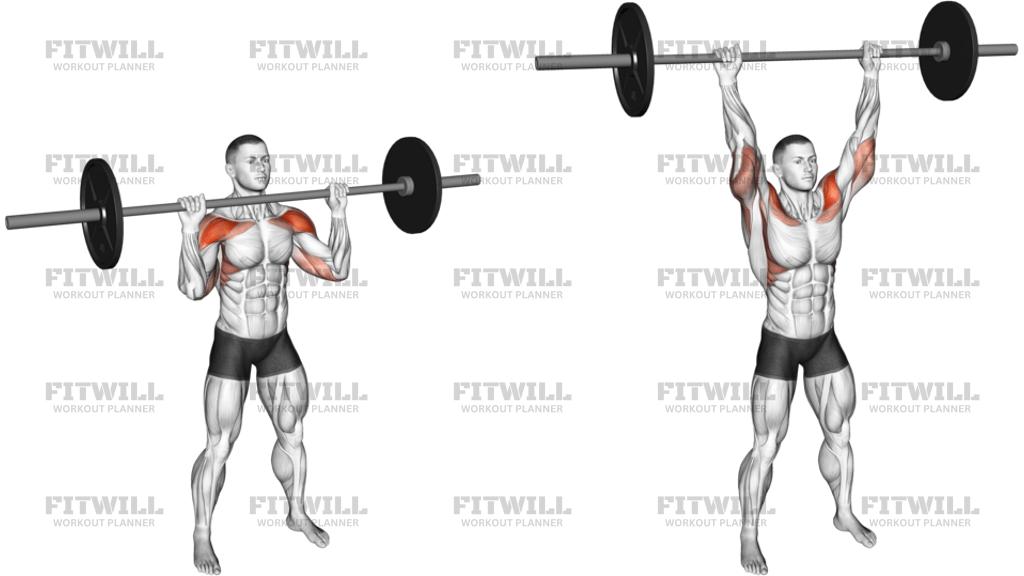
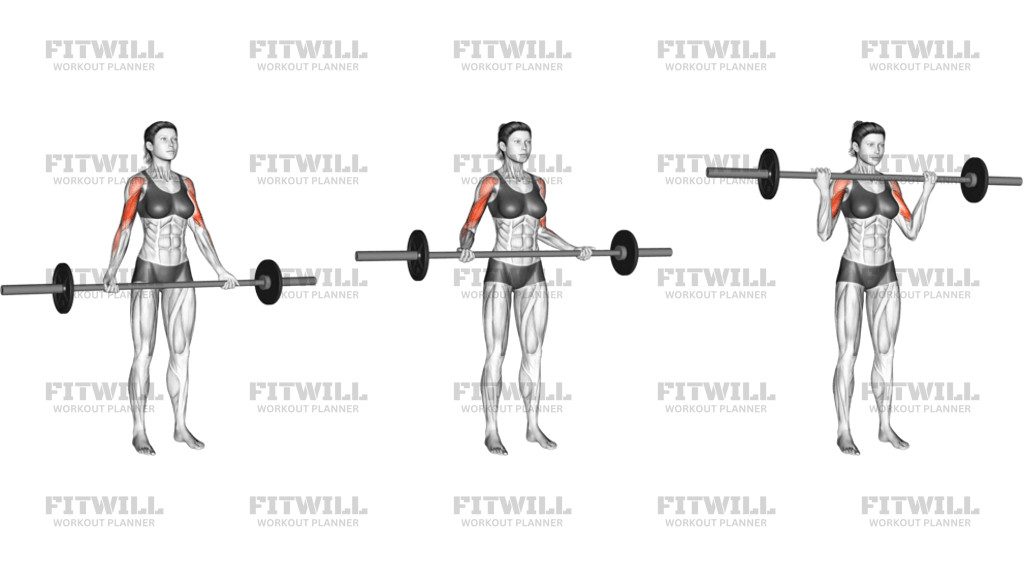
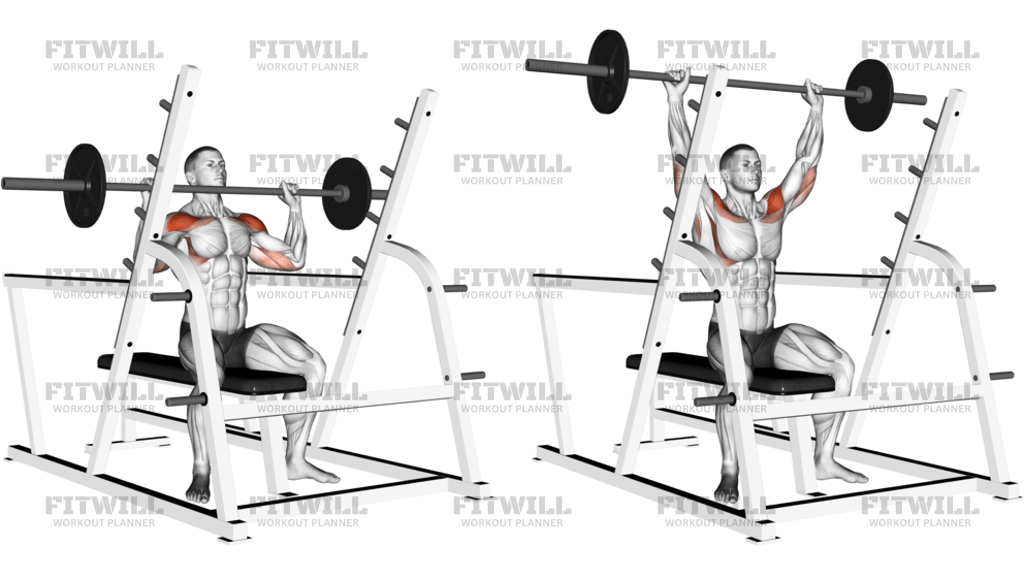
Standing Behind Neck Press
Standing Behind Neck Press is a standing barbell shoulder press performed from behind the head, with the bar starting across the upper traps and traveling straight overhead. It places the main demand on the delts while the triceps, upper back, and core help keep the bar stable and the torso upright.
Because the bar starts behind the neck, the setup matters more than in a standard front press. A slightly wider grip usually gives the bar room to clear the head, and the feet should stay planted under a tall, stacked torso. The goal is to press without turning the rep into a backbend or shrugging the shoulders up toward the ears.
A good rep begins with the bar resting high on the back, elbows bent and positioned under the bar as much as your shoulder mobility allows. From there, press the bar up in a smooth vertical line, guide it past the top of the head, and finish with the elbows locked out overhead. Lower it under control back to the same behind-the-neck start so the next rep begins from a stable, repeatable position.
This movement is useful when you want direct overhead shoulder loading and you can keep the shoulder path clean. It is best treated as a controlled strength or accessory exercise rather than a lift to rush. If your shoulders feel pinched, your torso leans back, or the bar has to drop too low behind the neck, shorten the range or switch to a front press instead.
The exercise works best with moderate loads, deliberate tempo, and a pain-free range of motion. Keep the neck relaxed, the rib cage stacked over the pelvis, and the bar path centered over the midfoot. Clean reps matter more here than chasing weight, because the behind-the-neck position gives less room for sloppy mechanics.
Fitwill
Log Workouts, Track Progress & Build Strength.
Achieve more with Fitwill: explore over 9600 exercises with images and videos, access built-in and custom workouts, perfect for both gym and home sessions, and see real results.
Start your journey. Download today!




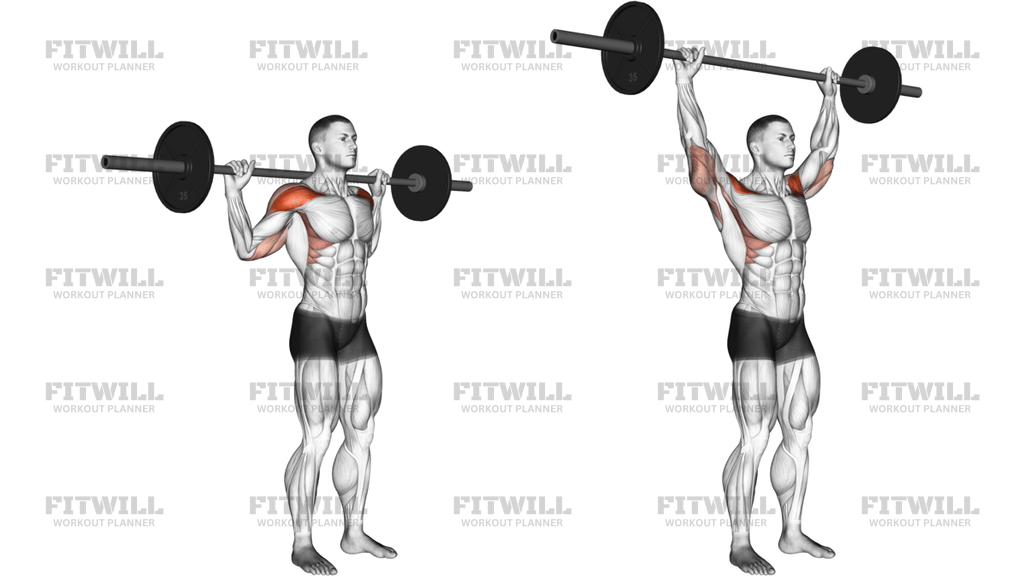
Instructions
- Stand tall with your feet about hip-width apart and hold the barbell across the upper traps behind your neck with a slightly wider-than-shoulder-width grip.
- Set your wrists straight, point your elbows slightly down and forward, and keep your chest lifted without over-arching your lower back.
- Brace your midsection and keep your ribs stacked over your pelvis before the first rep.
- Press the bar upward in a smooth vertical line, letting it clear the back of your head without drifting forward.
- Finish with the bar stacked over your shoulders and midfoot, elbows fully extended and shoulders controlled.
- Lower the bar slowly back behind your head until it settles on the upper traps at the same starting height.
- Keep your neck long and neutral as you breathe out through the press and in as you lower.
- Repeat for the planned reps, then re-rack the bar only after it returns fully under control.
Tips & Tricks
- A slightly wider grip usually makes room for the bar to travel behind the head without forcing the shoulders into an extreme angle.
- If the lower back starts to arch hard, lower the load and keep the ribs down rather than finishing the rep by leaning back.
- The bar should move almost straight up and down; drifting it forward turns the lift into a shaky incline press pattern.
- Keep the forearms near vertical under the bar at the start so the wrists and elbows share the load evenly.
- Do not force the bar deeper behind the neck than your shoulders can comfortably control.
- A brief pause on the upper traps between reps can help you reset tension and prevent bouncing.
- Use a weight that lets you finish every rep with the same head, rib, and bar position.
- If your shoulders feel pinched, reduce range or switch to a front press or dumbbell overhead press.
Frequently Asked Questions
What muscle does Standing Behind Neck Press target most?
The deltoids are the main target, especially the front and side portions of the shoulders.
Can beginners perform this exercise?
Yes, but only with light weight and pain-free shoulder mobility. If the behind-the-neck position feels awkward, a front press is usually a better starting point.
How heavy should I train this movement?
Use a load that lets you press overhead without leaning back or losing the bar path. Clean position matters more here than moving big numbers.
What is a common mistake to avoid?
The biggest mistake is turning the press into a standing backbend. Keep the ribs down and let the bar travel vertically instead of drifting forward.
Where should the bar start before each rep?
It should rest across the upper traps behind the neck, with the elbows bent and the grip wide enough for the bar to clear the head.
Should my elbows flare out while I press?
A little outward position is normal, but the elbows should stay controlled under the bar instead of flying far behind the body.
Is this harder on the shoulders than a normal overhead press?
Often yes, because the behind-the-neck start asks for more shoulder mobility and less margin for sloppy bar path.
What should I do if the bottom position feels uncomfortable?
Shorten the range, lighten the load, or switch to a front rack overhead press so the shoulders are not forced into an awkward path.