Bridge On Knees
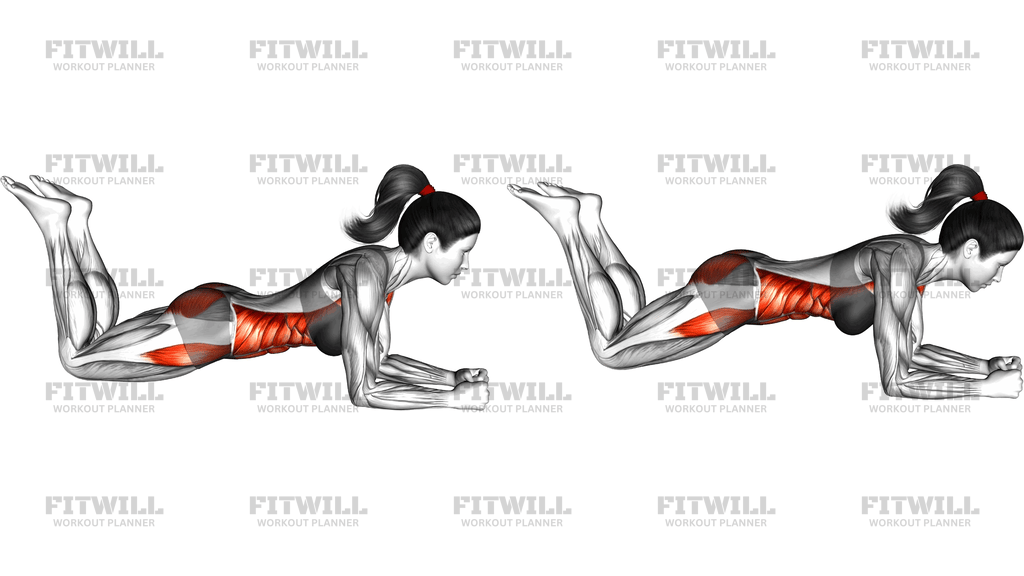
Bridge On Knees is a knee-supported plank or bridge hold that trains the abs while reducing the load compared with a full plank. The knees stay on the floor, and the body forms a straight line from shoulders to hips to knees while the shoulders and glutes assist with stability.
This exercise is a useful entry point for learning core bracing. The shorter lever makes it easier to avoid sagging through the lower back, but the same alignment rules still apply. The hips should not pike high or drop low; the ribs and pelvis should stay connected.
Set up on the forearms or hands with the knees padded on the floor. Align the shoulders over the support point, brace the abs, and hold the body in one straight line. Breathe steadily and lower to reset before alignment breaks down.
Use Bridge On Knees as a beginner core hold, warmup, or regression for full planks. Progress by increasing hold time, improving breathing control, or moving to a full plank once the knee-supported version is steady. Stop if the lower back sags or the shoulders feel strained.
[ Workout Log & Planner ]
Put your next workout in Fitwill
Keep your plan and training log ready when you are.


Instructions
- Set up on your forearms or hands with your knees resting on a padded floor.
- Place your elbows or hands under your shoulders.
- Walk your knees back until your shoulders, hips, and knees form a straight line.
- Brace your abs and gently squeeze your glutes.
- Hold the bridge position without letting your hips sag toward the floor.
- Keep your neck long and gaze down.
- Breathe steadily while maintaining the straight line.
- Lower and reset when your hips or shoulders start to lose position.
Tips & Tricks
- Use padding under the knees so pressure does not distract from core tension.
- Keep the hips in line with the shoulders and knees rather than piking upward.
- Press the floor away to keep the shoulders active.
- Squeeze the glutes lightly to help prevent lower-back sagging.
- Take small breaths without letting the ribs flare.
- Shorten the hold if your low back starts to feel the exercise more than your abs.
- Progress to a full plank only when the knee version is steady.
- Use the forearm version if the hands-and-wrists position is uncomfortable.
Frequently Asked Questions
What muscles does the knee bridge work?
It mainly works the abs, with support from the shoulders and glutes.
Is Bridge On Knees good for beginners?
Yes. The knee-supported setup makes it easier to learn core bracing.
How long should I hold it?
Hold as long as you can keep a straight, controlled line without sagging.
Should I do it on hands or forearms?
Either can work. Forearms may feel easier on the wrists, while hands more closely resemble a high plank.
Where should my hips be?
Keep them in line with your shoulders and knees, not high like a pike or low like a sag.
Why keep the knees down?
The knees shorten the lever, making it easier to practice bracing before a full plank.
What if I feel it in my lower back?
Tuck the ribs down, squeeze the glutes lightly, and shorten the hold. Stop if discomfort continues.
How do I progress from Bridge On Knees?
Increase clean hold time first, then move to a full plank from the toes.