Kneeling Cable One-Arm Straight Back High Row
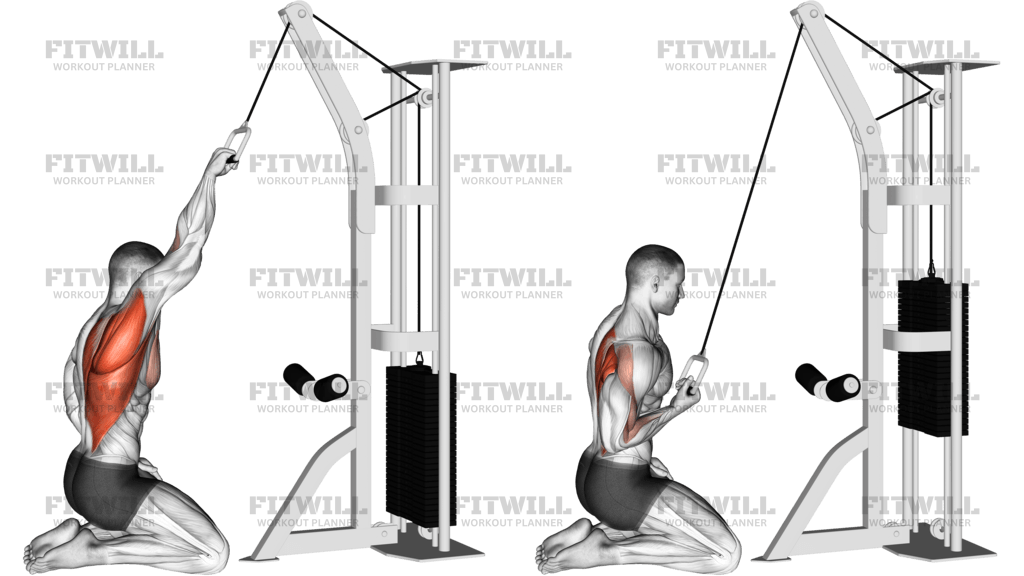
Kneeling Cable One-Arm Straight Back High Row is a unilateral high-row variation that uses a kneeling base to make the pull stricter and more controlled. The higher cable angle changes the line of force so the elbow can travel back and slightly out while the torso stays quiet, which makes the movement feel different from a low row or a pure rear-delt raise.
The primary emphasis is the upper back, with the rear shoulders, lats, biceps, and core helping stabilize the body and guide the pull. The kneeling stance reduces momentum and makes it easier to notice whether the back is actually driving the handle or whether the torso is twisting to finish the rep. That makes this a useful option for upper-back control, single-side work, and cleaner scapular movement.
Set the cable at a mid-to-high level and kneel in a stable position facing the machine. Start with one arm extended, the chest tall, and the ribs stacked over the hips. Pull the elbow back and slightly outward toward a high-row finish, pause briefly at the squeeze, and return the handle forward slowly until the arm is long again. The torso should stay quiet through the whole rep so the cable path stays honest.
Kneeling Cable One-Arm Straight Back High Row works well as an upper-back accessory after larger rows or pulldowns, especially when you want a unilateral movement with more control than a standing version gives you. The kneeling setup also makes it easier to compare sides and feel whether one shoulder blade moves more cleanly than the other. Good reps are deliberate, compact, and repeatable, with the elbow leading and the neck staying relaxed.
If the body starts rotating or the shoulders start shrugging, reduce the load and shorten the range slightly. The goal is a controlled high row driven by the back, not a torso twist with a handle in the hand.
[ Workout Log & Planner ]
Put your next workout in Fitwill
Keep your plan and training log ready when you are.


Instructions
- Set the cable to a mid-to-high level with a single handle and kneel in a stable position facing the machine.
- Start with one arm extended, your chest tall, and your ribs stacked over your hips.
- Brace your core so the torso stays quiet before the first pull.
- Pull the elbow back and slightly outward to create the high-row path.
- Pause briefly at the squeeze without shrugging the shoulder or twisting the body.
- Return the handle forward slowly until the arm is long again and the shoulder stays organized.
- Keep the neck neutral and the movement compact instead of reaching for extra range.
- Repeat on one side before switching and matching the same control on the other side.
Tips & Tricks
- If the torso starts rotating, the load is too heavy or the kneeling base is too loose for a strict high row.
- Keep the elbow driving the motion; thinking about the hand usually makes the shoulder shrug or the biceps take over.
- A slightly wider elbow path is okay here, but it should still feel like a row rather than a rear-delt fly.
- Use a moderate load that lets the pause at the top feel clean instead of forced.
- Keep the neck long and neutral so the upper traps do not take over the finish.
- The return phase should be slow enough that you can reset the shoulder blade before the next rep.
- A stable kneeling base matters more than range; if you need to wobble to finish the rep, shorten the motion.
- Matching both sides carefully will reveal whether one scapula or upper back side is less coordinated.
Frequently Asked Questions
What muscles does Kneeling Cable One-Arm Straight Back High Row work?
It mainly works the upper back, with the rear shoulders, lats, biceps, and core helping stabilize the pull.
Why use a kneeling stance for this high row?
It reduces momentum and makes it easier to keep the torso from twisting through the rep.
Can Kneeling Cable One-Arm Straight Back High Row replace a seated row?
It can complement or substitute it depending on the goal, but it is usually a more specific single-side upper-back drill.
Should my elbow stay close to my body in this row?
No, this style usually allows the elbow to track a little wider than a low row.
Is the unilateral version useful?
Yes, it is a good way to spot and correct side-to-side differences in upper-back control.
What is the most common mistake in this exercise?
Twisting the torso or shrugging the shoulder to finish the pull.
What rep range works well here?
Moderate reps are usually a good fit because the movement is about control and scapular position.