Cable Twist Version 2
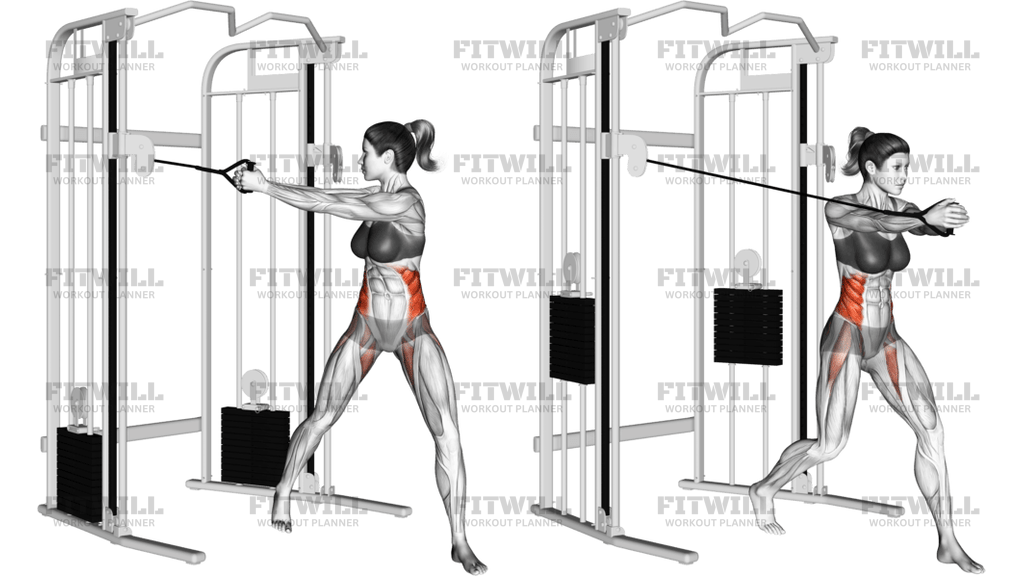
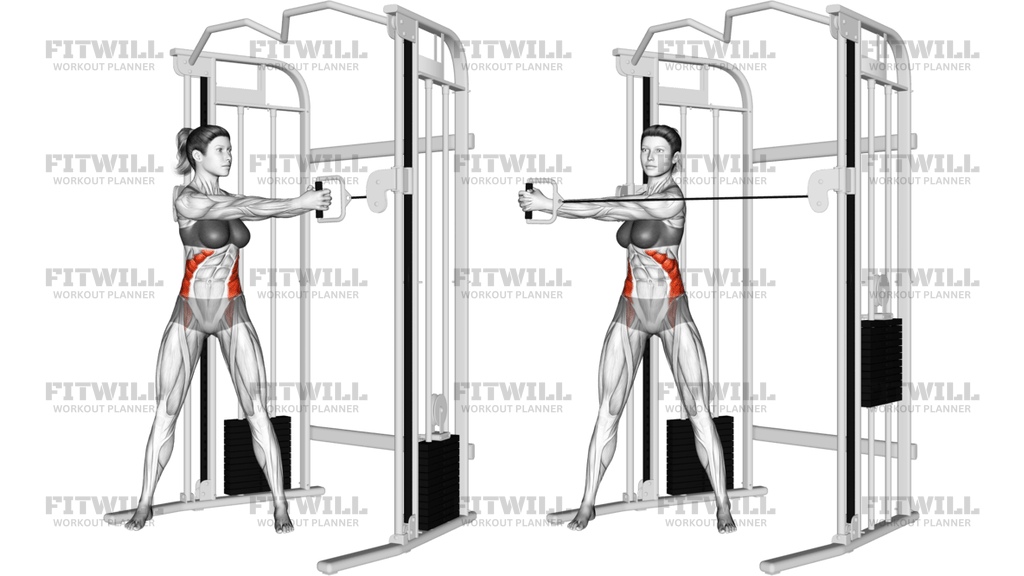
Cable Twist Version 2 is a standing rotational core exercise performed on a cable machine with a single handle. It trains the obliques to create and control trunk rotation while the arms stay long and the cable keeps constant tension on the body. Because the resistance never disappears, the exercise is useful for building cleaner rotational strength than a loose bodyweight twist or a fast, momentum-driven swing.
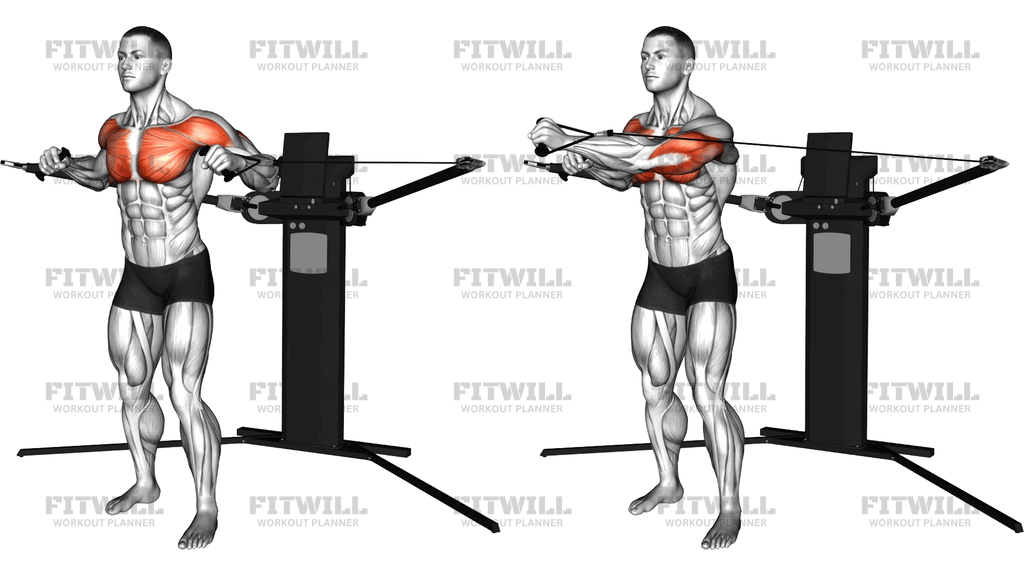
The image shows a split-stance setup with the cable set around chest height and the hands held straight out in front of the sternum. That setup matters because it keeps the line of pull consistent and makes it easier to feel whether the torso is doing the work or the arms are cheating the rep. A stable stance, soft knees, and a neutral ribcage help the trunk rotate without turning the movement into a back crank or an arm pull.
During each repetition, the torso turns against the cable as one controlled unit. The shoulders and ribcage rotate first, the hips follow just enough to keep the knees and low back comfortable, and the handle stays near chest height instead of dipping or drifting. The return phase matters just as much as the turn: resisting the cable on the way back keeps tension on the obliques and prevents the stack from yanking you into the start position.
This is a useful accessory movement for core sessions, athletic warm-ups, and programs that need better rotational control. It can also support sports that involve throwing, striking, swinging, or changing direction. Keep the range of motion pain-free, use a load that lets you stay tall and steady, and stop the set if the torso starts swaying, the shoulders shrug, or the low back takes over the motion.
[ Workout Log & Planner ]
Put your next workout in Fitwill
Keep your plan and training log ready when you are.


Instructions
- Set the pulley at about chest height and clip on a single handle.
- Stand sideways to the stack in a split stance with your feet wider than hip width and your knees softly bent.
- Hold the handle with both hands and extend your arms straight out in front of your chest.
- Step far enough from the machine that the cable is already under tension at the start.
- Brace your midsection, keep your ribs stacked over your pelvis, and drop your shoulders away from your ears.
- Rotate your ribcage and shoulders away from the stack while keeping the arms long and the handle at chest height.
- Let the back foot pivot naturally as you turn, but keep the knees soft and avoid arching your lower back.
- Pause briefly at the end of the turn, then reverse the motion slowly and resist the cable back to the start.
- Reset your stance before the next rep and repeat for the planned number of repetitions.
Tips & Tricks
- Keep your elbows almost locked so the handle travels with your trunk instead of turning into a pressing motion.
- Use a stance wide enough that you can rotate without the front knee collapsing inward or the back heel getting stuck.
- If the cable is pulling you off balance, step a little farther from the stack so the start position has steady tension but not a yank.
- Think about turning your sternum and front ribs together; if the pelvis twists wildly, the rep usually gets sloppy.
- Do not chase a bigger range by arching the low back or flaring the ribs at the finish.
- A slower return should feel harder than the turn itself; if you cannot control the way back, reduce the load.
- Keep the handle at chest height through the entire rep so the cable does not turn the exercise into a diagonal chop.
- Exhale as you rotate and inhale as you come back to help you keep the trunk braced without holding your breath.
Frequently Asked Questions
What muscle does Cable twist (version 2) target most?
The obliques are the main target, especially the external obliques that create and control trunk rotation.
Why are the arms kept straight during the twist?
Straight arms keep the handle at chest height and shift the work to the torso instead of turning the movement into an arm pull.
Should my hips stay completely still?
No. A small natural pivot is fine, but the torso should still be doing the main rotational work and the knees should stay soft.
How far should I rotate on each rep?
Rotate only as far as you can without arching the lower back, shrugging the shoulders, or losing tension on the cable.
Can beginners do this cable twist?
Yes, if they start with light resistance and a short, controlled range while learning to keep the ribs stacked over the pelvis.
What is the most common mistake with this setup?
People often bend the elbows or swing the torso, which turns the exercise into a cable arm pull instead of a controlled rotation.
Where should the cable be set?
Chest height is the most practical starting point because it keeps the handle in line with the sternum and makes the rotation easier to control.
What should I do if my lower back feels it more than my abs?
Shorten the range, lower the load, and keep the ribs from flaring so the rotation stays in the midsection instead of the lumbar spine.