Dumbbell Alternate Biceps Curl
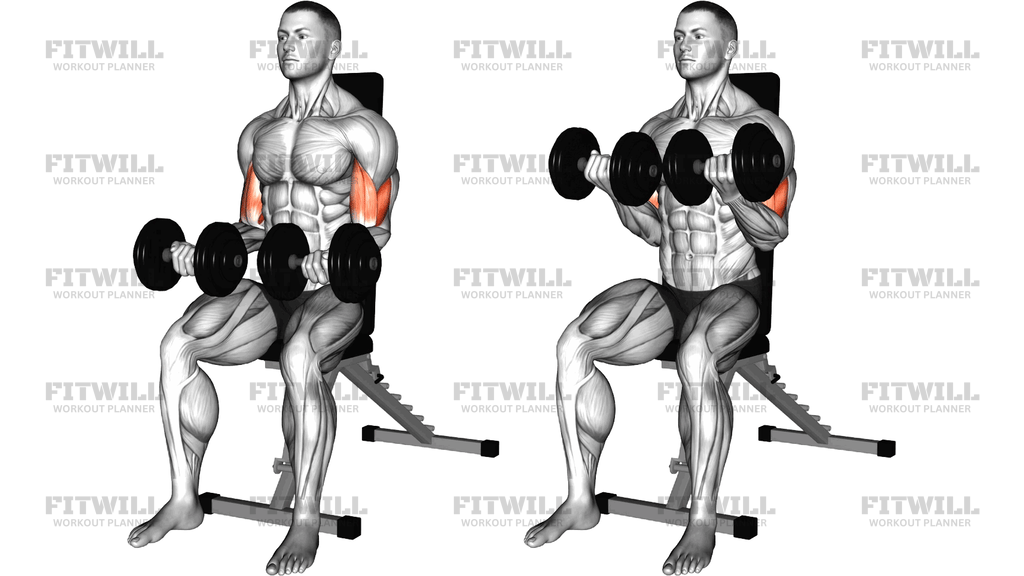
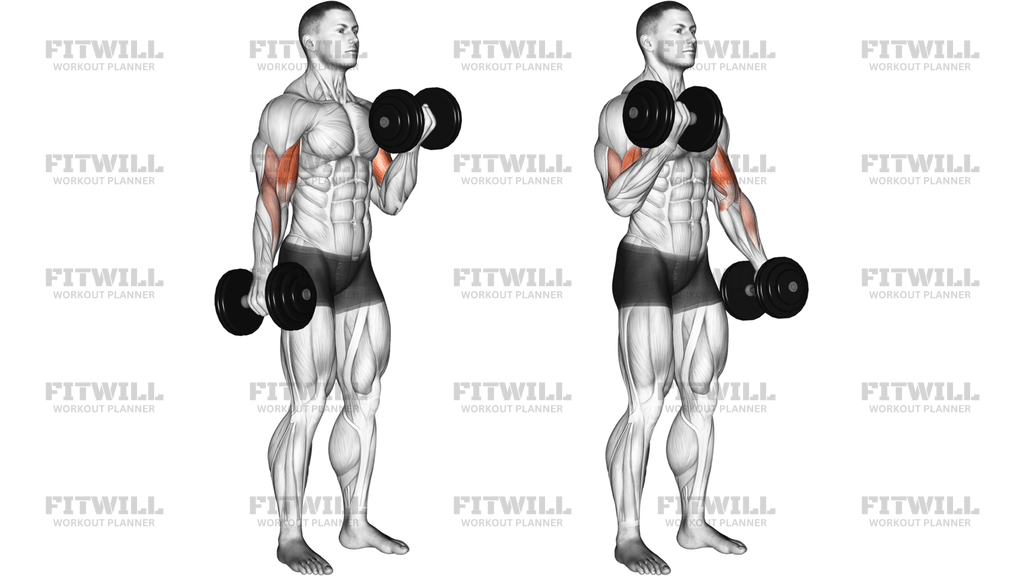
Dumbbell Alternate Biceps Curl is a strict single-arm curling exercise that uses two dumbbells one side at a time. It is a simple way to train the biceps with a little more focus than a simultaneous curl, because each arm has to earn its turn while the other side stays quiet. That alternating rhythm also makes it easier to notice side-to-side differences in strength, control, and elbow path.
The main target is the biceps, with the brachialis and brachioradialis helping through the elbow bend and the forearms working to keep the grip steady. Because the load is moving while the torso should stay still, the exercise rewards clean posture more than heavy cheating. When it is done well, the upper arm does not swing forward and the shoulder does not take over the lift.
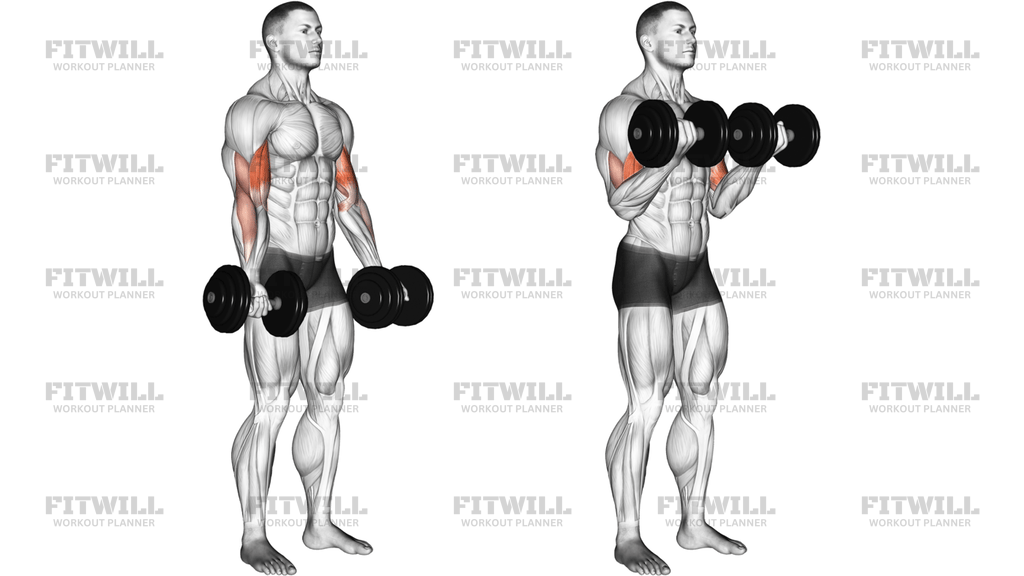
Set up by standing tall with a dumbbell in each hand, feet about hip-width apart, and the arms hanging naturally at your sides. Keep the elbows close to your ribs, the wrists stacked, and the shoulders relaxed so the curl starts from a stable position. The first rep should already feel organized, not rushed, because the alternating pattern makes small form errors obvious right away.
Curl one dumbbell toward the same-side shoulder by bending only the elbow, then lower it under control before switching to the other arm. Exhale as the weight rises and inhale as it comes back down, keeping the torso tall instead of leaning back to finish the rep. At the top, the forearm should be close to vertical and the biceps fully shortened without the elbow drifting in front of the body.
Dumbbell Alternate Biceps Curl fits well as accessory work after big pulling or pressing lifts, or as a focused arm movement when you want a controlled biceps stimulus without complicated setup. It is useful for beginners who need a simple pattern as well as experienced lifters who want cleaner reps, a better squeeze, and less momentum. If the weight starts pulling the shoulder forward, the wrists bend back, or the torso rocks, the load is too heavy for the quality you want.
Fitwill
Log Workouts, Track Progress & Build Strength.
Achieve more with Fitwill: explore over 9600 exercises with images and videos, access built-in and custom workouts, perfect for both gym and home sessions, and see real results.
Start your journey. Download today!




Instructions
- Stand tall with a dumbbell in each hand, feet about hip-width apart, arms hanging at your sides, palms facing forward or slightly inward.
- Set your elbows close to your ribs, stack your wrists over your forearms, and let your shoulders stay down instead of shrugging.
- Brace lightly through your midsection so your chest stays lifted and your torso does not rock when the first curl starts.
- Curl one dumbbell toward the same-side shoulder by bending only that elbow.
- Keep the upper arm quiet and let the forearm travel in a clean arc without drifting forward.
- Exhale as the dumbbell rises and stop near the top when the forearm is close to vertical.
- Squeeze the biceps briefly, then lower the dumbbell slowly until the arm is nearly straight again.
- Switch sides and repeat the same path, then finish by lowering both dumbbells with control and standing still.
Tips & Tricks
- Use a lighter pair than you would for simultaneous curls, because alternating reps make it easier to cheat with the torso.
- Keep the curling elbow pinned near the ribcage; if it slides forward, the front shoulder is taking over.
- Turn the palm up as the dumbbell climbs so the biceps finish the rep instead of the forearm doing all the work.
- Keep the nonworking arm quiet at your side instead of letting it swing to help the body rhythm.
- Lower each dumbbell for two to three seconds so the eccentric phase stays strict.
- If your wrist bends back, shorten the load before the forearm and grip become the weak link.
- A wall behind you can help if you tend to lean back and turn the curl into a body swing.
- Stop the set when the shoulder starts rolling forward on every rep, even if the biceps still feel fresh.
Frequently Asked Questions
What muscles does Dumbbell Alternate Biceps Curl work?
Dumbbell Alternate Biceps Curl mainly works the biceps, with help from the brachialis, brachioradialis, and forearm flexors. The shoulders and torso mostly act as stabilizers when the rep stays strict.
Should I fully turn my palm up during Dumbbell Alternate Biceps Curl?
Yes, a full or near-full palm-up position at the top usually gives the biceps the cleanest finish. If your wrist or forearm gets irritated, keep the rotation smooth and avoid forcing the twist.
Why alternate arms instead of curling both dumbbells together?
Alternating makes it easier to focus on one elbow path at a time and spot side-to-side differences. It also helps reduce rushing, which often leads to torso sway and sloppy reps.
How heavy should Dumbbell Alternate Biceps Curl be?
Choose a load that lets each arm curl without leaning back or drifting the elbow forward. If the last few reps require a hip drive or shoulder shrug, the dumbbells are too heavy.
How high should the dumbbell come up on each rep?
The dumbbell should come up until the forearm is close to vertical and the biceps are fully shortened. You do not need to jam the weight into the shoulder or let the elbow travel in front of the body.
Is Dumbbell Alternate Biceps Curl good for beginners?
Yes, because the movement pattern is simple and easy to load lightly. Start with a weight you can lower slowly on both sides without twisting or rocking.
What is the most common mistake in Dumbbell Alternate Biceps Curl?
The most common mistake is turning the rep into a body swing by leaning back or throwing the elbow forward. Keep the ribs stacked over the pelvis and let the elbow bend, not the torso move.
Where should I put Dumbbell Alternate Biceps Curl in my workout?
Use it after your main pressing or pulling work, or as a focused arm accessory near the end of the session. It is also useful after a warm-up if you want a controlled biceps movement before heavier training.