Dumbbell Concentration Curl
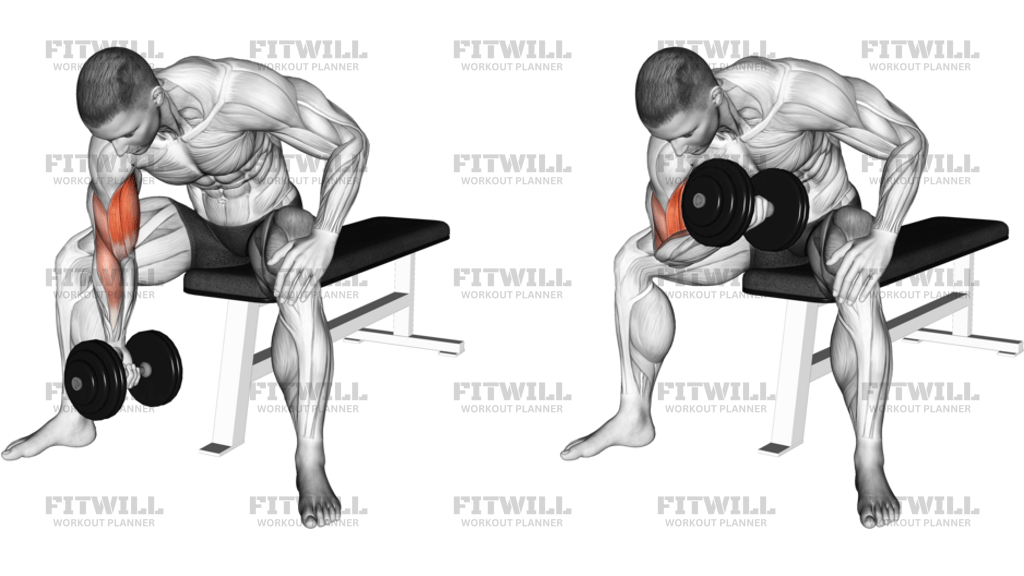
Dumbbell Concentration Curl is a strict single-arm curl that puts the biceps under a lot of tension with very little body English. By bracing the upper arm against the inner thigh, you remove most of the swing and force the elbow to do the work through a clean curl path. That makes the exercise especially useful when you want to build the peak contraction, improve arm control, or finish a biceps session with high-quality reps.
The supported setup is what separates Dumbbell Concentration Curl from a regular standing curl. Sitting down and pinning the back of the upper arm to the inside of the thigh gives the biceps a stable anchor, while the free hand and planted foot help keep the torso quiet. If the shoulder starts drifting forward or the elbow slides off the thigh, the load is usually too heavy or the bench position is off.
The rep itself should feel deliberate from bottom to top. Start with the arm nearly straight, then curl the dumbbell in a short, focused arc toward the front of the shoulder while keeping the wrist straight and the upper arm fixed. Squeeze hard at the top without shrugging, then lower the dumbbell slowly until the arm is almost fully extended and the biceps are lengthened again. Breathing stays simple: exhale on the curl, inhale on the lowering phase.
Dumbbell Concentration Curl is a good accessory choice for lifters who want to isolate one arm at a time, clean up left-right imbalances, or reduce cheating after heavier compound pulling work. It also works well for beginners because the thigh brace makes the movement easier to learn than a free-standing curl, but only if the weight stays light enough to keep the elbow locked in place. The movement should feel precise, not rushed.
The most common errors are leaning back, turning the curl into a shoulder movement, or letting the wrist collapse as fatigue builds. When that happens, the biceps lose tension and the forearm starts taking over. Keep the rep controlled, choose a dumbbell that lets you finish every repetition without rocking, and reset the arm fully between sides if you need to regain position before the next set.
[ Workout Log & Planner ]
Put your next workout in Fitwill
Keep your plan and training log ready when you are.


Instructions
- Sit on a sturdy bench with your feet flat and your knees apart enough to create a shelf for the working upper arm.
- Hold one dumbbell in the working hand and rest the back of that upper arm against the inside of the same-side thigh, just above the knee.
- Lean forward slightly from the hips so the chest stays open and the free hand can brace on the opposite leg for support.
- Let the working arm hang almost straight with the wrist neutral and the shoulder relaxed before each rep.
- Curl the dumbbell upward in a smooth arc toward the front of the shoulder while keeping the upper arm pressed into the thigh.
- Exhale as you lift and squeeze the biceps hard at the top without letting the shoulder roll forward.
- Lower the dumbbell slowly until the elbow is nearly straight and the biceps are fully lengthened again.
- Finish the set on one side, set the dumbbell down with control, then repeat the same setup on the other arm.
Tips & Tricks
- Choose a bench height that lets the upper arm stay anchored on the thigh without rounding your lower back.
- If the elbow keeps sliding forward, the dumbbell is too heavy for a true concentration curl.
- Keep the wrist stacked over the forearm instead of letting it bend back as you approach the top.
- A slight pause near the top makes the biceps do more of the work than a quick bounce ever will.
- Lowering should be noticeably slower than lifting; rushing the eccentric usually means the set is too heavy.
- Keep the free hand planted on the opposite leg so your torso does not twist when fatigue builds.
- Let the upper arm stay in contact with the thigh for the full rep instead of lifting off on the way up.
- Stop the rep before the shoulder starts rolling forward, even if the dumbbell has not reached your chin line.
- Match the reps on both sides and start with the weaker arm so the stronger side does not set the pace.
Frequently Asked Questions
What Muscles Does Dumbbell Concentration Curl Work?
Dumbbell Concentration Curl mainly targets the biceps brachii, with help from the brachialis, brachioradialis, and forearm flexors. The braced setup also asks the shoulder and trunk to stay quiet so the curl stays strict.
Why Is My Upper Arm Braced Against My Inner Thigh?
That brace removes momentum and keeps the elbow from drifting forward during the curl. It turns the movement into a tighter biceps isolation exercise instead of a body-driven cheat curl.
Is Dumbbell Concentration Curl Good For Beginners?
Yes, because the thigh support makes the setup easier to control than a free-standing curl. Start light enough that you can keep the elbow pinned and lower every rep slowly.
How Heavy Should The Dumbbell Be For Dumbbell Concentration Curl?
Use a load that lets you keep the upper arm glued to the thigh and the wrist straight for every rep. If your torso rocks or the elbow leaves the thigh, the weight is too heavy.
Should I Curl The Dumbbell All The Way Up?
Curl until you get a strong biceps squeeze without letting the shoulder roll forward. The top position should feel tight and controlled, not cramped or jammed.
What Is The Biggest Mistake With Dumbbell Concentration Curl?
The biggest mistake is turning it into a swing by leaning back or lifting the elbow off the thigh. That steals tension from the biceps and usually means the dumbbell is too heavy.
Can I Use Dumbbell Concentration Curl To Fix Left-Right Imbalances?
Yes. Because it is one arm at a time, it is useful for noticing which side fatigues first and for keeping both arms honest with the same range and tempo.
What Should I Do If My Wrist Hurts During Dumbbell Concentration Curl?
Keep the wrist straight and reduce the weight before changing the movement. If the wrist still feels irritated, shorten the range slightly and avoid letting the dumbbell drift back behind the forearm.
How Many Reps Work Best For Dumbbell Concentration Curl?
Most people do well with 8-15 controlled reps per arm. Use the lower end for heavier strength-focused sets and the higher end when you want a strict biceps pump.