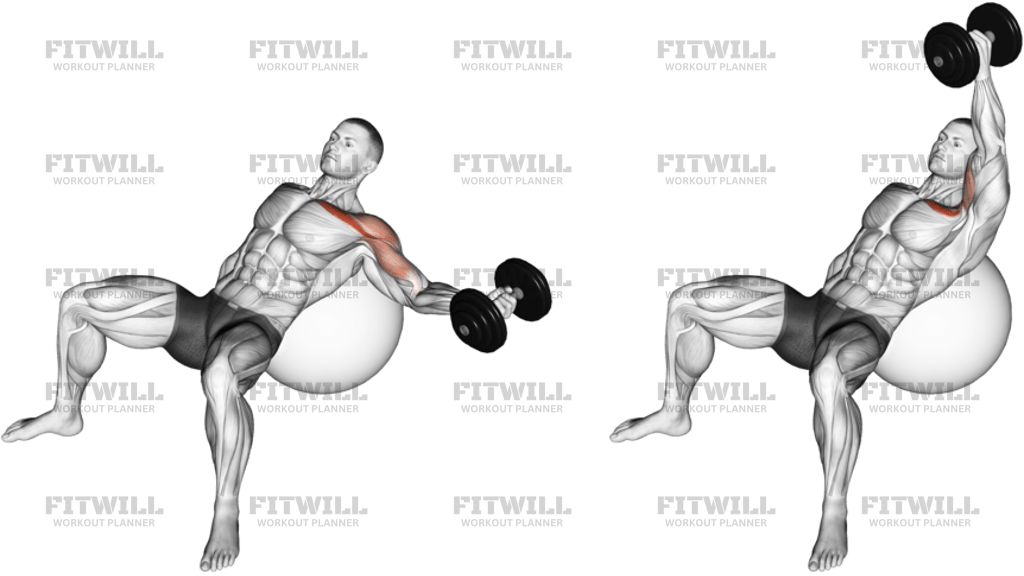
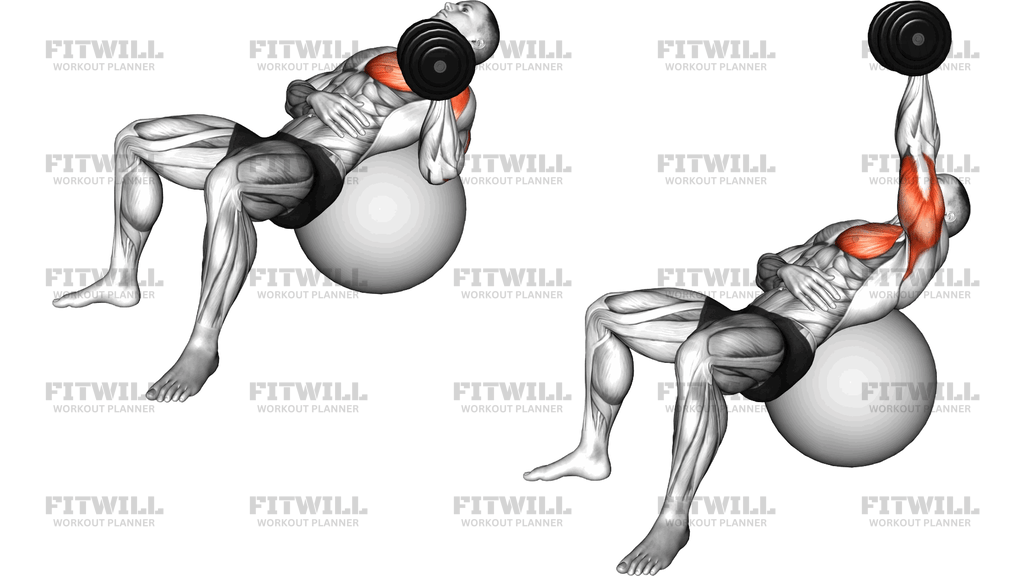
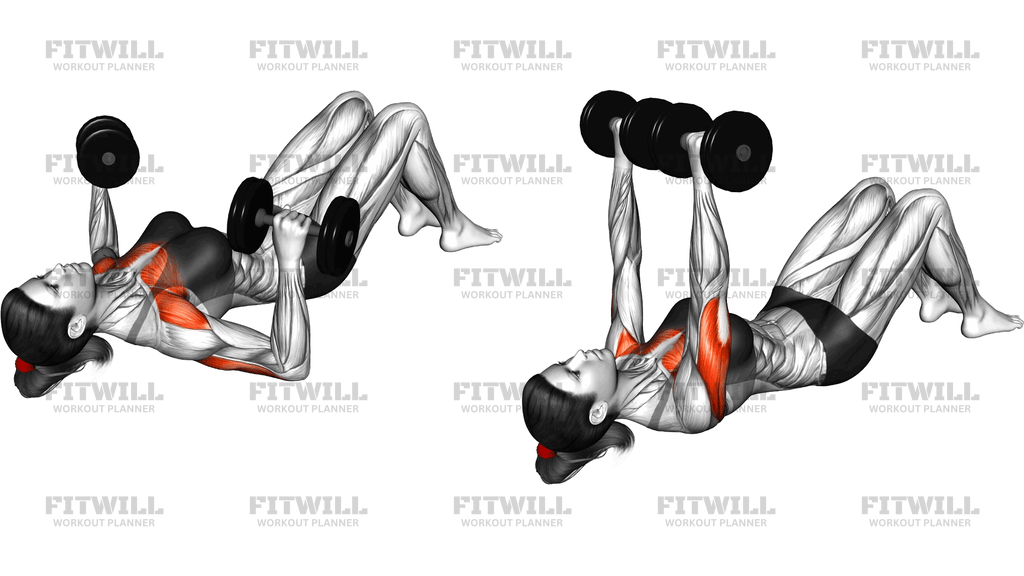
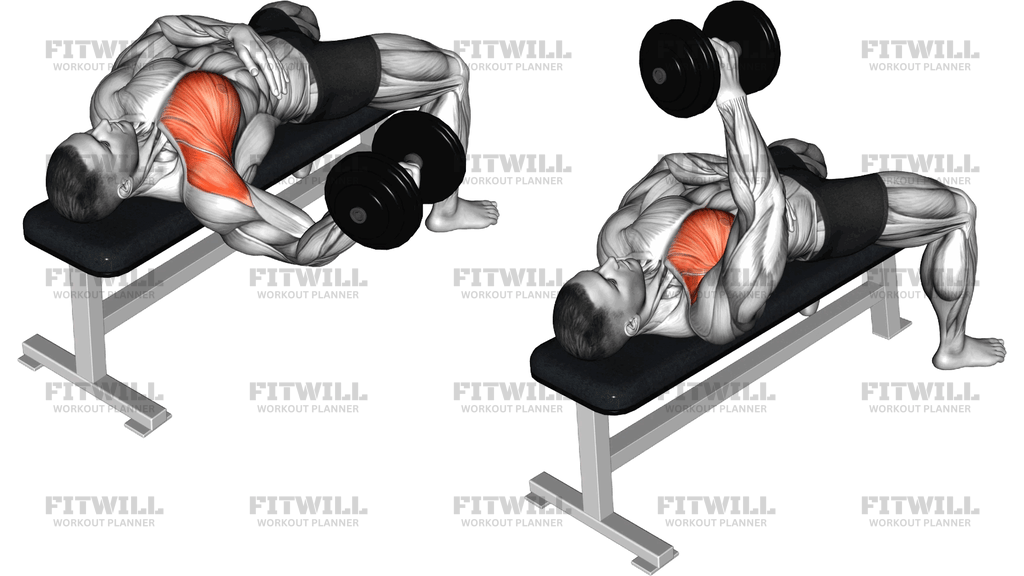
Dumbbell Decline Fly
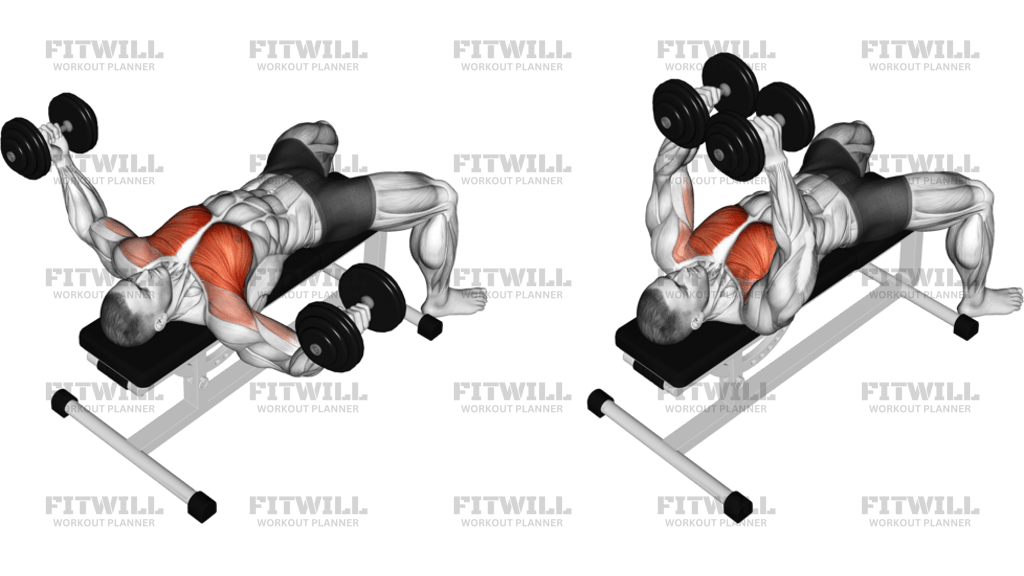
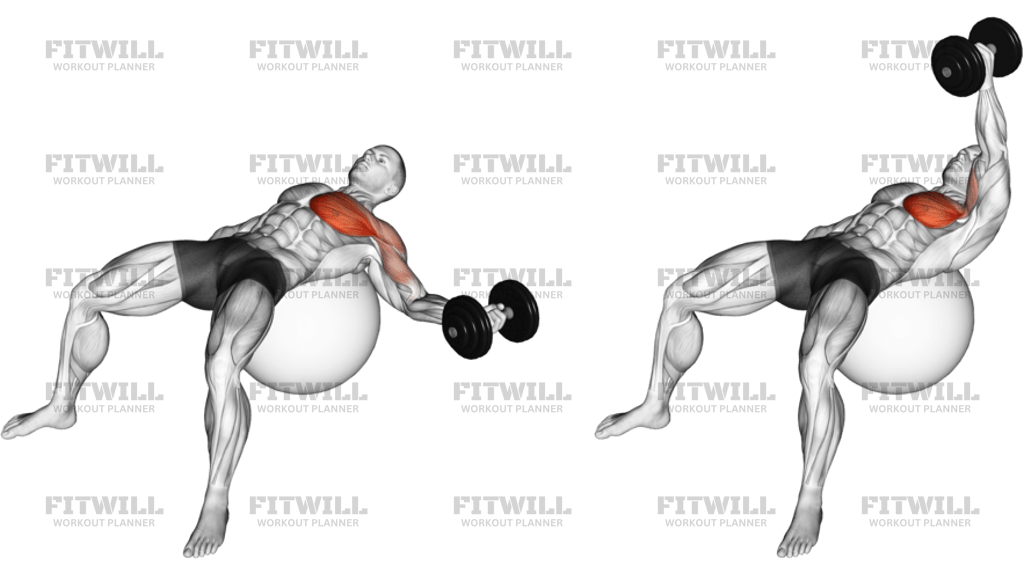
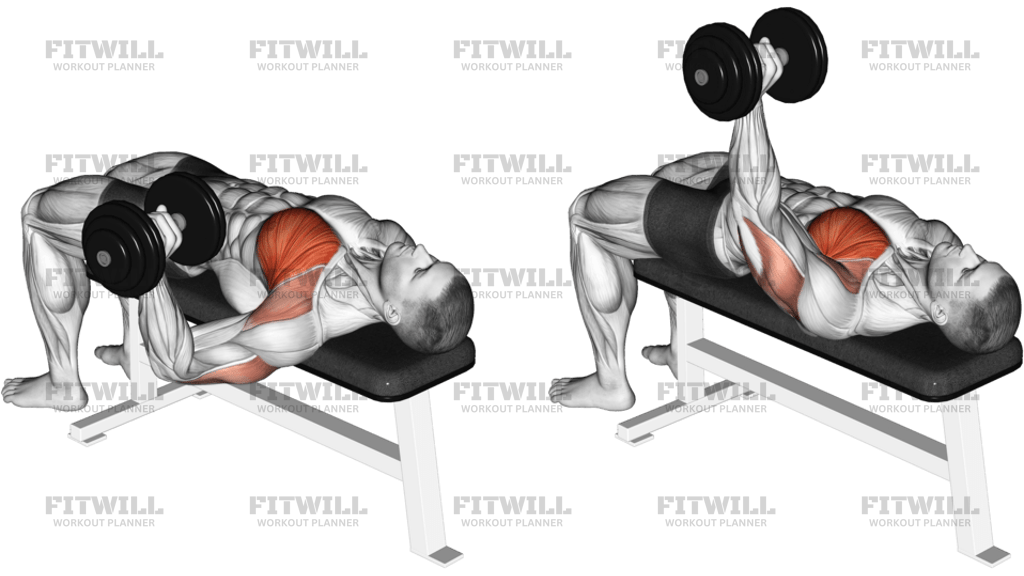
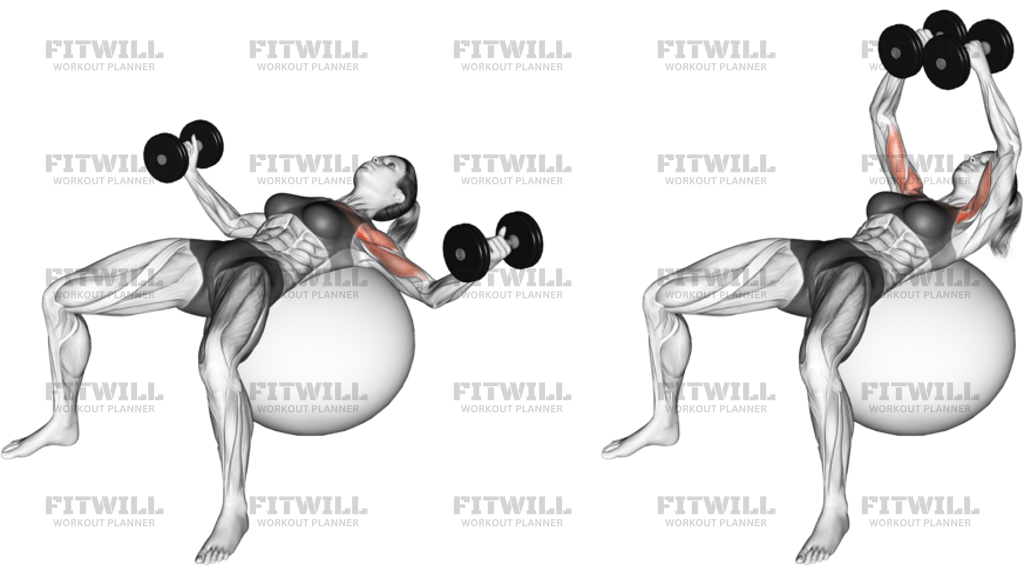
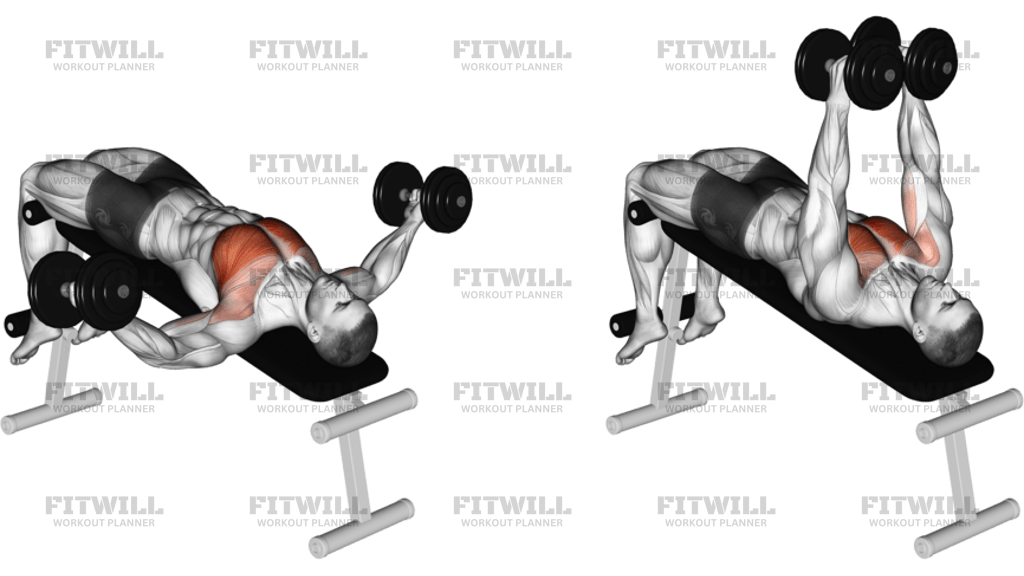
Dumbbell Decline Fly is a chest isolation exercise performed on a decline bench with one dumbbell in each hand. The decline angle shifts the arm path slightly downward, which changes the line of pull and places a stronger emphasis on the lower portion of the chest while still asking the front shoulders and upper arms to stabilize the load.
Unlike a press, this movement is about horizontal adduction: the upper arms open and close in a controlled arc while the elbow angle stays almost fixed. That long stretch position is the part that makes the exercise effective, but it also means the load should stay modest and the shoulder position should stay organized from the first rep to the last.
Set the bench so your head is lower than your hips, anchor your feet, and keep your shoulder blades gently back and down on the pad. Start with the dumbbells stacked above the lower chest, then lower them only as far as you can keep the ribcage quiet and the shoulders from rolling forward. A stable setup matters here because any wobble at the bottom usually turns into shoulder strain or a shortened range.
The best reps feel smooth and even. Lower the dumbbells in a wide arc, pause briefly in the stretched position if needed, then sweep them back together over the chest without bouncing or clashing the bells. Exhale as the arms come together and keep the wrists stacked over the forearms so the movement stays centered through the chest instead of leaking into the elbows and shoulders.
Use Dumbbell Decline Fly as a chest accessory after presses or as a hypertrophy-focused chest movement when you want more pec work with less triceps involvement. If the front of the shoulders feel pinched, shorten the range, reduce the load, or use a flatter angle. Good reps should feel like the chest is opening and closing against resistance, not like the shoulders are being yanked into the stretch.
[ Workout Log & Planner ]
Put your next workout in Fitwill
Keep your plan and training log ready when you are.


Instructions
- Set a decline bench at a stable angle and sit with a dumbbell in each hand on your thighs.
- Lean back carefully, keep your head lower than your hips, and plant both feet firmly on the floor or bench rollers.
- Set your shoulder blades gently back and down against the pad before the first rep.
- Press the dumbbells to arm's length above the lower chest with your palms facing each other or slightly turned in.
- Keep a small bend in both elbows and inhale to brace your ribcage before lowering.
- Lower the arms in a wide arc until you feel a strong chest stretch without letting the shoulders roll forward.
- Exhale and sweep the dumbbells back together over the lower chest while keeping the elbow angle almost unchanged.
- Pause briefly at the top, then repeat for smooth, even reps and sit up only after the set is finished.
Tips & Tricks
- Use less weight than you would for a dumbbell press; the long lever at the bottom makes this fly much harder than it looks.
- Keep the elbows softly bent and nearly fixed so the rep stays a fly instead of becoming a decline press.
- Stop the descent as soon as the shoulders start to tip forward; the deepest stretch is not automatically the best range.
- Keep the wrists stacked over the forearms so the dumbbells do not drift behind the hands at the bottom.
- Let the chest open, but do not flare the ribcage hard enough to lose contact with the bench.
- Move both dumbbells together at the same speed so one side does not take over the arc.
- A slow 2-3 second lowering phase usually keeps tension on the pecs better than a quick drop.
- If the dumbbells wobble or touch at the top, reduce the load or shorten the range.
Frequently Asked Questions
What muscles does Dumbbell Decline Fly target?
It primarily targets the chest, with extra work from the front shoulders and the upper arms as stabilizers. The decline angle shifts the emphasis slightly toward the lower portion of the pecs.
Is Dumbbell Decline Fly a pressing exercise?
No. The elbows stay almost fixed while the arms open and close in an arc, so the movement should feel like a fly rather than a press.
Why use a decline bench for this fly?
The decline angle changes the line of pull and directs the dumbbells more toward the lower chest. It also gives some lifters a shoulder-friendly way to train the pecs through a long stretch.
How low should the dumbbells go?
Lower them only until the chest is stretched and the shoulders stay packed on the bench. If the front of the shoulder pinches or the elbows drift, the range is too deep.
Should the dumbbells touch at the top?
They can come close, but they do not need to bang together. Stopping just over the chest keeps tension on the pecs and helps you keep the same path every rep.
Can beginners do Dumbbell Decline Fly?
Yes, but only with a very light load and a shortened range at first. If the bench setup feels unstable, start with a flat or cable fly variation.
What is the most common mistake with this movement?
Using too much weight and turning the fly into a shaky partial press is the most common error. Letting the shoulders roll forward at the bottom is another big one.
How do I know if the weight is too heavy?
If you have to bend the elbows more each rep, lose the arc, or lose control in the bottom stretch, the dumbbells are too heavy for this exercise.