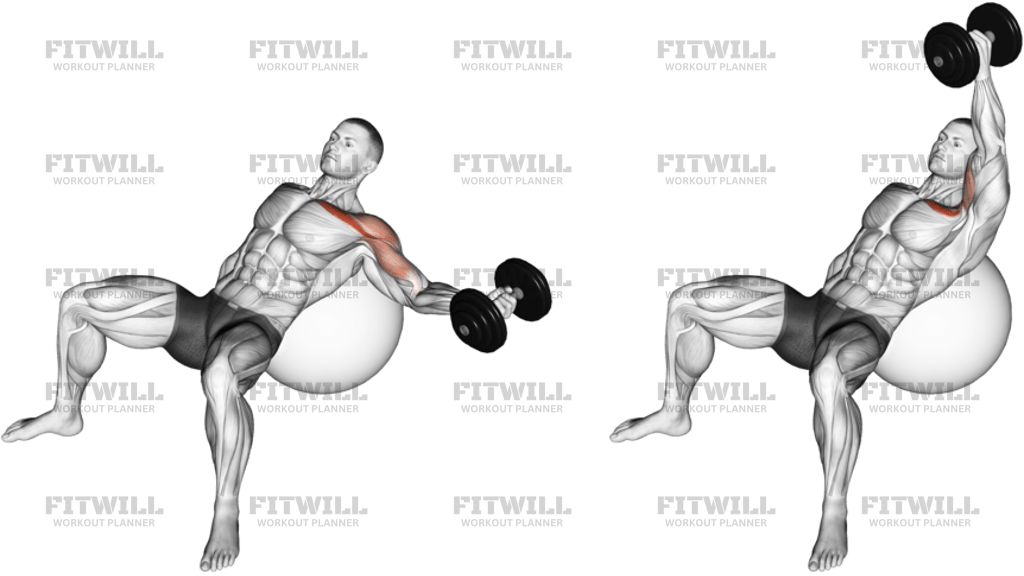
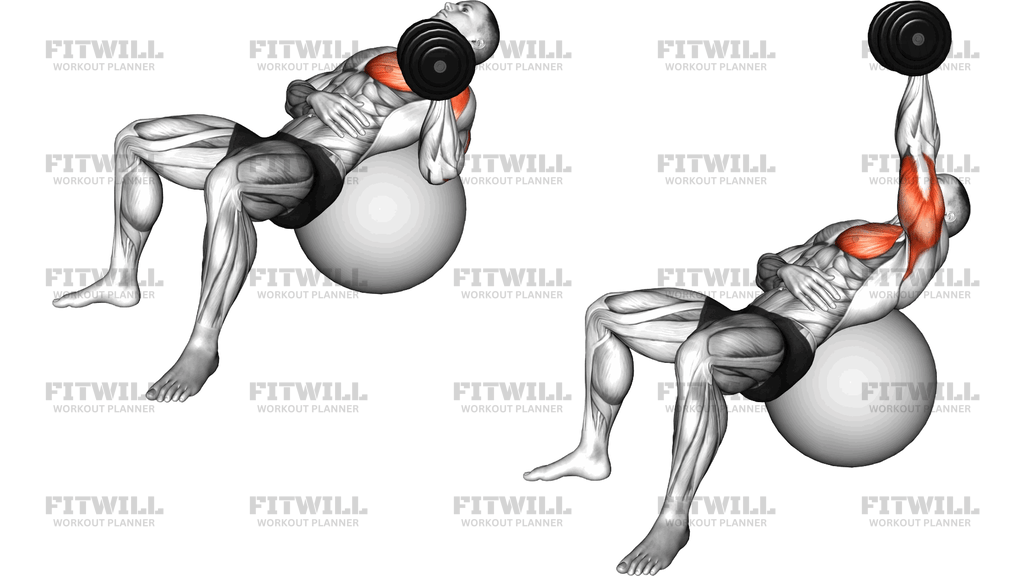
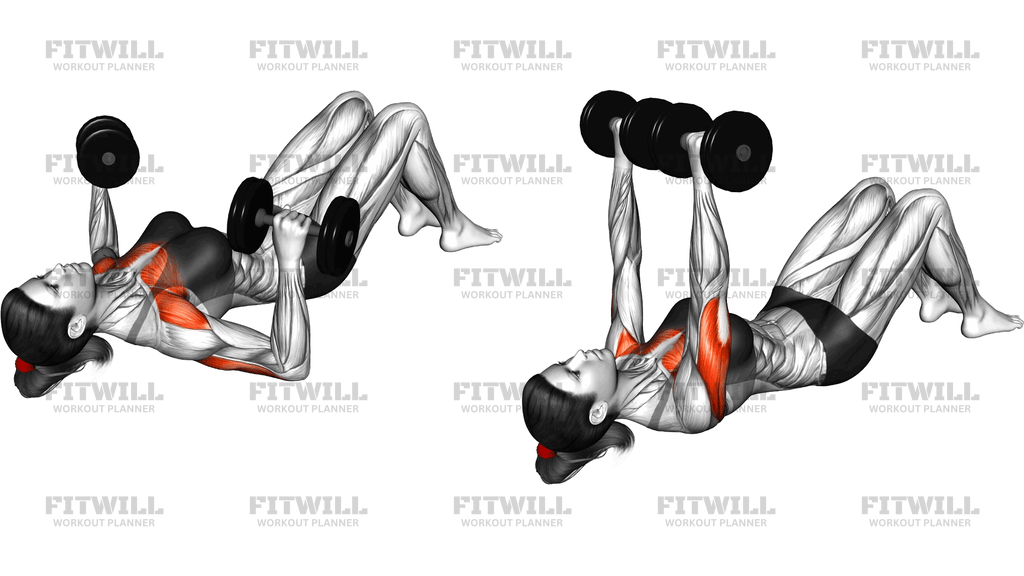
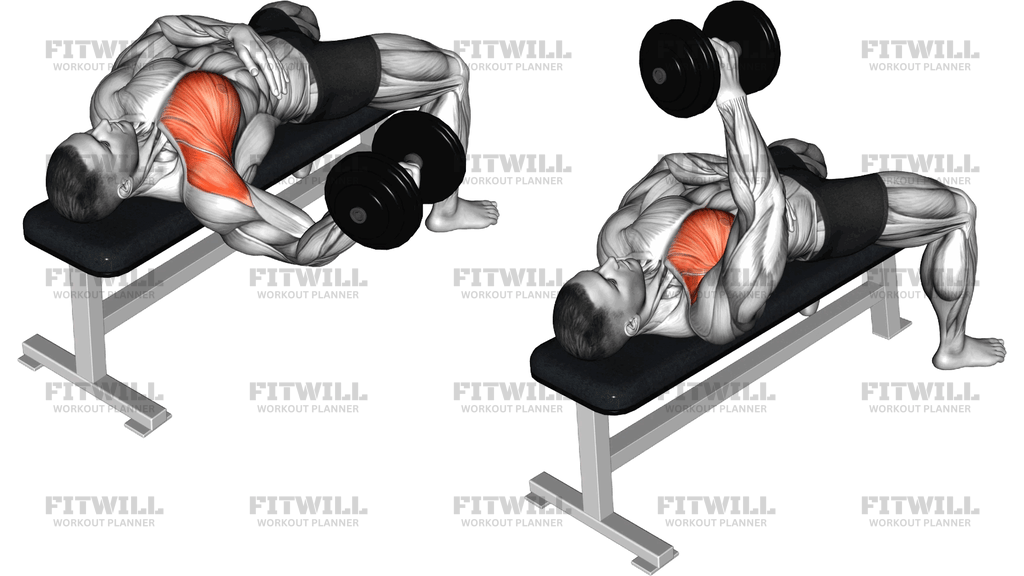
Dumbbell Decline Twist Fly
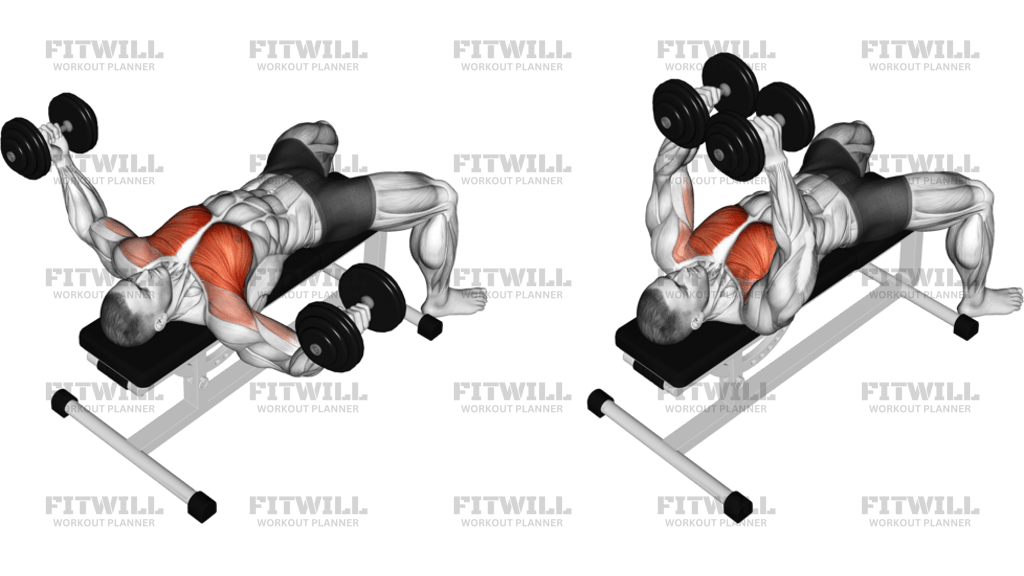
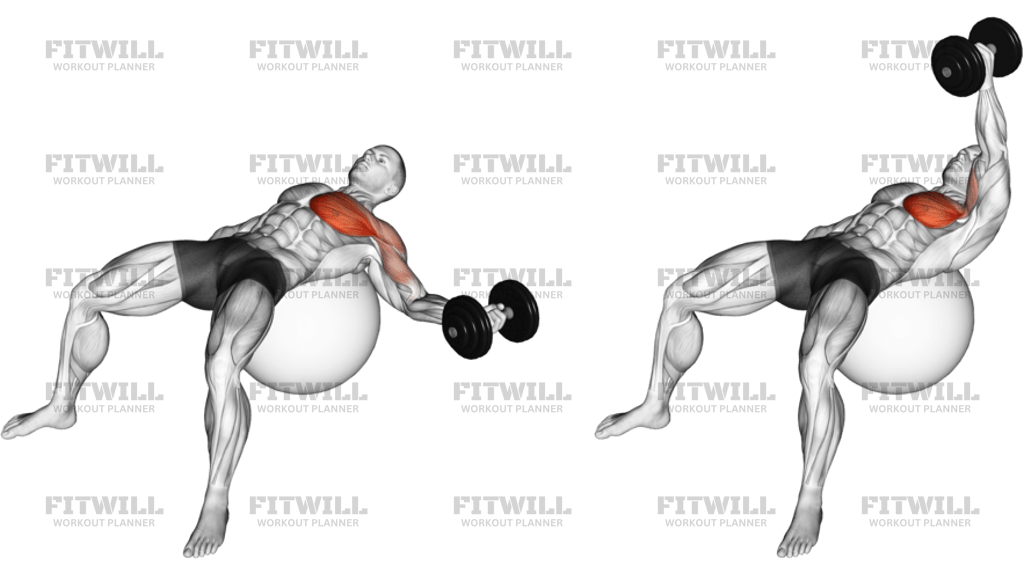
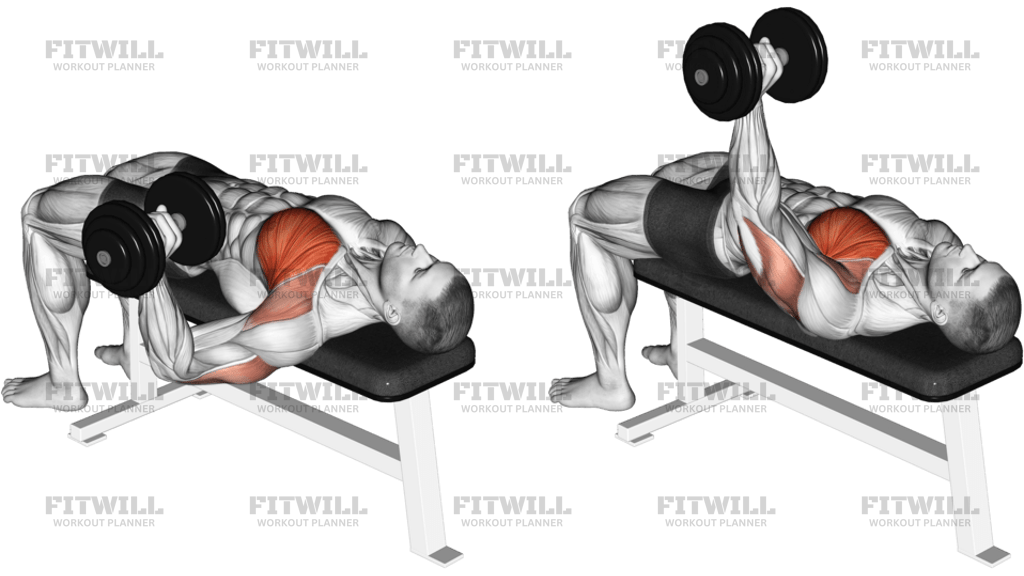
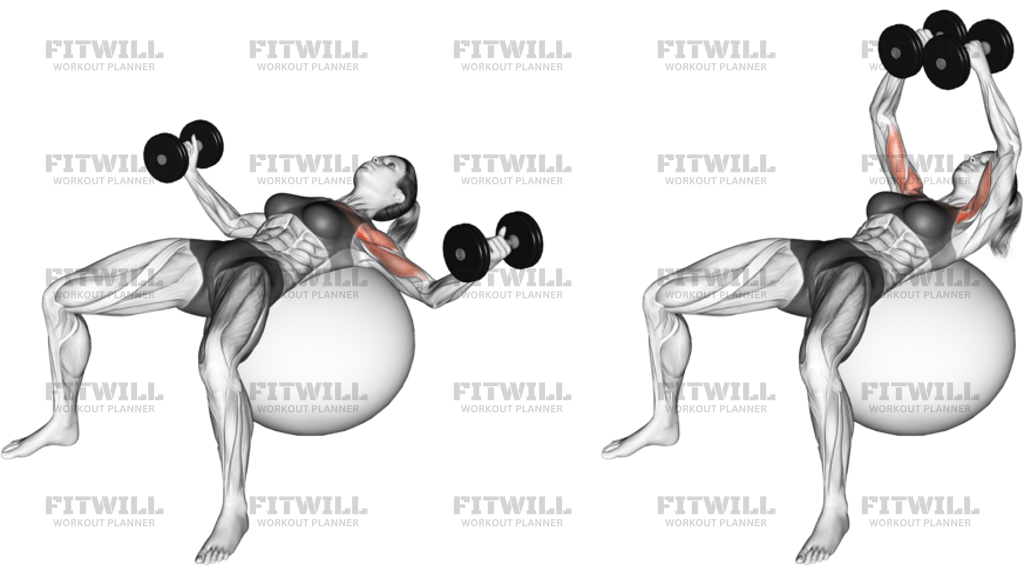
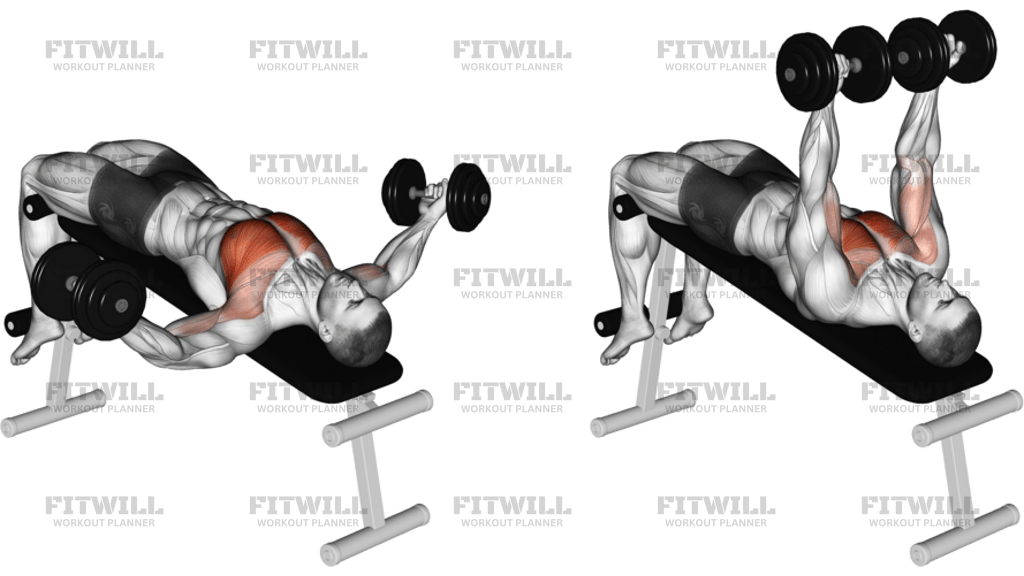
Dumbbell Decline Twist Fly is a decline-bench chest isolation exercise that combines a wide fly arc with a small hand rotation on the way up. The decline angle shifts the line of pull toward the lower portion of the chest, while the twist helps you keep the dumbbells organized through the closing phase instead of turning the movement into a press.
The main target is the pectorals, especially the lower and mid-chest fibers that adduct the arms back toward center. The front delts, triceps, and core assist by stabilizing the shoulder and ribcage so the dumbbells can travel on a clean arc. Because the load is held far from the torso, this movement is usually best done with lighter dumbbells and deliberate control.
Set up with your upper back on a decline bench, feet secured or planted firmly, and the shoulder blades gently pinned to the pad. Start with the dumbbells above the lower chest and keep a small, steady bend in the elbows. From there, lower the arms out and down until you feel a broad chest stretch, but stop before the shoulders roll forward or the upper arms drop too far behind the torso.
On the way back up, squeeze the chest to bring the dumbbells together over the lower chest, letting the hands rotate only as much as needed to keep the wrists and forearms aligned. The twist should look smooth and controlled, not like a sharp wrist turn. If the rep turns into a press, the elbows change angle, or the weights bang together at the top, the load is too heavy or the range is too large.
This is a good accessory exercise after pressing work or as part of a chest-focused hypertrophy session. It rewards consistent setup, a calm tempo, and a repeatable path more than brute force. When the bench angle, arm path, and twist all stay the same from rep to rep, the chest does the work and the shoulders stay more comfortable.
Fitwill
Log Workouts, Track Progress & Build Strength.
Achieve more with Fitwill: explore over 9600 exercises with images and videos, access built-in and custom workouts, perfect for both gym and home sessions, and see real results.
Start your journey. Download today!




Instructions
- Set a decline bench to a moderate angle and sit with a dumbbell in each hand on your thighs.
- Lie back, hook your feet under the pads or plant them firmly, and settle your upper back into the bench.
- Start with the dumbbells above the lower chest and keep your shoulder blades gently pinned down and back.
- Hold a small bend in both elbows and keep that angle nearly the same for the whole set.
- Lower the arms out in a wide arc until the dumbbells are level with or slightly below the torso.
- Let the hands rotate only as much as needed to keep the dumbbells stable through the arc.
- Drive the dumbbells back together over the lower chest by squeezing the pecs, not by straightening the elbows.
- Finish the rep without clashing the dumbbells, then repeat with the same arc and controlled breathing.
Tips & Tricks
- Use noticeably less weight than you would for a dumbbell press; this long lever loads the shoulders quickly.
- Keep the elbow bend almost fixed so the movement stays a fly instead of turning into a press.
- Stop the descent when you still feel the chest working and the shoulders stay packed against the bench.
- Think about hugging a wide barrel on the way up instead of squeezing the weights together with the hands.
- Let the twist be small and smooth; a big wrist roll usually means the load is too heavy.
- Keep the wrists stacked over the dumbbells so the forearms do not collapse backward at the top.
- Avoid letting your shoulders drift forward when the weights rise, or the lower chest will lose tension.
- A slower lowering phase usually improves the stretch and keeps the rep pattern consistent.
Frequently Asked Questions
What muscles does Dumbbell Decline Twist Fly work?
It mainly trains the chest, with extra work from the front delts, triceps, and core stabilizers. The decline angle puts more emphasis on the lower-chest line of pull than a flat fly.
Why use a decline bench for this fly?
The decline changes the angle of the arm path so the dumbbells travel more toward the lower chest. It can also feel easier on some shoulders than a very deep flat fly.
How much twist should I use?
Only enough to keep the dumbbells and wrists organized as you close the rep. The twist should look smooth and subtle, not like a big wrist roll at the top.
How low should the dumbbells go?
Lower them until you feel a strong chest stretch while the shoulders still stay pinned to the bench. If the upper arms drift too far behind your torso, shorten the range.
Should my elbows stay bent the whole time?
Yes. Keep a soft bend and hold that angle nearly constant so the chest does the adduction work instead of turning the rep into a press.
Is this a good beginner exercise?
It can be, but only with very light dumbbells and a controlled range. Beginners who cannot keep the shoulders stable should start with a simpler chest fly or press variation.
What is the most common mistake?
Using too much weight and losing the fly pattern. That usually shows up as bent elbows changing position, shoulders rolling forward, or the dumbbells clacking together at the top.
What should I do if my shoulders feel pinchy?
Reduce the range first, then lower the load. If the pinch stays present even with a shorter arc, swap to a different chest exercise that is more comfortable.