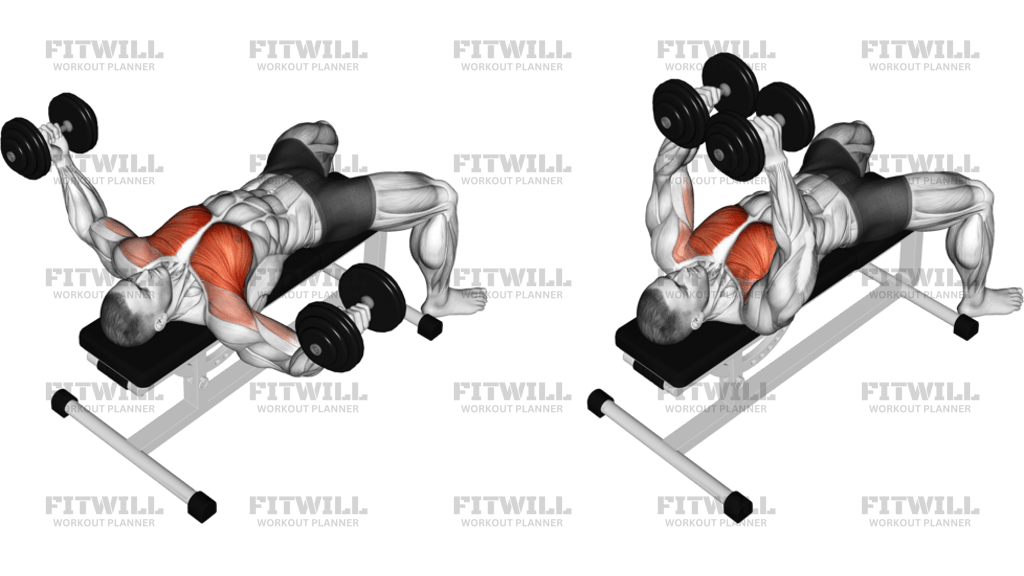
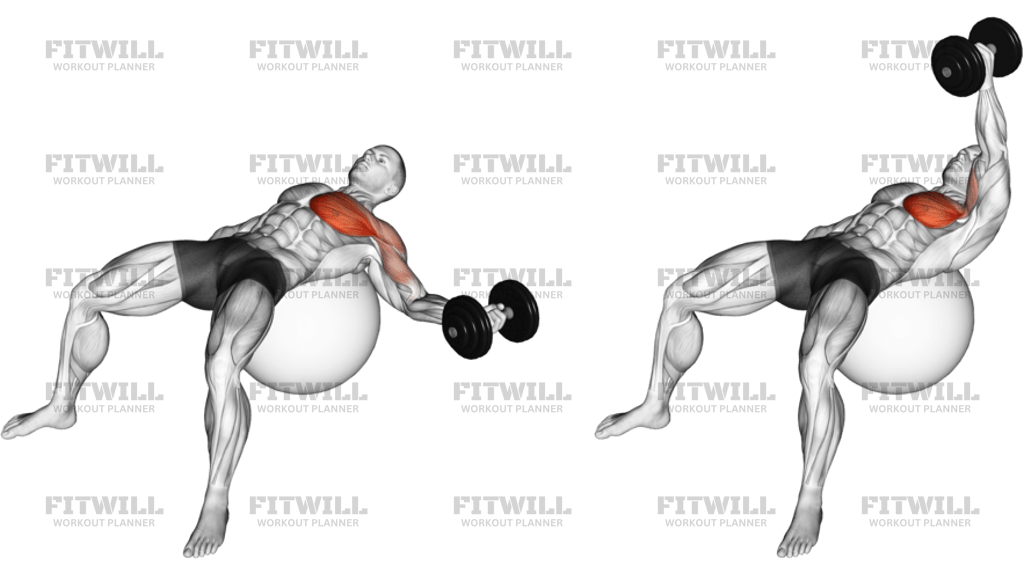
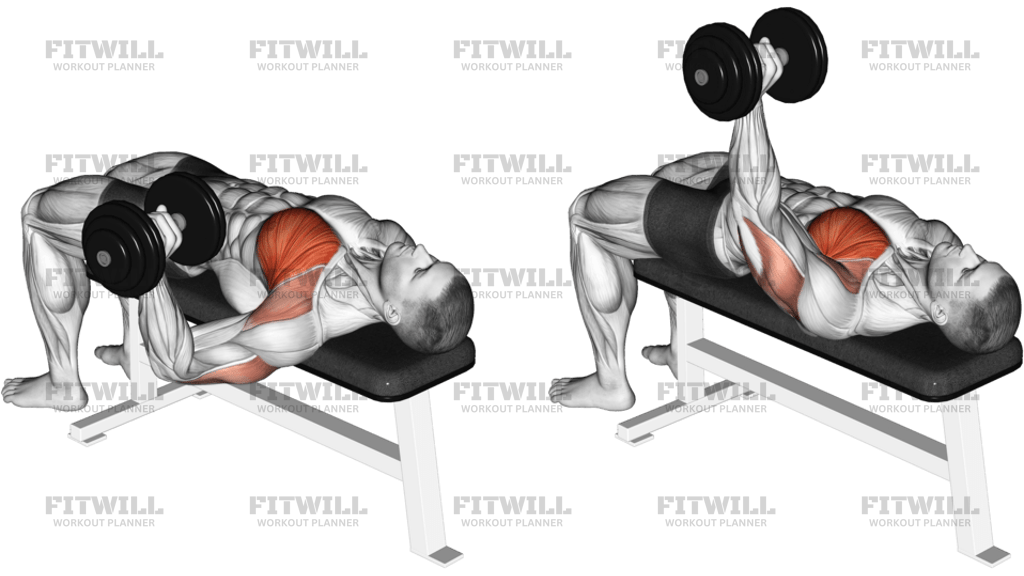
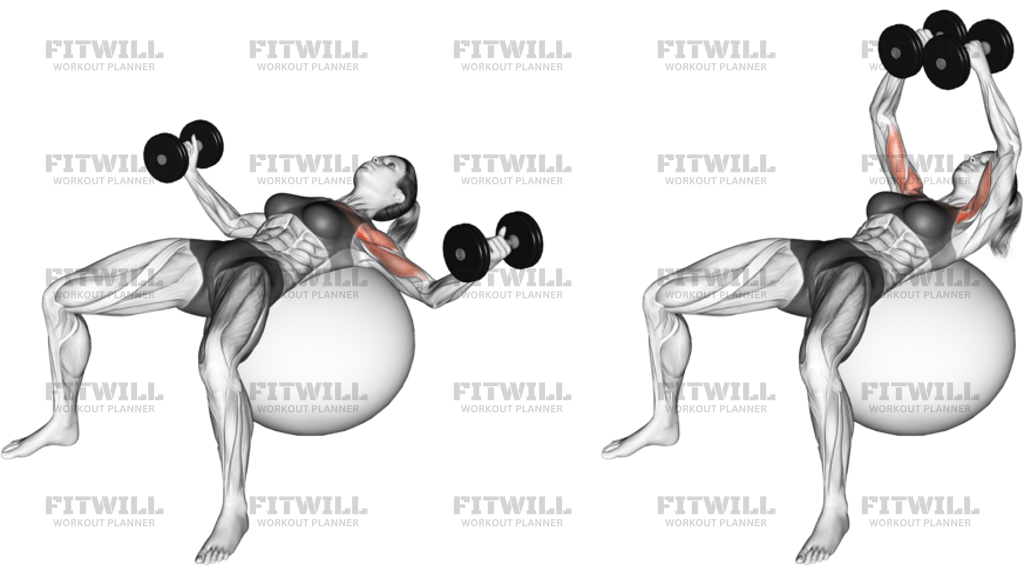
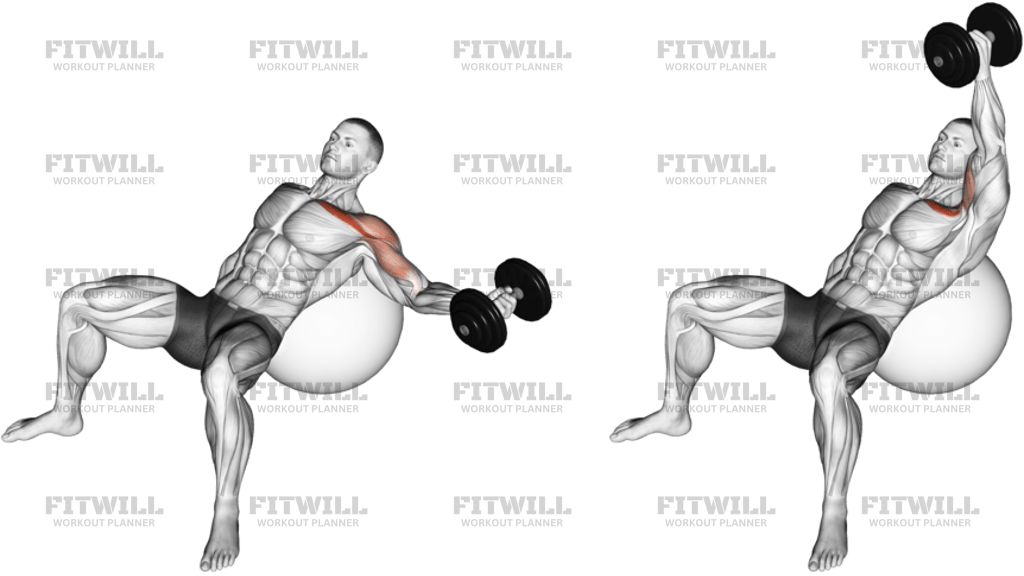
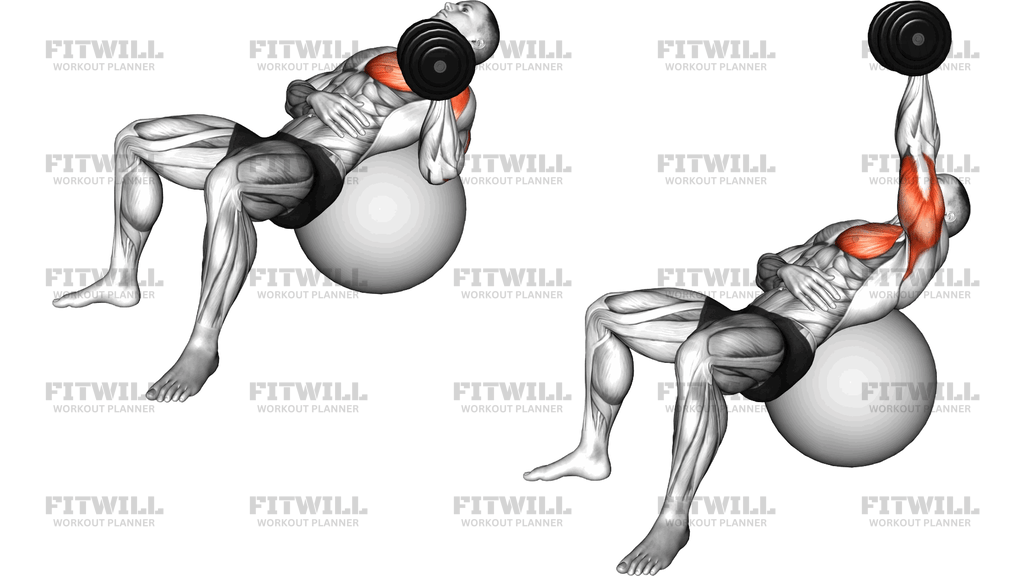
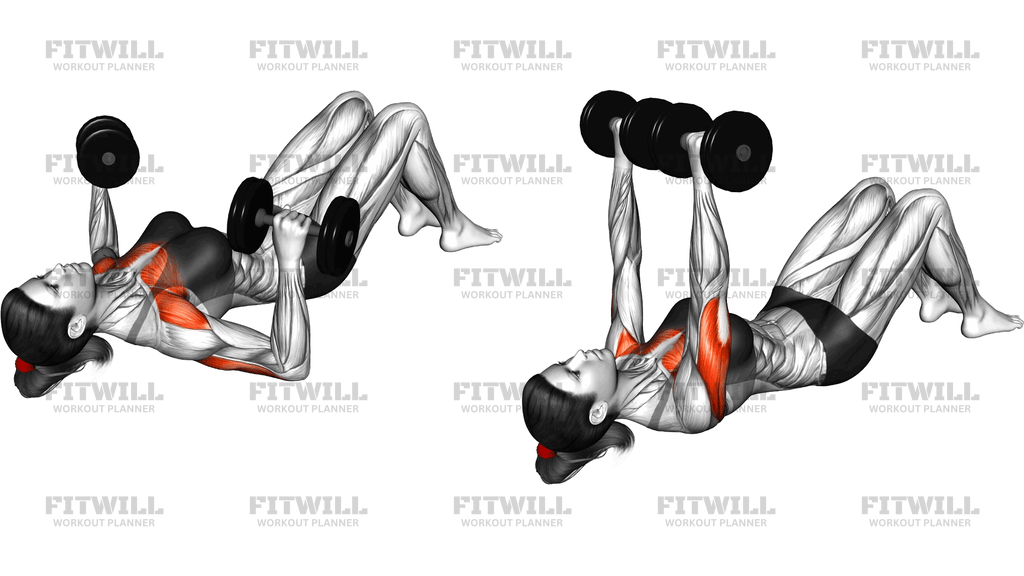
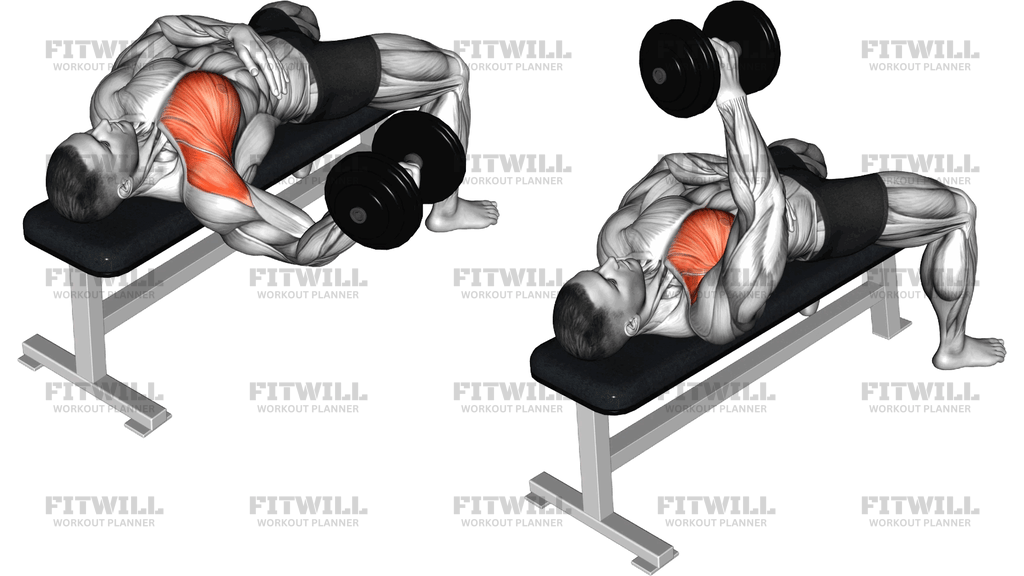
Dumbbell Incline Bench Press
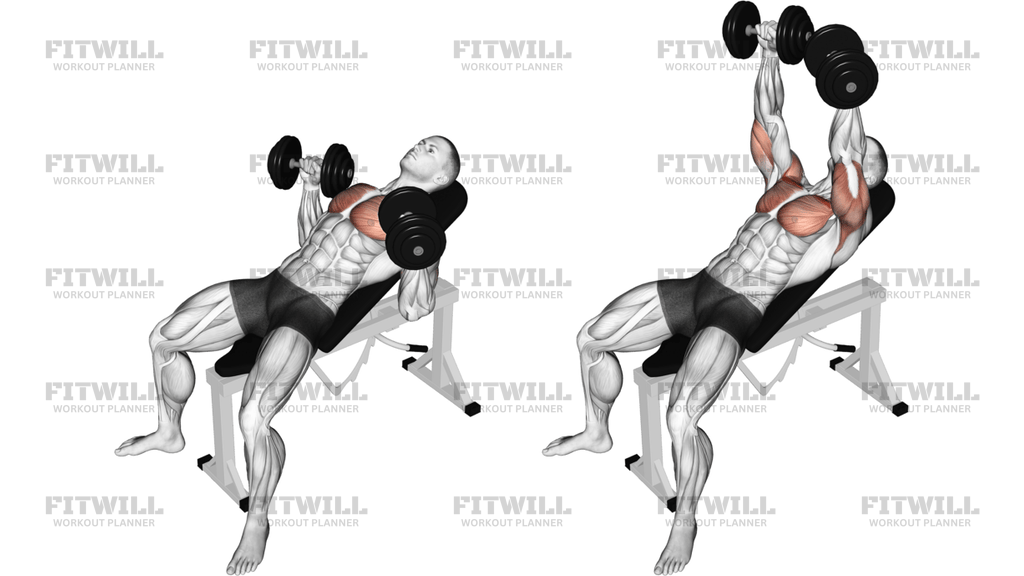
Dumbbell Incline Bench Press is a pressing exercise done on a bench set to a moderate incline, usually around 30 to 45 degrees. The incline shifts more of the work toward the upper chest and front shoulders while still giving the triceps a strong role in the press. It is a useful choice when you want a chest-focused press that feels a little more shoulder-friendly than a very steep angle.
The setup matters because the bench angle changes the line of force. If the bench is too upright, the movement starts to behave more like a shoulder press; if it is too low, the emphasis drifts back toward a flat press. A moderate incline keeps the dumbbells traveling from the upper chest toward the line above the shoulders, which is the cleanest path for this variation.
Begin each set by getting your upper back anchored to the pad, feet planted, and dumbbells controlled at chest level. From there, press the weights up without letting the shoulders roll forward or the ribs flare aggressively. The dumbbells should rise in a smooth arc, stay balanced from side to side, and finish over the upper chest or shoulders without clanging together.
On the way down, lower the dumbbells with control until the upper arms reach a comfortable depth and the chest stays lifted. A short pause near the bottom can help remove bouncing and keep tension where it belongs. This is especially useful for lifters who want quality chest work with a clear top-end lockout and a predictable pressing path.
Dumbbell Incline Bench Press fits well into upper-body strength work, chest hypertrophy sessions, or any program that needs a pressing variation with a slightly different angle from the flat bench. Use a load that lets you keep the wrists stacked, elbows controlled, and shoulder blades stable. When the bench angle, dumbbell path, and bracing all line up, the movement becomes a strong and repeatable upper-chest press rather than a loose heave.
[ Workout Log & Planner ]
Put your next workout in Fitwill
Keep your plan and training log ready when you are.


Instructions
- Set an incline bench to a moderate angle, around 30 to 45 degrees, and sit with a dumbbell on each thigh.
- Kick the dumbbells up to chest level one at a time and lie back with your upper back and head supported on the pad.
- Plant both feet firmly, tighten your midsection, and pull your shoulder blades down and back into the bench.
- Start with the dumbbells above your upper chest, wrists stacked over elbows, and forearms close to vertical.
- Lower the dumbbells in a smooth arc until your upper arms reach a comfortable depth beside the chest.
- Keep your elbows slightly tucked instead of flaring straight out to the sides.
- Press the dumbbells back up and slightly inward until they finish over the upper chest or shoulders.
- Exhale as you press and inhale as you lower, keeping both dumbbells moving at the same speed.
- After the last rep, bring the dumbbells back to chest level, sit up with control, and rest them on your thighs before standing.
Tips & Tricks
- A moderate incline is the sweet spot here; a near-upright bench shifts too much work onto the front shoulders.
- Keep the dumbbells traveling over the upper chest, not drifting toward the face or out behind the shoulders.
- If your shoulders feel crowded, rotate the elbows a little closer to your torso and use a slightly shorter bottom position.
- Do not let the dumbbells touch hard at the top; a light squeeze is enough and keeps tension on the chest.
- Keep the wrists stacked over the forearms so the load does not fold the hands back.
- Lower under control for the entire descent instead of dropping into the bottom and rebounding.
- If the rep turns into a triceps lockout only, the load is probably too heavy or the bench angle is too steep.
- Use a spotter or a reliable kick-up setup when the dumbbells are heavy enough that you cannot get them into position smoothly.
Frequently Asked Questions
What muscles does Dumbbell Incline Bench Press work?
Dumbbell Incline Bench Press mainly works the upper chest, front shoulders, and triceps. The upper back and core help stabilize the bench position so the dumbbells can travel cleanly.
Is Dumbbell Incline Bench Press good for beginners?
Yes, as long as the bench angle is moderate and the dumbbells are light enough to control into and out of the bottom. Beginners usually do best with a spotter or a careful knee kick-up.
How steep should the bench be for Dumbbell Incline Bench Press?
A 30 to 45 degree incline usually works best. Much steeper than that often turns the lift into more of a shoulder press than a chest press.
Should the dumbbells touch at the top of Dumbbell Incline Bench Press?
They can come close, but they do not need to slam together. Keeping a small gap or a light touch helps maintain tension and keeps the shoulders from losing position.
Why do my front shoulders feel this more than my chest?
That usually means the bench is too steep, the elbows are flaring too wide, or the dumbbells are drifting too high over the shoulders. Lower the incline and keep the press line aimed at the upper chest.
Can I use a neutral grip on Dumbbell Incline Bench Press?
Yes, a neutral or semi-neutral grip is often easier on the shoulders and wrists. It can also make it simpler to keep the elbows slightly tucked.
What is the safest way to get the dumbbells into position?
Sit on the bench with the dumbbells on your thighs, then kick each one up as you lie back. That is safer than trying to curl heavy dumbbells from the floor to the start position.
What is the most common mistake in Dumbbell Incline Bench Press?
The biggest error is using too much weight and losing the press path, either by flaring the elbows or bouncing out of the bottom. A controlled arc over the upper chest is the goal.
Should Dumbbell Incline Bench Press hurt my shoulders?
No. You should feel chest and pressing effort, but pinching or sharp shoulder pain means the incline, grip, or bottom position needs to be adjusted.