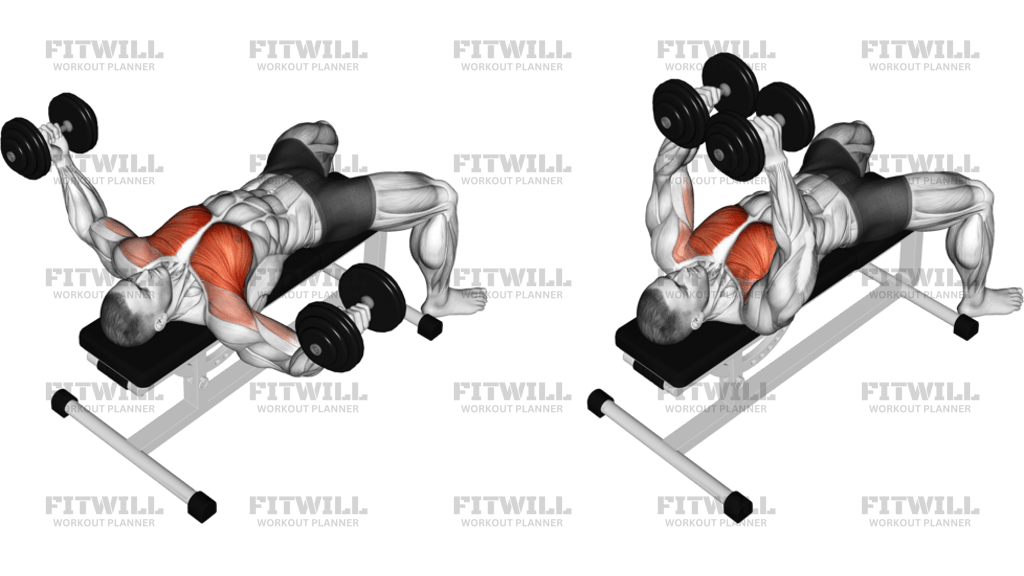
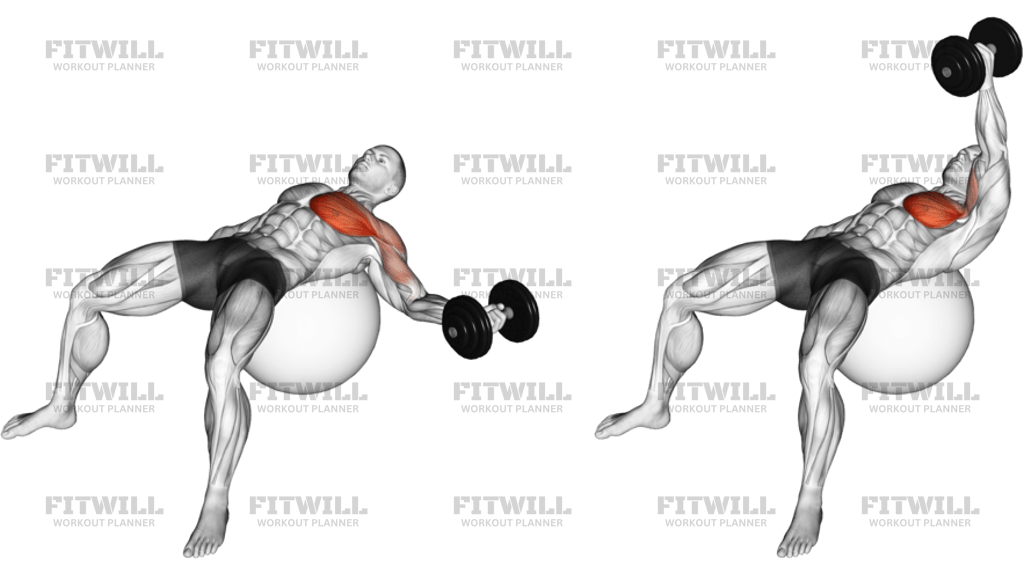
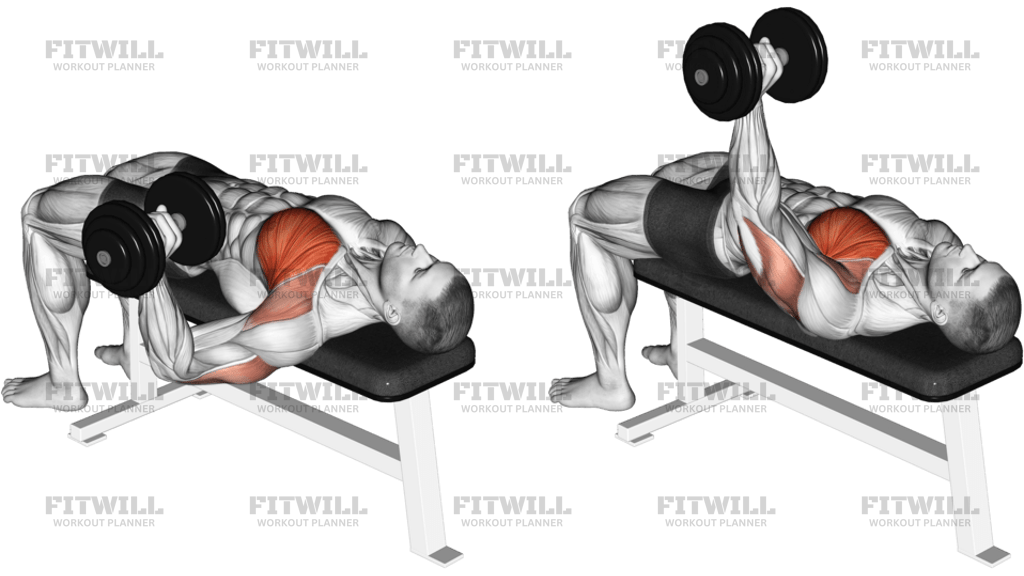
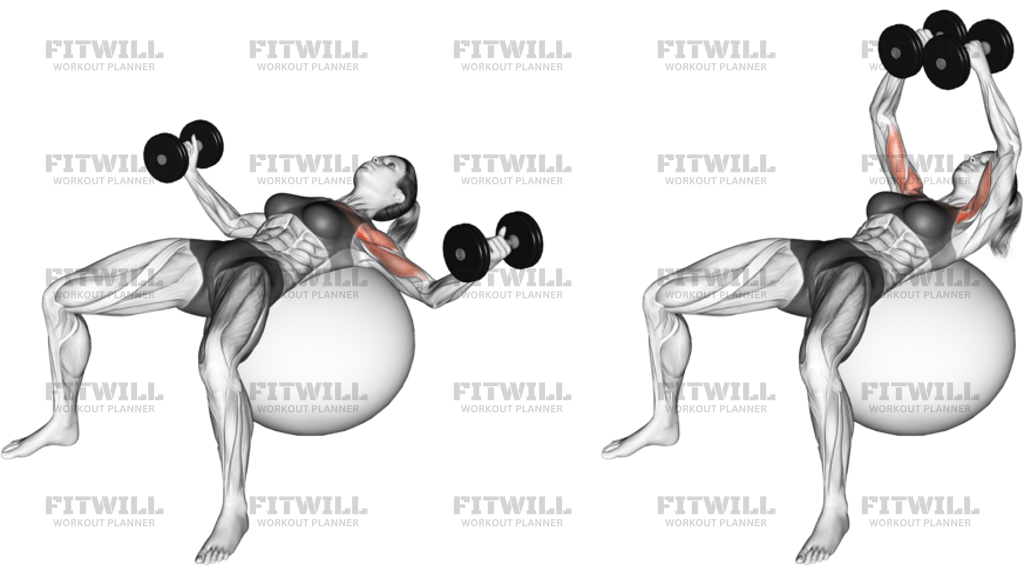
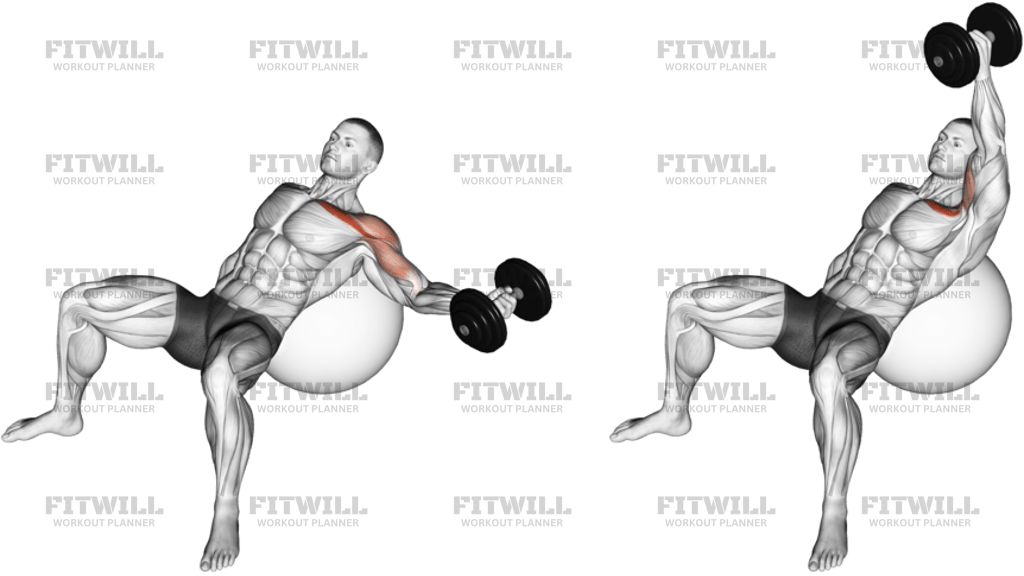
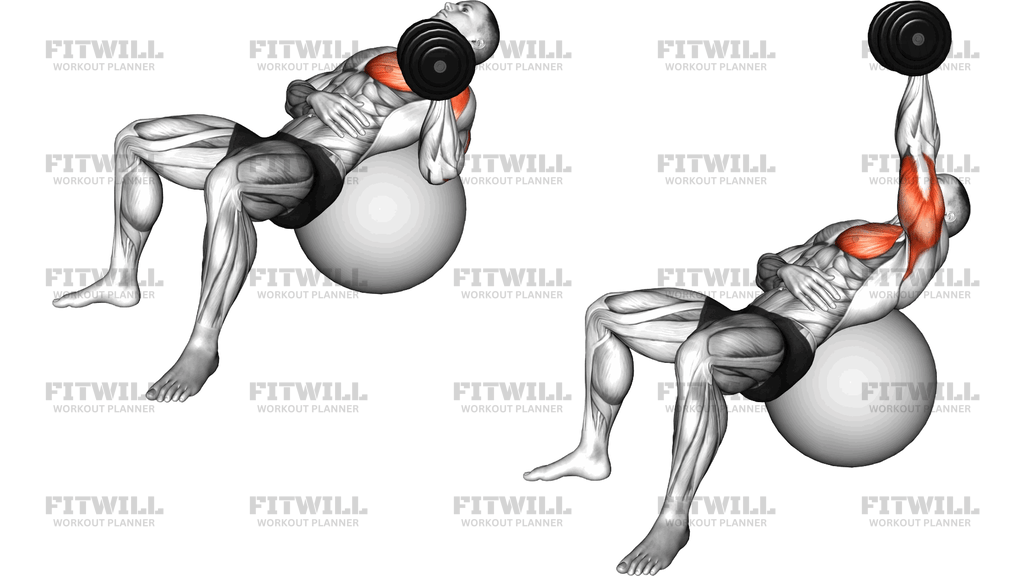
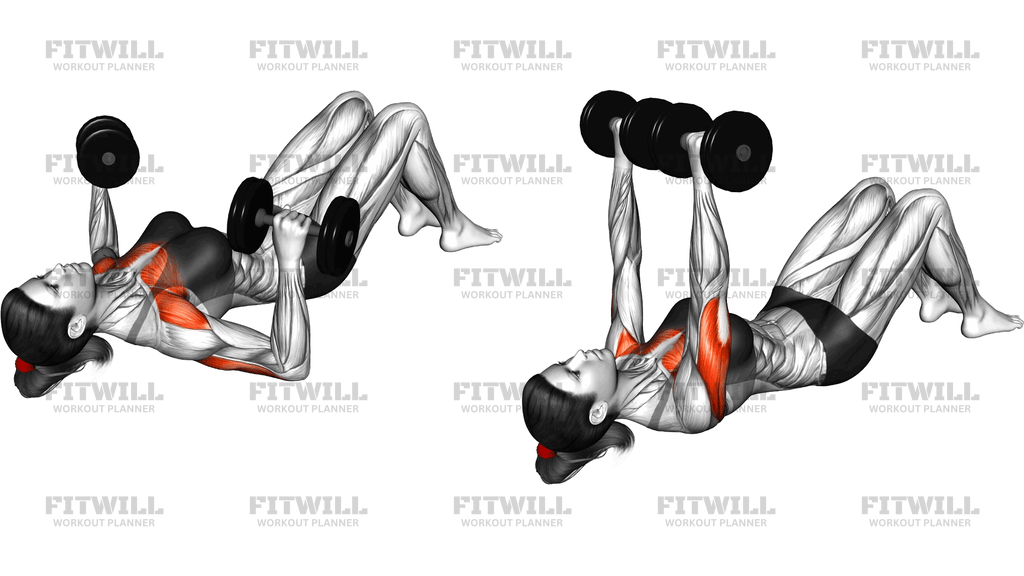
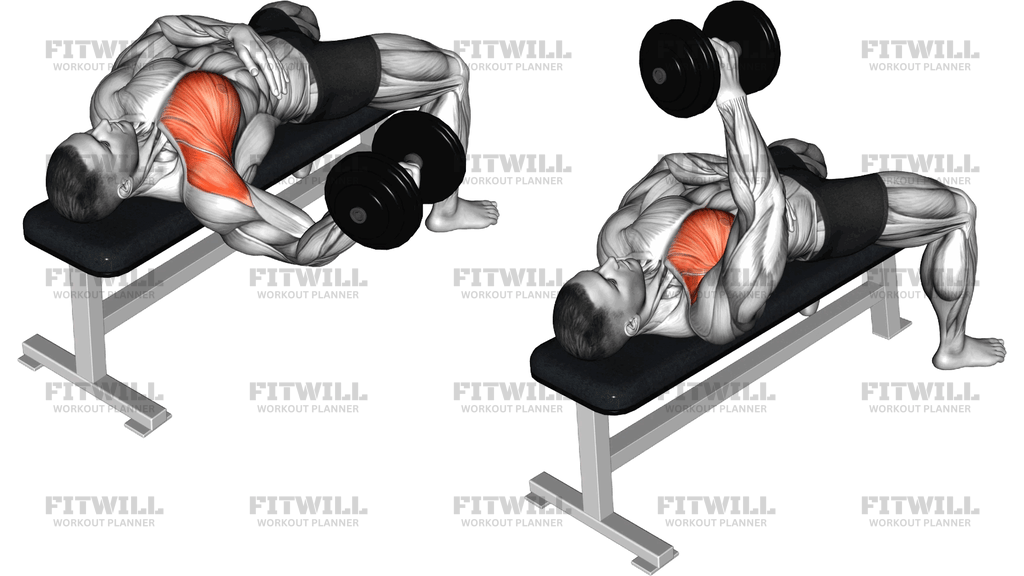
Dumbbell Incline Palm-In Press
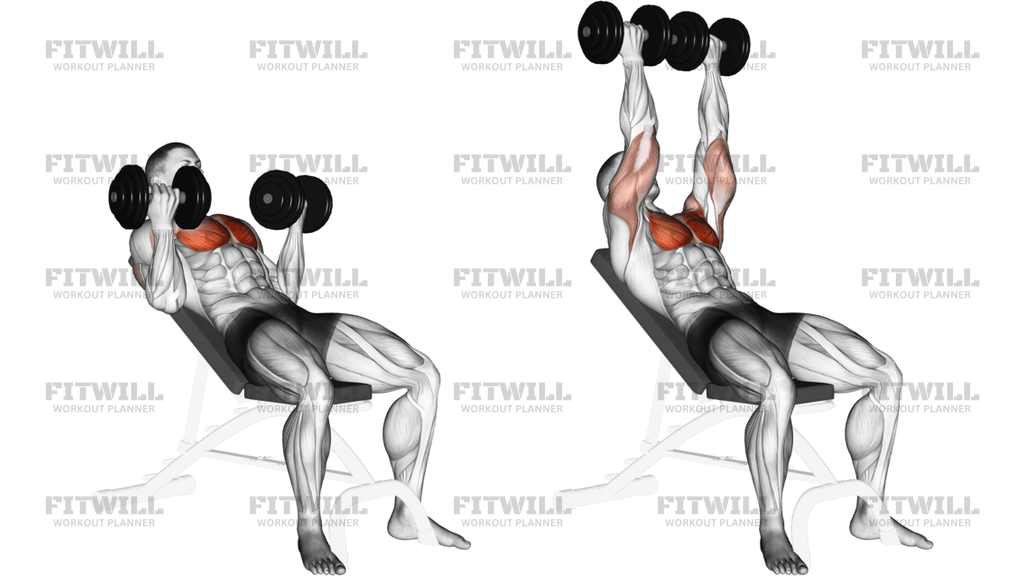
Dumbbell Incline Palm-In Press is a neutral-grip incline dumbbell press performed on a bench set to a moderate angle. The palm-in grip keeps the elbows in a more natural pressing path than a wide overhand grip, while the incline shifts more work toward the upper chest and front shoulders. This version still trains the triceps heavily, but the upper-body angle and hand position make the setup more shoulder-friendly for many lifters.
The exercise is most useful when you want a strong horizontal-to-upward pressing pattern without turning the movement into a flat bench press. Because the bench is inclined, the dumbbells should travel slightly up and in, not straight forward and not flared wide. That line of travel helps the chest contribute while keeping the shoulders stacked and the wrists in control.
Setup matters more than load on this movement. Lie back with your upper back supported by the bench, feet planted firmly, and your shoulder blades gently pulled down and back. Start the dumbbells near the upper chest with forearms vertical, then press by driving the weights up until they are nearly over the shoulders. At the top, the arms should be extended without banging the dumbbells together or shrugging the shoulders toward the ears.
On the lowering phase, bring the dumbbells back to the same starting point with control. Keep the elbows from drifting far below the bench line or splaying excessively wide. A clean rep feels smooth through the chest, triceps, and front delts, with the upper back staying anchored to the bench and the torso staying braced.
Use Dumbbell Incline Palm-In Press for upper-body strength work, hypertrophy sets, or accessory pressing volume when you want a neutral-grip incline option. It is a good choice for lifters who prefer dumbbells over a barbell and for anyone who needs a pressing variation that lets the shoulders move naturally. Stop the set if the front of the shoulder pinches, the lower back arches hard, or the dumbbells start wobbling out of sync.
[ Workout Log & Planner ]
Put your next workout in Fitwill
Keep your plan and training log ready when you are.


Instructions
- Set an incline bench to a moderate angle and sit with a dumbbell in each hand.
- Lie back with your upper back on the pad, feet flat on the floor, and the dumbbells parked near the upper chest.
- Turn the palms to face each other and stack each wrist over its elbow before the first press.
- Pull the shoulder blades down and back so the chest stays supported against the bench.
- Brace the torso and press the dumbbells upward in a slight up-and-in arc.
- Finish with the arms extended over the upper chest or shoulders without shrugging.
- Lower both dumbbells along the same path until the elbows are just below the bench line or your shoulders stop moving comfortably.
- Pause briefly, keep the ribcage controlled, and repeat for the desired reps without bouncing.
Tips & Tricks
- Keep the grip neutral and resist the urge to rotate into a wide press as the set gets hard.
- Use a bench angle that still lets your upper back stay planted; if the angle is too steep, the movement turns into a shoulder press.
- Lower the dumbbells until the elbows are slightly below the torso line, not so deep that the front of the shoulder rolls forward.
- Keep the forearms close to vertical in the bottom position so the wrists do not collapse back.
- Press the dumbbells slightly inward on the way up, but do not let them collide above the face.
- Keep the chest lifted by bracing through the midsection rather than arching the lower back hard.
- Choose a load that lets both dumbbells rise at the same speed; uneven arms usually means the set is too heavy.
- Exhale through the press and take a controlled breath at the top before the next rep.
Frequently Asked Questions
What muscles does Dumbbell Incline Palm-In Press work?
It mainly works the upper chest, triceps, and front shoulders. The upper back, rotator cuff, and core help keep the bench position stable and the dumbbells on a clean path.
Is Dumbbell Incline Palm-In Press good for beginners?
Yes, if you start light and keep the bench angle moderate. Beginners should prioritize a stable shoulder position and a smooth path before adding load.
Where should the dumbbells start on Dumbbell Incline Palm-In Press?
Start with the bells near the upper chest or outer shoulders, forearms stacked under the weights. That gives you a strong pressing line and keeps the wrists from bending back.
How much should I tuck my elbows?
Keep them angled slightly in from the torso rather than flared straight out. That neutral path usually feels better on the shoulders and matches the palm-in grip.
Why use a palm-in grip instead of a palms-forward press?
A neutral grip often lets the shoulders move more naturally and can reduce strain at the front of the shoulder while still training the chest and triceps effectively.
How deep should I lower the dumbbells?
Lower only as far as your shoulders stay packed and the dumbbells remain under control. If the bottom position turns into a stretchy shoulder dump, shorten the range.
What is the most common mistake in Dumbbell Incline Palm-In Press?
The most common mistake is turning the press into a steep incline shoulder press by using too much bench angle or letting the ribs flare hard.
Can I use Dumbbell Incline Palm-In Press as a chest builder?
Yes. It is a strong upper-chest accessory when you keep the elbows controlled, pause briefly at the top, and use a range you can repeat cleanly.
Should Dumbbell Incline Palm-In Press hurt my shoulders?
No. You should feel pressing effort, not a sharp pinch in the front of the shoulder. If the joint feels irritated, reduce the angle, shorten the range, or switch variations.