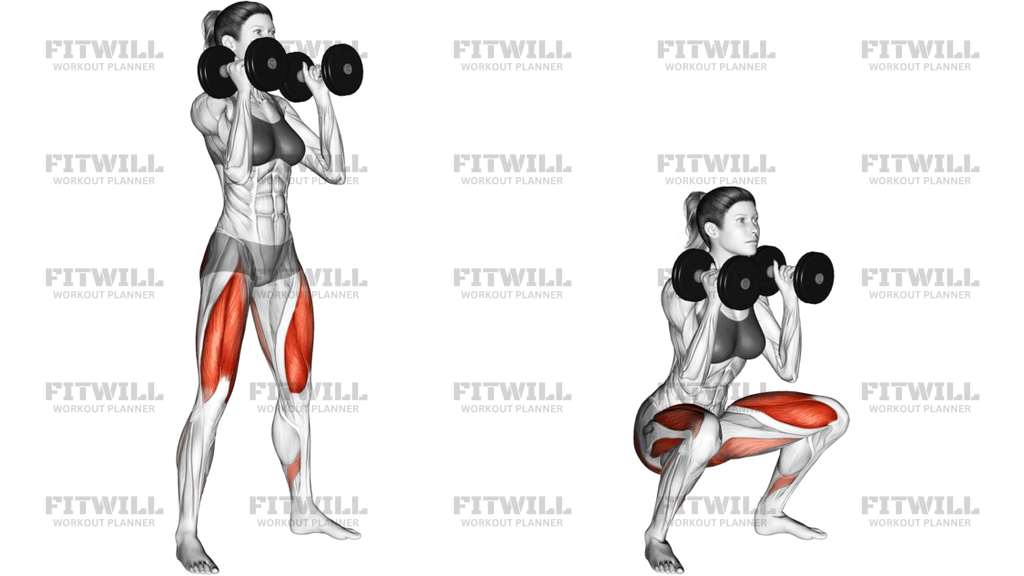
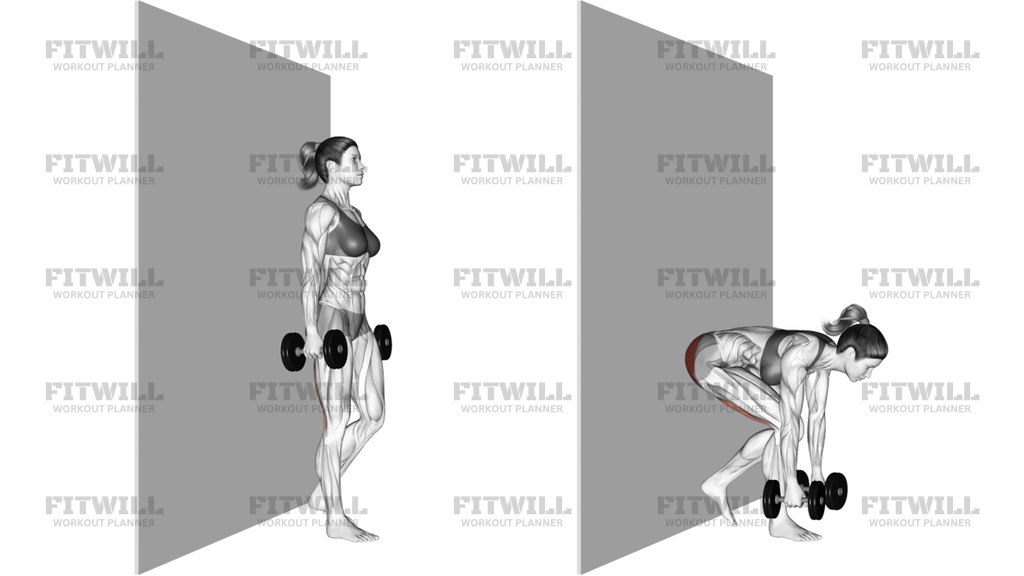
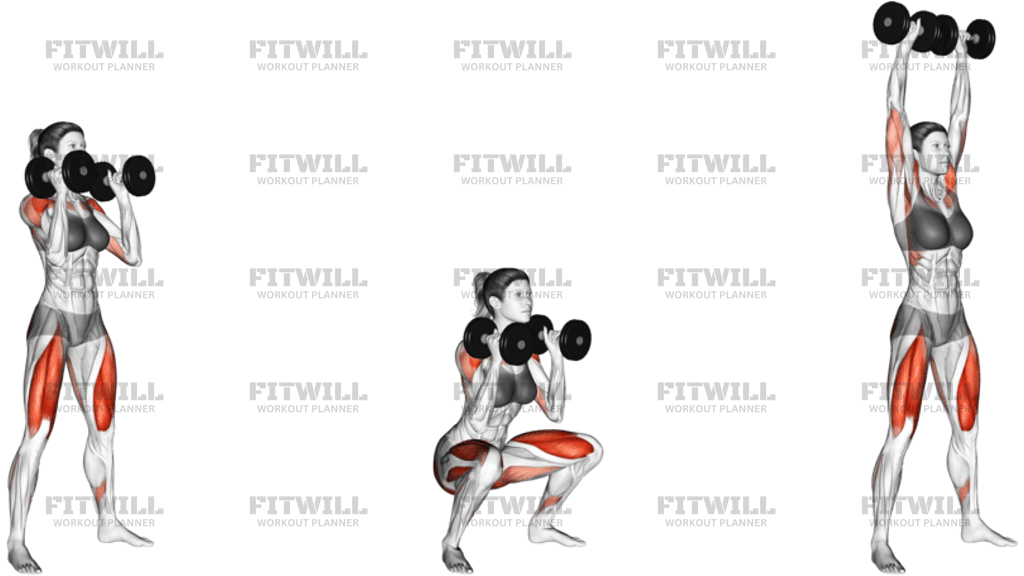
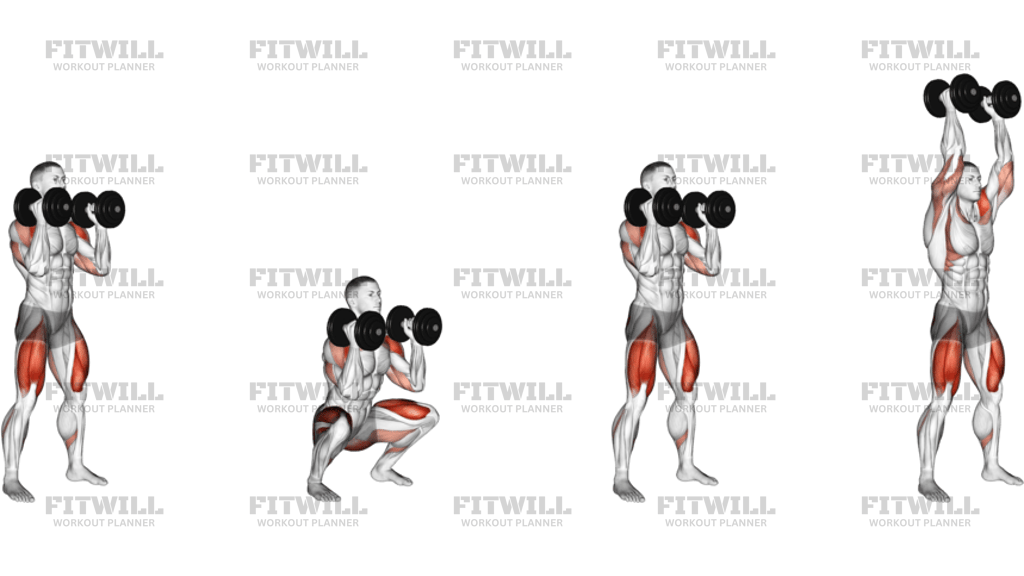
Dumbbell Lunge
Dumbbell Lunge is a split-stance lower-body exercise that loads one leg at a time while the dumbbells hang at your sides. It trains the glutes and quads hard, with the hamstrings, calves, inner thigh, and trunk helping you stay balanced and upright. Because the weight sits beside the body instead of in front of it, the exercise rewards clean leg drive and steady pelvic control more than brute force.
The setup matters because the stance determines where the work goes. Step one foot forward into a long split stance, keep both feet planted flat, and let the back heel stay lifted. The front foot should be far enough out that you can lower the rear knee toward the floor without the front heel peeling up or the torso collapsing forward. When the stance is too short, the front knee and hips usually take over too soon.
On each rep, lower straight down with the dumbbells hanging quietly beside the hips. The front knee should track in line with the toes while the rear knee moves down and slightly back. At the bottom, the back knee should hover just above the floor or make a light, controlled tap. Drive through the front heel and midfoot to stand back up, then finish tall before changing sides or repeating.
Use Dumbbell Lunge for strength, hypertrophy, or unilateral work when you want to expose left-right differences and build leg stability. It works well as a main lower-body accessory after squats or deadlifts, but the load should stay light enough that you can keep the torso square, the knee tracking cleanly, and the dumbbells from swinging. If balance or knee position breaks down, shorten the range or reduce the weight before adding more difficulty.
Fitwill
Log Workouts, Track Progress & Build Strength.
Achieve more with Fitwill: explore over 9600 exercises with images and videos, access built-in and custom workouts, perfect for both gym and home sessions, and see real results.
Start your journey. Download today!




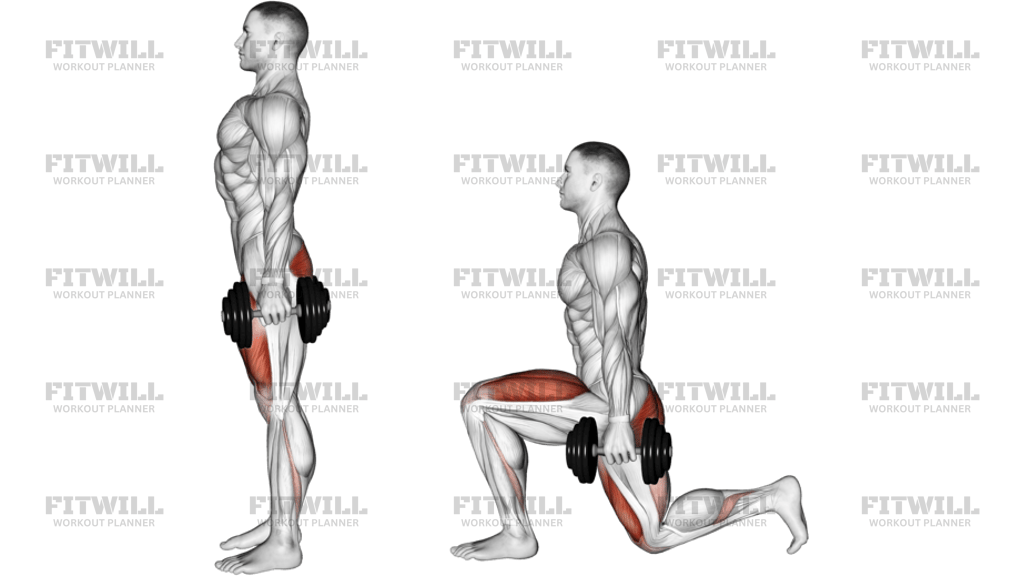
Instructions
- Stand tall with a dumbbell in each hand and your arms straight by your sides.
- Step one foot forward into a long split stance, keeping both toes mostly pointed forward and the back heel lifted.
- Plant the front heel and make sure you can lower without losing balance or lifting the heel.
- Set your ribs over your pelvis and keep your chest tall before you start the rep.
- Bend both knees and lower straight down, letting the rear knee travel toward the floor behind you.
- Keep the front knee tracking over the second and third toes while the dumbbells stay still beside your hips.
- Descend until the rear knee is just above the floor or makes a light, controlled tap.
- Drive through the front heel and midfoot to stand back up, then finish tall before the next rep or the side change.
Tips & Tricks
- Set the front foot far enough forward that the heel stays planted at the bottom of the rep.
- Keep most of your pressure on the front leg; the back leg is there to balance, not to launch the rep.
- Let the torso lean only a little if needed; a big forward fold usually means the stance is too short.
- Watch the front knee on the way down and stop it from collapsing inward toward the big toe.
- Keep the dumbbells hanging beside the thighs instead of drifting forward like a front-loaded squat.
- Use a soft rear-knee tap rather than bouncing off the floor.
- Lower under control for a full second or two so the front hip and quad do the work instead of momentum.
- Reduce the load if you cannot keep the pelvis square and the front heel flat through every rep.
Frequently Asked Questions
What muscles does Dumbbell Lunge work?
It mainly works the glutes and quads, with the hamstrings, calves, inner thigh, and core helping stabilize the split stance. The dumbbells also make each side work harder to control the bottom position.
Is Dumbbell Lunge good for beginners?
Yes, if you start with bodyweight or very light dumbbells and a shorter range. Beginners should first learn to keep the front heel down and the rear knee tracking straight toward the floor.
How far apart should my feet be?
Long enough that your front heel stays flat and your rear knee can descend without forcing your torso to fold. If the stance feels cramped, step the front foot farther forward.
Where should the dumbbells stay during the rep?
They should hang straight beside your hips with minimal swing. If the weights drift forward or sway from side to side, the load is probably too heavy.
How low should I go in the lunge?
Lower until the rear knee is just above the floor or gives a light tap while the front foot stays planted. Do not chase depth if it makes the front heel lift or the knee cave in.
Is this the same as a split squat?
The image shows a stationary split-stance lunge, which is very close to a split squat. If you step into and out of the stance every rep, it becomes a more dynamic lunge variation.
What is the most common mistake in Dumbbell Lunge?
The most common mistake is taking too short a stance, which pushes the front knee forward and makes the torso tip. A clean rep keeps the front heel down and the pelvis square.
Should Dumbbell Lunge hurt my knees?
No. You should feel leg effort and balance demand, not sharp knee pain or pinching. If the front knee feels irritated, shorten the range, lighten the dumbbells, or check your stance length.