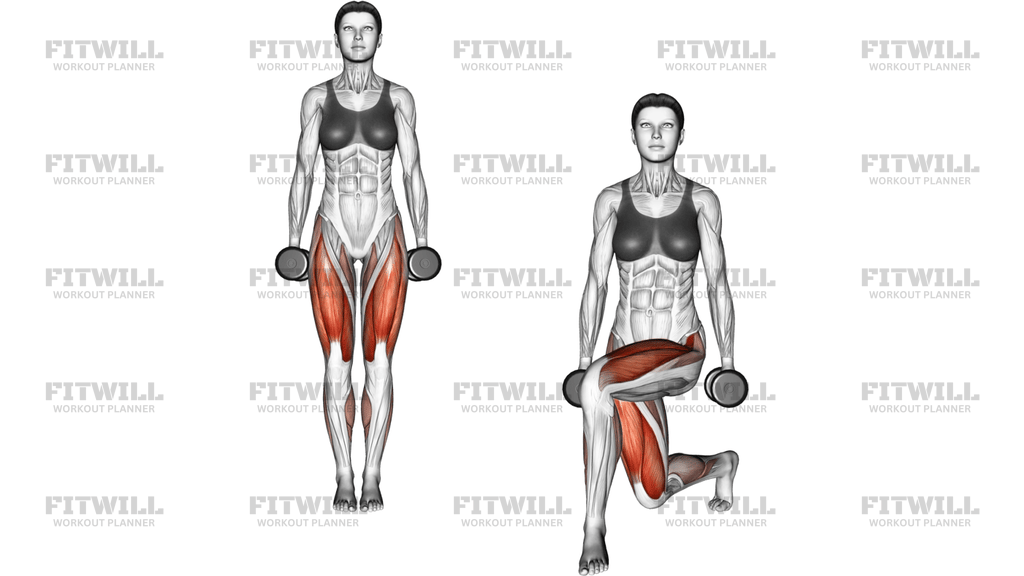
Dumbbell Bench Squat
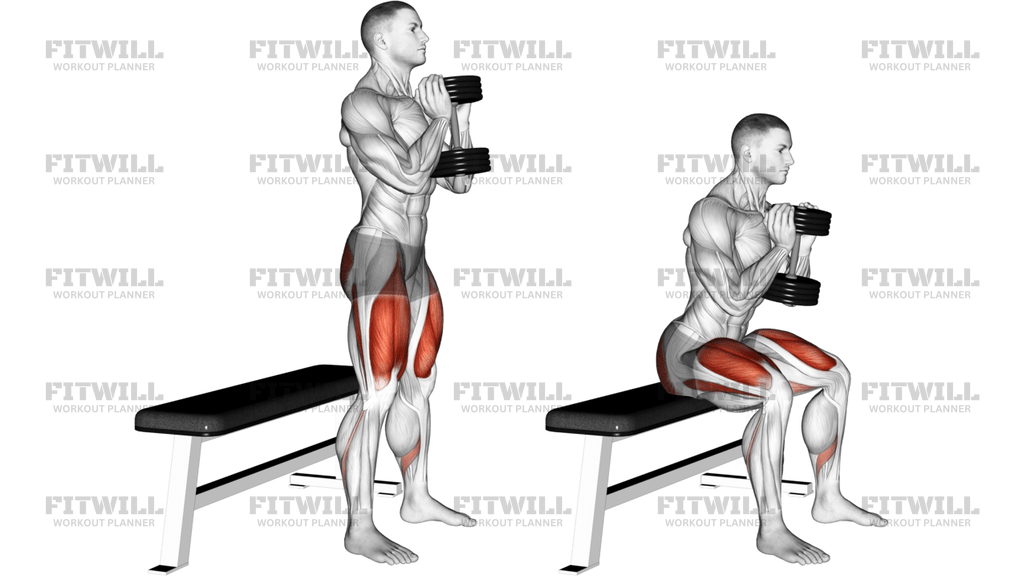
Dumbbell Bench Squat is a squat variation that uses a bench as a depth target while the dumbbells add resistance at your sides. It is useful for building glutes, quads, hamstrings, and hip stability without having to guess how deep each rep should be. The bench also gives beginners a clear stopping point, which makes the movement easier to learn and easier to repeat with consistent depth.
The exercise works best when you sit the hips back under control, touch the bench lightly, and stand up without collapsing onto the seat. That keeps tension on the legs and glutes instead of turning the rep into a bounce or a full rest. Holding the dumbbells by your sides also changes the loading pattern, so your trunk has to stay braced while your shoulders stay packed and your arms stay long.
Start by standing just in front of the bench with your feet about shoulder-width apart and your toes slightly turned out. The bench should sit behind you as a target, not something you drop onto. Keep your chest tall enough to keep the torso organized, but allow a natural forward lean as you lower so the hips can move back and the knees can track cleanly.
On the way down, control the descent until your glutes touch the bench softly. Pause only long enough to stay balanced, then drive through your whole foot and stand back up in one smooth line. If your knees cave, your lower back rounds, or the dumbbells drift forward, the load or bench height is probably too ambitious for the current set.
Dumbbell Bench Squat is a practical choice for lower-body strength work, warm-up progressions, and technical practice before heavier free squats. It rewards clean repetition more than speed, so the goal is to make every rep look and feel the same. Use it to train a repeatable squat depth, solid leg drive, and better control coming out of the bottom.
[ Workout Log & Planner ]
Put your next workout in Fitwill
Keep your plan and training log ready when you are.


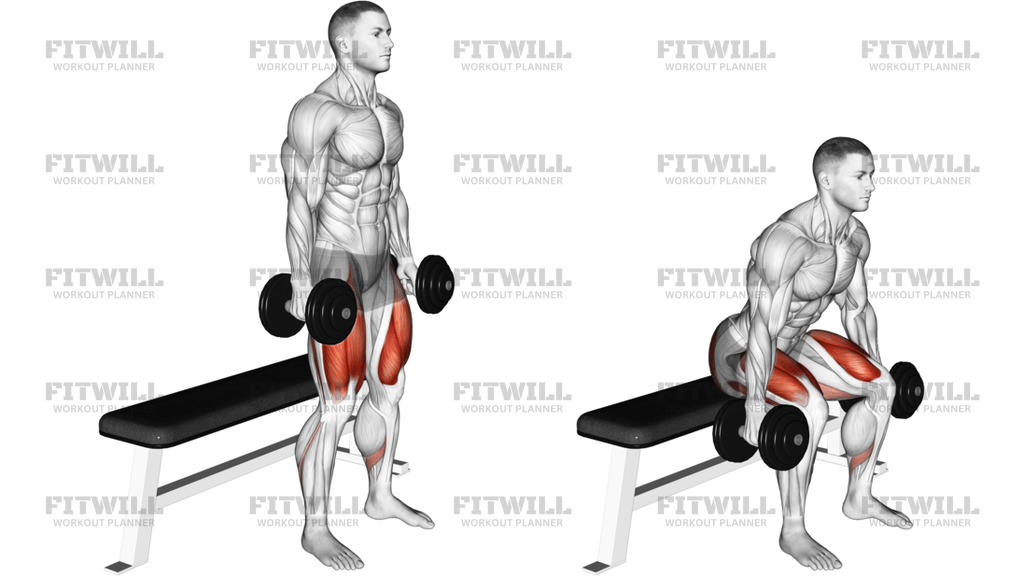
Instructions
- Stand a few inches in front of a flat bench with a dumbbell in each hand at your sides.
- Set your feet about shoulder-width apart with your toes turned slightly out.
- Pull your ribs down, brace your torso, and keep the dumbbells hanging straight beside your legs.
- Push your hips back first, then bend your knees to lower under control toward the bench.
- Keep your chest open and let your knees track in line with your toes as you descend.
- Lightly touch the bench with your glutes without sitting back and relaxing onto it.
- Drive through your midfoot and heels to stand back up until your hips and knees are fully extended.
- Keep the dumbbells close to your sides and finish each rep with the same stance and depth.
- Reset your balance between reps if needed, then repeat with the same controlled tempo.
Tips & Tricks
- Place the bench so it catches you at a depth you can control without rocking backward.
- Keep the dumbbells hanging beside your thighs instead of drifting in front of your knees.
- If the weights pull your shoulders forward, lighten the load before the squat pattern breaks down.
- Touch the bench softly; bouncing off it turns the rep into momentum instead of leg work.
- Let your torso lean forward a little on the way down, but do not round your lower back to reach the bench.
- Press the floor apart with your feet if your knees want to collapse inward on the ascent.
- Use a bench height that allows you to keep tension in the glutes and quads instead of sinking too low.
- Lower under control and stand with intent so the transition off the bench stays smooth and balanced.
Frequently Asked Questions
What muscles does Dumbbell Bench Squat work?
Dumbbell Bench Squat mainly works the glutes and quads, with the hamstrings and core helping control the descent and the drive up.
Is Dumbbell Bench Squat good for beginners?
Yes. The bench gives beginners a clear depth target, which makes it easier to learn a consistent squat pattern with lighter dumbbells.
How low should I go in Dumbbell Bench Squat?
Lower until your glutes lightly touch the bench, then stand back up. The bench should guide your depth, not force you to fully sit and relax.
Why are the dumbbells held at the sides?
Holding the dumbbells at your sides changes the loading so your legs and hips do the work while your torso stays braced and balanced.
What if I keep falling back onto the bench?
Shorten the descent, use lighter dumbbells, or raise the bench height if possible. You want a controlled touch, not a hard drop into the seat.
Should my heels stay down during Dumbbell Bench Squat?
Yes. Keep your whole foot grounded so you can push through the midfoot and heels instead of shifting onto your toes as you stand.
Can I use Dumbbell Bench Squat instead of a regular squat?
It can be a good squat substitute when you want a clearer depth target or a more beginner-friendly setup, but it does not replace every benefit of a full squat.
What is the main form mistake with Dumbbell Bench Squat?
The biggest mistake is losing tension and sitting onto the bench. Keep the touch light and keep the legs active through the whole rep.