Dumbbell Lying Elbow Press
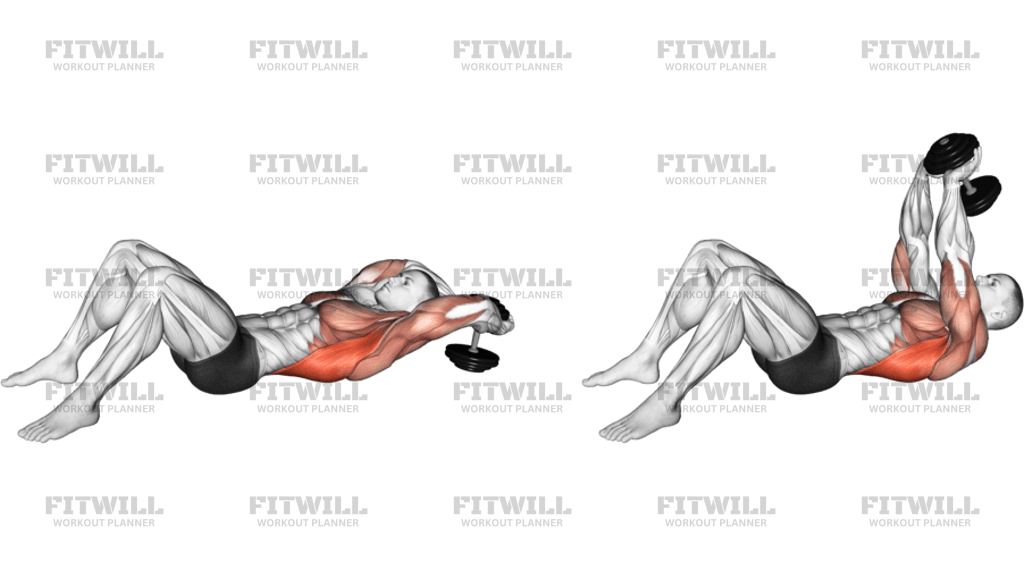
Dumbbell Lying Elbow Press is a bench-based, triceps-dominant dumbbell press built around a short, controlled elbow-driven path. The bench fixes your body position so the elbows, wrists, and shoulder blades can do the work without turning the lift into a full-body heave. It is a useful strength accessory when you want pressing volume with more control than a free barbell pattern.
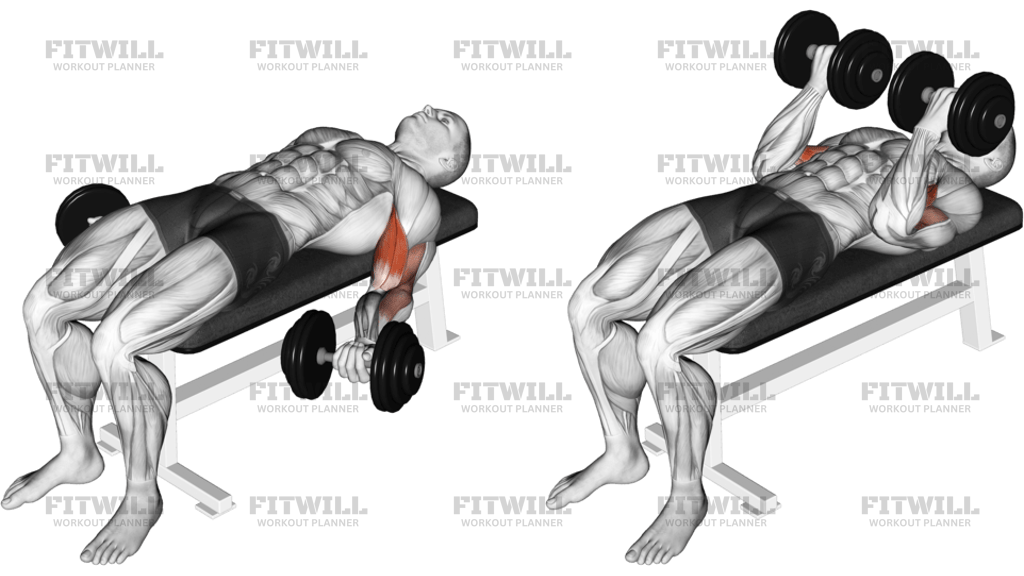
The setup matters because the movement is defined by the elbow angle, not by a big range of motion. Lie on a flat bench with your head, shoulders, and hips supported, feet planted, and the dumbbells held over the lower chest in a neutral grip. Keep the forearms close to vertical, the elbows tucked slightly toward the ribs, and the shoulder blades set down so the shoulders stay quiet as the press begins.
On each rep, drive the dumbbells up by straightening the elbows until the arms are long and the weights stack over the shoulders. The path should stay smooth and symmetrical, with both dumbbells moving together instead of one side racing ahead. Lower the dumbbells back under control to the same bent-elbow position and keep tension on the triceps instead of dropping into the bottom.
This exercise is most useful when you want to train elbow extension strength while still involving the chest and front shoulders as stabilizers. It can fit into a chest day, a triceps day, or a press accessory block because the bench removes balance demands and keeps the load honest. That also makes it a good option for practicing clean pressing mechanics without needing a barbell path.
Use a load that lets you keep neutral wrists, tucked elbows, and a stable rib cage. If the dumbbells drift toward your face, the elbows flare wide, or your lower back arches hard to finish the rep, the set is too heavy or the range is too aggressive. Build the movement with control first, then add resistance only when every rep looks the same.
[ Workout Log & Planner ]
Put your next workout in Fitwill
Keep your plan and training log ready when you are.


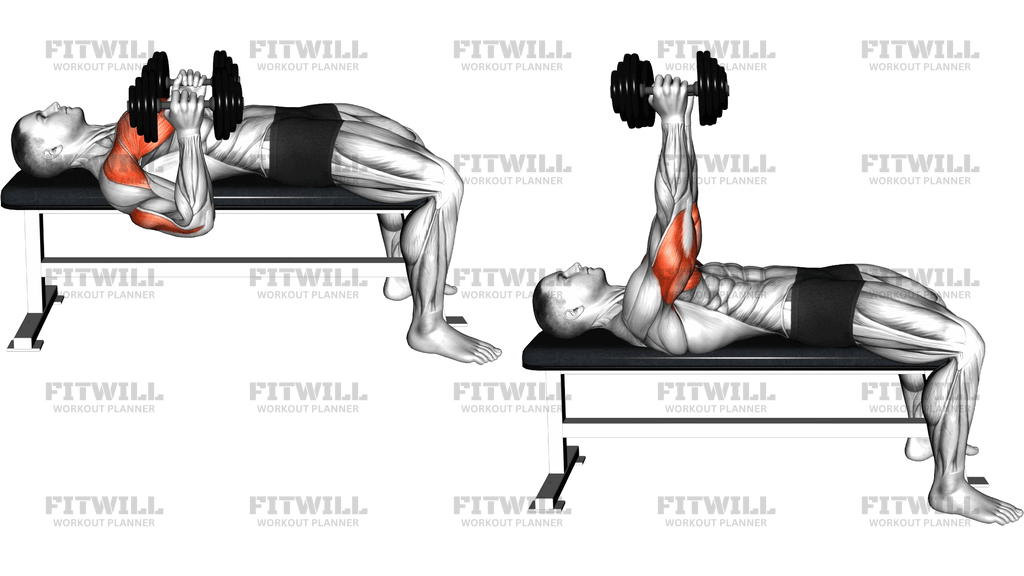
Instructions
- Lie flat on the bench with your head, shoulders, and hips supported and both feet planted.
- Hold the dumbbells above the lower chest with a neutral grip, palms facing each other.
- Set your shoulder blades down and back without forcing your chest up high.
- Keep your elbows tucked slightly toward your ribs and your forearms close to vertical.
- Brace your trunk, then press the dumbbells straight up by extending the elbows.
- Finish with the weights stacked over the shoulders and the wrists still neutral.
- Lower the dumbbells slowly back to the bent-elbow start without losing elbow position.
- Keep both sides matched and repeat with the same path on every rep.
Tips & Tricks
- Keep the elbows slightly tucked so the triceps drive the press instead of the shoulders taking over.
- Neutral wrists matter here; if the dumbbells fold the wrists back, the load is too heavy or the grip is off.
- Think of the rep as a controlled elbow extension, not a big chest press from the bottom.
- Stop the descent when the upper arms stay controlled; do not chase extra range if the shoulders roll forward.
- If one dumbbell climbs ahead of the other, slow down and match the tempo before adding weight.
- Keep your ribs from flaring just to finish the lockout.
- A short pause at the top should feel stable, not shrugged into the neck.
- Exhale as you press and inhale on the lowering phase to keep the torso steady.
Frequently Asked Questions
What muscles does Dumbbell Lying Elbow Press work?
It mainly loads the triceps through elbow extension, with the chest and front shoulders helping to stabilize and guide the press.
How is Dumbbell Lying Elbow Press different from a regular dumbbell bench press?
This version is more elbow-driven and usually uses a shorter, more controlled path. A regular dumbbell bench press relies more on the chest and shoulder arc.
Should the dumbbells stay over the chest or drift toward the face?
They should finish stacked over the shoulders and lower chest line, not drift toward the face. If the path changes, the shoulders are probably taking over.
Is this exercise beginner-friendly?
Yes, if you start light and keep the elbows, wrists, and shoulder blades in a stable position. The bench support makes it easier to learn than a standing press.
What is the most common mistake on this movement?
Letting the elbows flare and turning it into a loose chest press is the most common issue. A second mistake is using momentum to bounce out of the bottom.
Should my lower back arch hard during the rep?
No. A small natural arch is fine, but a hard bridge usually means the load is too heavy or the setup is losing control.
What should I do if my shoulders pinch?
Shorten the range, lighten the dumbbells, and keep the shoulder blades set down on the bench. If the pinch stays sharp, stop the set.
How can I make Dumbbell Lying Elbow Press harder without cheating?
Use a slower lowering phase, brief pauses at the top, or small weight jumps while keeping the same elbow path and neutral wrist position.