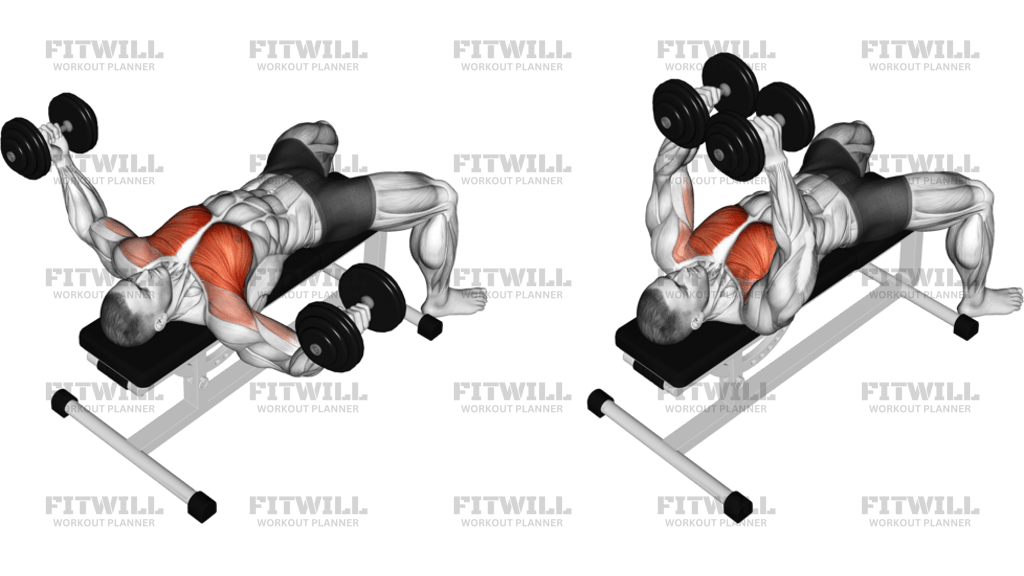
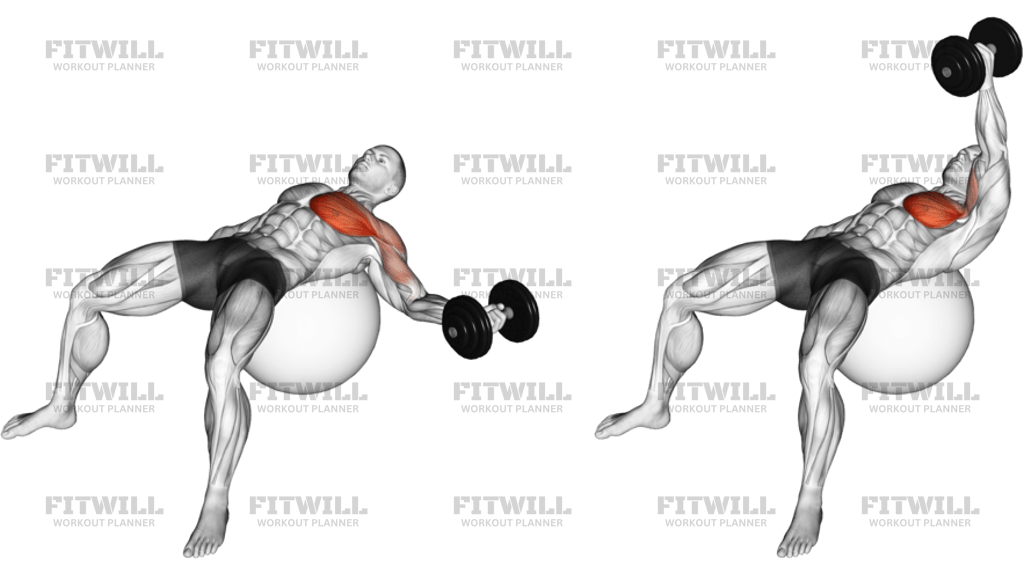
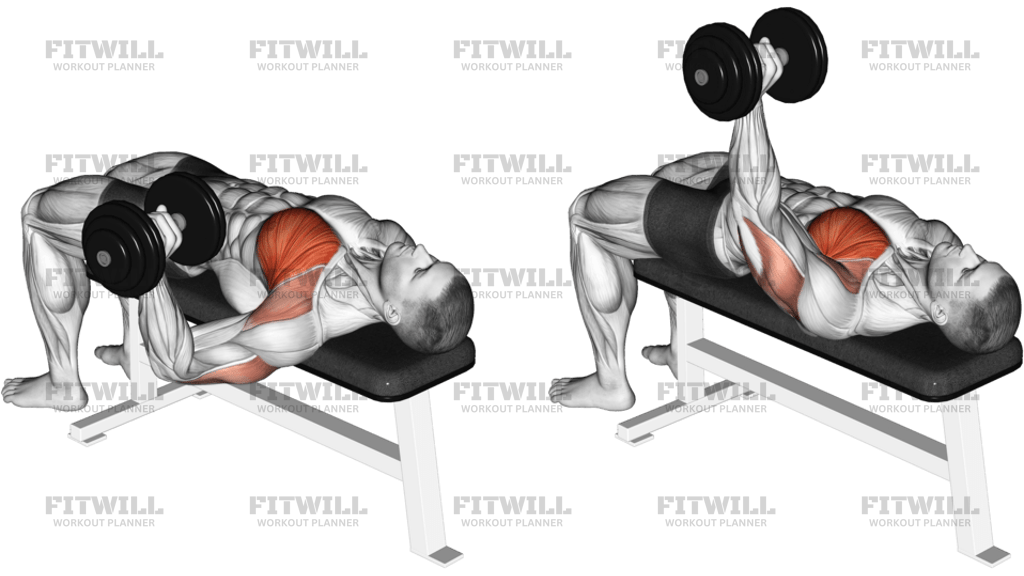
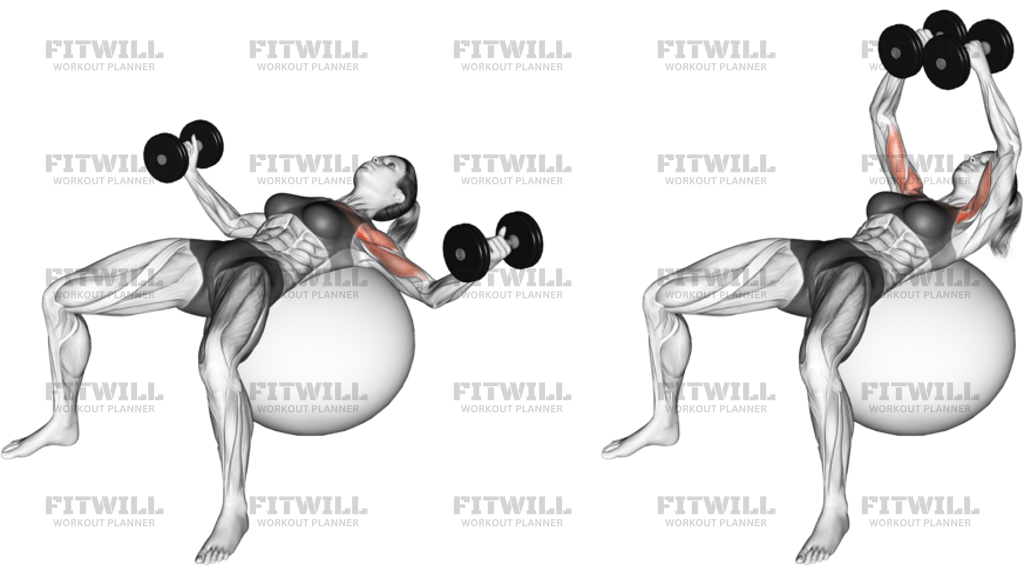
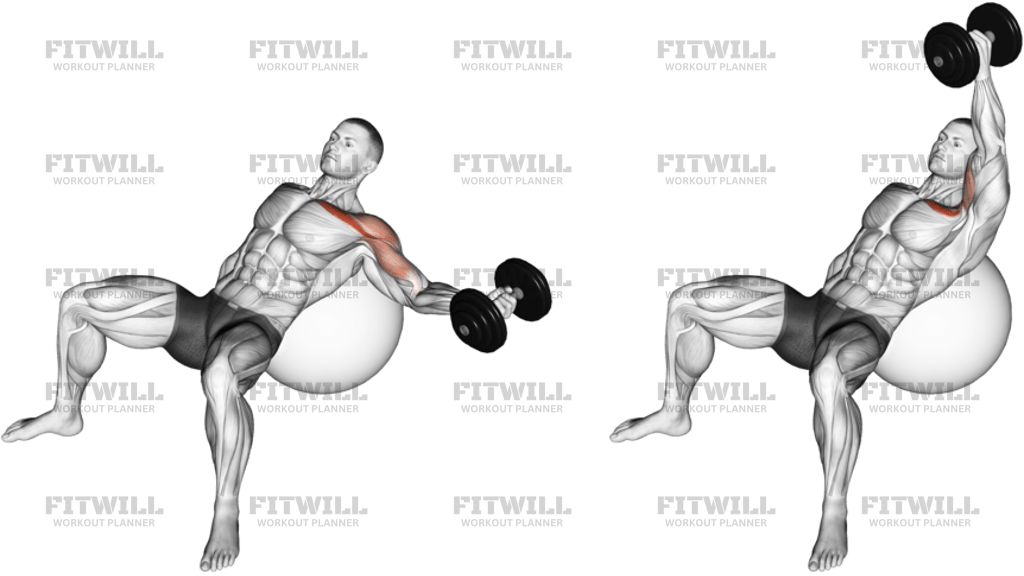
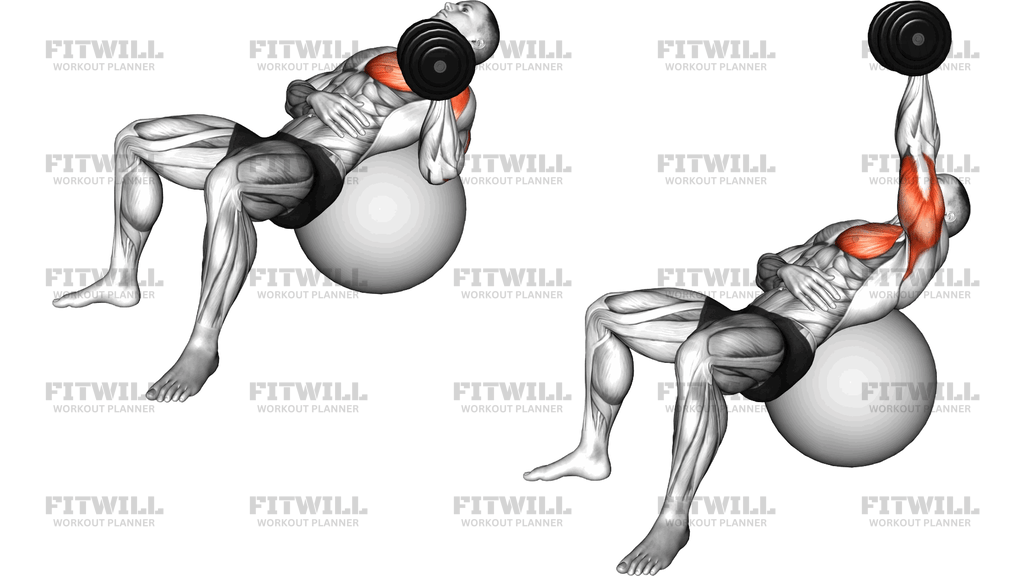
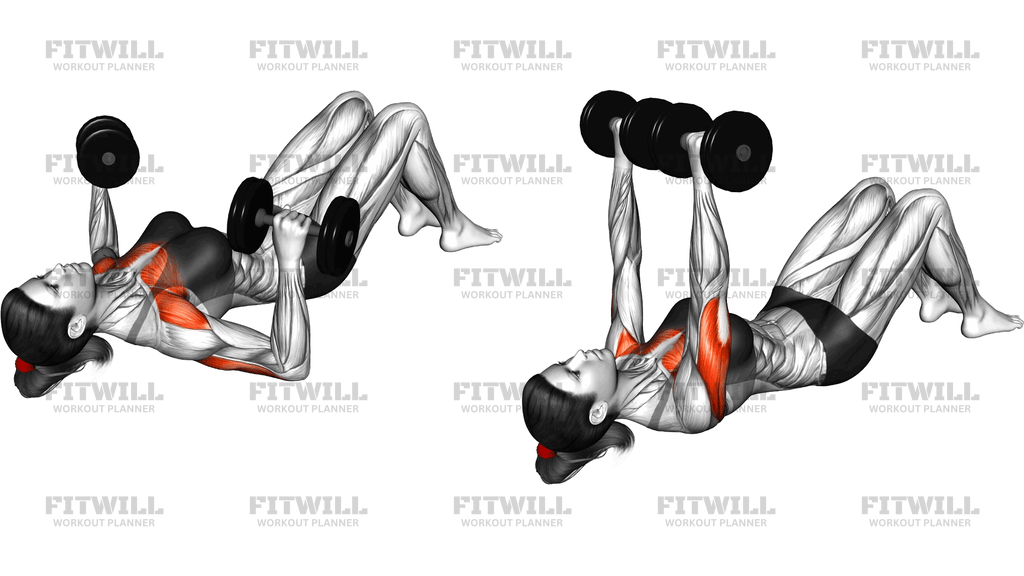
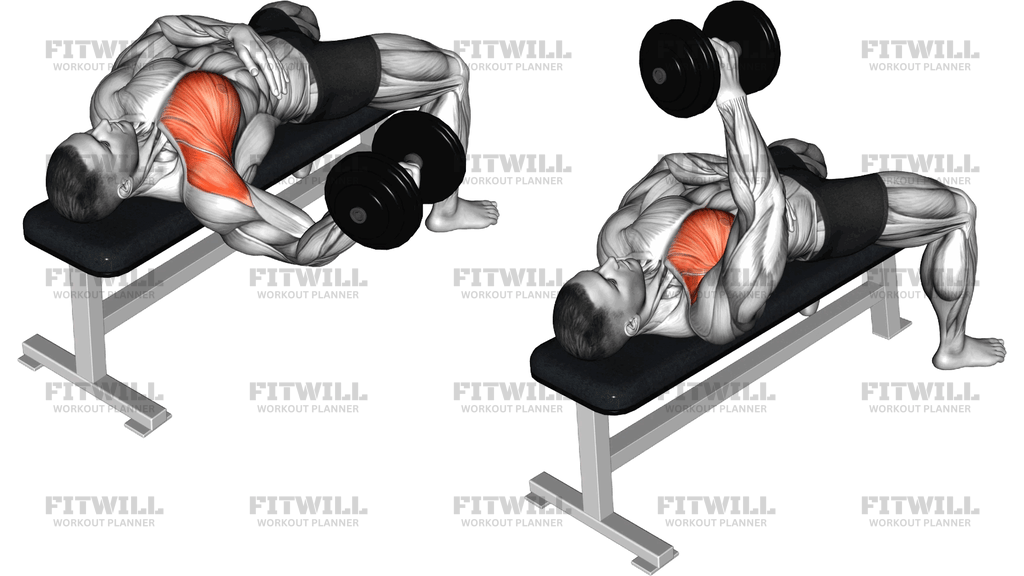
Dumbbell Lying Hammer Press
Dumbbell Lying Hammer Press is a neutral-grip dumbbell press performed while lying on a bench. The palms face each other through the whole rep, which changes the elbow path and often makes the press feel smoother on the shoulders than a wide-grip dumbbell press. The movement still trains the chest hard, but the triceps and front delts usually contribute more because the neutral hand position keeps the upper arms closer to the body.
The setup matters because the dumbbells travel best when the shoulders are packed, the wrists stay stacked, and the feet stay anchored. Lie flat with each dumbbell at the outside of the chest, then settle the shoulder blades down and back without over-arching the lower back. A solid base lets the pressing muscles do the work instead of forcing the shoulders and torso to chase the weights.
Each rep should follow a controlled vertical-to-slightly-inward press path. Drive the dumbbells up until the elbows extend, but do not smash them together at the top or shrug into the finish. On the way down, let the elbows bend under control until the upper arms reach a comfortable depth without shoulder pinch or loss of scapular position. A steady tempo keeps the chest loaded and prevents the press from turning into a sloppy bounce.
Use this exercise for chest and triceps strength work, accessory pressing, or as a more shoulder-friendly option when straight-bar pressing feels awkward. It also works well for lifters who want more individual arm control than a barbell gives them. Start with a load that lets both dumbbells move on the same track, and stop the set when one side starts drifting, the wrists fold back, or the bottom position stops feeling stable.
[ Workout Log & Planner ]
Put your next workout in Fitwill
Keep your plan and training log ready when you are.


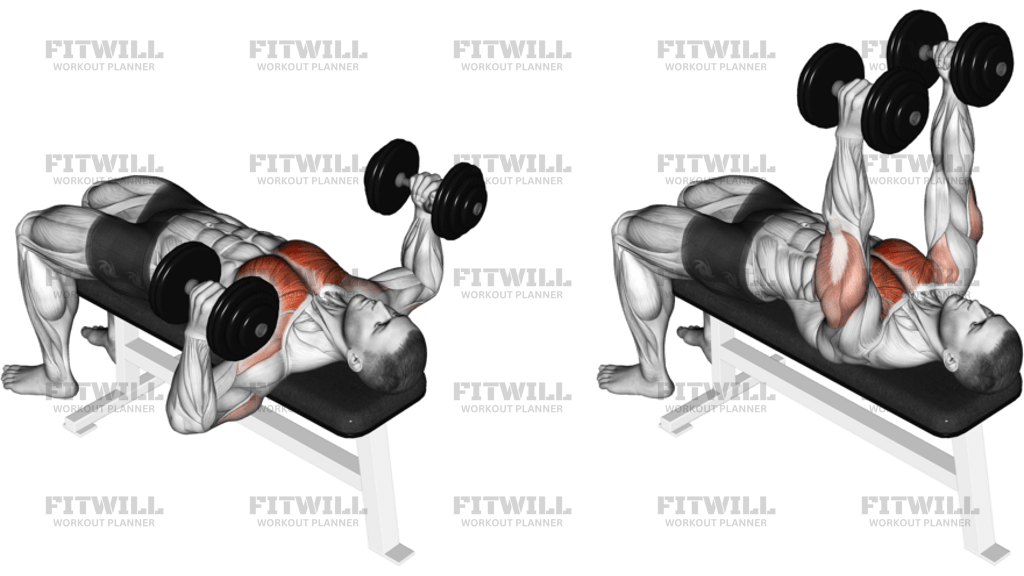
Instructions
- Lie flat on a bench with a dumbbell in each hand and your palms facing each other.
- Set the dumbbells just outside the chest with elbows bent and forearms vertical.
- Plant both feet firmly and keep your hips and upper back glued to the bench.
- Pull your shoulder blades down and slightly together before starting the press.
- Press the dumbbells up and slightly in until the elbows are nearly straight.
- Keep the wrists stacked over the elbows as the weights travel upward.
- Lower the dumbbells in a controlled arc back to the outside of the chest.
- Stop the descent before the shoulders roll forward or the upper arms lose control.
- Keep both dumbbells moving at the same speed and repeat for the desired reps.
Tips & Tricks
- Keep the palms facing each other for the whole set so the neutral grip stays consistent.
- Let the elbows track about 30 to 45 degrees from the torso instead of flaring wide.
- Do not smash the dumbbells together at the top; finish with stacked wrists and firm triceps.
- If the shoulders feel crowded at the bottom, shorten the range before the upper arms drift below bench level.
- Use a bench width and grip path that let the dumbbells clear your chest without forcing the shoulders forward.
- Keep the ribcage from popping up as you press; the bench should support the lift, not a big lower-back arch.
- Choose a load that you can lower quietly under control, because a noisy drop usually means the bottom position is too deep or too heavy.
- Exhale through the press and reset your shoulder blades before each rep if the set starts to get loose.
Frequently Asked Questions
What does Dumbbell Lying Hammer Press emphasize most?
It primarily targets the chest, with the triceps and front delts contributing strongly because the neutral grip keeps the elbows closer to the torso.
Why use a hammer grip instead of a normal dumbbell press grip?
The palms-facing-in position often feels friendlier on the shoulders and makes it easier to keep both elbows on a cleaner pressing path.
How deep should I lower the dumbbells?
Lower only as far as you can keep the shoulders packed and the upper arms under control. If the front of the shoulder pinches, the bottom is too deep for that rep.
Can beginners do this exercise?
Yes, as long as they start light and can place the dumbbells safely at chest level. A stable bench setup and a short controlled range make it much easier to learn.
What is the biggest mistake with the dumbbells?
A common mistake is letting the weights drift apart or wobble independently, which usually means the load is too heavy or the shoulders are no longer set.
Should the dumbbells touch at the top?
They can come close, but do not force them together. The goal is to finish the press cleanly, not to clap the bells and lose shoulder position.
Is this a good alternative to barbell bench pressing?
Yes. It gives each arm its own path and can be easier to tolerate if straight-bar benching bothers the shoulders or wrists.
How do I make the set safer when the dumbbells get heavy?
Use a spotter or a setup that lets you get the dumbbells into position without twisting, then stop the set before the descent turns into a drop.