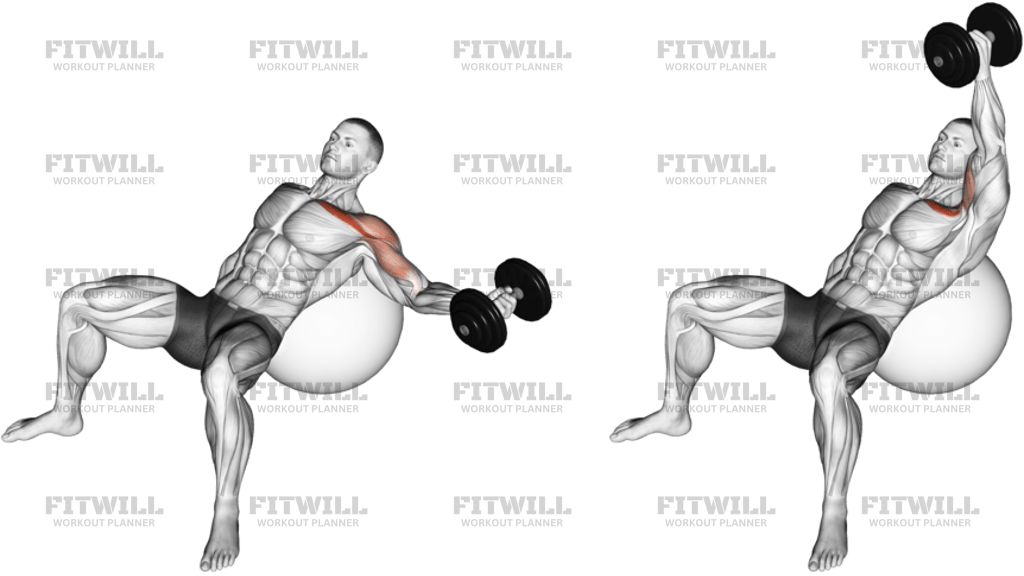
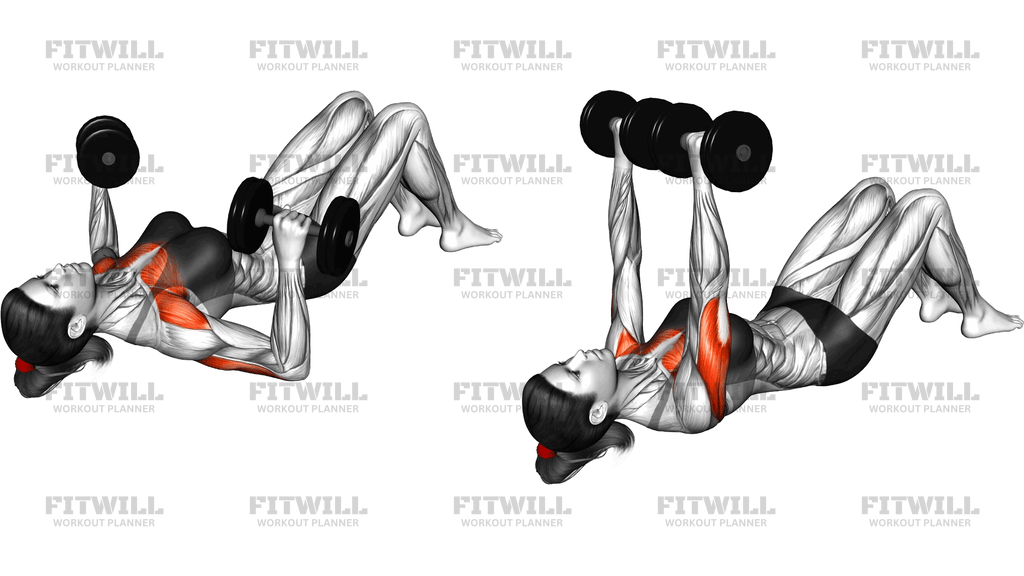
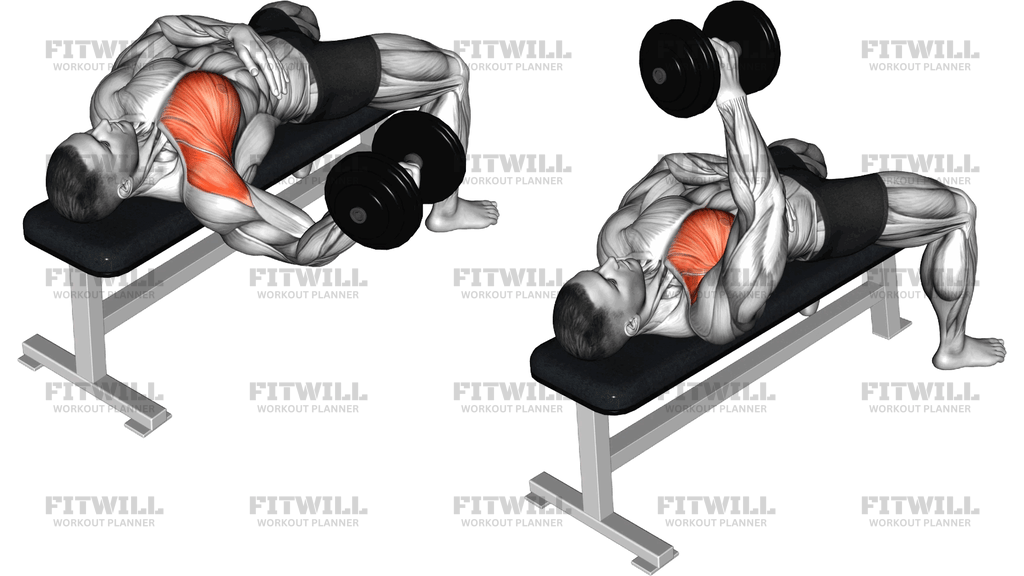
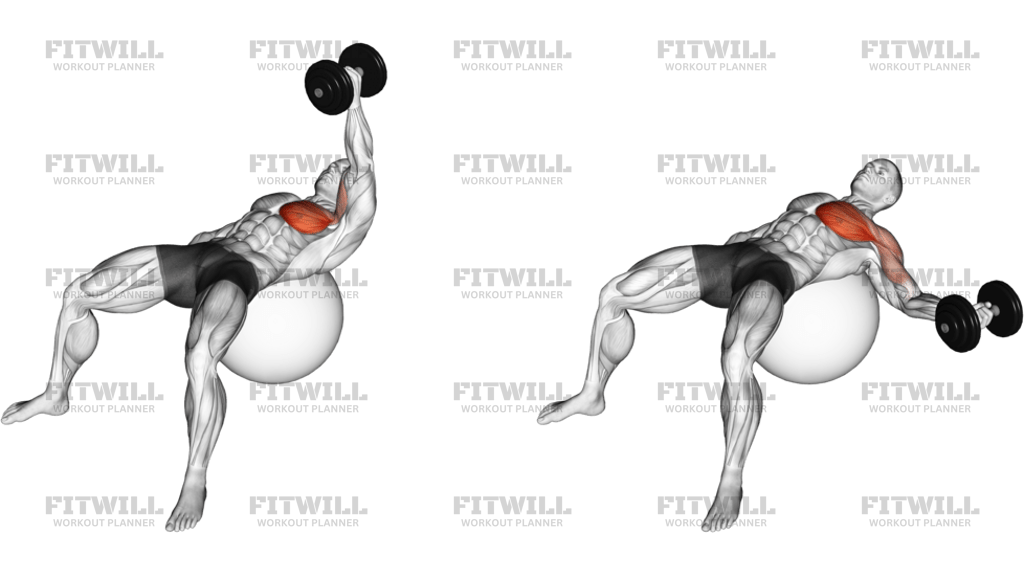
Dumbbell Incline One-Arm Press On Exercise Ball
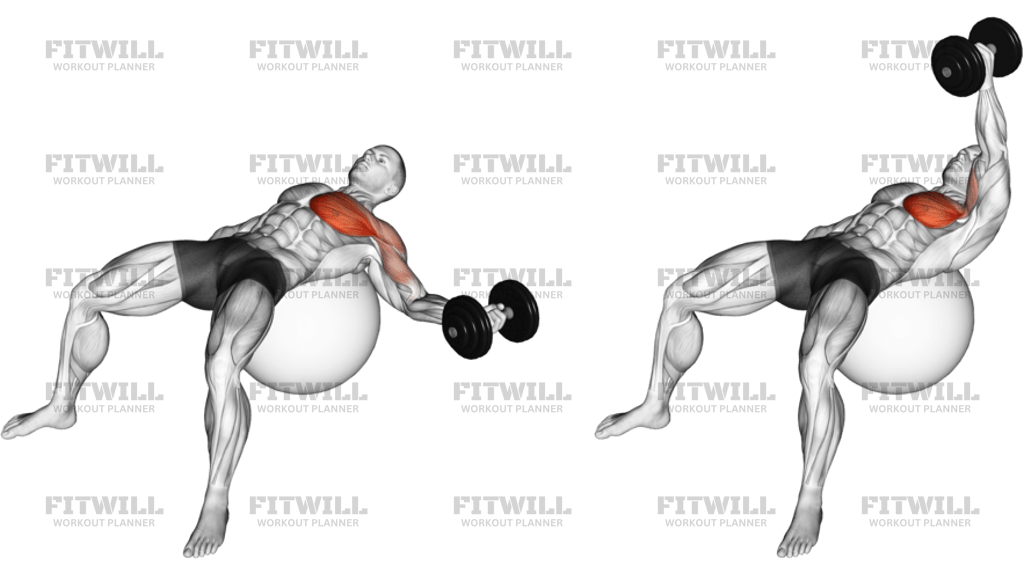
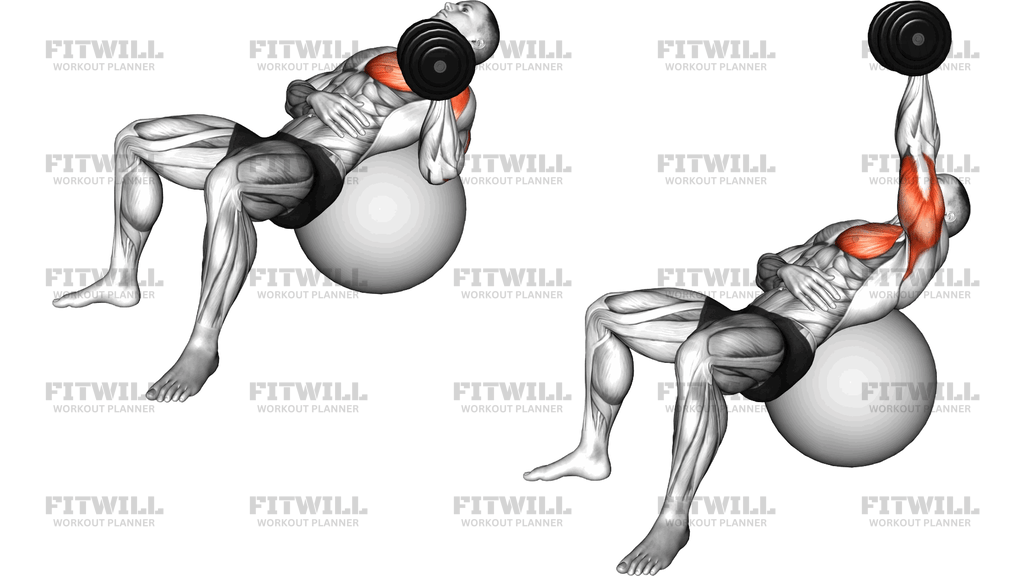
Dumbbell Incline One-Arm Press On Exercise Ball is a single-arm pressing variation performed with the upper back supported on a stability ball. The ball changes the lift from a simple chest press into a pressing and anti-rotation drill: the chest drives the dumbbell, while the shoulders, triceps, and trunk keep the torso from shifting or overextending. The result is a useful upper-body strength exercise that also asks for real control.
The main emphasis is on the pecs, with the anterior deltoid and triceps helping finish the press. Because only one arm works at a time, the obliques and deep core have to resist twisting through the torso and rib cage. That makes the exercise valuable when you want chest work that also exposes side-to-side control, shoulder stability, and weak links that are easy to hide on a flat bench.
Setup matters a lot more here than on a standard dumbbell press. Position the upper back and shoulder blades on the center of the ball, plant the feet wide enough to keep the ball from rolling, and keep the hips level. Start with the dumbbell beside the chest, wrist stacked over the elbow, and the shoulder blade set without shrugging. A small amount of natural body shift is normal, but the lift should not turn into a twist, a hip drive, or a lower-back arch.
Press the dumbbell up until the arm is almost straight and the hand finishes above the shoulder or slightly in front of it, depending on shoulder comfort. Lower the weight slowly to the outside of the chest with the elbow under control and the forearm mostly vertical. Exhale as you press, inhale as you lower, and keep the free side quiet so the rep stays deliberate instead of turning into a full-body heave.
Use this movement as accessory chest work, unilateral pressing practice, or a stability-focused upper-body drill. It is not the best choice for maximal loading, but it is effective when you want pressing volume with more balance demands than a bench press. Stop the set if the ball shifts, your ribs flare, or the torso begins to rotate enough that the pressing arm is no longer doing the work.
[ Workout Log & Planner ]
Put your next workout in Fitwill
Keep your plan and training log ready when you are.


Instructions
- Sit beside the exercise ball with a dumbbell in one hand, then roll your upper back onto the center of the ball so your chest is angled up and your shoulders are supported.
- Walk your feet out until they are flat, slightly wider than hip-width, and far enough apart that the ball stays steady under your upper back.
- Bring the dumbbell to the working-side chest with the palm facing forward or slightly inward, the wrist stacked over the elbow, and the forearm vertical.
- Set the working-side shoulder blade down and back without shrugging, then brace your ribs so your torso stays level instead of twisting toward the lifting arm.
- Press the dumbbell up and slightly inward until the arm is nearly straight and the hand finishes above the shoulder or just in front of it.
- Keep the free arm quiet for balance and avoid letting the hips pop or the lower back arch as the dumbbell moves upward.
- Lower the dumbbell slowly to the outside of the chest until the elbow is just below shoulder level and the stretch is controlled.
- Reset your breath and body position before the next repetition, then finish the set and switch sides if you are training both arms.
Tips & Tricks
- Plant the feet wide enough that the ball stays still; if it rolls, the set is too unstable for the load you chose.
- Use a lighter dumbbell than you would on a flat bench, because the ball adds a balance demand to every rep.
- Keep the wrist stacked over the elbow at the bottom so the shoulder, not the wrist, controls the press path.
- Let the dumbbell travel slightly up and in rather than straight up, which better matches the chest line from this incline position.
- Do not lock the shoulder blade so hard that the shoulder jams; keep it set, but allow the joint to move naturally as the arm presses.
- If the rib cage flares or the low back arches, shorten the range and re-stack the torso before the next rep.
- Exhale through the press and inhale on the way down to keep the torso from bracing too late.
- Stop the set when the torso starts rotating more than the arm is pressing, because the core is no longer holding the position.
Frequently Asked Questions
What muscles does Dumbbell Incline One-Arm Press On Exercise Ball work?
It mainly works the chest, especially the upper and outer press line, with help from the front deltoid and triceps. The obliques and deeper core muscles also work hard to keep you from twisting on the ball.
Why use an exercise ball for this press?
The ball adds instability, so the press becomes more than just chest work. It forces the torso, shoulders, and hips to stay organized while one arm moves the load.
How should my elbow travel on the way down?
Let the elbow drift to the outside of the chest and stop when it is just below shoulder level. Avoid flaring it straight out or letting it sink so low that the shoulder feels jammed.
Can beginners do this one-arm press on the ball?
Yes, but only with a light dumbbell and very steady feet. If the ball feels too shaky, start with a floor or bench press first and come back to the ball later.
How do I keep from twisting during the press?
Widen your feet, keep the ribs stacked, and press without letting the opposite shoulder and hip rotate away from the ball. The non-working side should stay quiet, not help drive the rep.
What is the most common mistake with this exercise?
The usual mistake is turning it into a bridge or a twist instead of a press. If your hips pop up or your lower back takes over, the load is too heavy or the setup is off.
What can I use instead if the ball feels unstable?
Use a single-arm dumbbell press on a flat bench or on the floor. Both options keep the pressing pattern but remove some of the balance challenge.
Where should I feel the movement most?
You should feel the chest doing the main work, with the front shoulder and triceps assisting. A little trunk effort is normal, but sharp low-back pressure is a sign to adjust the setup.