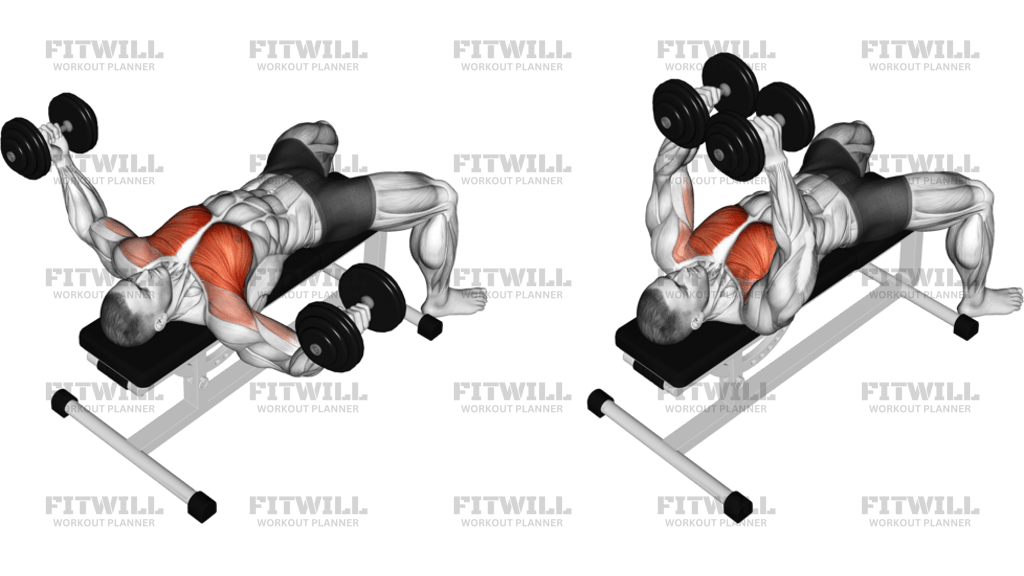
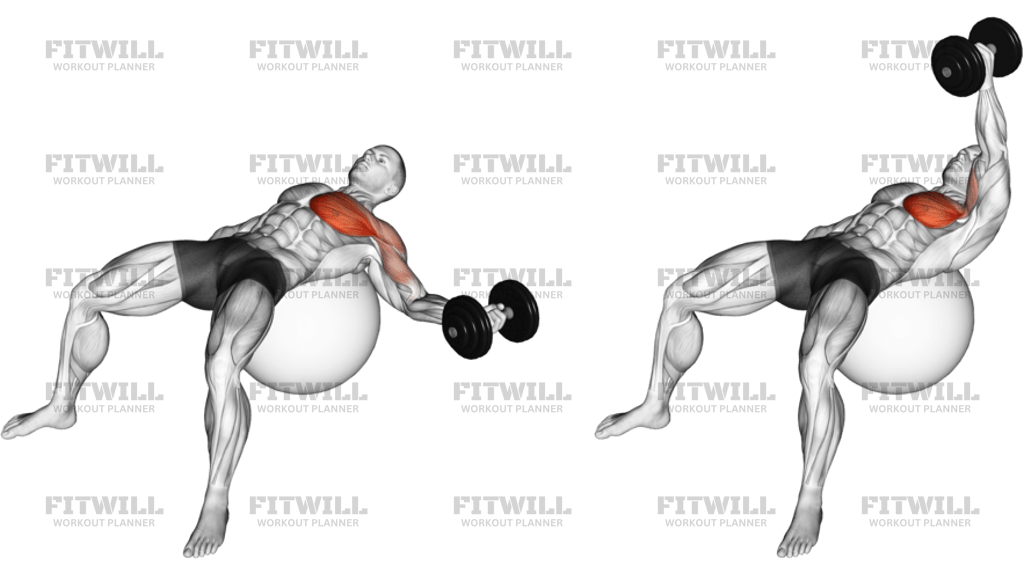
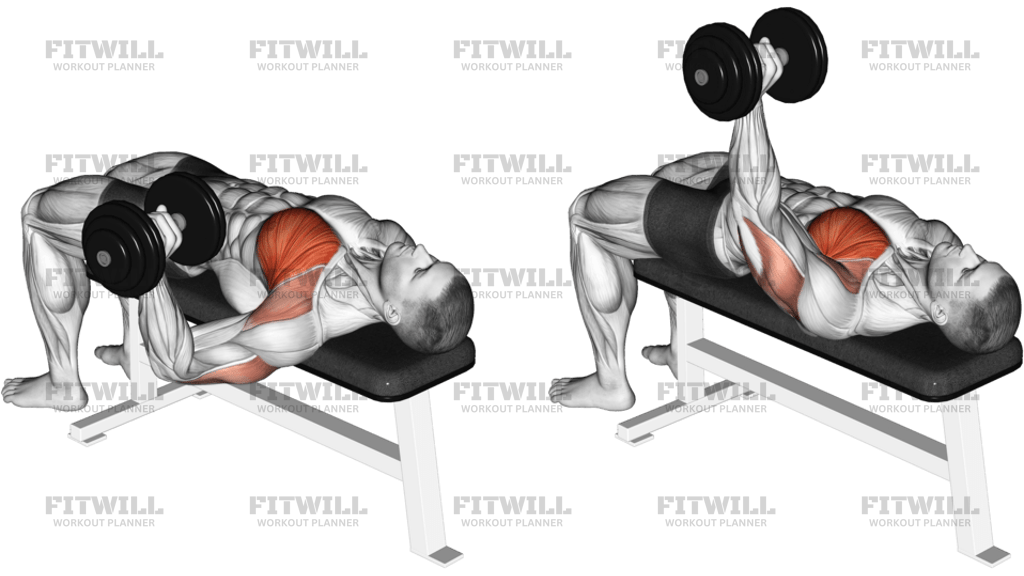
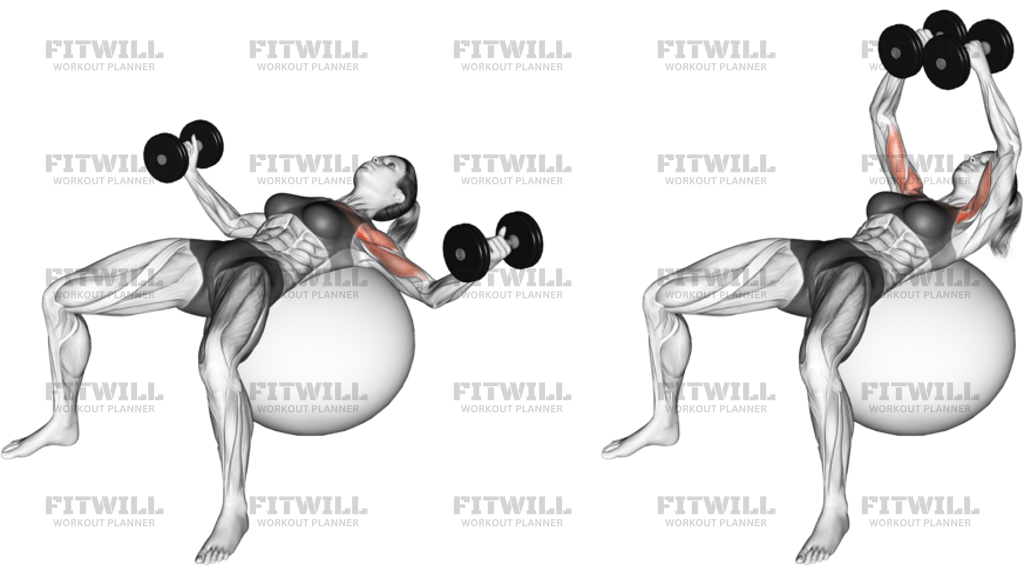
Dumbbell Incline One-Arm Fly On Exercise Ball
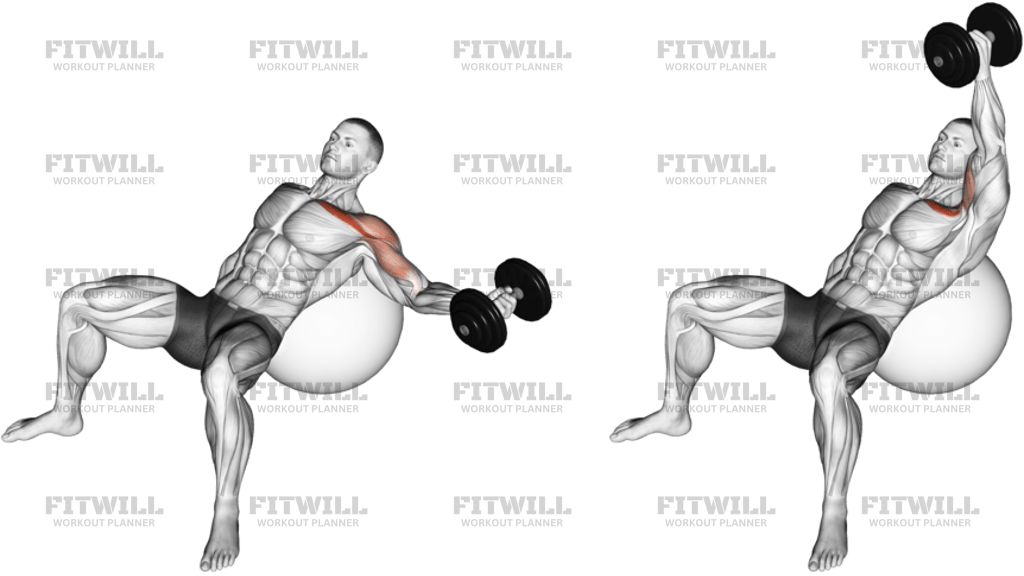
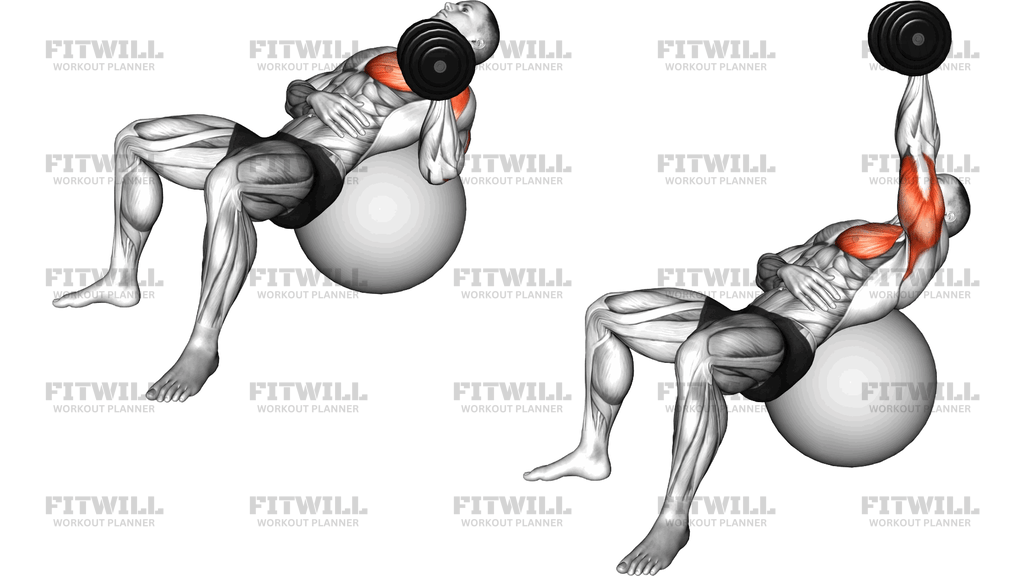
Dumbbell Incline One-Arm Fly On Exercise Ball is a chest-focused dumbbell movement that puts your upper back on a stability ball so you can train the pecs through a long, controlled arc. The ball creates an unstable base, so the lift asks for more positioning skill than a flat-bench fly and rewards lifters who can keep the rib cage, shoulders, and pelvis organized while one arm moves.
The main target is the chest, especially the Pectoralis Major, with the front deltoid, triceps, and abdominal wall helping you keep the body steady. That makes the exercise useful when you want chest isolation without the pressing pattern of a bench press. The one-arm setup also makes side-to-side control more obvious, which is helpful if one shoulder wants to drift forward or one side tends to take over.
The setup matters more here than with a standard fly. You need the upper back and shoulder blades supported by the ball, feet planted far enough away to keep the hips from sliding, and the working dumbbell lined up over the chest before the arc begins. If the ball is too high on the back or your feet are too close, the shoulders usually roll forward and the movement turns into a shaky press instead of a chest fly.
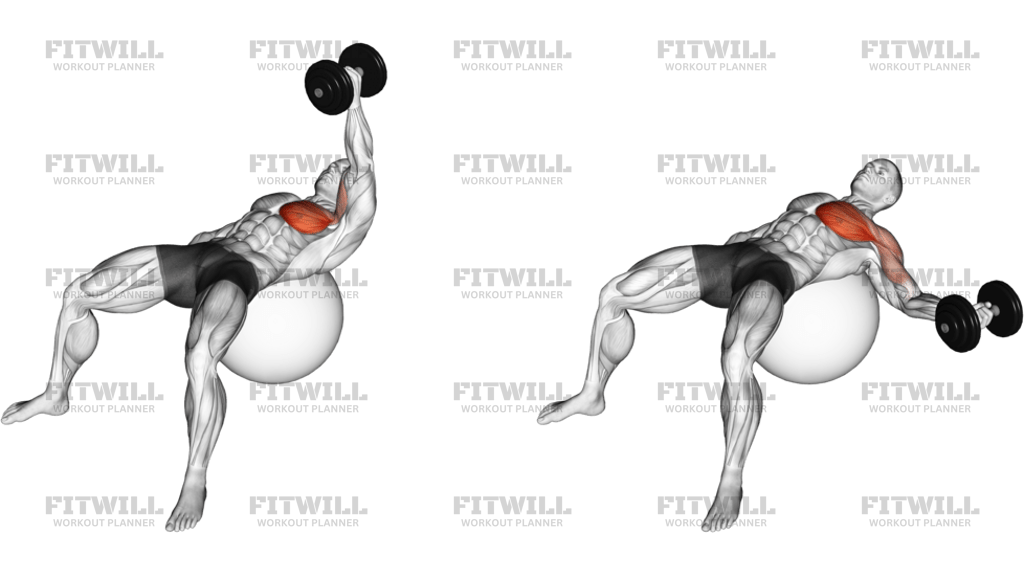
During each rep, open the arm in a wide but controlled arc until the upper arm is roughly level with the torso or slightly below it, then bring the dumbbell back up in the same path until the hand finishes above the chest. Keep a soft bend in the elbow and resist the urge to straighten and bend the arm like a press. The goal is to feel the chest lengthen on the way down and shorten as the arm closes, without losing the stacked position of ribs over pelvis.
Dumbbell Incline One-Arm Fly On Exercise Ball works well as accessory chest work, as a lighter hypertrophy movement, or as a unilateral finisher when you want the pecs to work without loading the shoulder joint heavily. It is also a useful option for lifters who want more control than a free-standing fly but less rigidity than a machine. Use conservative weight, stop the range before the shoulder feels stretched or unstable, and keep the movement smooth enough that every rep looks the same from the first to the last.
[ Workout Log & Planner ]
Put your next workout in Fitwill
Keep your plan and training log ready when you are.


Instructions
- Sit on the stability ball with a dumbbell in one hand, then walk your feet forward until your upper back is supported on the ball and your knees stay bent with both feet flat on the floor.
- Set your shoulder blades across the ball, keep your hips level, and hold the dumbbell above the middle of your chest with a slight bend in the elbow.
- Plant your feet wide enough to stop the ball from rolling and keep your head, ribs, and pelvis stacked before the first rep.
- Lower the dumbbell in a slow arc out to the side until the upper arm is in line with your torso or just below it.
- Keep the elbow angle nearly fixed as you open the arm so the movement stays a fly, not a press.
- Squeeze the chest to bring the dumbbell back over the chest along the same arc.
- Pause briefly at the top without letting the shoulder shrug forward or the wrist bend back.
- Lower into the next repetition or finish the set by setting the dumbbell down carefully and sitting upright on the ball.
Tips & Tricks
- Choose a lighter dumbbell than you would use on a flat bench fly; the ball makes the shoulder and trunk work harder to stay organized.
- If the ball feels unstable, walk your feet farther forward and keep more weight through the heels instead of letting your hips slide off the ball.
- Stop the descent when the upper arm is just below torso level; going deeper often pulls the shoulder forward and turns the stretch into joint stress.
- Keep the wrist stacked over the elbow so the dumbbell stays stable instead of wobbling at the bottom of the arc.
- Do not turn the rep into a press by straightening the elbow as the dumbbell comes up; the elbow angle should stay almost fixed.
- Exhale as the arm closes and the chest contracts, then inhale on the opening phase when the pecs are lengthening.
- Keep the working shoulder from shrugging toward the ear at the top; the chest should finish the rep, not the upper trap.
- Use a slow lowering phase if the ball starts bouncing or your ribs flare off the ball, because that usually means the load is too heavy.
Frequently Asked Questions
What muscles does Dumbbell Incline One-Arm Fly On Exercise Ball work most?
It mainly trains the chest, especially the Pectoralis Major, with the front deltoid and triceps helping to stabilize the arm.
Why use the ball instead of a flat bench for this fly?
The ball adds an unstable support, so you have to control your shoulder blade position, rib cage, and hips while the chest moves through the fly.
How far should I lower the dumbbell on Dumbbell Incline One-Arm Fly On Exercise Ball?
Lower until the upper arm is about level with the torso or slightly below it. Going much deeper usually shifts tension from the chest into the shoulder joint.
Can beginners do Dumbbell Incline One-Arm Fly On Exercise Ball?
Yes, if they use a very light dumbbell and keep the feet planted wide enough to keep the ball steady. The unstable setup makes control more important than load.
Should the elbow bend change during the rep?
Only slightly. Keep a soft bend locked in so the movement stays a fly and the chest does the work instead of turning the lift into a press.
What if my shoulder feels pinched at the bottom?
Shorten the range and stop the descent earlier. On this exercise, a deep stretch with the shoulder rolled forward is usually a setup or load problem, not a cue to push deeper.
Where should my feet be during the exercise ball setup?
Keep both feet flat and wide enough to keep the ball from rolling as you open and close the arm. If the hips slide, move the feet farther away from the ball.
Is this better as a chest builder or a finisher?
It works well for both, but most people use it as accessory chest work or a lighter finisher because the stability demand makes heavy loading impractical.