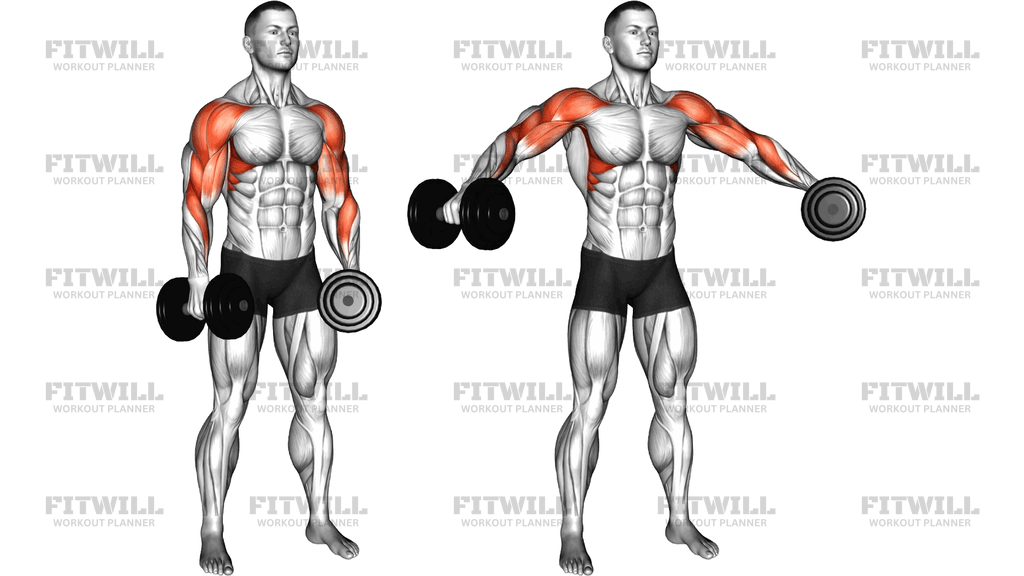
Dumbbell One-Arm Lateral Raise With Support
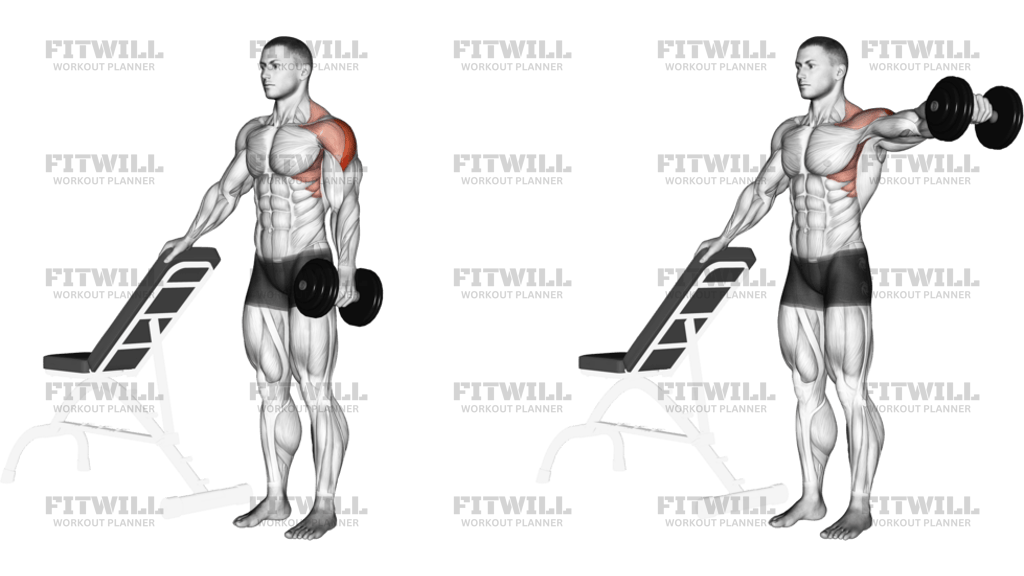
Dumbbell One-Arm Lateral Raise With Support is a single-arm shoulder isolation exercise built to train the side delts while limiting body swing. The free hand on a bench or similar support gives you a stable base, so the working shoulder has to do the lifting instead of the torso turning the rep into a cheat raise. It is useful when you want cleaner shoulder work, better side-to-side comparison, or less momentum than a standing bilateral raise.
Because the movement is supported, the load is usually lighter than people expect. That is a good thing. The goal is not to fling the dumbbell up to shoulder height; it is to keep the shoulder and upper arm organized while the delts abduct the arm in a smooth arc. The traps and upper back still help stabilize, but they should not take over the rep.
Set up beside an incline bench or another sturdy support, brace lightly, and let the working arm hang just outside the thigh. Keep a soft bend in the elbow and raise the dumbbell out and slightly forward rather than straight into a shrugging path. Stop around shoulder height, pause briefly, and lower under control until the dumbbell returns close to the thigh without bouncing off the leg.
This exercise fits well in shoulder accessory work, upper-body hypertrophy training, or unilateral corrective work. It is especially useful if one side tends to swing, shrug, or dominate the other. Keep the neck long, the ribs quiet, and the support hand planted so the repetition stays strict from the first rep to the last.
For most lifters, Dumbbell One-Arm Lateral Raise With Support works best late in a push session or as a focused finisher after bigger pressing work. It can also be paired with rear-delt or external-rotation work when you want a shoulder session that emphasizes control instead of heavy loading. If the top of the shoulder starts doing most of the work, or if the path turns into a half-front raise, reduce the weight and keep the dumbbell traveling on the same line every rep.
The supported setup makes it easier to stay honest with your range and tempo, which is why this version is often better than a free-standing raise when you are chasing cleaner shoulder mechanics. Treat the bench as a balance point, not a push-off point, and keep the repetition smooth enough that the side delt stays under tension from the bottom to the top. If the rep gets noisy, jerky, or twisted, the load is too heavy for the form you want.
[ Workout Log & Planner ]
Put your next workout in Fitwill
Keep your plan and training log ready when you are.


Instructions
- Stand beside an incline bench or sturdy support and plant your free hand on the top pad for balance.
- Set your feet about hip-width apart, then lean very slightly away from the bench so the working arm hangs clear of the thigh.
- Keep your chest tall, ribs stacked, and neck long while the dumbbell starts near the outside of the lead leg.
- Hold the dumbbell with a neutral grip and keep a soft bend in the elbow before the first rep.
- Lift the dumbbell out to the side in a smooth arc, leading the motion with the elbow instead of the hand.
- Raise until the upper arm reaches about shoulder height or just below it, keeping the shoulder down away from the ear.
- Pause briefly at the top without twisting the torso or pushing harder into the support hand.
- Lower the dumbbell slowly back toward the thigh, keeping the same path on the way down.
- Reset the shoulder before the next rep and switch sides once the set is complete.
Tips & Tricks
- Choose a dumbbell you can lift without shifting your weight off the planted foot or leaning harder into the bench.
- Keep the dumbbell slightly in front of your body line if a pure side path makes the shoulder pinch.
- Think about moving the elbow out and up; if the wrist is climbing faster than the elbow, the raise usually gets sloppy.
- Do not let the top shoulder creep toward the ear on the way up.
- A slower lowering phase keeps tension on the side delt and reduces the urge to swing the next rep.
- If your torso starts rotating away from the support, cut the range before adding more load.
- A tiny thumb-up turn near the top can feel smoother for some shoulders, but do not force the rotation if it changes the path.
- Keep the supporting hand relaxed but firm enough that the bench stays a balance point, not a push-off point.
Frequently Asked Questions
What muscles does Dumbbell One-Arm Lateral Raise With Support work?
It mainly targets the side delts, with the upper traps and upper back helping stabilize the shoulder. The support reduces body swing so the shoulder does more of the work.
Why use a bench or other support for this raise?
The support keeps you from swaying, leaning, or cheating the weight up with the torso. That makes it easier to isolate one shoulder and compare sides.
How high should I raise the dumbbell?
Most lifters should stop around shoulder height or just below it. Going higher usually turns into shrugging and shifts work away from the side delt.
Should I lean away from the bench?
A small lean away from the support is fine if it helps the dumbbell clear the thigh and keeps the path clean. Do not turn it into a big side bend or twist.
What grip should I use on Dumbbell One-Arm Lateral Raise With Support?
A neutral grip works well for most people, with the thumb pointing roughly forward. If your shoulder feels better with a slight thumb-up turn near the top, that is usually fine.
What if I feel this mostly in my traps?
That usually means the shoulder is shrugging or the dumbbell is too heavy. Lower the load, keep the neck long, and lead the rep with the elbow instead of lifting the shoulder.
Is Dumbbell One-Arm Lateral Raise With Support beginner-friendly?
Yes, because the bench makes it easier to stay strict and control the path. Start light and keep the range just below the point where the shoulder starts to shrug.
Can I do Dumbbell One-Arm Lateral Raise With Support if my shoulder is sensitive?
Often yes, but only if the movement is pain-free and the path stays smooth. Try a smaller range, a lighter dumbbell, and a slight forward angle instead of forcing a perfectly flat side raise.