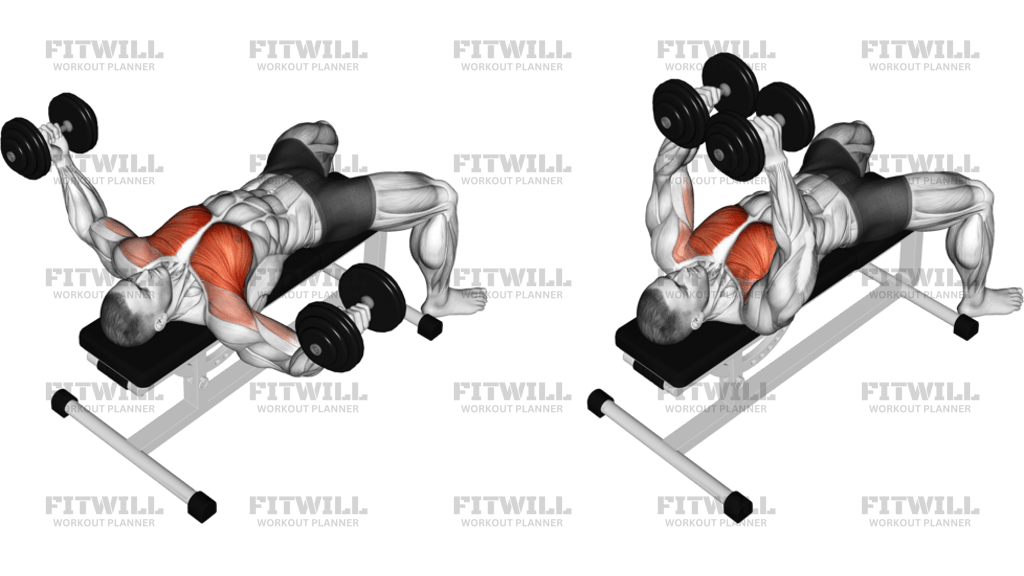
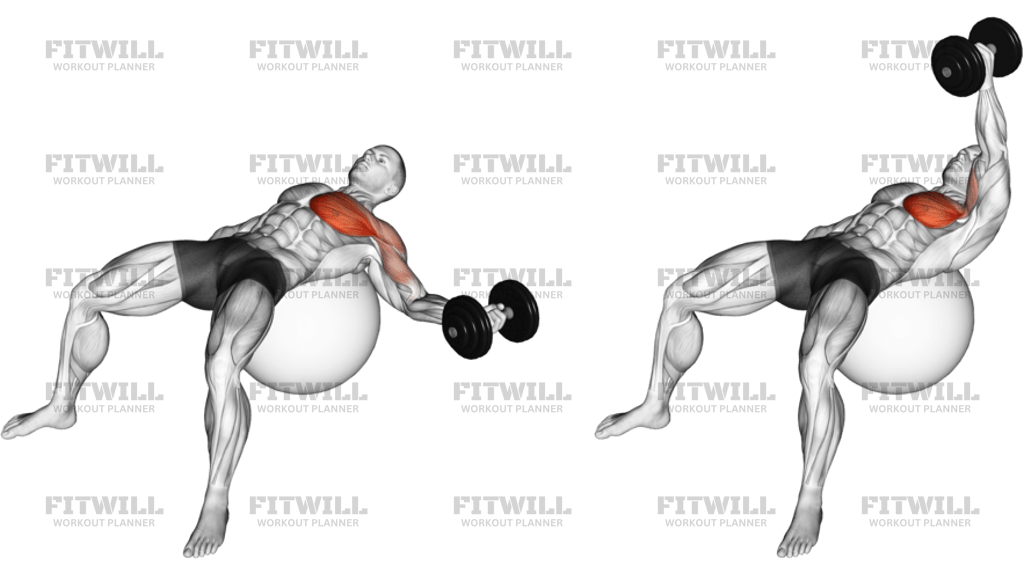
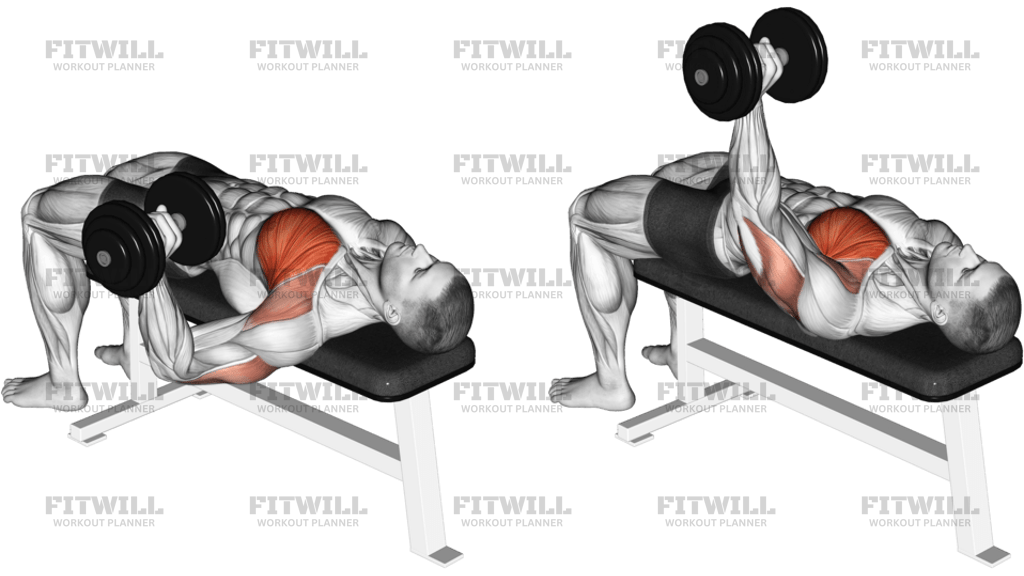
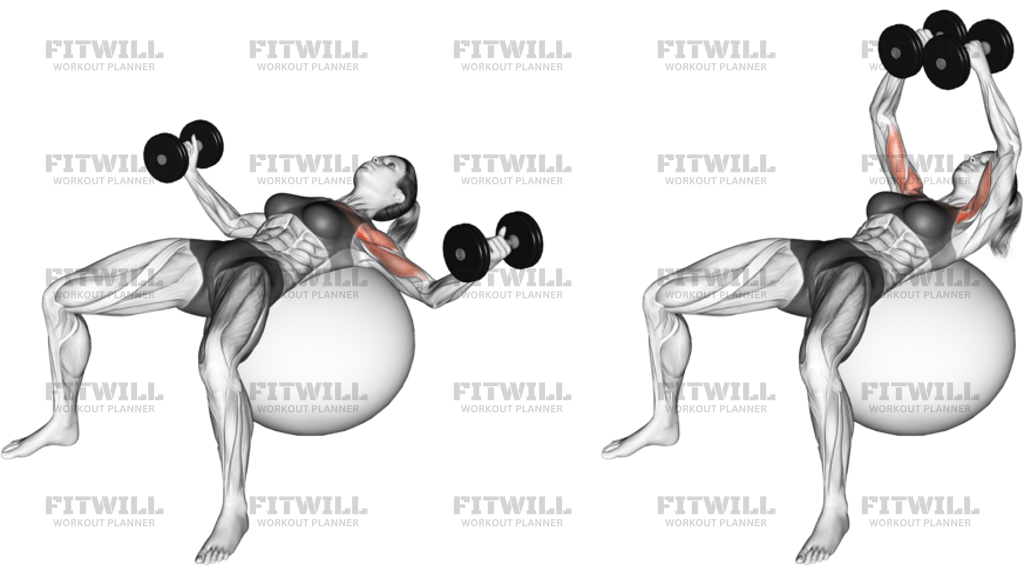
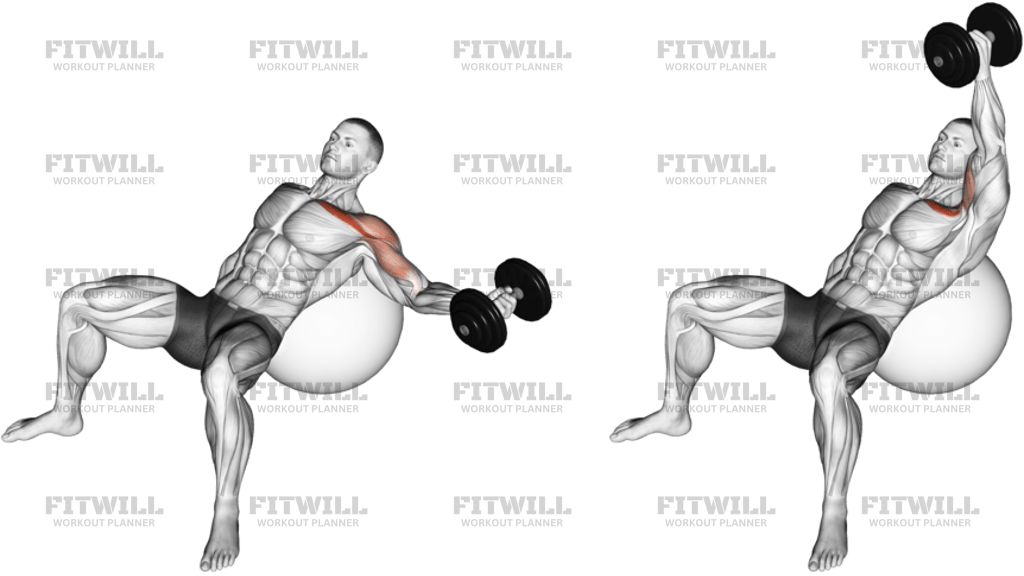
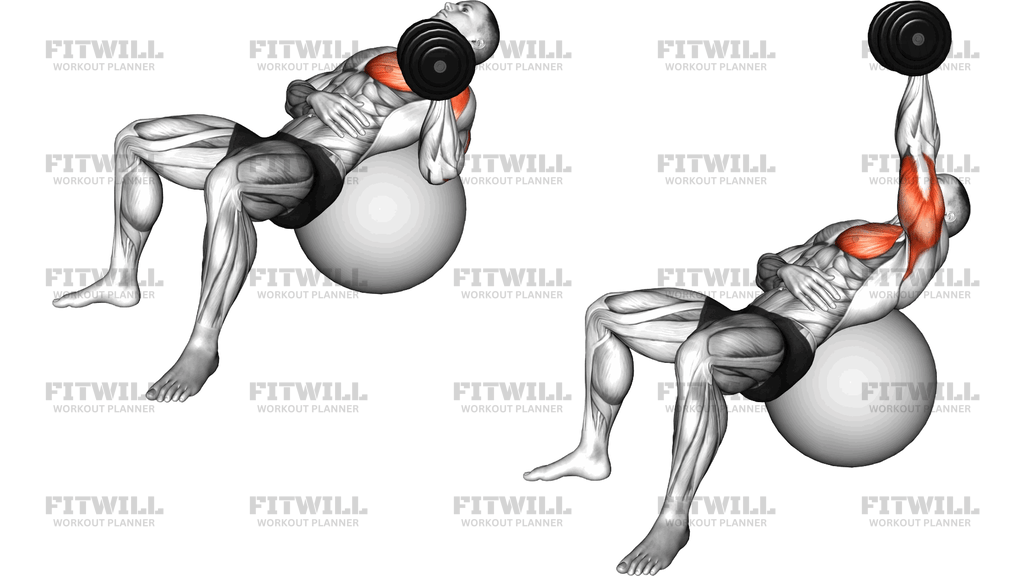
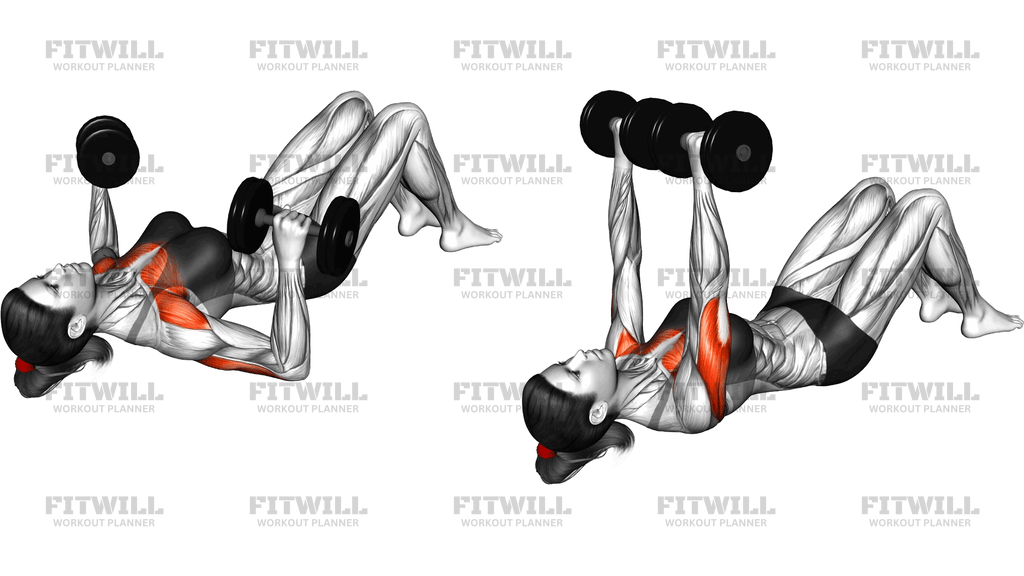
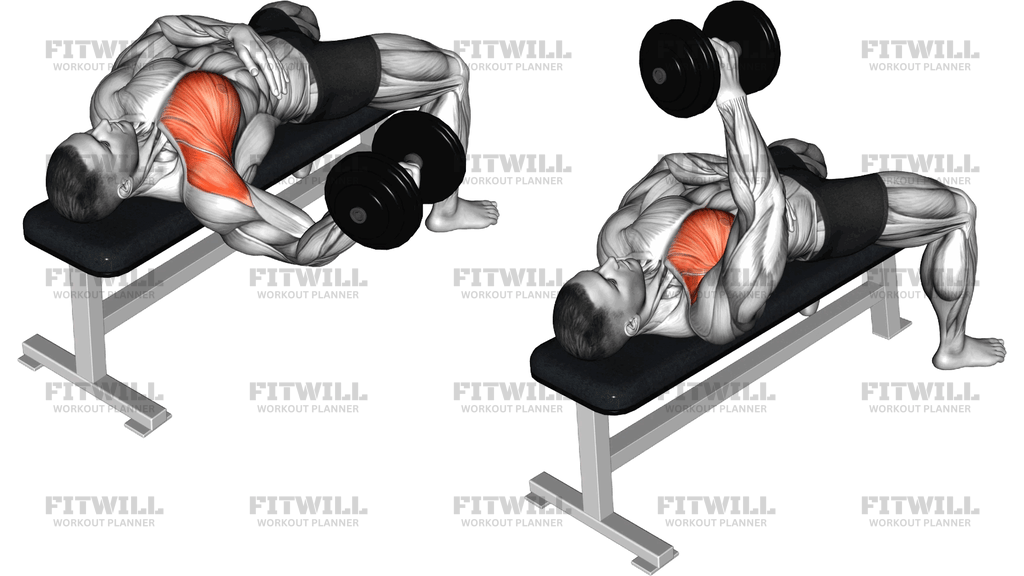
Dumbbell One-Arm Press On Stability Ball
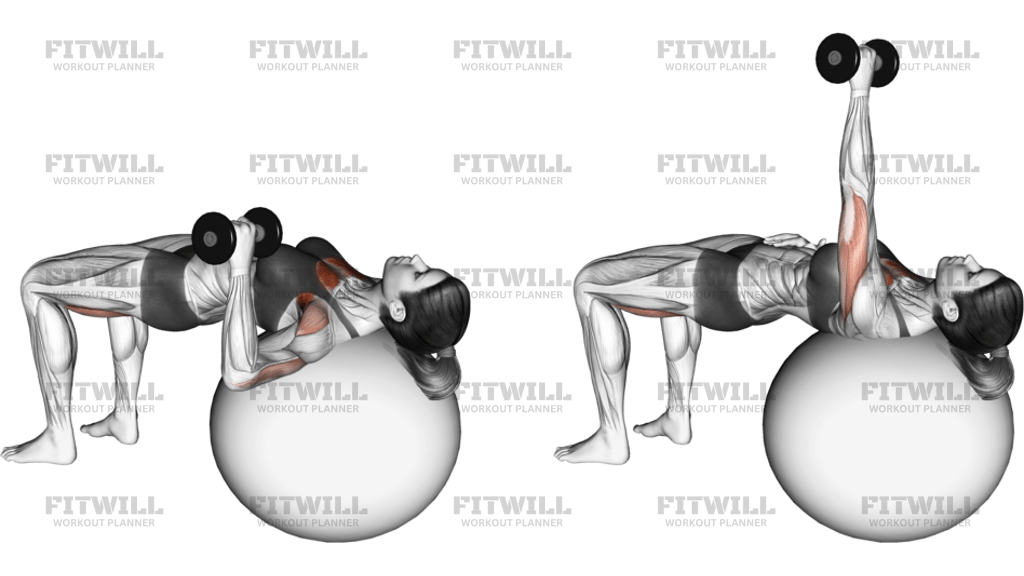
Dumbbell One-Arm Press On Stability Ball is a unilateral pressing exercise performed while lying across a stability ball with the shoulder blades and upper back supported, the hips lifted, and one dumbbell pressed from chest level to a vertical lockout. The unstable base turns a simple press into a full-body control drill, so the chest, front shoulder, and triceps do the lifting while the core and glutes keep the torso from rotating or sagging.
The setup matters because the ball changes where your body wants to drift. If the feet are too close together, the pelvis can wobble; if the hips drop, the press becomes a compensation exercise instead of a chest and shoulder rep. A solid bridge, stacked wrist, and steady shoulder position let the pressing arm move cleanly while the trunk stays quiet.
This version is useful when you want unilateral pressing strength without letting the stronger side take over every rep. It can also be a good accessory for athletes and lifters who need anti-rotation control, ribcage position, and shoulder stability under load. The ball adds challenge without needing very heavy weight, so the exercise rewards precision more than brute force.
The dumbbell should travel in a straight, efficient line from the outside of the chest toward the shoulder and then above the sternum. Lower under control until the elbow is comfortably below the torso line, then press again without bouncing off the bottom. Keep the non-working arm relaxed or braced lightly at the torso, and resist the urge to twist toward the pressing side as fatigue climbs.
Dumbbell One-Arm Press On Stability Ball works best with moderate loads, crisp tempo, and a stable bridge. It is a good option for upper-body accessory work, core-integrated pressing, or unilateral strength balance, but it is not the place to chase sloppy reps. If the ball shifts, the hips drop, or the shoulder shrugs toward the ear, reduce the load and own the position first.
Fitwill
Log Workouts, Track Progress & Build Strength.
Achieve more with Fitwill: explore over 9600 exercises with images and videos, access built-in and custom workouts, perfect for both gym and home sessions, and see real results.
Start your journey. Download today!




Instructions
- Sit on the floor with the stability ball behind you, then walk your feet out and roll your upper back onto the ball so your shoulder blades and head are supported.
- Lift your hips into a straight bridge and plant both feet firmly so the ball stays still before you start pressing.
- Hold one dumbbell at chest height with your wrist stacked over your elbow and the working elbow slightly below shoulder level.
- Brace your ribs down and keep your pelvis level so the torso does not twist toward the pressing side.
- Press the dumbbell upward in a smooth line until the arm is straight and the weight finishes over the shoulder.
- Keep the non-working side quiet and avoid letting the shoulder roll forward as you reach lockout.
- Lower the dumbbell slowly back to chest level, stopping under control without bouncing off the bottom position.
- Breathe out as you press and inhale as you lower, keeping the bridge and upper back position steady through every rep.
- Complete the set on one side, then switch arms and match the same range, tempo, and body position on the other side.
Tips & Tricks
- Set the ball so your upper back is supported, not just your neck, or the press will feel unstable and strain the neck.
- Keep the hips lifted like a bridge; a dropped pelvis makes the ball roll and steals tension from the press.
- Use a load that lets you keep the dumbbell path vertical without arching the lower back to finish the rep.
- Think about pressing the weight away from your chest, not forward toward your face, so the shoulder stays better stacked.
- Do not let the free hand pull you open; a quiet non-working side helps prevent rotation.
- Stop the descent before the elbow flares too far behind the torso if the front of the shoulder feels pinchy.
- A slower lowering phase makes the stability-ball challenge more useful than chasing a heavy one-rep feel.
- If the ball slides during the set, widen the stance slightly and replant the feet before adding more weight.
- Keep the wrist straight at the top; a bent wrist turns the press into a forearm strain instead of a chest and triceps rep.
Frequently Asked Questions
What muscles does Dumbbell One-Arm Press On Stability Ball work?
It mainly works the pecs, front delts, and triceps, while the abs, obliques, and glutes work hard to keep the torso from rotating on the ball.
Is Dumbbell One-Arm Press On Stability Ball beginner-friendly?
Yes, if the load is light and you can hold a stable bridge without wobbling. Beginners should learn the ball setup first before pushing heavier.
How should I set up on the stability ball?
Your upper back should be on the ball, your feet should stay planted, and your hips should stay lifted in a bridge. That gives you enough support to press without sliding around.
How heavy should the dumbbell be?
Choose a weight that lets you press without twisting, shrugging, or dropping the hips. If the ball starts moving, the load is too high.
Where should the dumbbell travel?
It should move in a clean line from chest level to directly above the shoulder. If it drifts forward, the shoulder usually takes over and the rep gets sloppy.
Why use one arm instead of both arms?
A single arm makes the torso resist rotation and helps expose side-to-side strength differences. It is also a useful way to train pressing control with less total load.
Should my hips stay high during Dumbbell One-Arm Press On Stability Ball?
Yes, the bridge is part of the exercise. Keeping the hips up reduces rolling on the ball and helps the trunk stay rigid while you press.
What mistake should I avoid?
Do not arch hard through the lower back or twist toward the working arm to finish the rep. That turns the press into a compensation pattern instead of a clean unilateral lift.