Dumbbell Rear Delt Raise
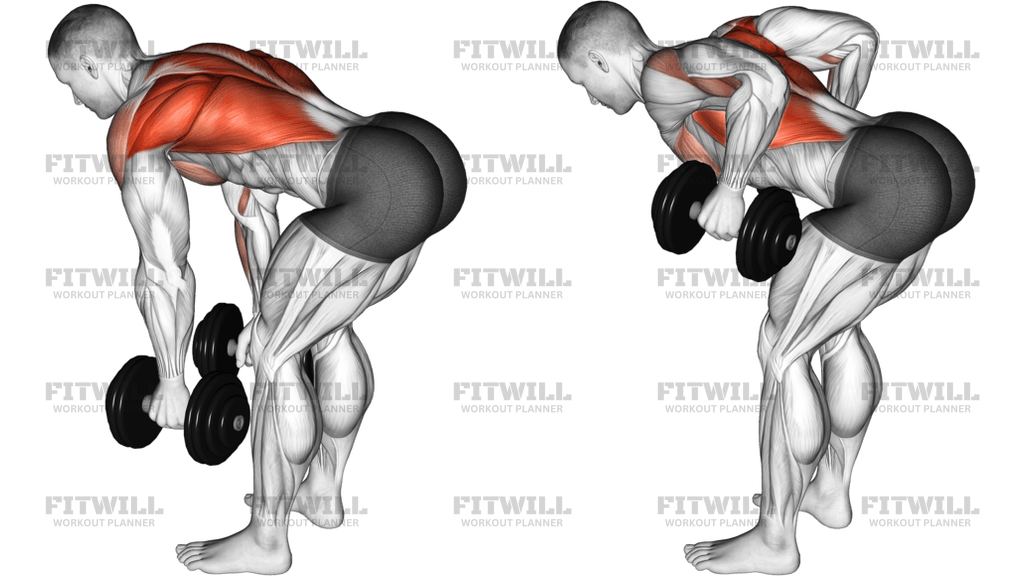
Dumbbell Rear Delt Raise is a rear-shoulder isolation exercise built around a hip hinge and a wide arm path. In the image, the torso stays tipped forward while the dumbbells hang under the shoulders and then travel outward until the upper arms line up with the body. That setup matters because it shifts the work onto the rear delts instead of turning the movement into a shrug, swing, or lower-back exercise.
This is a useful accessory movement for improving shoulder balance, pulling strength support, and posture control. Dumbbell Rear Delt Raise trains the back side of the shoulder through a clean horizontal abduction pattern, with the upper back and arm stabilizers helping keep the motion organized. It is often programmed after heavier pressing or rowing work, when the goal is to target the smaller shoulder muscles without needing a lot of load.
A good rep starts before the weights move. Hinge at the hips, keep a soft bend in the knees, and let the chest come forward so the spine stays long and neutral. Hold the dumbbells with a neutral grip and let them hang just below shoulder level, then set the shoulder blades quietly without pinching them hard together. The start position should feel stable enough that the arms can move without the torso rocking.
Lift the dumbbells out and slightly back in a controlled arc until the elbows are roughly in line with the shoulders or the rear delts are fully shortened. Keep the neck relaxed, the wrists stacked, and the elbows softly bent so the hands do not take over the work. On the way down, lower the weights slowly and keep tension on the rear delts instead of letting the arms drop and the shoulders roll forward.
Dumbbell Rear Delt Raise works best with modest loads, deliberate tempo, and clean reps that look the same from start to finish. It is a strong choice for athletes and lifters who need more rear-shoulder development, but it is also appropriate for beginners because the path is simple and the load can stay light. If your lower back starts doing the work, shorten the range, hinge a little less, or reduce the weight until the rear delts are clearly controlling the lift.
The exercise is most effective when the movement stays strict and repeatable. Use it as a finishing accessory, a shoulder-health builder, or a posture-focused pull-day movement when you want the rear delts to do the main work without the help of momentum. When the setup stays fixed and the torso stays quiet, Dumbbell Rear Delt Raise gives you direct tension exactly where the image suggests it should: on the back of the shoulder.
[ Workout Log & Planner ]
Put your next workout in Fitwill
Keep your plan and training log ready when you are.


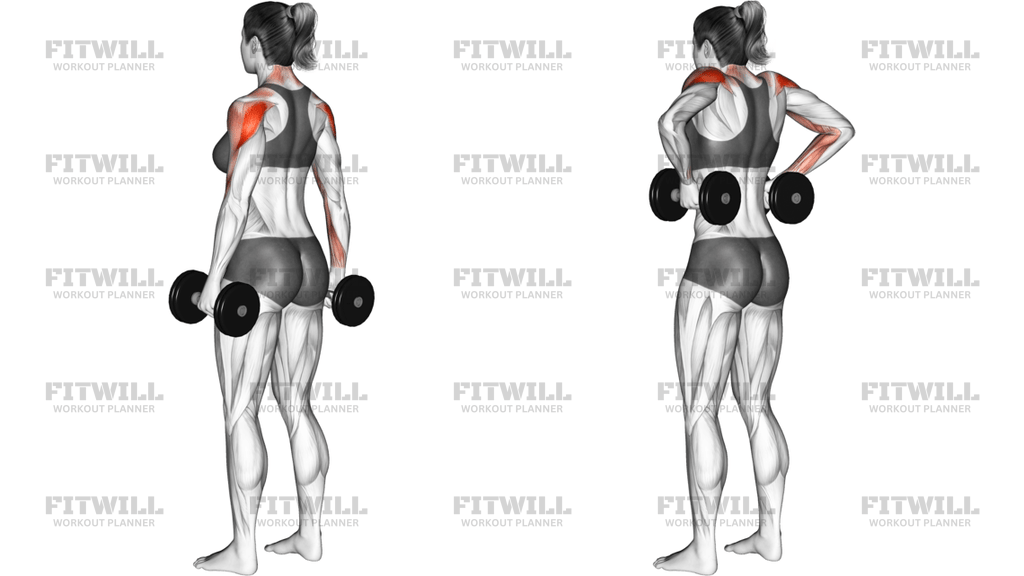
Instructions
- Stand with your feet about hip-width apart, hold a dumbbell in each hand with a neutral grip, and hinge forward from the hips until your torso is nearly parallel to the floor.
- Keep a soft bend in your knees, let the dumbbells hang under your shoulders, and point your chest toward the floor while keeping your neck long.
- Set your torso angle before you start; do not round your lower back or stand up between reps.
- Brace your midsection and keep your shoulder blades quiet so the rear delts can move the arms instead of the traps taking over.
- Raise both dumbbells out to the sides and slightly back in a wide arc until your upper arms reach about shoulder height or just below it.
- Pause briefly at the top and feel the back of the shoulders, not a shrug at the neck.
- Lower the dumbbells slowly along the same path until your arms are hanging under your shoulders again.
- Keep the wrists straight, the elbows softly bent, and the tempo controlled through every rep.
- Reset your hinge and grip before each set, then finish by bringing the weights down with control and standing up only after the last rep.
Tips & Tricks
- Think about lifting with your elbows, not your hands, so the rear delts stay in charge of the movement.
- If your traps keep taking over, lower the dumbbells and stop the rep before your shoulders rise toward your ears.
- A small elbow bend should stay almost fixed the whole set; turning the raise into a curl changes the line of pull.
- Keep your torso angle locked in place so the set does not become a swing from the lower back.
- Use a grip that keeps the dumbbells parallel to the floor or only slightly angled; twisting the wrists usually adds noise without helping the rear delts.
- If the top position feels cramped in the shoulders, raise the arms only to shoulder level instead of forcing them higher.
- Slow the lowering phase so the rear delts keep tension after the peak contraction instead of dropping the weights.
- Choose a lighter load than you would for a press or row; this movement usually works best when the rep is strict and deliberate.
- Keep your gaze down and your neck neutral so you do not crane upward as the arms lift.
Frequently Asked Questions
What muscles does Dumbbell Rear Delt Raise work?
It primarily targets the rear delts, with the upper back and shoulder stabilizers helping control the arm path.
How far should I hinge over for Dumbbell Rear Delt Raise?
Lean forward until your torso is close to parallel with the floor, or slightly higher if that helps you keep a neutral spine and quiet lower back.
Should my elbows stay bent during Dumbbell Rear Delt Raise?
Yes. Keep a small, fixed bend in the elbows so the rear delts move the dumbbells instead of turning the rep into a straight-arm swing.
Why do I feel Dumbbell Rear Delt Raise in my traps?
Usually the weights are too heavy or the shoulders are creeping upward. Lower the load and stop the raise when the upper arms reach shoulder height.
Can beginners do Dumbbell Rear Delt Raise safely?
Yes, as long as the dumbbells are light enough to keep the torso fixed and the motion smooth. It is one of the easier rear-shoulder isolation drills to learn.
Is Dumbbell Rear Delt Raise the same as a bent-over reverse fly?
They are very similar, and many lifters use the terms interchangeably. The key is the same: a bent-over torso and a wide arc that opens the arms out from the shoulders.
How high should the dumbbells go in Dumbbell Rear Delt Raise?
Bring them to about shoulder height or slightly below if that keeps the rear delts working without shoulder shrugging or momentum.
What is the biggest form mistake in Dumbbell Rear Delt Raise?
Swinging the torso to move the dumbbells. If your chest keeps rising and falling, reduce the weight and lock the hinge position before the next rep.