Dumbbell Push Press
Dumbbell Push Press is a standing overhead power movement that blends a short lower-body drive with a strong shoulder press. Each dumbbell starts at the shoulders, then the legs help launch the weights before the arms finish the press overhead. The result is a useful strength exercise for building the delts, triceps, traps, and upper back while also teaching you to transfer force from the floor into a stable lockout.
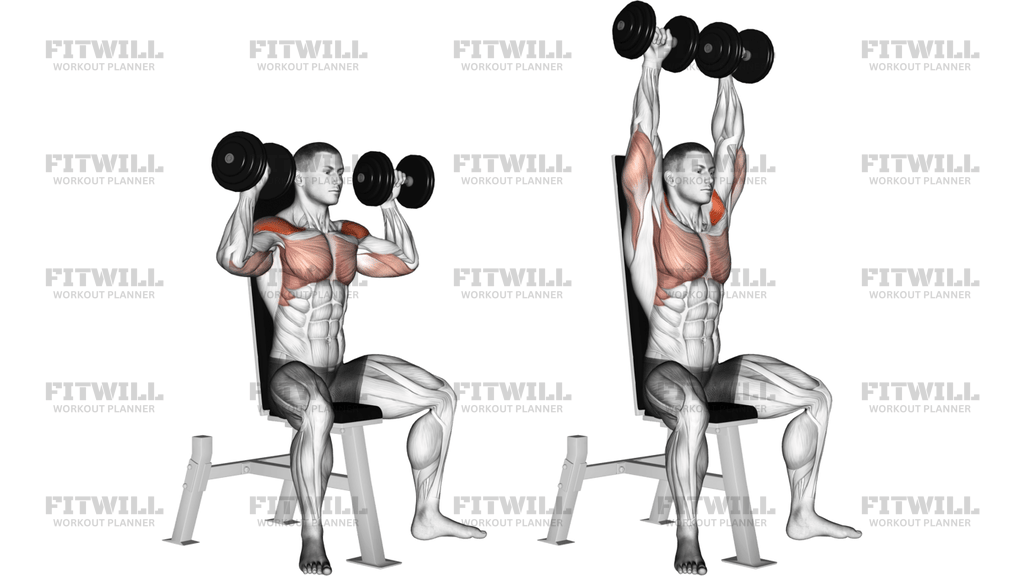
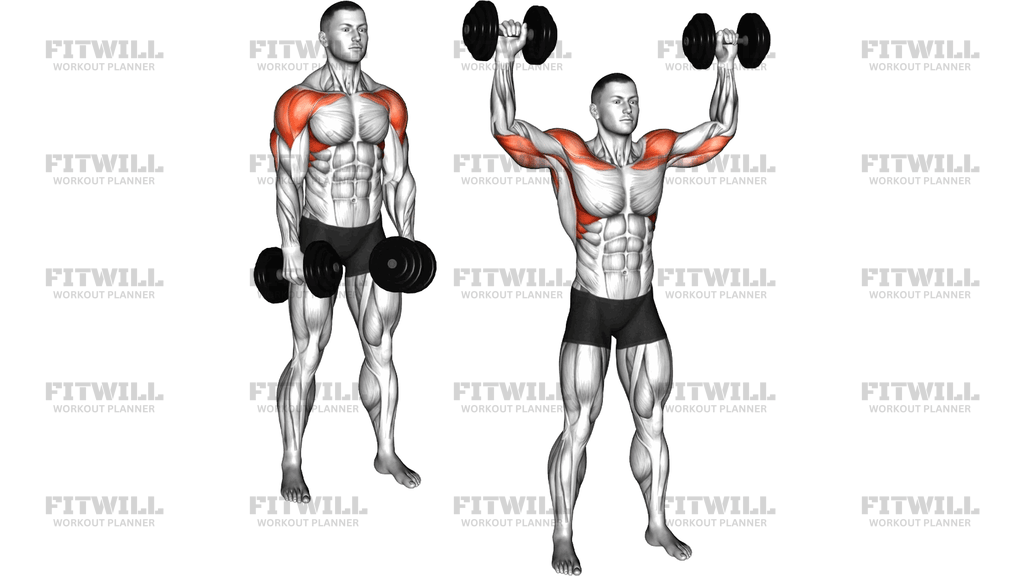
The setup matters because the rack position sets the tone for the whole rep. With the dumbbells at shoulder height, the wrists should stay stacked over the elbows, the elbows slightly in front of the torso, and the ribs kept down so the lower back does not take over. That arrangement gives the shoulders a better line of press and keeps the push press from turning into a lean-back press or a sloppy front raise.
The dip is small and deliberate. Bend the knees and hips together just a few inches, keep the torso tall, then drive hard through the floor so the legs finish their contribution before the arms take over. Once the dumbbells leave the shoulders, press them in a straight line overhead and bring them to a stable position above the midfoot with the biceps close to the ears. The best reps look crisp and stacked, not rushed or thrown upward.
Because the exercise uses leg drive, it is often useful for athletes and lifters who want more overhead power than a strict press can provide. It also fits well in upper-body strength work when you want to train shoulders without staying completely isolated from full-body force production. The movement is not about bouncing through a deep squat; it is about a controlled dip, a strong drive, and a clean finish overhead.
Safety comes from restraint and control. If the low back arches, the elbows collapse, or one dumbbell shoots ahead of the other, the load is probably too heavy or the dip is too aggressive. Use a weight you can lower back to the shoulders under control, reset your stance if balance shifts, and stop the set when the rack position or overhead finish starts to break down.
[ Workout Log & Planner ]
Put your next workout in Fitwill
Keep your plan and training log ready when you are.


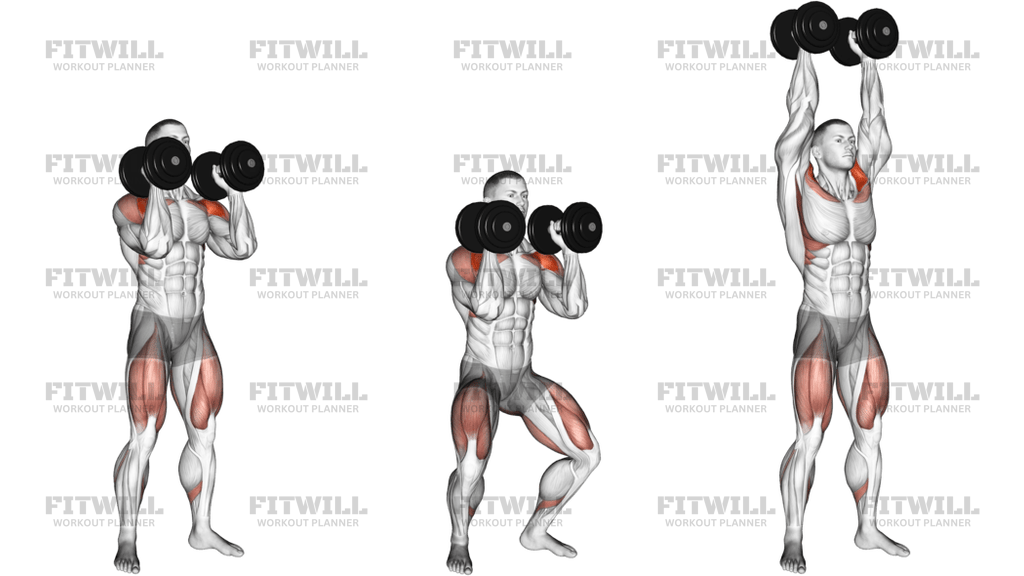
Instructions
- Stand with your feet about hip- to shoulder-width apart and hold a dumbbell in each hand at shoulder height, palms facing in or slightly forward.
- Stack each wrist over its elbow, keep the elbows slightly in front of your torso, and pull the ribs down so your lower back stays neutral.
- Take a breath and brace, then make a short dip by bending your knees and hips together a few inches while keeping your torso upright.
- Drive forcefully through the floor to extend the legs and hips, using that leg drive to start the dumbbells moving upward.
- As the dumbbells leave the shoulders, press them straight up so they travel close to your face instead of drifting forward.
- Finish with both arms locked out overhead, the dumbbells stacked over your midfoot, and your biceps near your ears.
- Lower the dumbbells back to shoulder height under control, softening the knees slightly to absorb the return.
- Reset your stance and breathing before the next rep, or rack the dumbbells safely when the set is finished.
Tips & Tricks
- Keep the dip shallow. If your thighs drop too low, the rep turns into a squat and the dumbbells lose a clean vertical path.
- Drive up once, not twice. A second knee bounce usually means the load is too heavy or the dip is too deep.
- At the top, stack the dumbbells over the shoulder, hip, and ankle line instead of letting them drift in front of your head.
- Use a neutral or slightly turned-in grip if a fully forward palm position makes the shoulders feel pinched.
- If one dumbbell climbs faster than the other, lighten the load and slow the press so both arms finish together.
- Keep the chest from flaring on the way up; an arched lower back is a sign the press is finishing with the spine instead of the shoulders.
- Lower the dumbbells to the shoulders under control so you can catch the next dip in a balanced rack position.
- Choose a weight you can cleanly stabilize overhead for a full pause without wobbling at the elbows or wrists.
Frequently Asked Questions
What muscle does Dumbbell Push Press target most?
Dumbbell Push Press mainly targets the delts, with the triceps and traps helping finish the lockout. The legs also contribute to the initial drive.
How is Dumbbell Push Press different from a strict dumbbell shoulder press?
The push press uses a short knee and hip dip to help drive the dumbbells upward before the arms finish the press. A strict press removes that leg drive and relies almost entirely on the shoulders and triceps.
How deep should the dip be in Dumbbell Push Press?
The dip should only be a few inches, with the torso staying tall and the heels staying down. If you are squatting noticeably, the dip is too deep.
Should the dumbbells travel straight up or in front of my face?
They should travel mostly straight up, staying close to the face on the way past the head. A forward drift usually means the ribs are flaring or the elbows are starting too far behind the body.
Can beginners do Dumbbell Push Press safely?
Yes, if they start light and learn the rack position, dip, and overhead finish first. The movement becomes much easier to manage once the dumbbells stay balanced over the shoulders and midfoot.
Why do my lower back and ribs flare during this exercise?
That usually happens when the weight is too heavy or the core is not braced before the dip. Keep the ribs stacked over the pelvis and stop the press before you start leaning backward.
What if one dumbbell rises faster than the other?
Match the tempo and use a lighter pair until both arms finish together. Uneven lockout often comes from an unstable rack position or a shift in body weight during the dip.
What can I use instead of Dumbbell Push Press?
A barbell push press, kettlebell push press, or strict dumbbell shoulder press are the closest substitutions. Choose the version that matches your shoulder comfort and the amount of leg drive you want.