Dumbbell Prone Incline Curl
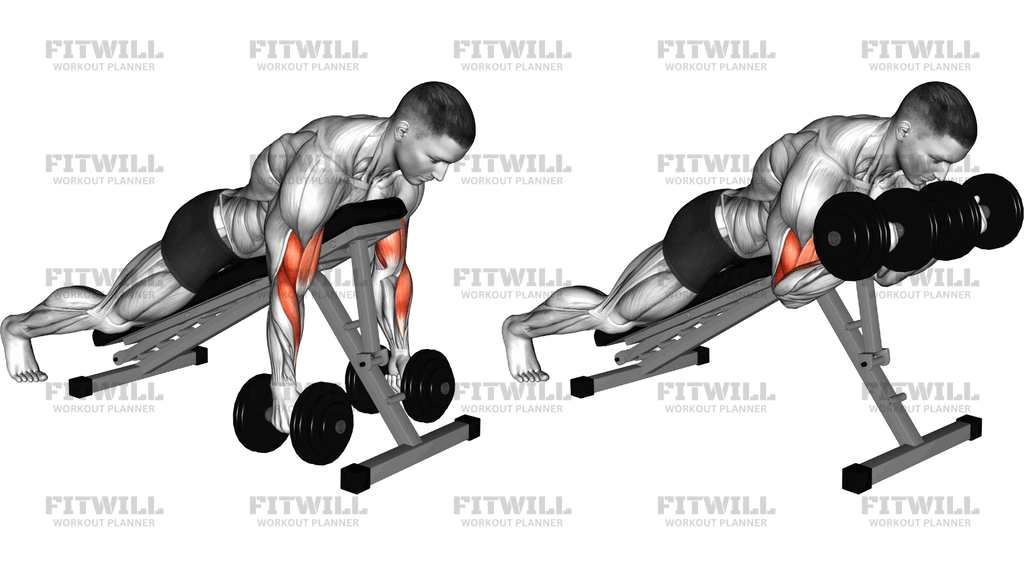
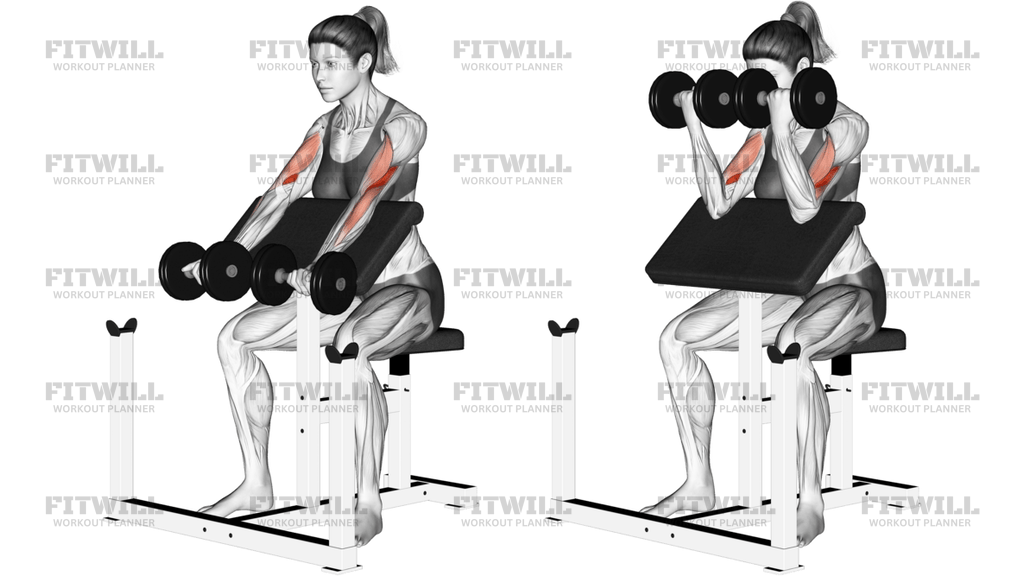
Dumbbell Prone Incline Curl is a chest-supported dumbbell curling variation that keeps the upper arm hanging below the shoulder while the elbow flexes against gravity. The incline bench changes the leverage compared with a standing curl, so the biceps have to work without help from body English, hip drive, or a back swing. That makes the exercise especially useful when you want cleaner arm isolation and a stricter path for both sides.
This setup shifts a lot of the work to the biceps, with the brachialis and brachioradialis helping through the lower and middle portions of the lift. Because your chest is supported on the bench, the torso stays quiet and the shoulder has less chance to drift forward as fatigue builds. The result is a curl that feels more honest than a standing version and often exposes side-to-side differences more clearly.
The bench angle matters. Lie face down on an incline that lets your arms hang straight toward the floor without your shoulders being forced into an uncomfortable stretch. Set your chest and upper ribs firmly on the pad, plant your legs for stability, and let the dumbbells hang under the shoulders before each rep. From there, the curl should happen at the elbow, not by rolling the shoulders or lifting the chest off the bench.
Each rep should trace the same smooth arc. Curl the dumbbells toward the front of the shoulders, squeeze briefly near the top, then lower them under control until the elbows are almost straight again. Keep the wrists stacked over the forearms so the dumbbell does not fold the hand back, and avoid letting the elbows drift behind or in front of the torso as the set gets harder.
Dumbbell Prone Incline Curl is a strong accessory choice for arm training days, pulling-focused sessions, or any program that needs more direct biceps work without adding more stress from standing momentum. It also works well as a lighter refinement movement after heavier rows or chins, because the supported position lets you keep tension on the arm muscles without asking the lower back to stabilize the lift. When the range, angle, and load are matched well, this variation rewards patience and strict reps more than heavy cheating.
[ Workout Log & Planner ]
Put your next workout in Fitwill
Keep your plan and training log ready when you are.


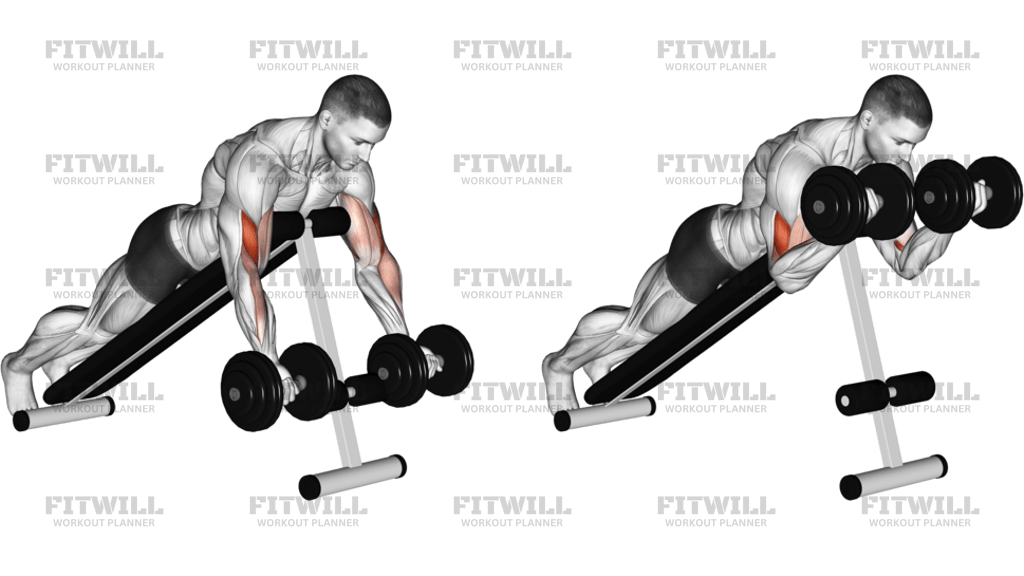
Instructions
- Set the bench to an incline that supports your chest and lets both arms hang straight down from the shoulders.
- Lie chest-down on the pad with your chest and upper ribs supported, and plant your legs wide enough to stay steady.
- Hold a dumbbell in each hand with your wrists stacked over your forearms and your shoulders relaxed toward the bench.
- Let the dumbbells hang under the shoulders before you start the first rep.
- Curl both dumbbells by bending at the elbows and keep the upper arms still against the line of the bench.
- Bring the dumbbells toward the front of your shoulders without letting your chest lift off the pad.
- Pause briefly at the top, then lower the dumbbells slowly until the elbows are almost straight again.
- Keep the wrists from folding back and finish each rep with the same smooth path on both sides.
- Set the dumbbells down carefully once the set is complete and release tension from the bench one arm at a time if needed.
Tips & Tricks
- If the dumbbells touch the bench or the floor at the bottom, shorten the range slightly before you add load.
- Keep your chest glued to the pad; lifting the sternum turns the movement into a cheat curl.
- A steeper incline usually makes the start position harder on the biceps, so back the bench off if the stretch feels cranky.
- Let the elbows stay just below shoulder line instead of drifting far behind the torso.
- Use a grip that keeps the wrist stacked over the knuckles; a bent wrist makes the dumbbell feel much heavier.
- Think about curling the hands toward the front of the shoulders, not swinging the dumbbells upward.
- Lower for a count of two to four so the supported position actually keeps tension on the biceps.
- If one arm finishes early, match the slower side rather than racing the stronger arm through extra reps.
Frequently Asked Questions
What muscles does Dumbbell Prone Incline Curl work?
Dumbbell Prone Incline Curl mainly works the biceps, with the brachialis and brachioradialis helping through the curl. The chest-supported position also asks the forearms and shoulder stabilizers to keep the dumbbells aligned.
Is Dumbbell Prone Incline Curl beginner-friendly?
Yes, if you keep the load light and let the bench do the stabilizing. Beginners usually learn a cleaner elbow path here than in a standing curl because there is less temptation to swing.
How should I set the incline bench for Dumbbell Prone Incline Curl?
Use an incline that lets your arms hang straight down without your shoulders feeling jammed forward. If the stretch at the bottom is too aggressive, lower the bench angle slightly.
Should my elbows stay pinned to the bench during Dumbbell Prone Incline Curl?
They should stay quiet, but not frozen in one forced position. Let them hang naturally under the shoulders and avoid driving them forward as the dumbbells come up.
What is the biggest mistake in Dumbbell Prone Incline Curl?
Swinging the chest off the pad to finish the curl. Once the torso starts helping, the exercise stops being a strict prone incline curl and becomes a standing cheat curl pattern.
Can I use one dumbbell at a time on Dumbbell Prone Incline Curl?
Yes. Single-arm reps can help you keep the shoulder and wrist aligned if one side cheats or twists more than the other.
Why does Dumbbell Prone Incline Curl feel different from a standing curl?
The chest-supported setup removes body swing and keeps the upper arm hanging behind the load, which makes the biceps work harder through a stricter line of pull.
How heavy should I use for Dumbbell Prone Incline Curl?
Choose a weight that lets you pause at the top and lower under control without losing the bench contact or bending the wrists back.
What should I do if my wrists hurt during Dumbbell Prone Incline Curl?
Reduce the load and keep the knuckles stacked over the forearms instead of letting the hands fold back. If the angle still feels rough, use a lighter dumbbell or a less aggressive bench incline.