Dumbbell Rear Lateral Raise Support Head
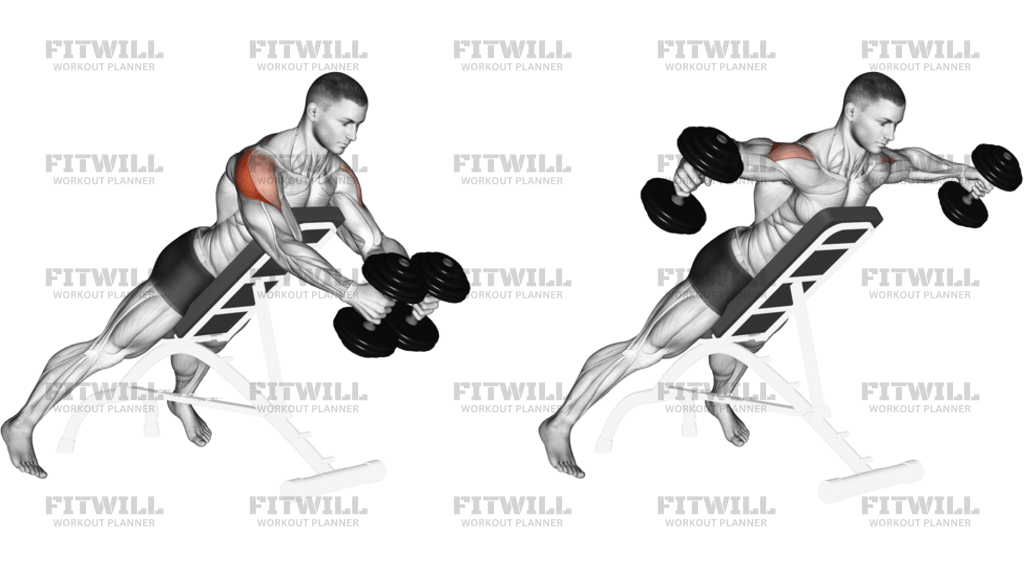
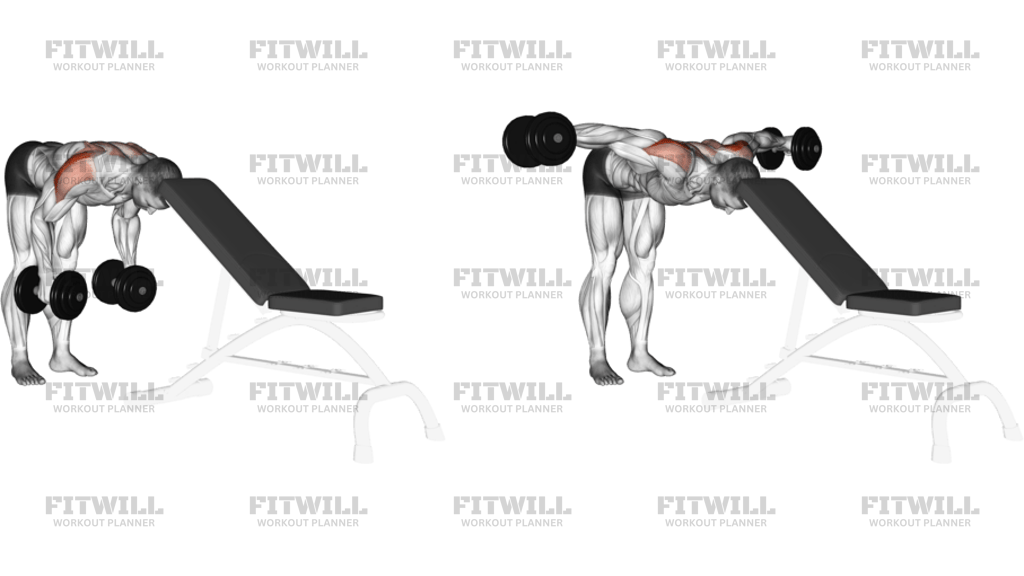
Dumbbell Rear Lateral Raise Support Head is a chest-supported rear delt raise performed on an incline bench with the forehead and upper torso braced on the pad. The support takes the hips and lower back out of the equation, so the rear delts have to do the work instead of turning the rep into a swing. That makes this version especially useful when you want clean shoulder isolation and less cheating from body momentum.
The main emphasis is the rear delts, with the rhomboids, mid traps, upper traps, and rotator cuff helping steady the movement. Because the torso is fixed, the quality of the dumbbell path matters more than load. A light pair done with a precise arc will usually train the target area better than a heavier pair that forces shrugging or twisting.
Set the bench to a moderate incline and rest the chest and forehead against the pad before the first rep. Let the arms hang under the shoulders, keep the ribs down, and keep the neck long so you are not craning into the bench. The starting position should feel stable and quiet, with the shoulders relaxed away from the ears and the elbows softly bent.
From there, raise both dumbbells out and slightly back in a wide arc until the upper arms are about level with the shoulders or just below. Think about driving the elbows away from the floor rather than lifting the hands high. Pause briefly at the top, then lower under control until the rear shoulders are lengthened again without losing contact with the bench.
This exercise works well as accessory volume after pressing, rowing, or pull work, especially for lifters who need more rear-delt development without lower-back fatigue. It also works well in higher-rep shoulder work because the support makes it easier to keep the rep strict even when the muscles start to fatigue. If the traps begin to dominate, the fix is usually a lighter dumbbell, a slightly lower bench angle, or a shorter top range rather than forcing the same load through a sloppy pattern.
Treat Dumbbell Rear Lateral Raise Support Head as a precision movement. Smooth breathing, steady tempo, and a consistent arc matter more than how much weight is on the dumbbells. When the setup is right, the rear delts should feel like the limiter long before your torso, neck, or grip starts taking over.
[ Workout Log & Planner ]
Put your next workout in Fitwill
Keep your plan and training log ready when you are.


Instructions
- Set an incline bench to a moderate angle and lie chest-down with your forehead and upper chest supported on the pad.
- Hold a dumbbell in each hand under your shoulders with your palms facing each other and your elbows softly bent.
- Plant your feet firmly on the floor, keep your ribs down, and let your shoulders settle away from your ears.
- Lift both dumbbells out and slightly back in a wide arc until your upper arms are about level with your shoulders or just below.
- Lead the rep with your elbows and keep your wrists aligned with your forearms instead of curling the weights up.
- Pause briefly at the top without shrugging or arching your lower back.
- Lower the dumbbells slowly along the same arc until your arms are nearly vertical again.
- Reset the shoulders before the next rep, and finish by placing the dumbbells down before you lift your chest off the bench.
Tips & Tricks
- Use a lighter pair than you would for a standing rear delt raise; the bench support removes the cheating that usually lets heavier weights move.
- If your traps take over, lower the bench angle a little and keep the dumbbells moving in a wider arc rather than higher.
- Keep the forehead and upper chest on the pad so the neck stays neutral instead of jutting forward to chase the top position.
- Turn your thumbs slightly up or stay neutral if the shoulders feel pinchy at the top of the rep.
- Stop the lift when the upper arms reach shoulder level; going higher often turns the rep into a shrug.
- Use a two- to three-second lowering phase so the rear delts stay loaded instead of letting gravity drop the dumbbells.
- If one dumbbell rises faster than the other, shorten the range until both arms track evenly.
- Exhale as the arms open and avoid holding your breath long enough to push your ribs off the bench.
Frequently Asked Questions
What muscles does Dumbbell Rear Lateral Raise Support Head work?
It mainly targets the rear delts, with the rhomboids, mid traps, upper traps, and rotator cuff helping control the lift. The bench support keeps the emphasis on the shoulders instead of the lower back.
Why rest my forehead and chest on the bench for Dumbbell Rear Lateral Raise Support Head?
That support limits body swing and makes the rear delts do the lifting. It also helps you keep the same torso angle from rep to rep.
How high should the dumbbells go?
Raise them until your upper arms are about level with your shoulders or slightly below. If you need to shrug to get higher, the range is too much for that set.
Should my elbows stay bent in Dumbbell Rear Lateral Raise Support Head?
Yes, keep a soft bend and hold that angle fairly steady. Turning it into a curl changes the exercise and usually shifts tension away from the rear delts.
Is Dumbbell Rear Lateral Raise Support Head good for beginners?
Yes, as long as the weight is light and the bench support lets you stay strict. It is a good way to learn rear-delt positioning without using momentum.
What if I feel it mostly in my traps?
Lower the load, reduce the bench angle slightly, and stop the rep at shoulder height instead of chasing extra height. The lift should feel like the back of the shoulder opening the arms.
Can I do Dumbbell Rear Lateral Raise Support Head one arm at a time?
You can, but the two-dumbbell version shown here is better for matching both sides and keeping the bench setup simple. A single-arm version is useful if one shoulder needs a cleaner path.
What is a good substitute for Dumbbell Rear Lateral Raise Support Head?
A reverse pec deck or a cable rear delt fly can fill a similar role. Use whichever option lets you keep the same rear-delt line of pull without shrugging.