Dumbbell Seated Curl
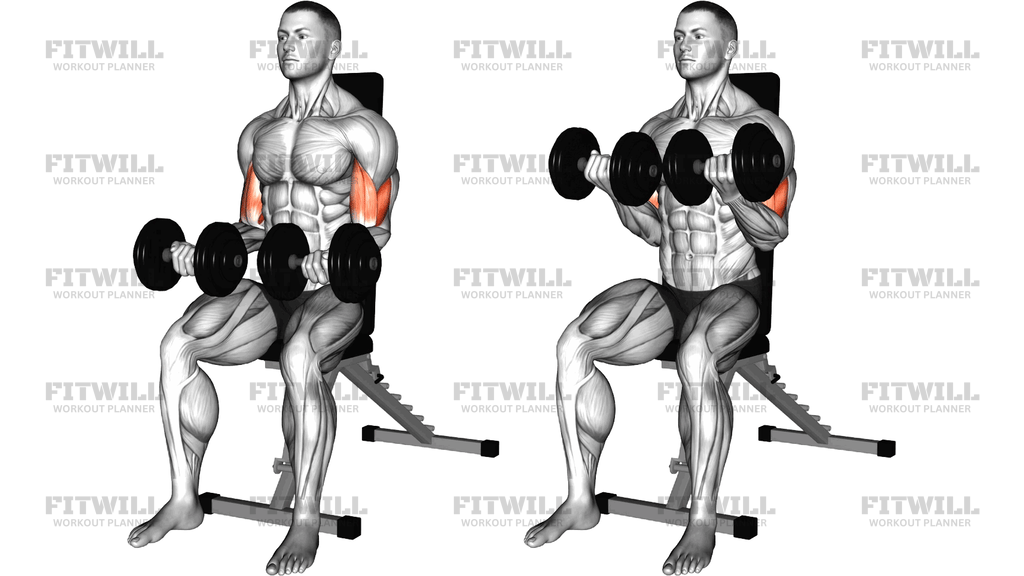
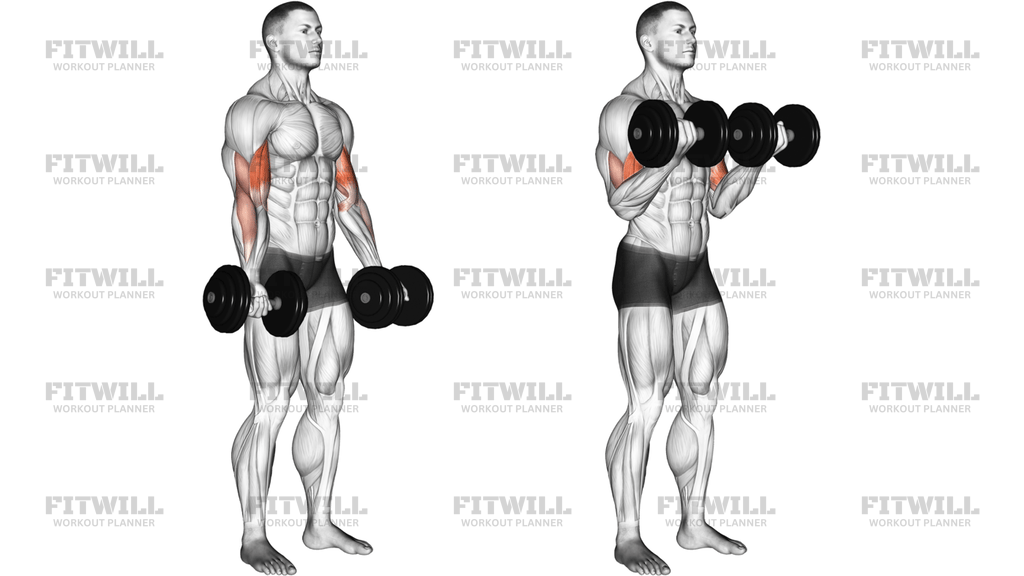
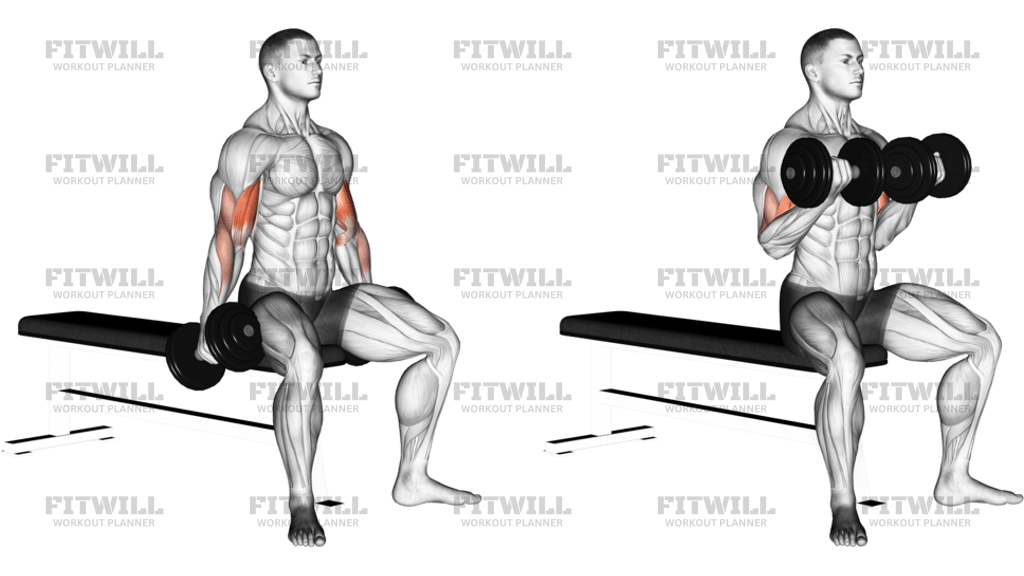
Dumbbell Seated Curl is a strict seated dumbbell curl performed with your back upright on a flat bench and a dumbbell in each hand. It is built to train elbow flexion without the body English you often see in standing curls, so the biceps have to do most of the work while the torso stays quiet.
The main training effect is on the biceps, with the brachialis and brachioradialis helping through the pull. Because you are seated, the bench removes a lot of leg drive and lower-back involvement, which makes the movement useful when you want a cleaner arm exercise, easier side-to-side comparison, or a curl variation that is less dependent on momentum.
Set up by sitting near the front of a flat bench with both feet flat and the dumbbells hanging straight down at your sides. Let the shoulders stay down and slightly back, keep the wrists stacked over the forearms, and start each rep from a still bottom position. That setup matters because a crooked wrist, slouched chest, or drifting elbow changes where the stress lands and usually turns the curl into a shoulder movement.
As you curl, keep the upper arms close to the ribs and drive the handles toward the front of the shoulders without letting the elbows shoot forward. The forearms should rotate naturally into a palms-up position if they are not already there. Squeeze briefly at the top, then lower the dumbbells under control until the elbows are almost straight again. A slower lowering phase usually exposes the actual strength of the arm better than a fast, swinging rep.
This exercise is a good accessory choice for arm hypertrophy, strict strength work, or as a lighter finisher after pulling sessions. It is also a practical option for lifters who want to reduce cheating, keep the spine more neutral, or compare left and right arm output more honestly. If the movement turns into a shrug, a lean-back curl, or a wrist dump at the top, the load is too heavy for the seated position and should be reduced before the set continues.
[ Workout Log & Planner ]
Put your next workout in Fitwill
Keep your plan and training log ready when you are.


Instructions
- Sit near the front edge of a flat bench with both feet planted and a dumbbell in each hand.
- Let your arms hang straight down at your sides with your palms facing forward and your wrists stacked over your forearms.
- Set your chest tall, keep your shoulders down, and brace before the first rep starts.
- Curl both dumbbells by bending the elbows and bring the handles toward the front of your shoulders.
- Keep your upper arms close to your ribs so the shoulders do not drift forward to help the lift.
- Squeeze the biceps briefly at the top without leaning back or shrugging.
- Lower the dumbbells slowly until your elbows are almost straight again.
- Keep the same elbow path on every rep and stop the set if you have to swing to finish the curl.
Tips & Tricks
- Sit tall enough that the dumbbells can clear your thighs at the start without you having to kick them into position.
- Keep the elbows slightly behind or beside the torso instead of letting them chase forward as the dumbbells rise.
- Turn the palm fully up as you curl if the dumbbells are starting from a neutral hang; the extra supination helps the biceps do more of the work.
- Do not let the wrists bend back at the top, or the forearms will take over and the curl will feel unstable.
- Use a load that lets you pause at the top for a clean squeeze instead of racing through the last few centimeters.
- Lower with a deliberate negative; if the descent is noisy or fast, the weight is too heavy for a strict seated curl.
- Keep both feet planted so you do not slide or twist on the bench while the set gets hard.
- If one arm finishes early, match the slower side instead of letting the stronger arm turn the set into a partial-range rep.
Frequently Asked Questions
What muscles does Dumbbell Seated Curl work?
It mainly works the biceps, with help from the brachialis, brachioradialis, and forearm muscles. The seated setup keeps the torso from contributing much to the lift.
Is Dumbbell Seated Curl beginner-friendly?
Yes. The bench makes it easier to learn a strict curl because you can focus on elbow motion without using your legs or lower back to cheat the rep.
Should my elbows stay pinned to my sides?
They should stay close to the ribs and only travel a little if needed. If the elbows drive far forward, the shoulders are helping too much.
Can I do both dumbbells at the same time?
Yes. The image shows a bilateral seated curl, and that is the simplest version to keep the torso honest and compare both arms rep to rep.
What if my wrists bend back at the top?
Lower the weight and keep the knuckles stacked over the forearm. A bent wrist shifts stress away from the biceps and can irritate the wrists or elbows.
Is this different from a standing dumbbell curl?
Yes. Sitting removes most of the body sway and leg drive, so the arms have to produce the rep with much less help from the rest of the body.
How should the dumbbells travel?
They should move in a smooth arc from the sides of the thighs up toward the front of the shoulders, not drift across the body or swing away from the bench.
What should I do if I feel my shoulders taking over?
Reduce the load and keep your chest tall with the shoulders set down. If the front of the shoulder keeps leading the rep, the curl is too heavy or too fast.