Dumbbell Seated Inner Biceps Curl
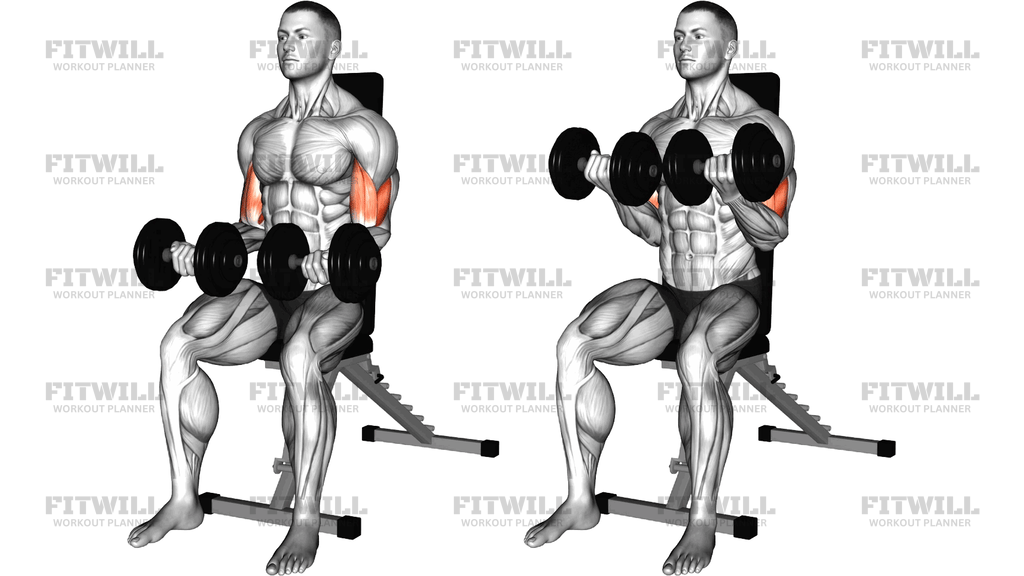
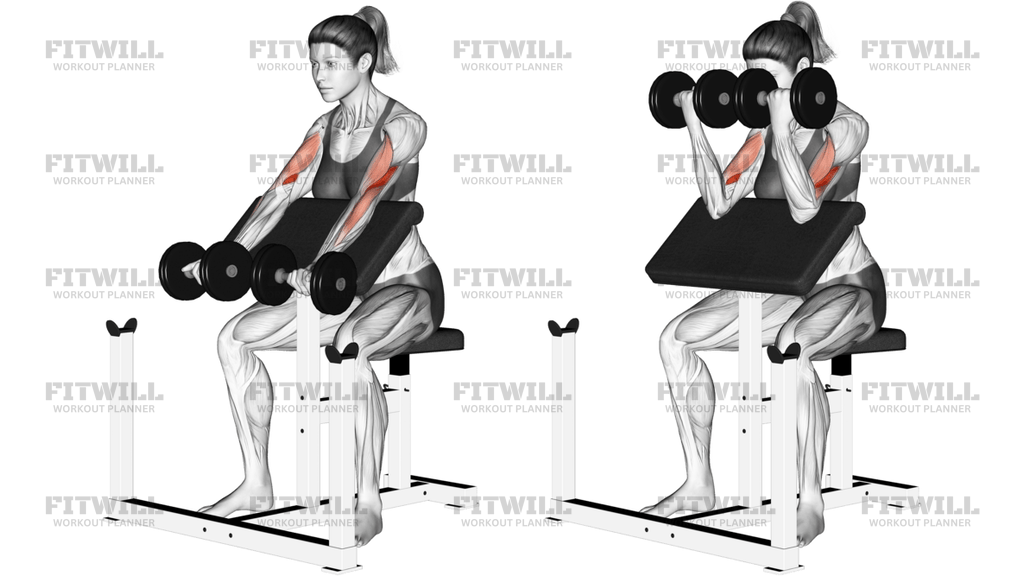
Dumbbell Seated Inner Biceps Curl is a strict seated curl variation that keeps the torso supported while the elbows do the work. The setup is simple, but the position matters: once your back is planted and your feet are stable, the curl becomes much easier to judge rep to rep and much harder to cheat with body swing.
This movement mainly trains the biceps, with help from the brachialis, brachioradialis, and forearm flexors. Because you are seated, the exercise is especially useful when you want clean elbow flexion without leg drive, hip sway, or a lot of shoulder involvement. That makes it a solid accessory choice for arm training days and for lifters who want more control over curl mechanics.
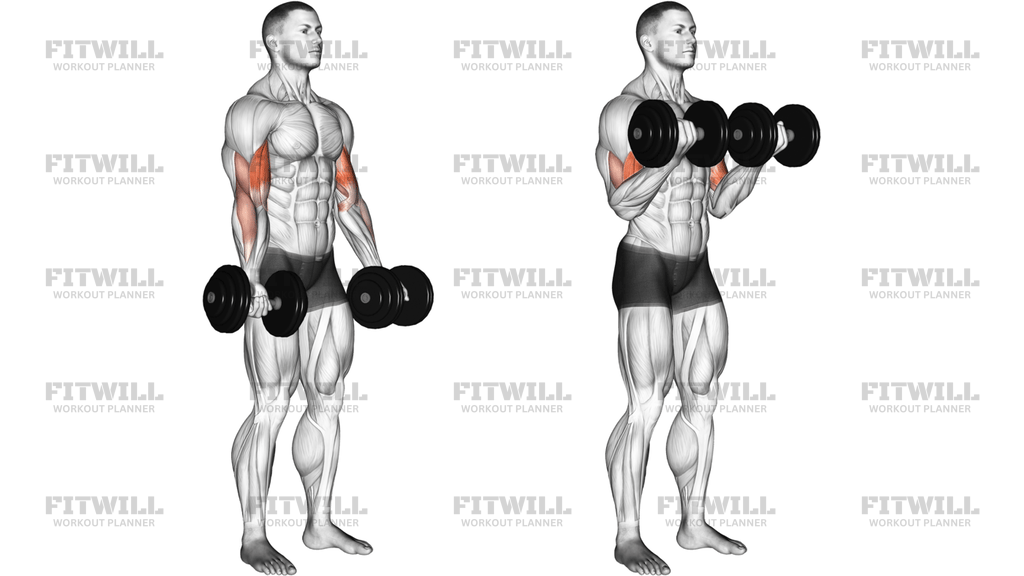
The dumbbells should travel in a smooth arc from your sides toward your shoulders while the upper arms stay close to the ribs. The wrists should stay stacked over the forearms rather than folding back, and the shoulders should remain down instead of rolling forward as the weights get heavier. If the elbows drift ahead of the torso, the set stops feeling like a seated curl and starts turning into a front-delt-driven cheat rep.
The seated position also helps you compare sides. If one arm twists, speeds up, or loses range early, you can see it immediately and adjust the load before compensation takes over. That makes this variation useful for building balanced arm strength, refining curl control, and teaching beginners how to move through the elbow without extra movement elsewhere.
Keep the reps deliberate and the turnaround at the bottom controlled. A brief squeeze at the top and a slow lowering phase usually make this exercise much more productive than trying to use the heaviest dumbbells possible. When the bench, feet, and elbow path stay consistent, the biceps do the work the exercise is supposed to demand.
Fitwill
Log Workouts, Track Progress & Build Strength.
Achieve more with Fitwill: explore over 9600 exercises with images and videos, access built-in and custom workouts, perfect for both gym and home sessions, and see real results.
Start your journey. Download today!




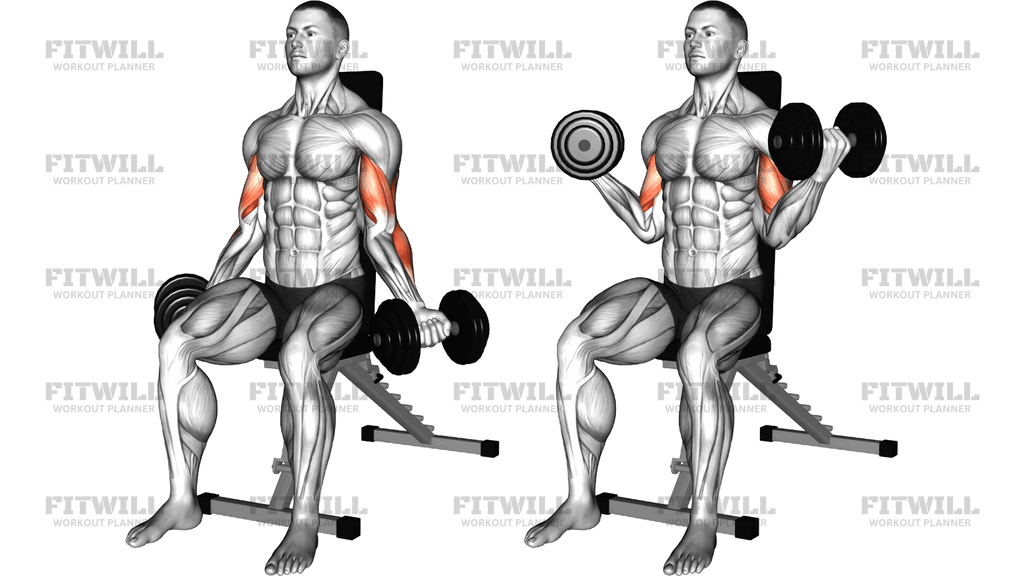
Instructions
- Sit on a bench with your back supported, feet flat on the floor, and a dumbbell in each hand hanging beside your thighs.
- Set your chest tall, keep your shoulders down, and let your elbows rest close to your ribs before the first rep.
- Hold the dumbbells with a firm grip and start with your wrists straight rather than bent back.
- Curl both dumbbells by bending the elbows and keeping the upper arms as still as possible.
- Bring the weights up toward your shoulders without letting the elbows slide forward or the torso rock back.
- Squeeze the biceps briefly at the top while keeping the shoulders relaxed and the neck long.
- Lower the dumbbells slowly until your arms are nearly straight and the weights return beside your thighs.
- Exhale as you curl up, inhale as you lower, and reset your shoulder position before the next rep.
Tips & Tricks
- A bench with back support makes this curl stricter by removing the small lean that often turns seated curls into standing swings.
- Keep your elbows beside your torso; if they creep forward, the front of the shoulder starts helping too much.
- Stop the rep just short of locking the elbows hard so the biceps stay loaded instead of resting at the bottom.
- Use a weight that lets you keep the wrists stacked over the forearms through the full range, especially near the top.
- Turn the pinkies slightly up as you finish the curl if that helps you squeeze the biceps without shrugging.
- Lower the dumbbells slower than you lift them; the bottom half of the eccentric is where many lifters lose tension.
- If your shoulders roll forward, reduce the load and keep your chest tall against the back pad.
- Match both arms on speed and range so one side does not finish early and steal the rep.
Frequently Asked Questions
What muscles does Dumbbell Seated Inner Biceps Curl work?
It mainly works the biceps, with the brachialis, brachioradialis, and forearm flexors helping during the curl and the lowering phase.
Why do I do Dumbbell Seated Inner Biceps Curl seated instead of standing?
The seated position reduces leg drive and torso swing, so the elbow flexion stays cleaner and the biceps get more of the work.
How should my elbows move during Dumbbell Seated Inner Biceps Curl?
Keep them close to your ribs and let them stay almost fixed. If they travel forward as the dumbbells rise, the rep turns into a looser shoulder-assisted curl.
Should I rotate my wrists during Dumbbell Seated Inner Biceps Curl?
A slight turn toward palm-up at the top is fine if it feels natural, but do not twist hard or let the wrists bend back under the load.
Is Dumbbell Seated Inner Biceps Curl beginner-friendly?
Yes. A light pair of dumbbells and a supported bench make it easier to learn strict curl mechanics without swinging.
What is the most common mistake in Dumbbell Seated Inner Biceps Curl?
Using the back and shoulders to move the dumbbells. If you have to lean back or shrug to finish the rep, the load is too heavy.
How low should I lower the dumbbells?
Lower until your elbows are nearly straight and the dumbbells are back beside your thighs, but keep a tiny amount of tension so the set does not turn into a resting position.
Can I use Dumbbell Seated Inner Biceps Curl as a finisher?
Yes. It works well later in an arm session because the seated setup keeps the reps strict even when your biceps are already fatigued.