Dumbbell Seated Shoulder Press Parallel Grip
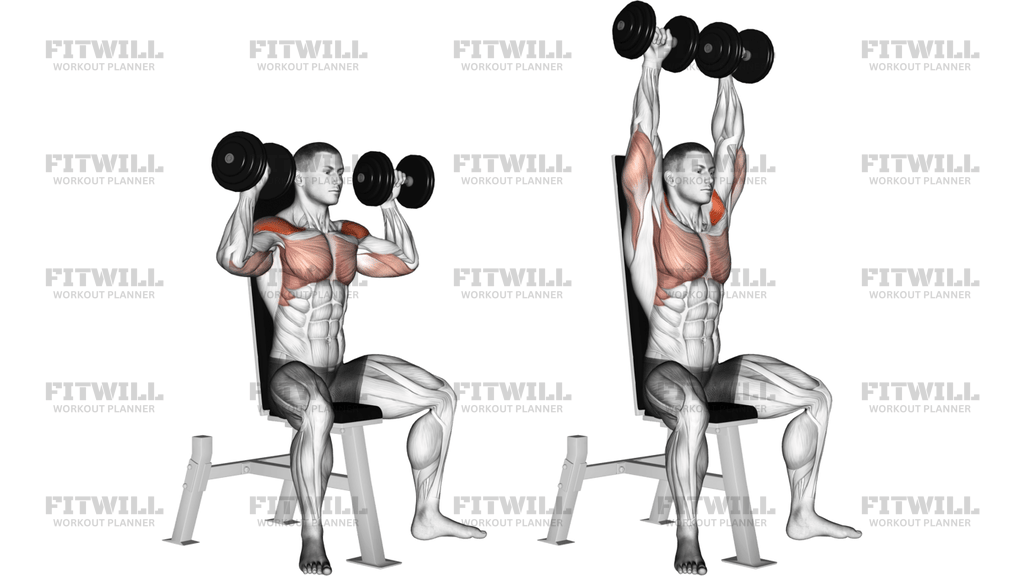
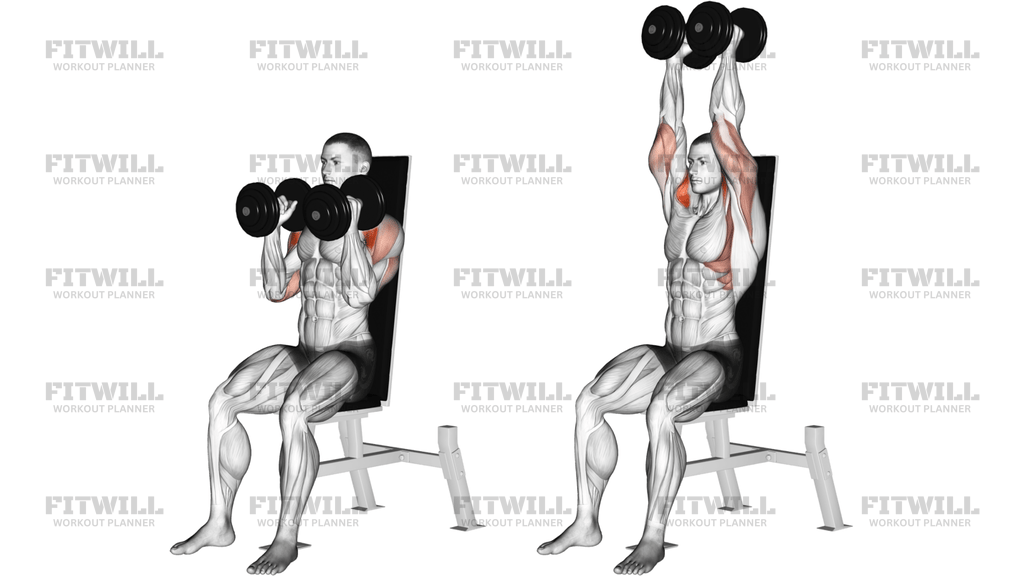
Dumbbell Seated Shoulder Press Parallel Grip is a seated overhead press that emphasizes the front and middle delts while asking the triceps, upper chest, upper back, and core to keep the line of force stable. The neutral grip usually feels smoother on the shoulders than a palms-forward press because it keeps the upper arm in a more natural path and reduces the urge to flare the elbows wide.
The seated setup matters as much as the press itself. With the bench back supporting you, the goal is to keep the ribcage stacked over the pelvis, the feet planted, and the dumbbells starting at shoulder height with the palms facing each other. That position gives you a cleaner press path and makes it easier to tell whether the shoulders are doing the work instead of the lower back.
As the dumbbells move upward, they should travel in a controlled arc slightly in front of the head, not drift behind it. The elbows stay under the wrists, the neck stays long, and the shoulders finish without a hard shrug. Lowering the bells slowly back to shoulder height keeps tension on the delts and helps you control the bottom position instead of dropping into it.
This is a useful main press for lifters who want shoulder strength without the same wrist and shoulder irritation that can come from a pronated grip. It also works well as accessory work after heavier chest or upper-body presses, especially when you want direct delt volume without standing balance becoming the limiting factor. If the back arches, the elbows flare, or the weights collide overhead, the load is too heavy or the bench angle is too upright for clean reps.
Treat Dumbbell Seated Shoulder Press Parallel Grip as a strict press, not a body English lift. Build the rep from a stable base, press until the arms are nearly straight, and lower with the same control you used on the way up. When the shoulders stay packed, the torso stays quiet, and the dumbbells follow the same path every rep, the exercise becomes a reliable way to train overhead pressing strength with less joint stress.
[ Workout Log & Planner ]
Put your next workout in Fitwill
Keep your plan and training log ready when you are.


Instructions
- Set an upright bench back, sit with your feet flat, and rest the dumbbells on your thighs with your palms facing each other.
- Lean back against the pad and walk your feet out until you feel balanced, then bring the dumbbells to shoulder height with your elbows slightly in front of your ribs.
- Stack your wrists over your elbows, draw your ribs down, and brace your abdomen so your lower back stays out of the lift.
- Press both dumbbells upward in a smooth arc, keeping the bells close to the line of your ears without letting them drift behind your head.
- Finish with your arms near full extension and your shoulders controlled, not jammed upward into a hard shrug.
- Pause briefly at the top if the bells are steady, and keep your neck relaxed instead of craning forward.
- Lower the dumbbells under control until they are back at shoulder height and your forearms are vertical again.
- Reset the shoulders and breathe before the next rep, then keep the same path and range on every repetition.
- After the final rep, bring the dumbbells back to your thighs before sitting up and standing.
Tips & Tricks
- A slightly narrower neutral grip usually feels better than turning the palms forward and flaring the elbows.
- Keep the dumbbells in the scapular plane, a little in front of the shoulders, so the press feels smooth instead of jammed.
- If your lower back leaves the pad, the load is too heavy or the bench is too upright for your mobility that day.
- Stop the descent when the upper arms reach shoulder height; dropping farther often turns the bottom into a sloppy stretch.
- Do not let the bells touch overhead if that forces your ribs to pop up or your shoulders to shrug hard.
- Exhale through the press and take air back in on the way down so the torso stays quiet.
- If one dumbbell drifts or twists, reduce the weight and match the path before adding load.
- A brief pause at the top helps remove bounce and shows whether both sides are finishing evenly.
- Keep your wrists straight over the handles; bent wrists usually mean the dumbbells are too far forward or too heavy.
Frequently Asked Questions
What muscles does Dumbbell Seated Shoulder Press Parallel Grip work?
It mainly trains the delts, with help from the triceps, upper chest, and upper back. The core and mid-back keep the torso from tipping or overextending against the bench.
Why use a parallel grip on Dumbbell Seated Shoulder Press Parallel Grip?
A neutral grip keeps the elbows and wrists in a more natural line and is often easier on the shoulders. It also makes it simpler to keep the dumbbells traveling slightly in front of the head.
How upright should the bench be for Dumbbell Seated Shoulder Press Parallel Grip?
An upright or slightly reclined bench works best. If the backrest is too vertical and your lower back arches, lower the load or adjust the seat so you can keep your ribs stacked.
Where should my elbows be at the bottom?
Keep them slightly in front of your torso and roughly under your wrists at shoulder height. If they flare straight out to the sides, the press usually feels less stable.
Should the dumbbells touch at the top?
They do not need to touch. Stop when the arms are nearly straight and the shoulders stay relaxed; forcing the bells together often adds shrugging and loses tension.
Is Dumbbell Seated Shoulder Press Parallel Grip beginner-friendly?
Yes, if you start light and use a back-supported bench. The seated setup removes balance demands and makes it easier to learn the press path.
What should I do if I feel pinching in my shoulders?
Shorten the range a little, keep the elbows slightly in front of the body, and reduce the load. If the pinch stays, switch to a less aggressive overhead variation for that session.
Can I do Dumbbell Seated Shoulder Press Parallel Grip one arm at a time?
Yes. Single-arm work makes the torso work harder to stay square, so use a lighter dumbbell and keep the ribcage from twisting toward the pressing side.
What is the most common mistake with this press?
The most common mistake is turning it into a lower-back arch and shrugging press. Keep the back on the pad, the ribs down, and the dumbbells on a clean path instead of forcing extra range.