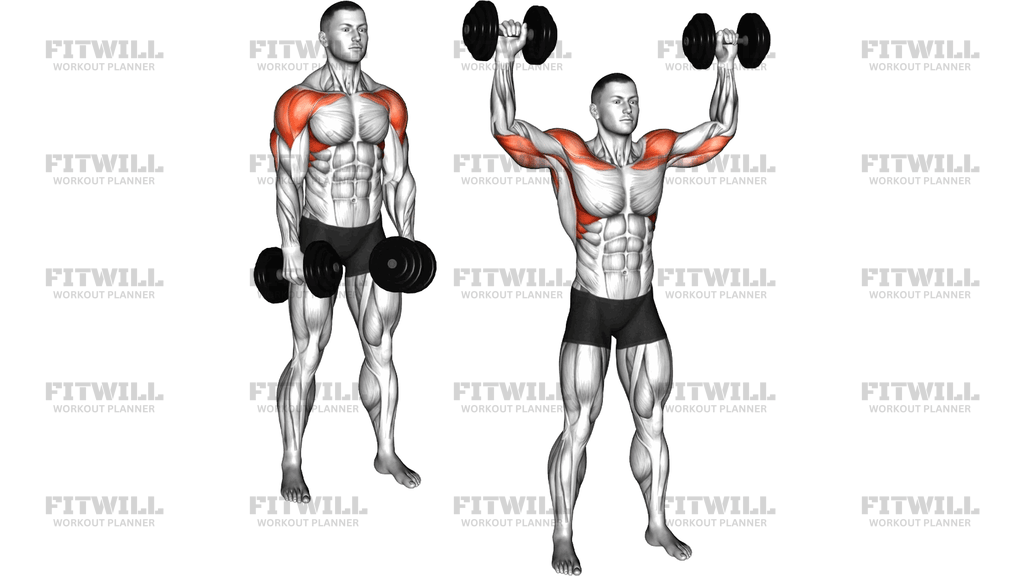
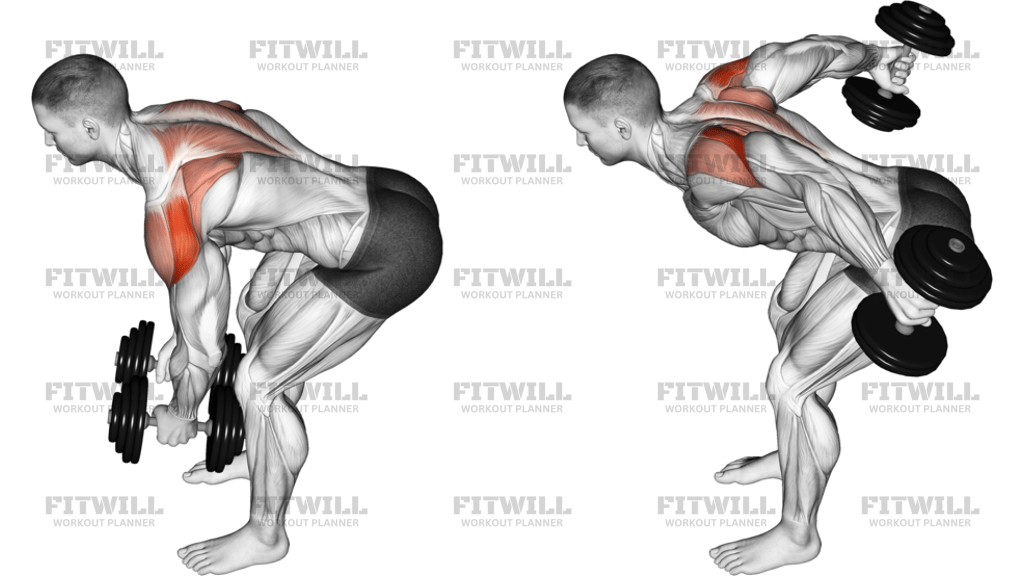
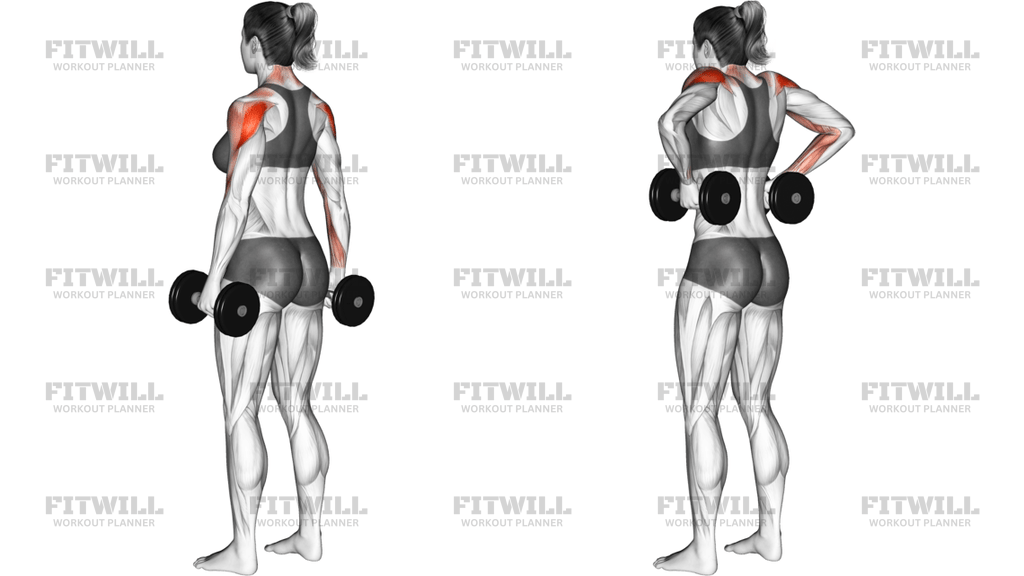
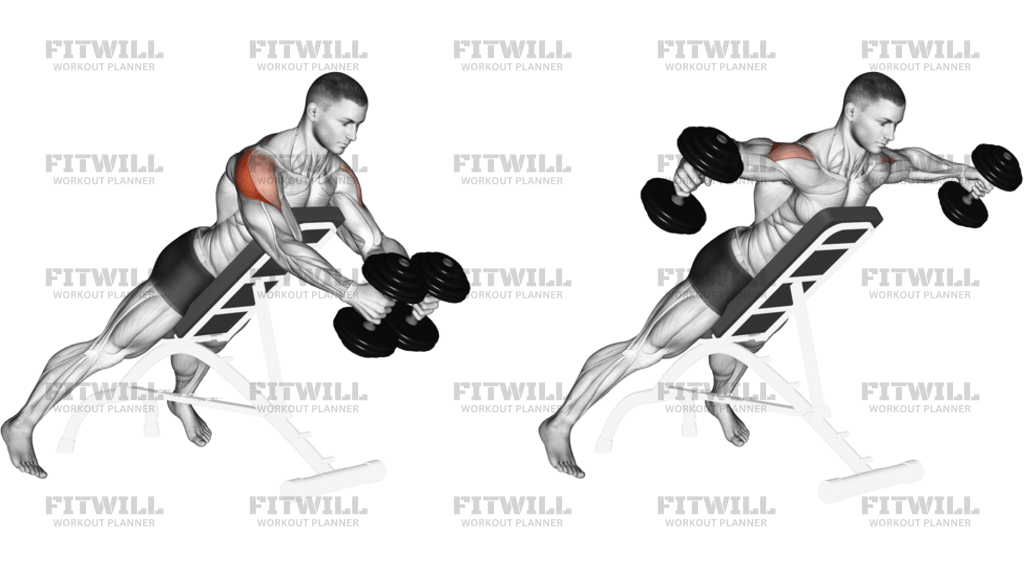
Dumbbell Standing One-Arm Palm-In Press
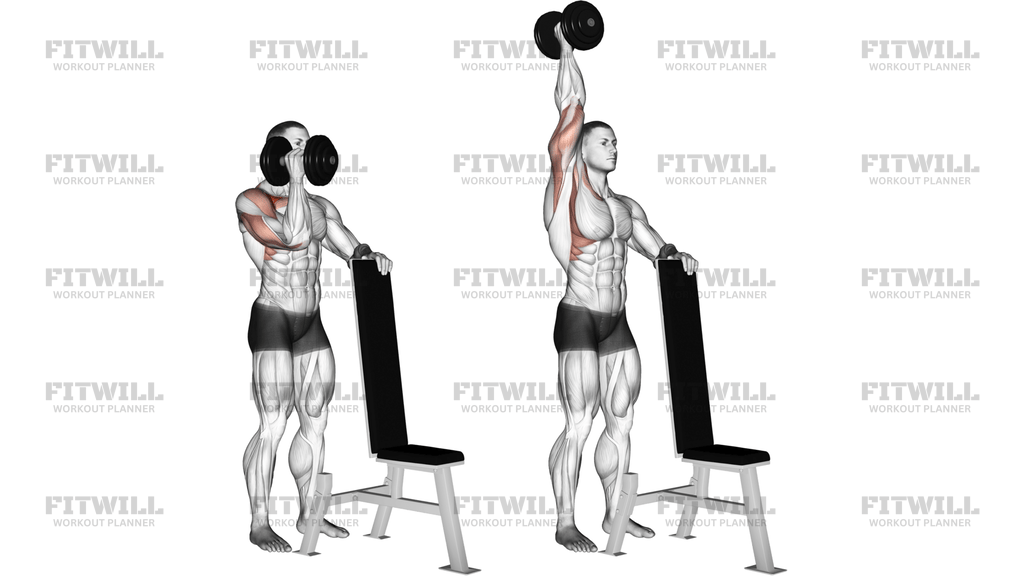
Dumbbell Standing One-Arm Palm-In Press is a standing unilateral overhead press that uses a neutral grip to load the shoulder without forcing the wrist or elbow into a wide turned-out position. It is especially useful when you want direct delt work, a little triceps help, and a pressing pattern that still challenges balance and trunk control.
The free hand on the bench is not just decoration. It gives you a stable point of contact so you can keep the torso tall, limit side-to-side sway, and focus on the working shoulder instead of turning the set into a full-body heave. That makes the exercise a good choice for accessory pressing, shoulder hypertrophy work, and side-to-side strength balance.
The working arm should start with the dumbbell racked at shoulder height, palm facing in, wrist stacked over the elbow, and the upper arm slightly in front of the body. Keep the ribs down and the glutes lightly engaged so the dumbbell rises because the shoulder is pressing, not because the lower back is arching to help the weight up. The bench support should stay light enough that you can still feel the shoulder and core doing the work.
Press the dumbbell on a smooth path overhead until the arm is straight and the biceps are close to the ear, then lower it under control back to the shoulder. A small amount of body lean is normal, but the hips should not swing away from the weight and the head should not jut forward to chase the dumbbell. If the top position feels pinchy or the shoulder starts shrugging hard, shorten the range slightly and reduce the load.
Dumbbell Standing One-Arm Palm-In Press works well as part of an upper-body session after a warm-up or as a secondary press after a bigger compound lift. It is also useful when one side feels weaker, when you want to clean up overhead mechanics, or when a neutral grip feels better on the shoulder than a palms-forward press. Keep each rep crisp and repeatable so the exercise stays a shoulder press rather than a balance contest.
[ Workout Log & Planner ]
Put your next workout in Fitwill
Keep your plan and training log ready when you are.


Instructions
- Stand beside a sturdy bench or upright bench pad and place your free hand lightly on top of it for balance.
- Plant both feet on the floor about hip-width apart and keep your torso tall beside the bench.
- Hold the dumbbell at shoulder height on the working side with your palm facing in, wrist stacked over the elbow, and the upper arm slightly in front of your torso.
- Set your ribs down, brace your abs, and keep the working shoulder away from your ear before you press.
- Press the dumbbell upward in a smooth arc until your arm is straight and the weight finishes over your shoulder.
- Exhale as you press and avoid leaning hard into the bench or twisting your hips toward the dumbbell.
- Lower the dumbbell slowly back to shoulder height with the elbow under control and the wrist still neutral.
- Reset the shoulder and grip at the bottom before starting the next rep or switching sides.
Tips & Tricks
- Use the bench for balance only; if your support hand is pushing hard, the dumbbell is probably too heavy.
- Keep the palm facing in through the whole rep so the shoulder can press without the wrist rolling forward.
- Let the elbow travel slightly in front of the body instead of flaring straight out to the side.
- Finish the press before the shoulder shrugs up toward the ear.
- Keep the ribs stacked over the pelvis; if your lower back arches to help the lockout, lighten the load.
- Lower the dumbbell for two to three seconds so the shoulder stays loaded on the way down.
- Choose a bench height that lets your free hand rest comfortably without forcing you to lean sideways.
- If the top position pinches, stop a little short of full lockout and work that pain-free range first.
Frequently Asked Questions
What muscles does Dumbbell Standing One-Arm Palm-In Press work?
Dumbbell Standing One-Arm Palm-In Press mainly trains the delts and triceps, with help from the upper traps, upper back, and core. The bench support lets the shoulder do most of the work instead of turning the lift into a body swing.
Why do I keep my free hand on the bench during Dumbbell Standing One-Arm Palm-In Press?
The bench gives you a stable contact point so you can stay tall and avoid twisting through the torso. Light support also makes it easier to keep the working shoulder honest through the full press.
Should my palm stay facing in during Dumbbell Standing One-Arm Palm-In Press?
Yes, the palm-in grip is part of the point of this variation. Keeping the hand neutral usually makes the press feel smoother on the shoulder and keeps the wrist stacked more naturally.
How high should the dumbbell go in Dumbbell Standing One-Arm Palm-In Press?
Press until the arm is straight and the dumbbell finishes over the shoulder, not drifting far in front of you. If the top position causes you to shrug or lean back, stop just short and keep the rep clean.
Is Dumbbell Standing One-Arm Palm-In Press good for beginners?
Yes, as long as the load is light enough to keep the torso quiet and the shoulder path smooth. If standing balance is the problem, a seated one-arm palm-in press is an easier starting point.
What should I do if Dumbbell Standing One-Arm Palm-In Press bothers my lower back?
Reduce the load first and make sure your ribs stay down instead of flaring up to finish the rep. If that still happens, shorten the range or switch to a more supported press variation.
Can I use Dumbbell Standing One-Arm Palm-In Press to fix side-to-side imbalances?
Yes, unilateral pressing is useful for exposing one weaker side and keeping each arm honest. Match the reps and load on both sides, and let the weaker side set the limit.
What is a common mistake in Dumbbell Standing One-Arm Palm-In Press?
A common mistake is turning the rep into a sideways lean and a shrug at the top. Keep the support hand light, the pelvis level, and the dumbbell traveling straight enough that the shoulder, not the torso, finishes the lift.