Dumbbell Step-Up
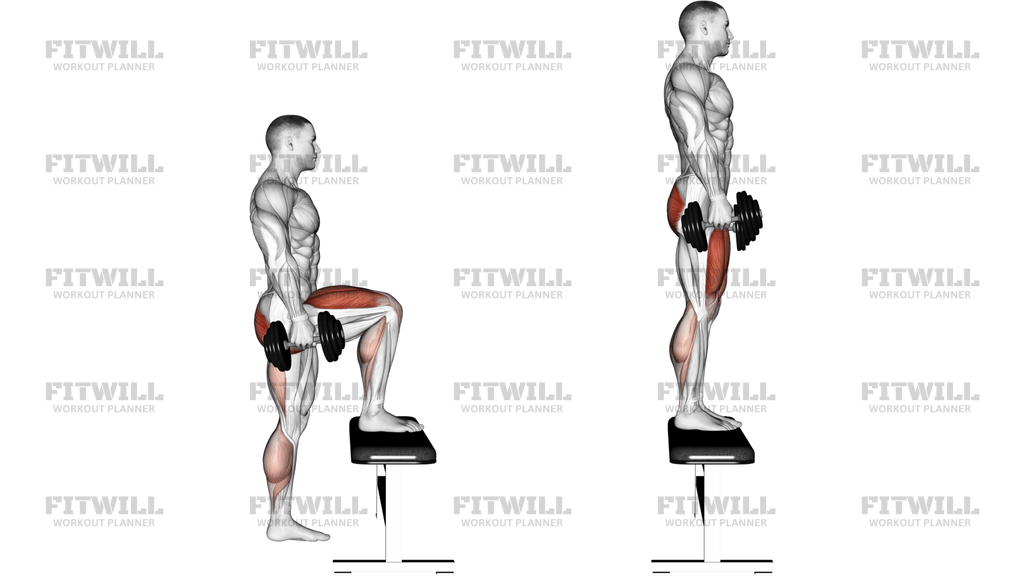
Dumbbell Step-Up is a unilateral lower-body exercise built around a simple climbing pattern: one foot drives onto a stable box or bench while dumbbells stay at your sides for added load and balance challenge. It is a strong choice for building glutes, quads, hamstrings, and calves while also asking the trunk to stay organized from one side to the other. Because each rep is done one leg at a time, it is useful when you want to clean up side-to-side differences and train leg drive without needing a barbell.
The setup matters a lot in Dumbbell Step-Up. Use a step or box that feels solid underfoot and place the whole working foot on top, not just the toes. Keep the dumbbells hanging straight beside the thighs, eyes forward, and ribs stacked over the pelvis so the torso does not fold over the front leg. A clean setup makes the rep smoother and keeps the work where it belongs, in the leg that is on the box.
As you step up, press through the heel and midfoot of the working leg until the hip and knee finish tall on top of the platform. The trailing leg should stay quiet and should not turn the rep into a jump or a push from the floor. At the top, stand tall with control rather than leaning back or swinging the dumbbells for momentum, then lower yourself under control until both feet are back in the start position.
Dumbbell Step-Up carries over well to general strength, athletic conditioning, and accessory work on leg day. It can be scaled by changing the box height, dumbbell load, or tempo, which makes it practical for beginners and experienced lifters alike. A slightly lower step usually makes the movement more glute- and quad-friendly, while a taller step increases the demand on hip flexion and balance; choose the version you can repeat cleanly.
The biggest mistakes are using a box that is too high, pushing off the back leg, or letting the knee cave inward as you stand. If your balance is shaky, slow the descent and reduce the load before you chase heavier dumbbells. Keep every rep quiet, controlled, and identical from side to side so the exercise builds usable leg strength instead of turning into a messy lunge or hop.
[ Workout Log & Planner ]
Put your next workout in Fitwill
Keep your plan and training log ready when you are.


Instructions
- Stand facing a stable box or bench with a dumbbell in each hand and your feet about hip-width apart.
- Place the whole working foot on top of the platform so the heel and forefoot are both supported.
- Keep your chest tall, ribs stacked over your pelvis, and your dumbbells hanging straight at your sides.
- Lightly load the working leg and keep the trailing leg ready to assist only with balance.
- Drive through the heel and midfoot of the foot on the box to stand up.
- Bring your hips over the platform and finish tall without leaning back or swinging the weights.
- Pause for a moment at the top with both knees aligned and the working leg fully in control.
- Lower yourself slowly until the trailing foot returns to the floor and the working foot can step down safely.
- Reset your stance before the next rep or switch legs and repeat for even work.
Tips & Tricks
- Use a box height that lets you stand up without pushing hard from the floor leg; if you have to launch, the step is too high.
- Keep the whole foot on the platform so your heel does not hang off the edge.
- Think about driving the floor away through the heel and midfoot of the working leg, not through the toes.
- Let the trailing leg help with balance only; if it is giving you a visible push, reduce the load or the step height.
- Keep the dumbbells close to your thighs instead of letting them swing in front of you.
- Lower under control for two to three seconds so the descent does not become a drop.
- Watch the front knee: it should track in line with the toes instead of collapsing inward.
- If you feel the movement mostly in your lower back, stand a little taller and keep the ribs from flaring as you step up.
- Choose a lighter pair if your grip starts to fail before the working leg does.
- Use a pause at the top to make sure each rep is finished by the leg, not by momentum.
Frequently Asked Questions
What muscles does Dumbbell Step-Up work?
Dumbbell Step-Up mainly works the glutes and quads, with the hamstrings, calves, and core helping stabilize the movement. The stepping leg does most of the work if you keep the trailing leg quiet.
How high should the box be for Dumbbell Step-Up?
Use a box height that lets you place the whole foot on top and stand up without pushing off the floor leg. For most people, knee height or slightly lower is a good starting point.
Should my whole foot stay on the step during Dumbbell Step-Up?
Yes. The heel and forefoot should both be supported so you can drive through the working leg cleanly and keep pressure out of the ankle.
Do I need to push off the back leg in Dumbbell Step-Up?
No. The back leg should only help with balance. If it is giving you real momentum, lower the box or the dumbbells.
Is Dumbbell Step-Up good for beginners?
Yes, if the box is low and the dumbbells are light enough to keep the movement controlled. Start with bodyweight first if balance is the limiting factor.
Why do I feel Dumbbell Step-Up more in my quads than my glutes?
A more upright torso and a lower box usually shifts the work toward the quads. If you lean slightly forward from the hips while keeping the spine neutral, the glutes tend to contribute more.
How do I hold the dumbbells during Dumbbell Step-Up?
Hold one dumbbell in each hand with the arms long and the weights hanging beside your thighs. Keep them quiet so they do not swing as you step.
What should I do if my knee caves inward on Dumbbell Step-Up?
Reduce the box height and think about driving the knee in line with the second toe as you stand. A lighter load usually helps you keep the leg stacked.
How can I make Dumbbell Step-Up harder without using a taller box?
Slow the lowering phase, add a brief pause on top, or increase the dumbbell load while keeping the same clean path. Those changes add challenge without turning the rep into a jump.