Dumbbell Stiff Leg Deadlift
Dumbbell Stiff Leg Deadlift is a dumbbell hip-hinge exercise that loads the hamstrings and glutes through a long stretch while the torso stays braced and the dumbbells travel close to the legs. The movement is built around a fixed, slight knee bend, so the lift looks more like a controlled hinge than a squat or a rounded forward fold.
This exercise is useful when you want posterior-chain strength without a barbell, or when you need a hinge pattern that is easier to set up and easier to stop short of the floor. Dumbbell Stiff Leg Deadlift also trains the lower back and trunk to hold position while the hips move, which makes the exercise valuable for general strength, athletic prep, and accessory work after squats or deadlifts.
The setup matters because the dumbbells need to stay close enough to the thighs and shins to keep the load centered over the midfoot. Start tall, soften the knees, brace before you descend, and send the hips back until the hamstrings limit the range. If the weights drift forward or the back starts to round, the lift stops being a clean Dumbbell Stiff Leg Deadlift and turns into a reach for the floor.
Use a controlled lowering phase and a deliberate drive back to standing. The rep should finish with the hips fully extended, glutes tight, ribs stacked over the pelvis, and the dumbbells back in front of the thighs. Breathing should stay organized: inhale on the way down, hold the brace through the hardest part of the hinge, then exhale as you stand and lock out.
Dumbbell Stiff Leg Deadlift is best performed with a range you can repeat without losing hamstring tension or spinal position. Slight knee softness is normal, but the knees should not keep bending more as you lower. If the stretch is limited by balance, grip, or low-back fatigue before the hamstrings are challenged, shorten the range or lower the load and keep the same hinge pattern.
[ Workout Log & Planner ]
Put your next workout in Fitwill
Keep your plan and training log ready when you are.


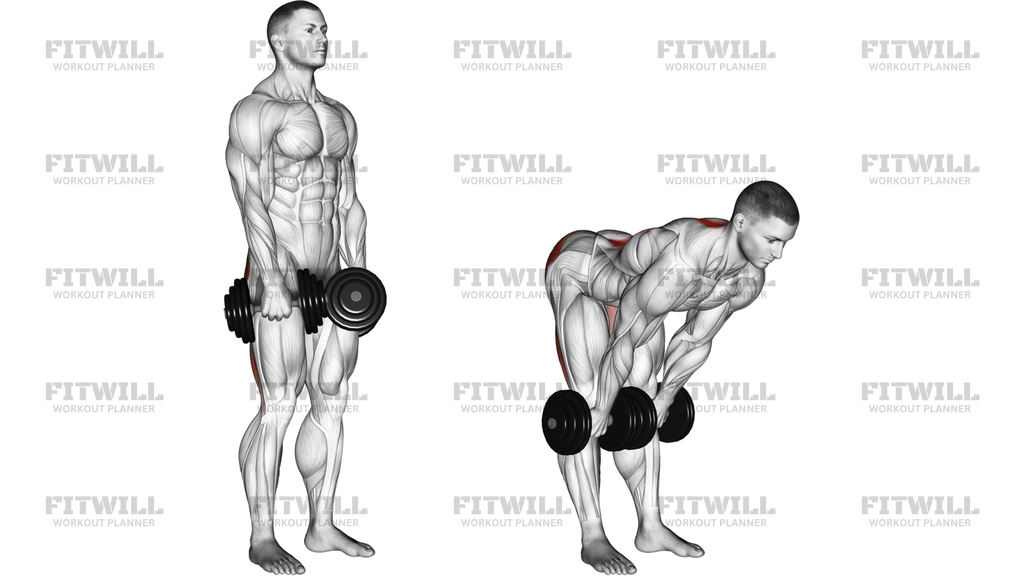
Instructions
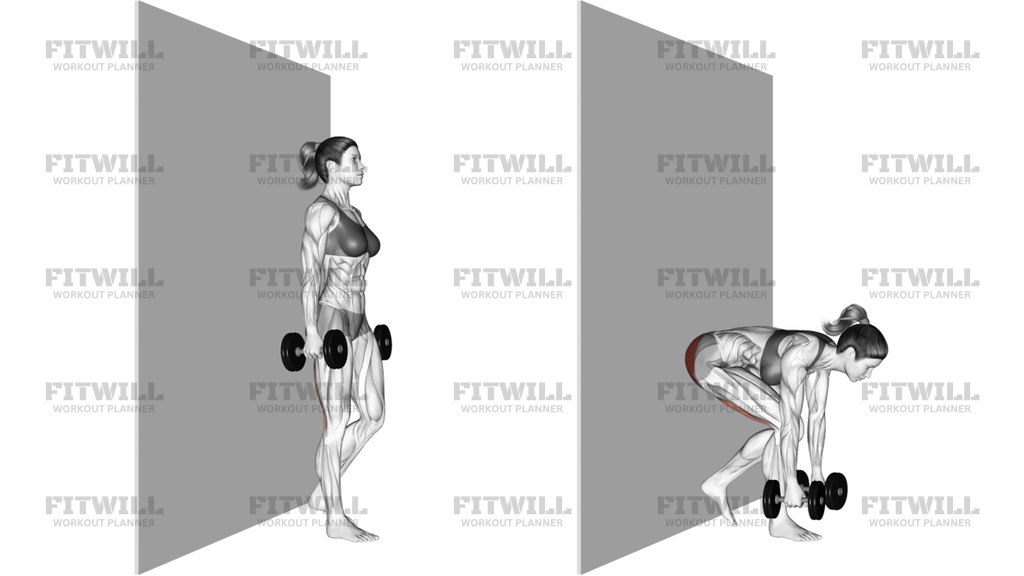
- Stand tall holding a dumbbell in each hand with your palms facing your thighs and your feet about hip-width apart.
- Keep your knees softly bent, stack your ribs over your pelvis, and brace your torso before the first rep.
- Let the dumbbells hang against the front of your thighs and keep your shoulders pulled down away from your ears.
- Push your hips straight back while the dumbbells slide down the front of your legs.
- Keep the same small knee bend as you hinge, and stop when your hamstrings hit a strong stretch without rounding your back.
- Pause briefly in the lowered position with the dumbbells near your shins and your spine long.
- Drive your hips forward to stand up, keeping the dumbbells close to your legs as you rise.
- Finish each rep by squeezing your glutes and standing tall without leaning back.
- Lower the weights under control for the next rep or set them down safely when you are done.
Tips & Tricks
- Treat the knee bend as a fixed setting; if the knees keep bending as you descend, the movement starts turning into a squat.
- Keep the dumbbells brushing the thighs and shins so the load stays under control instead of pulling the torso forward.
- Stop the descent when your hamstrings are fully loaded, even if the dumbbells have not reached the floor.
- Think about sending the hips back, not reaching the chest down; the torso should tilt because the hips move, not because the spine collapses.
- Use straps or reduce the load if grip failure is ending the set before the hamstrings do.
- A slow lower works better than a fast drop because the stretch is part of the exercise.
- If your lower back takes over, shorten the range and keep the ribs from flaring at the top.
- Keep the neck neutral by looking a few feet in front of you, not straight up or tucked hard under.
- Set the dumbbells down between reps if balance gets shaky rather than letting them swing.
Frequently Asked Questions
What muscles does Dumbbell Stiff Leg Deadlift work?
Dumbbell Stiff Leg Deadlift mainly works the hamstrings and glutes, with the lower back, core, and grip helping you keep position. The long hip hinge also gives the posterior chain a strong loaded stretch.
Is Dumbbell Stiff Leg Deadlift beginner-friendly?
Yes, if you start light and keep the hinge small at first. Beginners usually do best with a mirror or coach cue so they can keep the back flat and the dumbbells close to the legs.
Should my knees stay bent during Dumbbell Stiff Leg Deadlift?
Yes, but only slightly and with that bend held steady. If the knees keep bending more on the way down, you are drifting into a Romanian deadlift or squat pattern instead of a stiff-leg hinge.
How low should the dumbbells go in Dumbbell Stiff Leg Deadlift?
Lower them only as far as you can keep your spine long and your hamstrings under tension. For many lifters that is mid-shin, but the correct end point is whatever stops before the back rounds.
What is the biggest mistake in Dumbbell Stiff Leg Deadlift?
Letting the dumbbells drift away from the legs is the most common problem. Once the weights move forward, the low back has to work harder and the hamstrings usually lose the clean stretch.
Can I use Dumbbell Stiff Leg Deadlift instead of a barbell deadlift?
It can be a good accessory or substitution when you want less setup and a more targeted hamstring stretch, but it does not replace every deadlift pattern. It is best used for hinge practice, posterior-chain volume, or lighter training days.
Why do I feel Dumbbell Stiff Leg Deadlift in my lower back?
A mild lower-back effort is normal, but if it is doing most of the work, you are probably rounding or reaching too far. Shorten the range, keep the dumbbells closer, and stop the hinge when the hamstrings tighten first.
Do I need to touch the dumbbells to the floor?
No. Touching the floor is not the goal, and forcing it usually steals tension from the hamstrings. Stop where your hinge stays strong and repeatable.
How should I breathe during Dumbbell Stiff Leg Deadlift?
Take a breath and brace before you hinge, hold that pressure through the lowering phase, then exhale as you drive back to standing. Reset your brace at the top if the set is getting heavy.