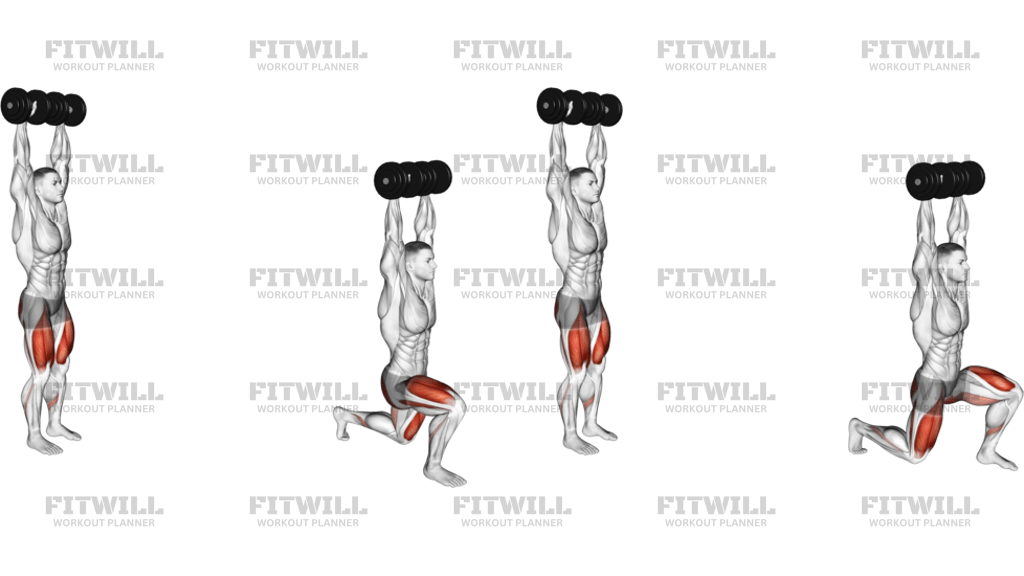
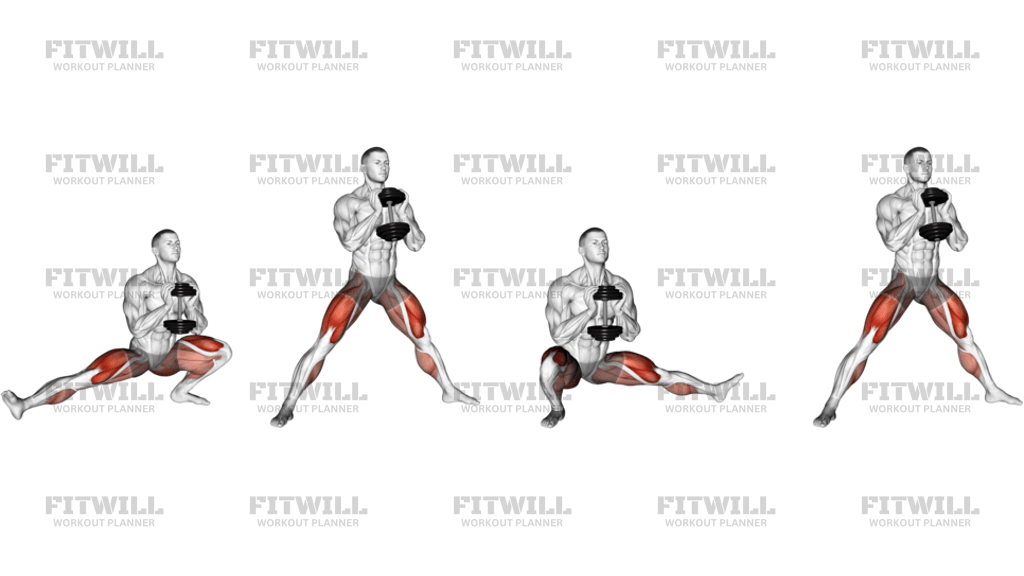
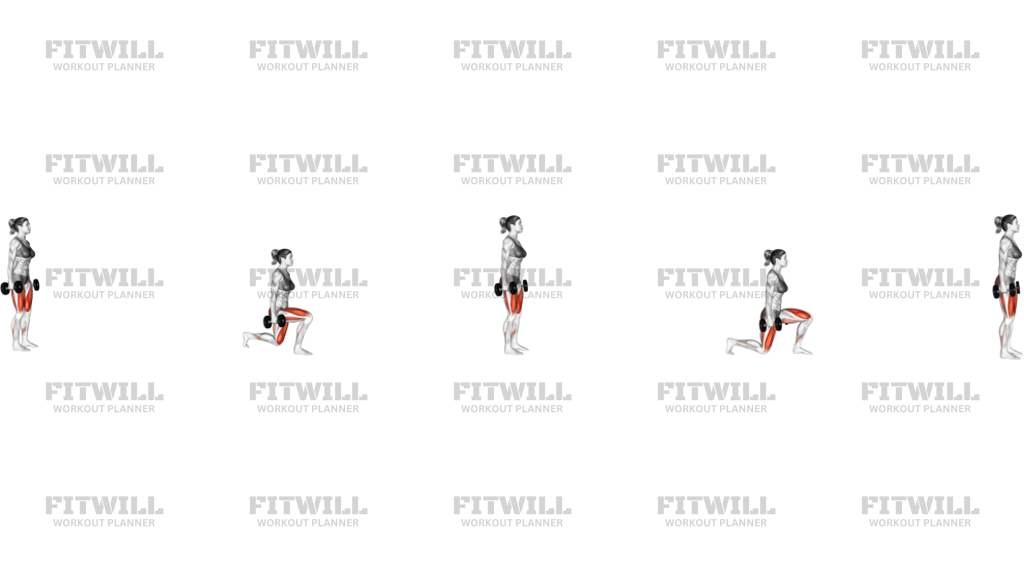
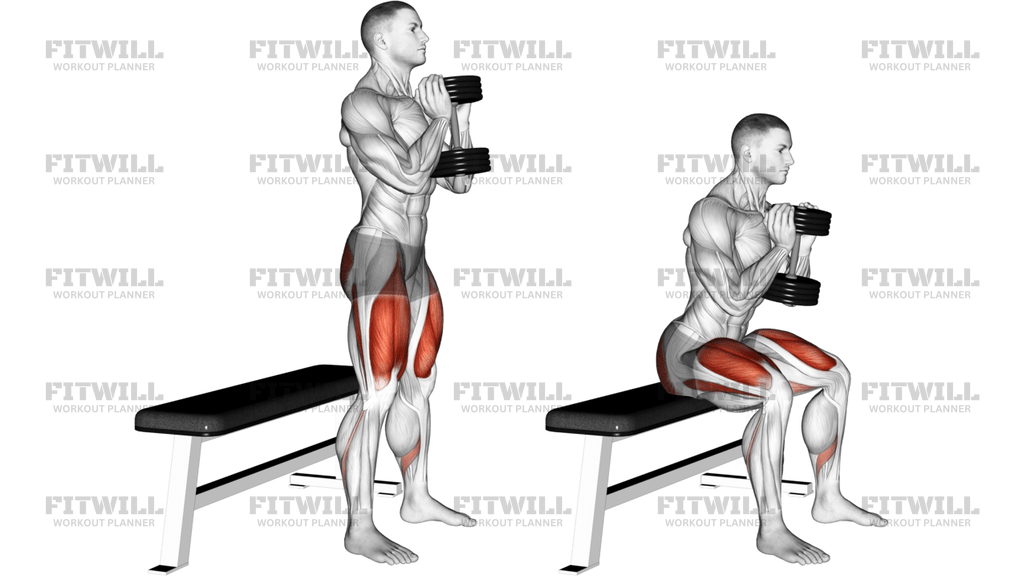
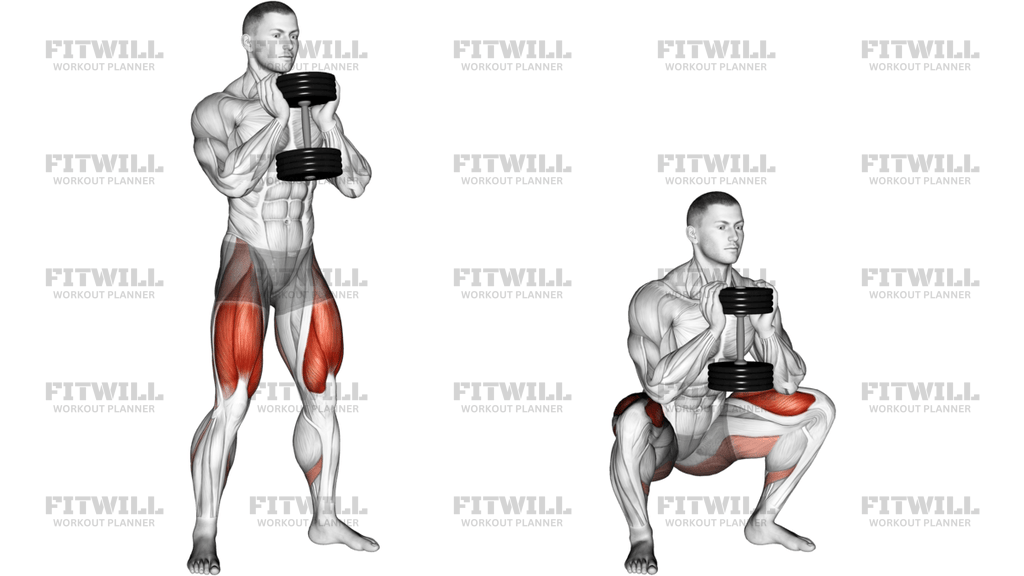
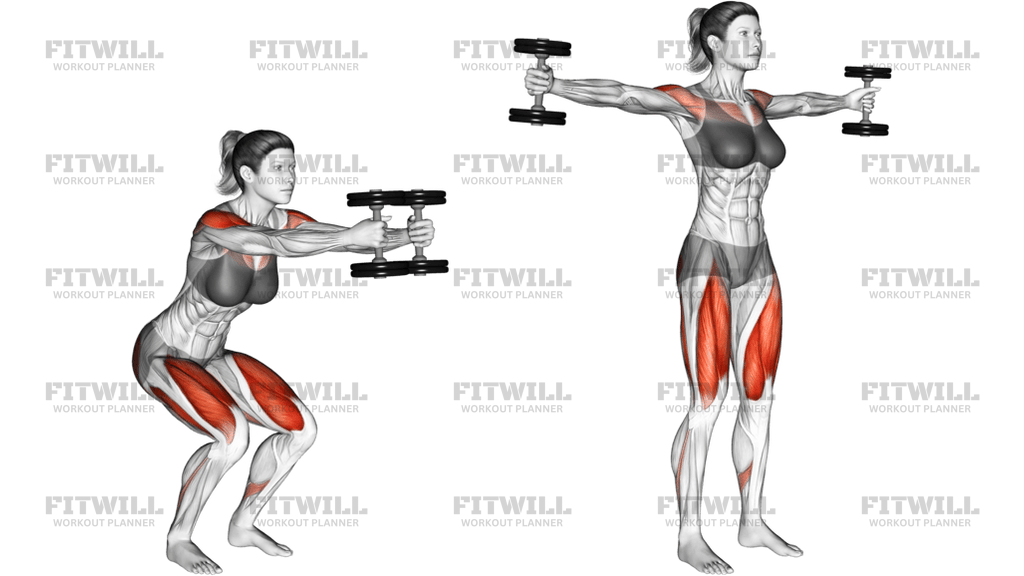
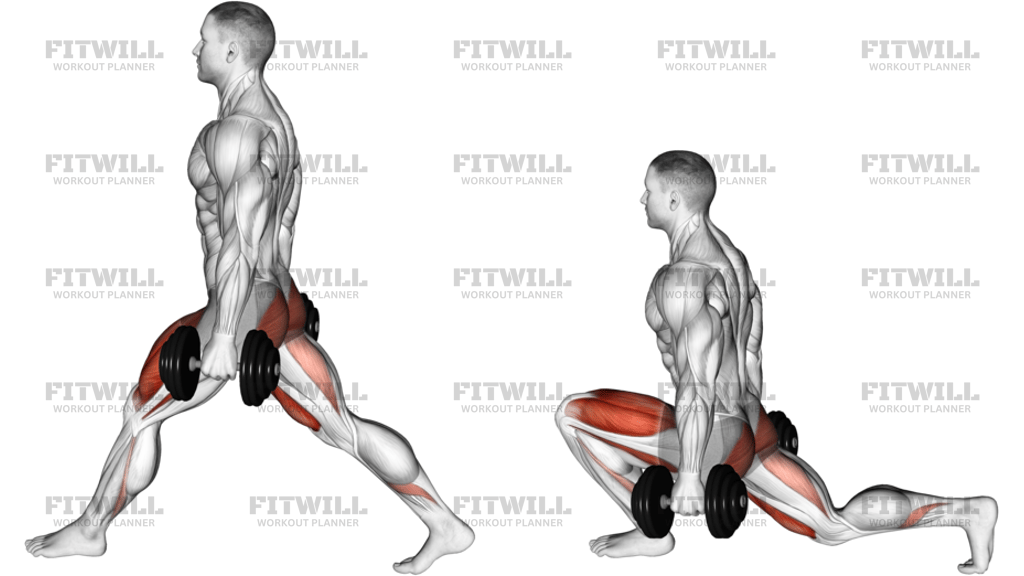
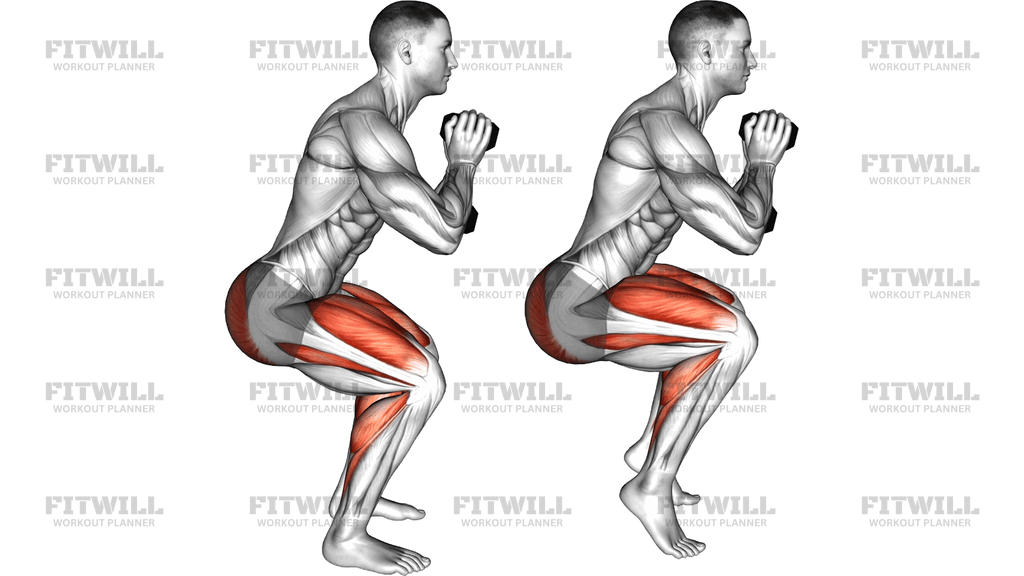
Dumbbell Curtsey Lunge
Dumbbell Curtsey Lunge is a unilateral lower-body exercise that loads the glutes and thighs while challenging hip control and balance. The rear leg crosses behind the front leg, which creates a different line of tension than a standard lunge and asks the standing hip to stay stable as you descend. It is useful for building single-leg strength, improving coordination, and training the outer hip to control the knee and pelvis through a demanding but practical range of motion.
The exercise works best when the front foot is planted, the torso stays tall, and the dumbbells hang quietly at your sides instead of swinging. The front leg should do most of the work while the rear leg acts as a light support and balance check. That setup matters because a curtsy pattern can quickly turn into a twisting step if the cross-behind position gets too wide or the pelvis rotates away from the front leg.
During each rep, sit down and slightly back while the rear knee moves toward the floor behind and across the body. Keep the front knee tracking over the middle toes and let the front heel stay grounded so the glute and thigh can drive the lift. The movement should feel smooth and deliberate, with enough depth to challenge the working side without collapsing the hip, losing balance, or forcing the knee inward.
Dumbbell Curtsey Lunge is a strong accessory choice for lower-body sessions, glute-focused work, or athletic programs that need single-leg control. It can be done with light dumbbells, bodyweight, or as a warm-up version before heavier squat or lunge work. Because the cross-behind angle increases the balance demand, the load should stay moderate enough that you can keep the pelvis square and the descent clean from the first rep to the last.
Good technique usually means controlling the path rather than chasing a huge step behind the body. If the back knee or front knee feels stressed, shorten the crossover, reduce depth, or switch to a reverse lunge until the pattern feels smoother. When the stance is set correctly and the descent stays controlled, Dumbbell Curtsey Lunge gives the glutes, thighs, and hip stabilizers a focused challenge without needing heavy weight.
[ Workout Log & Planner ]
Put your next workout in Fitwill
Keep your plan and training log ready when you are.


Instructions
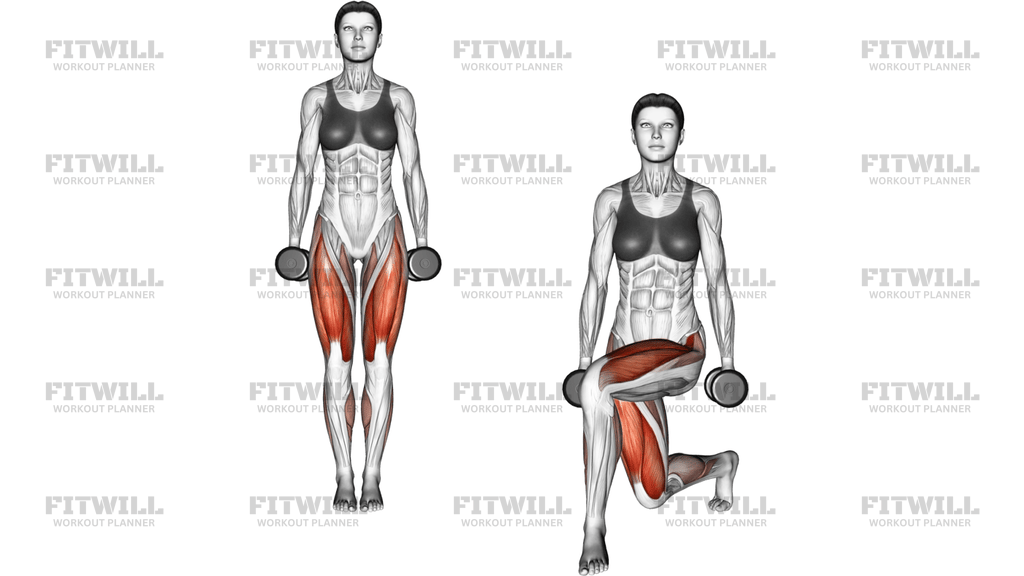
- Stand tall with a dumbbell in each hand, feet about hip-width apart, shoulders level, and arms hanging straight at your sides.
- Shift your weight onto one leg and step the other leg back and across behind the front leg at a shallow angle, landing on the ball of the back foot.
- Keep the front foot flat, the front knee pointing over the middle toes, and both hips facing forward before you start descending.
- Lower by bending the front knee and sitting down until the back knee approaches the floor behind you, keeping your chest up and your dumbbells still.
- Let the front thigh and glute control the descent instead of letting the rear leg take over or letting the torso twist toward the crossover.
- Pause briefly near the bottom only if you can hold the front heel down and keep the front knee stable.
- Press through the front heel and midfoot to stand back up, driving the front hip forward until you return to a tall position.
- Reset the rear leg beside the front leg before the next rep or switch sides if your program calls for alternating reps.
Tips & Tricks
- Keep the rear foot light. If you push hard through the back leg, the curtsy turn turns into a twisted step instead of a front-leg lunge.
- Cross behind just enough to feel the glute and thigh on the working side. A huge crossover usually makes the pelvis rotate and the knee track awkwardly.
- Let the front knee travel in line with the second or third toe instead of caving inward as you lower.
- Hold the dumbbells quietly at your sides. Swinging them forward changes the balance point and makes the torso tip too far.
- A slight forward torso lean is fine, but keep the chest long and the ribcage from collapsing over the front thigh.
- Use a smaller range if the back knee scrapes the floor or the front heel starts lifting before you reach depth.
- Start with bodyweight or light dumbbells if the cross-behind position feels unstable; the exercise is meant to train control as much as load.
- Exhale as you drive up and finish each rep by squeezing the front glute, not by snapping the lower back into extension.
Frequently Asked Questions
What muscle does Dumbbell Curtsey Lunge target most?
The glutes are the main target, especially the working-side glute as you stand back up from the cross-behind position. The thighs, adductors, and hip stabilizers help control the descent and keep the knee aligned.
Can beginners perform this exercise?
Yes, but start with bodyweight or very light dumbbells so you can learn the crossover and balance demand first. If the curtsy angle feels awkward, shorten the step or switch to a reverse lunge until you can keep the knee and pelvis steady.
How low should I go in Dumbbell Curtsey Lunge?
Lower until the front thigh is close to parallel or until you feel the front hip and glute doing the work without the heel lifting. Depth should stop before the pelvis twists or the back knee drives you out of position.
Why do my knees feel awkward in the curtsy position?
Usually the rear foot is crossing too far behind or the front knee is collapsing inward. Bring the crossover closer to the body and keep the front knee tracking over the toes.
Should Dumbbell Curtsey Lunge feel different from a regular lunge?
Yes. The cross-behind path usually shifts more demand to the glute and outer hip of the standing leg, while also asking for more balance than a standard forward or reverse lunge.
Do I need to touch the back knee to the floor?
No. The back knee should move toward the floor, but it does not need to slam down or make contact. Stop slightly above the floor if that lets you keep the front heel planted and the torso quiet.
What can I use instead of dumbbells for this movement?
You can do the same pattern with bodyweight, one dumbbell held at the chest, or a kettlebell goblet hold if you want a simpler balance setup. A reverse lunge is the closest swap if the crossover angle bothers your knees.
Where should I feel Dumbbell Curtsey Lunge most?
You should feel it mainly in the glute and thigh of the front leg, with the outer hip working to keep the knee from caving in. A little work in the core and adductors is normal, but they should support the rep rather than dominate it.