Elbow-to-Knee Twists
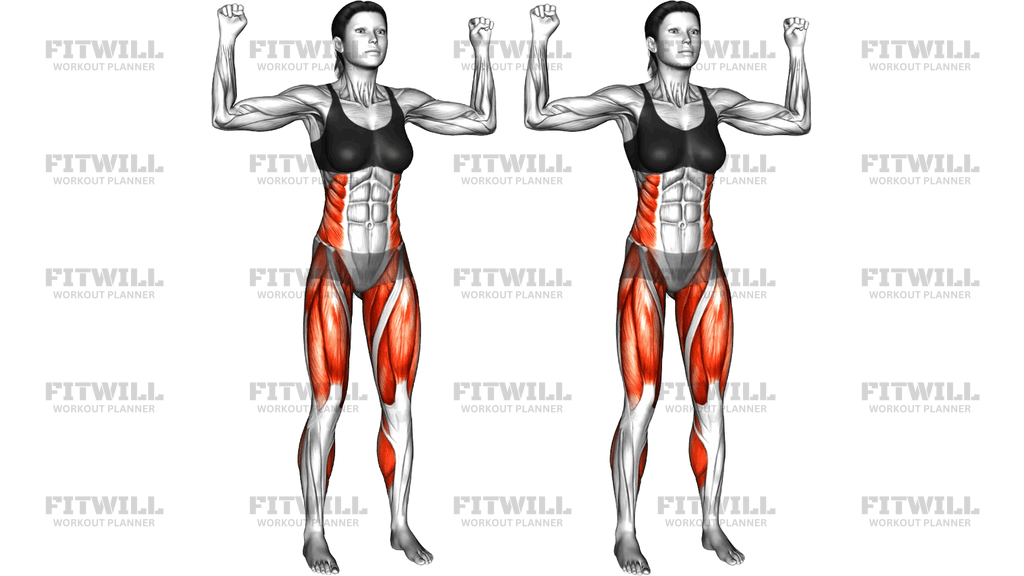
Elbow-to-Knee Twists is a standing bodyweight core and conditioning drill that combines a contralateral knee drive with a small trunk twist. It is useful when you want to wake up the obliques, hip flexors, and deep abdominal muscles while also training balance and coordination. The exercise should feel like an upright marching crunch, not a loose side bend or a rushed knee lift.
The setup matters because the movement is easy to turn into swinging if the stance is sloppy. Start tall, keep the chest lifted, and place the hands near the sides of the head or in a high guard so the elbows can travel without pulling on the neck. From there, one knee rises while the opposite elbow angles down and inward, creating a controlled cross-body squeeze through the trunk.
The goal is to rotate only enough to meet the knee, then return to a stacked, athletic posture before changing sides. Each rep should stay smooth, with the standing foot rooted and the hips level as much as possible. If the torso collapses or the lifted knee drifts outward, the abs stop doing the work and the drill becomes a balance save rather than a clean core contraction.
This is a good choice for warm-ups, active recovery, and light cardio intervals because it raises heart rate without needing equipment. It also works well when you need a simple standing ab exercise that does not involve the floor. Keep the range pain-free, move deliberately, and reduce speed before form breaks down, especially if your neck, hips, or low back start taking over.
[ Workout Log & Planner ]
Put your next workout in Fitwill
Keep your plan and training log ready when you are.


Instructions
- Stand tall with your feet about hip-width apart and bring your hands up near your temples or cheekbones.
- Keep your elbows open instead of pulling them behind your head, and brace your midsection before you move.
- Shift your weight onto one leg and drive the opposite knee upward toward the same-side elbow on the other side of your body.
- Let the torso rotate just enough for the elbow and knee to meet without rounding the upper back.
- Pause briefly at the top so the knee lift and trunk twist are controlled, not bounced.
- Lower the leg back to the floor under control and return your torso to center before the next rep.
- Alternate sides in a steady rhythm, keeping the standing leg soft but stable.
- Continue for the planned reps or time, then finish upright with both feet planted.
Tips & Tricks
- Think of lifting the knee and elbow toward each other rather than throwing the shoulder down.
- Keep the chin neutral so the neck does not crane forward as the elbow drops.
- If the torso is twisting too far, reduce the range and keep the sternum mostly facing forward.
- Plant the standing foot through the heel and big toe so the body does not wobble sideways.
- Exhale as the knee comes up to help the ribs close and the obliques engage.
- Use a slower tempo if the hips start swinging the leg instead of the abs controlling it.
- Stop the rep before the lifted knee drifts across the midline and pulls the pelvis off level.
- If balance is the limiter, shorten the knee lift before you shorten the elbow path.
Frequently Asked Questions
What muscles does Elbow-to-Knee Twists work?
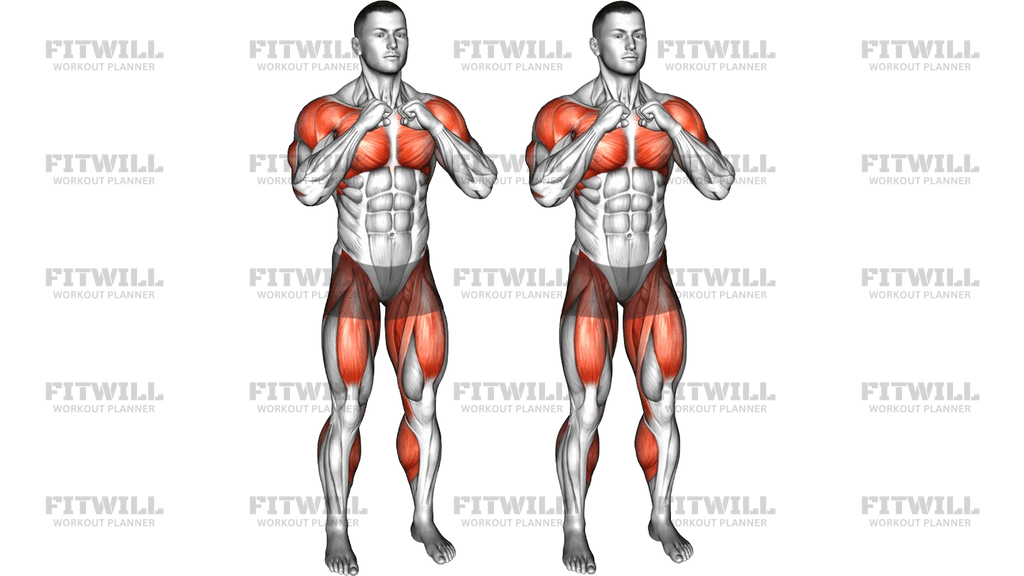
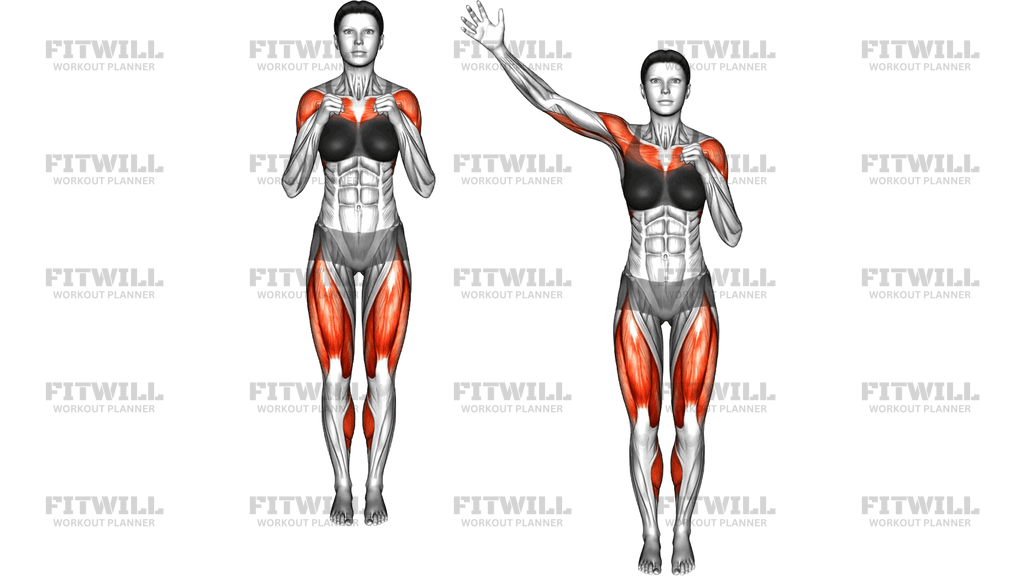
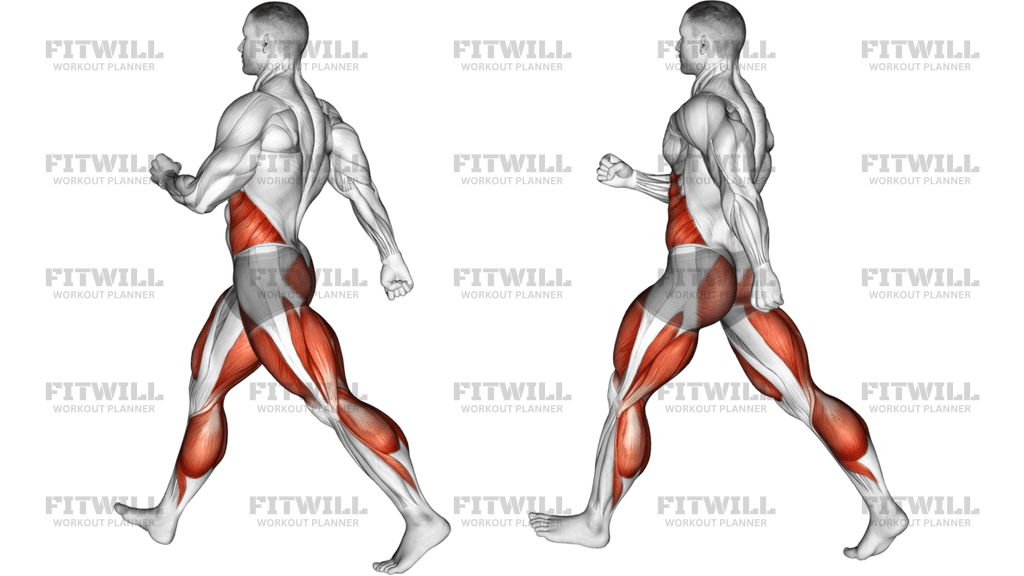
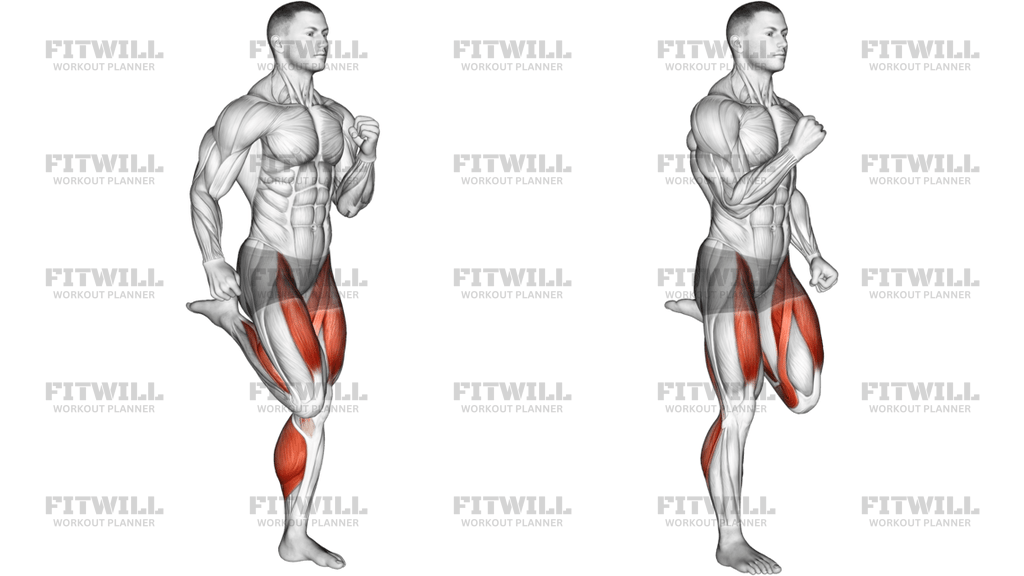
It mainly trains the abs, obliques, and hip flexors, with the glutes, calves, and shoulder girdle helping you stay upright and coordinated.
Is Elbow-to-Knee Twists beginner-friendly?
Yes, as long as you keep the movement small and controlled. Beginners should focus on balance and clean knee lifts before trying to touch elbow to knee every rep.
Where should my hands and elbows stay during the rep?
Keep your hands light near the sides of your head and your elbows open. They should guide the twist, not pull your head forward.
Should the lifted knee travel straight up or across the body?
Lift the knee mostly upward while the torso rotates to meet it. If the knee swings way across, the exercise usually turns into a balance drill instead of a controlled core rep.
How much should my torso twist?
Only enough for the elbow and knee to connect cleanly. A small, deliberate rotation is better than forcing a big turn through the low back.
Is this more of a cardio move or a strength exercise?
It can be both, depending on pace and volume. Done slowly, it is a core control drill; done continuously for time, it becomes a light conditioning movement.
What is the biggest form mistake?
The most common mistake is swinging the knee and collapsing the chest to fake the twist. Keep the ribcage stacked and let the abs create the movement.
When should I use this exercise?
It works well in a warm-up, as a low-impact cardio interval, or as a standing core drill when you want to avoid floor work.
What should I do if my balance is unstable?
Shorten the knee lift, slow the tempo, and keep the movement one side at a time. You can also hold a wall lightly until the pattern feels stable.