Frog Hops
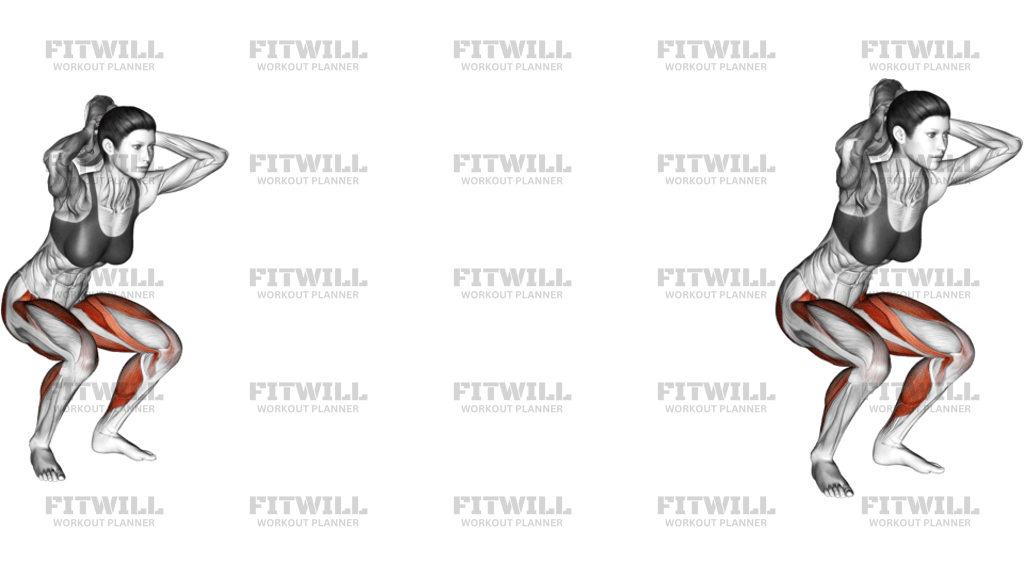
Frog Hops are a bodyweight plyometric squat drill built around a wide stance, turned-out toes, and a hands-behind-head position. The exercise raises heart rate quickly while training the quads, glutes, calves, adductors, and core to absorb force and repeat clean landings. Because the image shows a deep squat jump pattern rather than a floor drill, the setup matters: you need enough hip and ankle mobility to sit down, spring up, and land without collapsing inward.
The main training value comes from the repeatable squat-to-hop rhythm. Each rep asks you to load the legs, drive through the floor, and catch your body in the same wide stance with the torso controlled. That makes Frog Hops useful for warm-ups, conditioning circuits, and athletic prep when you want lower-body explosiveness without external load.
Start by setting your feet wider than shoulder width with the toes slightly turned out. Keep your hands behind your head as shown, elbows open, chest lifted, and weight balanced across the whole foot. The posture should let you squat between your hips instead of folding hard at the waist.
On each rep, sink into the squat, then hop lightly and land back into the same stance with soft knees. The landing should be quiet and stable, with the knees tracking over the toes and the hips dropping under control. If you lose position, shorten the hop and keep the squat shallower until the movement feels organized again.
Frog Hops work best when they stay rhythmic rather than frantic. A smaller jump with crisp mechanics is more useful than a high jump that forces the knees inward or the heels to pop off early. If the drill bothers the knees, ankles, or groin, reduce the depth, slow the pace, or switch to frog squats before building back to hopping.
Fitwill
Log Workouts, Track Progress & Build Strength.
Achieve more with Fitwill: explore over 9600 exercises with images and videos, access built-in and custom workouts, perfect for both gym and home sessions, and see real results.
Start your journey. Download today!




Instructions
- Stand with your feet wider than shoulder width, toes turned slightly out, and place your hands behind your head with your elbows open.
- Keep your chest lifted and your weight spread across the whole foot so you can sit down between your hips.
- Lower into a deep wide squat by bending the knees and hips together, letting the knees track over the toes.
- Pause long enough to feel balanced at the bottom, with your heels grounded or only lightly unloading before the hop.
- Drive through the floor and hop upward in a small, controlled burst instead of trying to jump as high as possible.
- Land back in the same wide stance with soft knees, a quiet landing, and your torso stacked over your hips.
- Use the landing to immediately absorb into the next squat hop or to reset if the rhythm starts to slip.
- Continue for the planned reps or time, keeping every rep in the same stance and depth range.
- Step your feet in and stand tall when the set is finished, then release your hands from behind your head.
Tips & Tricks
- Keep your elbows wide and your hands light behind your head so you do not pull on your neck.
- Think about sitting between your hips on the way down; folding forward turns the drill into a back-dominant hinge instead of a squat hop.
- Use a smaller hop if your knees drift inward on landing; the rep should look springy, not reckless.
- Aim for quiet foot contacts. Loud landings usually mean you are dropping too far or jumping too high.
- If your heels pop up early, narrow the stance slightly or reduce the squat depth before chasing more speed.
- Keep the toes turned out only enough to open the hips; an exaggerated turnout can make the knees twist instead of tracking cleanly.
- Treat the bottom position as a loading point, not a collapse. Stay braced so the hips and trunk can rebound together.
- For conditioning work, use short intervals and keep the pace steady rather than sprinting the first few reps.
- Stop the set when the landing gets sloppy, especially if the knees cave, the torso drops, or the feet stop landing in the same place.
Frequently Asked Questions
What muscles does Frog Hops work?
Frog Hops mainly trains the quads, glutes, calves, adductors, and core. The hands-behind-head position also makes the upper back and trunk work isometrically to keep the torso organized.
Is Frog Hops good for beginners?
Yes, if you start with small hops or frog squats and keep the landing quiet. If you cannot hold the wide squat position without your heels lifting or knees caving, shorten the range first.
How low should I squat in Frog Hops?
Go only as low as you can while keeping your chest up, heels grounded, and knees tracking over the toes. Depth should support a clean rebound, not force you to fold forward.
What is the biggest mistake in Frog Hops?
Jumping so high that the knees collapse inward or the feet land in a different spot. This drill should feel springy and repeatable, not like a max-effort vertical jump.
Why are my heels coming up on Frog Hops?
That usually means the stance is too wide, the squat is too deep, or the ankles are tight. Reduce the depth first, then narrow the stance a little if you still cannot keep pressure through the whole foot.
Should my hands stay behind my head the whole time?
Yes, if that is the version you are doing. Keep the elbows open and the hands light so you do not yank on the neck or round the upper back.
How is Frog Hops different from a regular squat jump?
Frog Hops use a wider stance, more toe turnout, and a hands-behind-head posture. That shifts more demand to the hips and inner thighs while still training a fast squat-to-land pattern.
Can I do Frog Hops for cardio?
Yes. Short timed intervals work well because the movement is repetitive and elevates the heart rate quickly, as long as your landings stay controlled.