Front And Back Neck Stretch
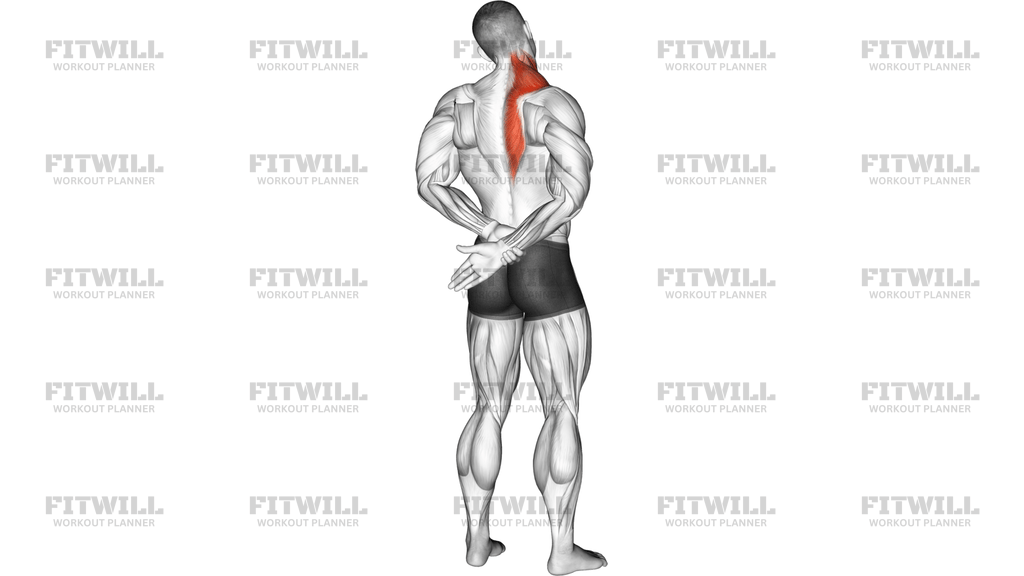
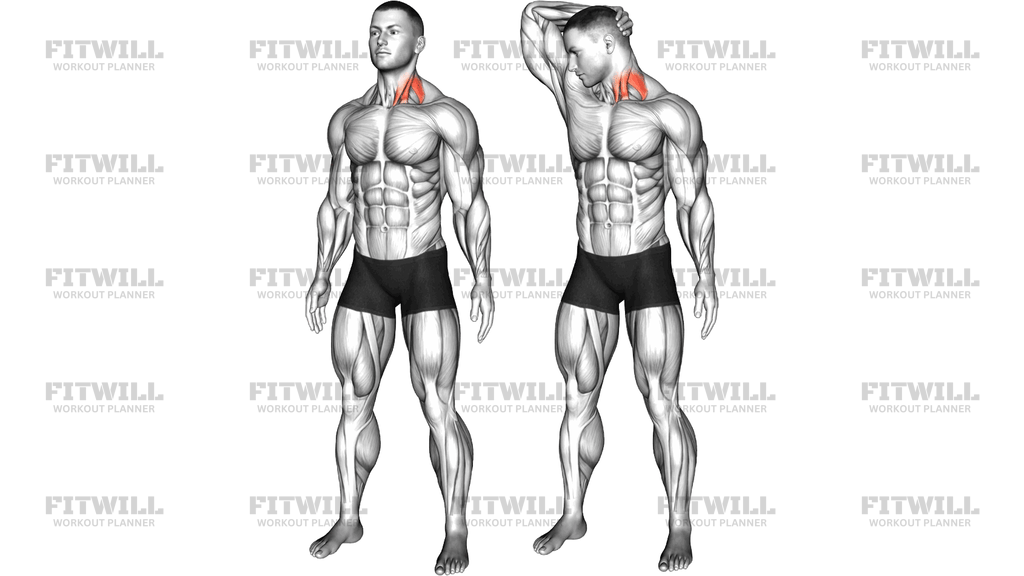
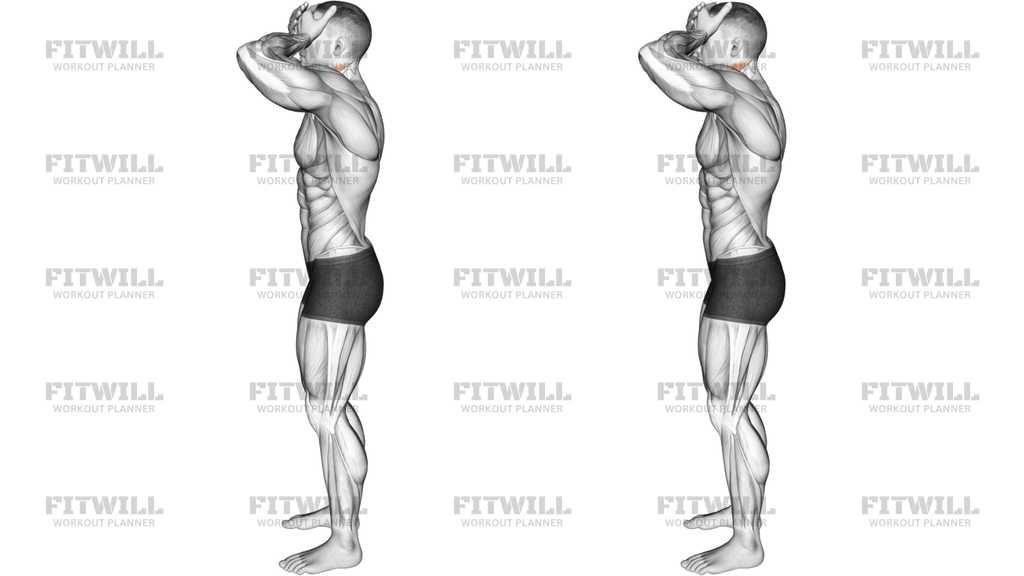
Front and Back Neck Stretch is a standing cervical mobility drill that moves the head between gentle flexion and extension while the hands lightly support the skull. The image shows a tall stance with the elbows out and the hands on the back of the head, which helps guide the neck without letting the shoulders and ribs take over. The goal is not to force a big range. It is to cleanly find the small arc where the front and back of the neck can lengthen without pinching.
This exercise mainly targets the neck flexors and extensors while the upper traps, levator scapulae, and deeper cervical stabilizers help control the position. Done well, it can be useful before training, after long periods of sitting, or as a controlled mobility reset when the neck feels stiff. Because the cervical spine is sensitive, the setup matters more than speed or range. The torso should stay stacked, the chin should move deliberately, and the hands should only guide the motion.
Start tall with your feet grounded and your ribs down. From there, use the hands to support the head as you gently tuck the chin to feel the back of the neck lengthen, then ease into a small back-and-up look if that is part of the variation being performed. The movement should be smooth and symmetrical, with no yanking on the head and no aggressive leaning through the chest or lower back. The shoulders stay relaxed so the neck does the work.
The best version of this drill feels controlled and almost understated. You should be able to breathe normally, keep your balance, and stop instantly if the motion creates sharp pain, pressure, dizziness, or nerve-like symptoms. Use a smaller range if the neck is irritable, and choose a seated or supported variation if standing makes it harder to stay organized. This is a precision mobility exercise, so consistency and comfort matter more than depth.
[ Workout Log & Planner ]
Put your next workout in Fitwill
Keep your plan and training log ready when you are.


Instructions
- Stand tall on the mat with your feet about hip-width apart and your knees softly unlocked.
- Bring both hands to the back of your head or upper neck, with the elbows wide and the chest relaxed.
- Set the ribs over the pelvis so the movement comes from the neck, not from arching the low back.
- Gently tuck the chin toward the chest until you feel a light stretch across the back of the neck.
- If the variation calls for it, ease the head slightly back and up to open the front of the neck without jamming the throat.
- Move slowly from one end of the range to the other, keeping the hands as guides rather than pulling hard.
- Breathe steadily through each rep and keep the jaw, shoulders, and upper traps soft.
- Repeat for the planned reps or time, then return to a neutral tall posture before releasing the hands.
Tips & Tricks
- Let the hands guide the head; do not yank the neck into a bigger range.
- Keep the chin motion small enough that the movement feels like a cervical stretch, not a crunch through the upper back.
- If the elbows drift forward and the chest collapses, reset the ribcage before continuing.
- A slight nod forward is usually enough to feel the back of the neck; forcing extra depth often just irritates the joints.
- When looking back, stop before the lower ribs flare or the head tips into a hard compression at the top of the neck.
- Keep the shoulders down so the upper traps do not steal the stretch.
- If standing makes you sway, do the same drill seated so the neck can move without balancing demands.
- Any dizziness, tingling, or sharp pain is a cue to stop and shorten the range immediately.
Frequently Asked Questions
What muscles does Front and Back Neck Stretch work?
It mainly works the neck flexors and extensors, with help from the upper traps, levator scapulae, and deep cervical stabilizers that control the head position.
Is the hands-on-head standing version good for beginners?
Yes, as long as you keep the range small and use the hands only to guide the head. Beginners should avoid forcing the neck back or pulling hard on the skull.
How many reps should I do for this neck stretch?
Use 6 to 10 slow reps or 20 to 30 seconds of gentle alternating movement. The neck responds better to control than to long, aggressive holds.
What is the biggest mistake with the hands on the head?
The biggest mistake is pulling the head with the arms instead of letting the neck move on its own. That turns a mobility drill into a crank on the cervical joints.
Should the stretch feel different in the front and back of the neck?
Yes. The chin-tuck portion should feel like a gentle stretch along the back of the neck, while the slight look-up phase should open the front without pinching the throat.
Do I need a mat for this exercise?
A mat is optional. It can make the standing position more comfortable underfoot, but the drill itself depends on posture and neck control, not on the surface.
Can I do Front and Back Neck Stretch seated instead of standing?
Yes. A seated version is often better if you sway when standing or if you want to isolate the neck without balancing through the legs and core.
What should I do if looking back feels pinchy?
Shorten the extension range immediately and keep the motion smaller. If the front of the neck still feels jammed, skip that end range and work only the chin-tuck portion.