High Knee Twist
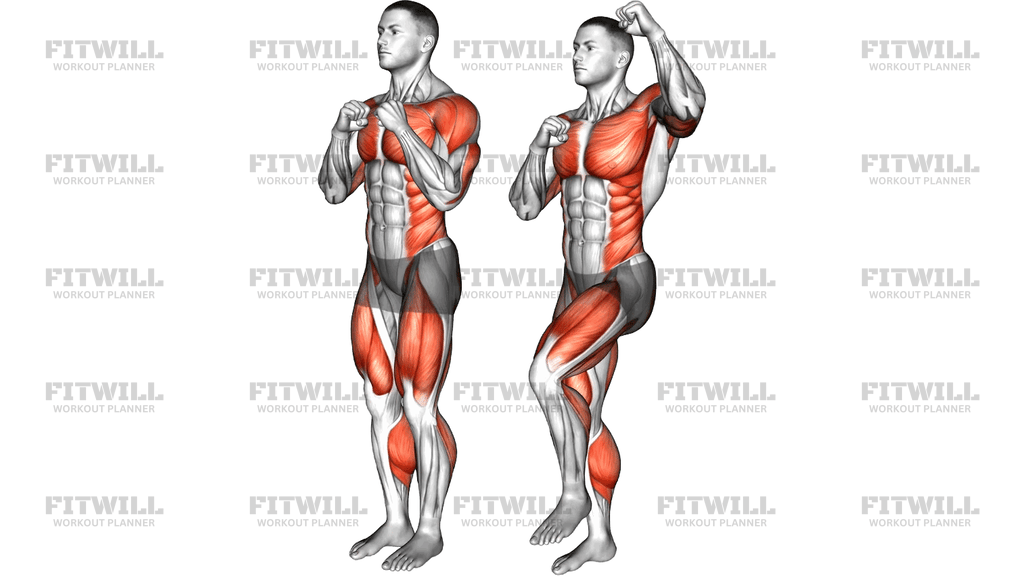
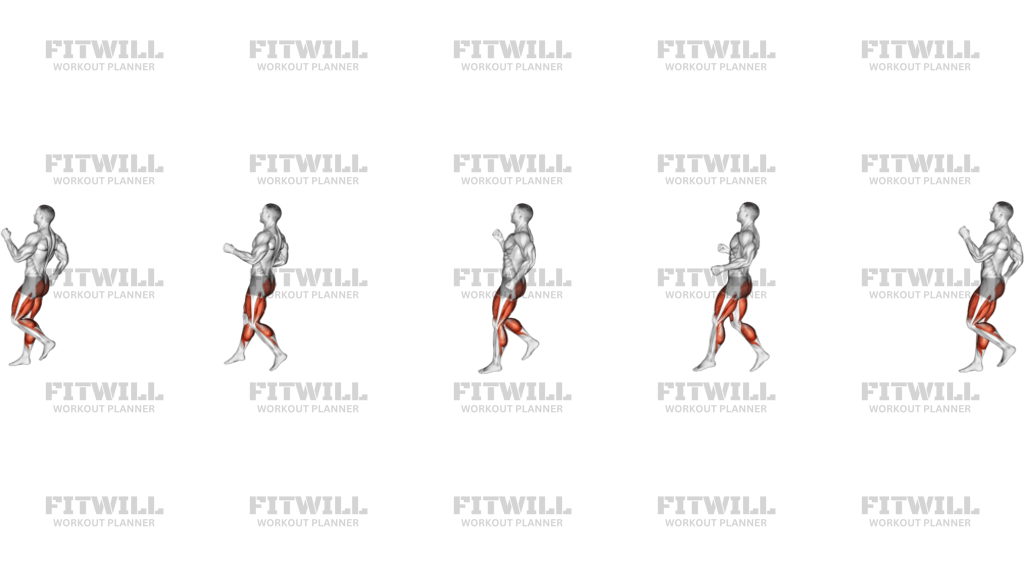
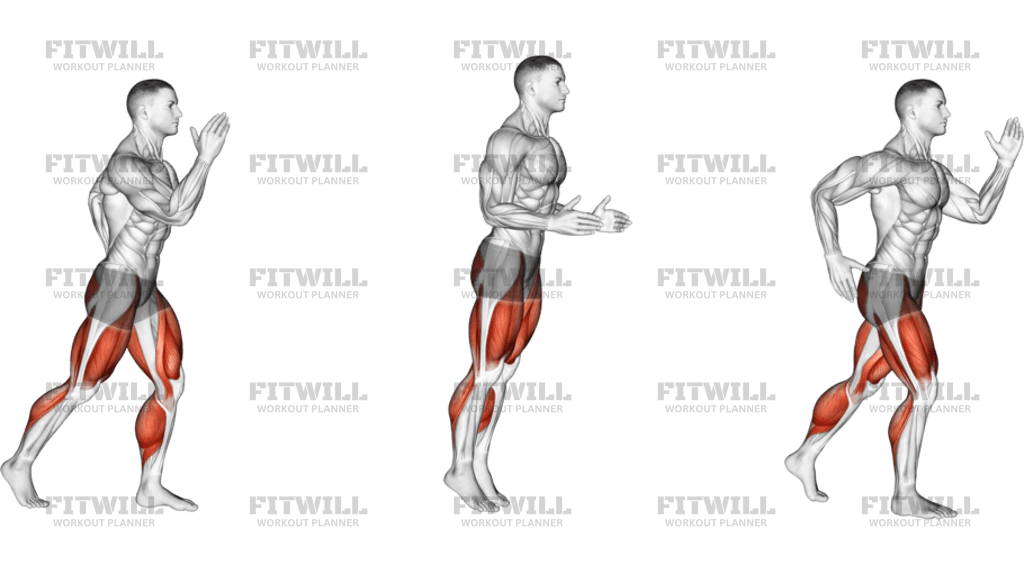
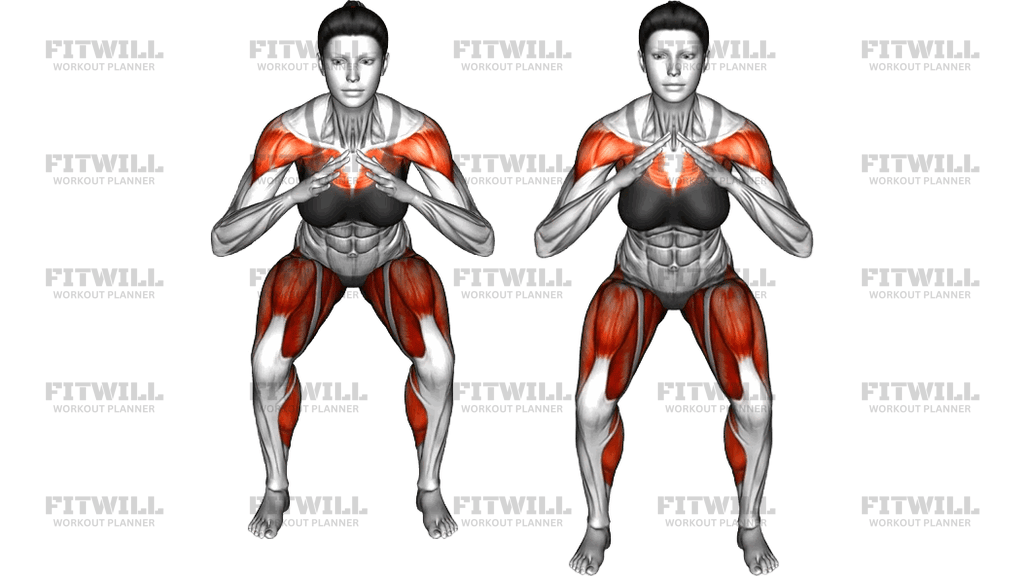
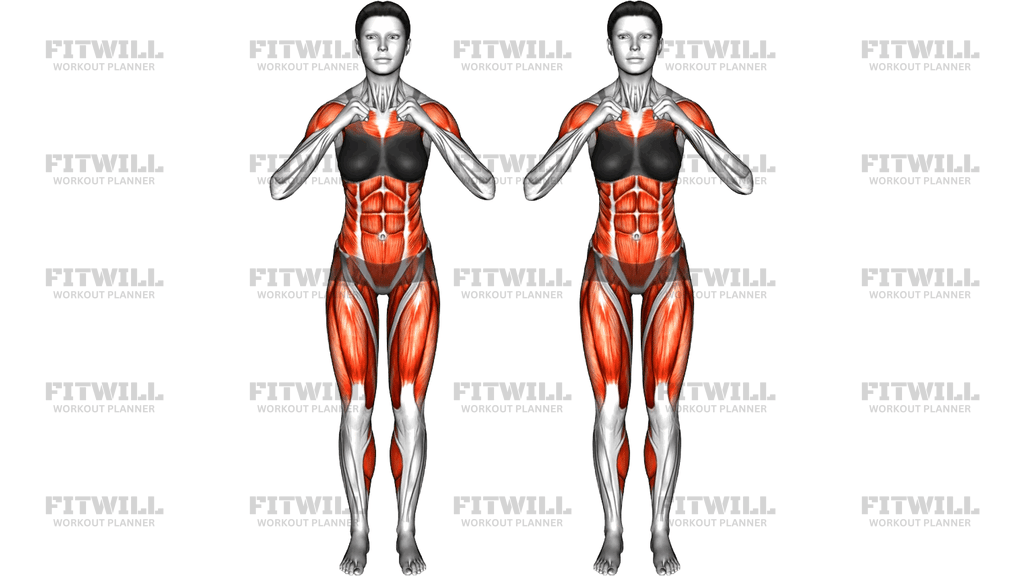
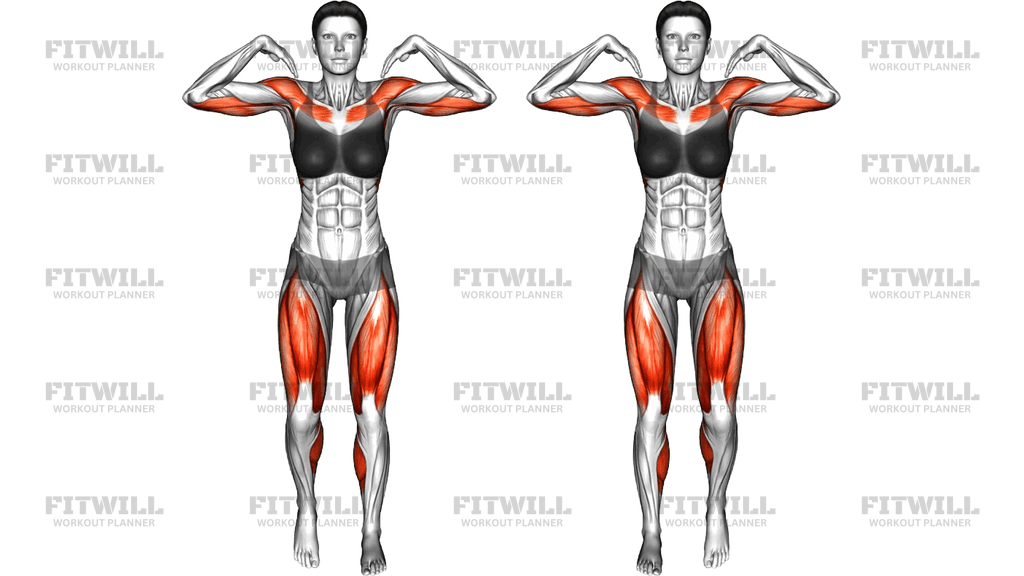
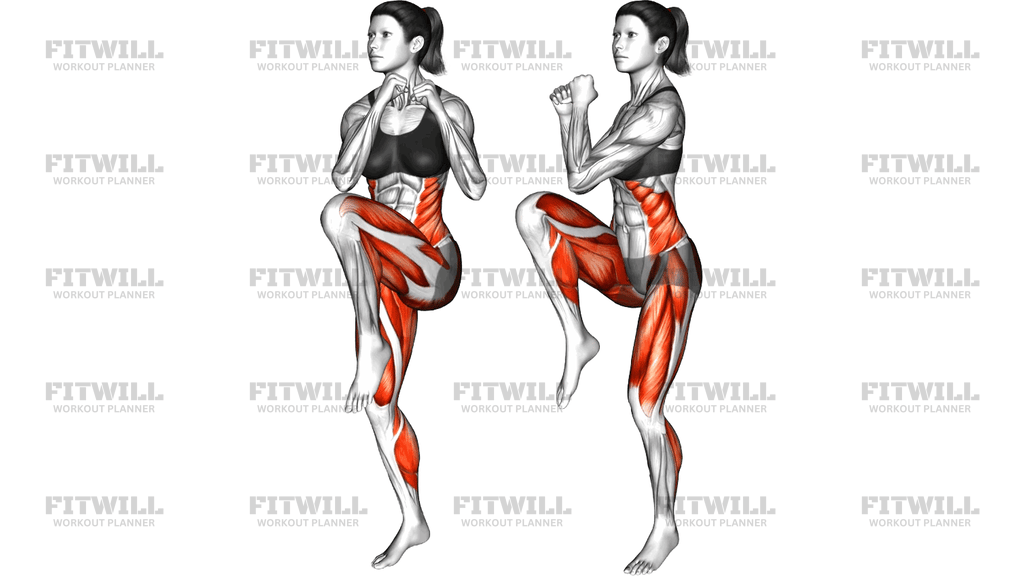
High Knee Twist is a standing bodyweight conditioning drill built around a single-leg balance, a lifted knee, and a small torso twist toward the raised side. In the image, the athlete stays upright on one leg while the other knee comes high in front of the body, which makes this more than a simple march: it asks the hips, trunk, and standing leg to coordinate at the same time.
The main training effect comes from the quads and hip flexors on the lifted side, with the standing glute, calf, and foot working hard to keep the body stacked. The core, especially the obliques and deep abdominal stabilizers, helps control the twist so the ribs and pelvis do not drift apart. That is why this movement can feel like a mix of cardio, balance, and core work even though no equipment is needed.
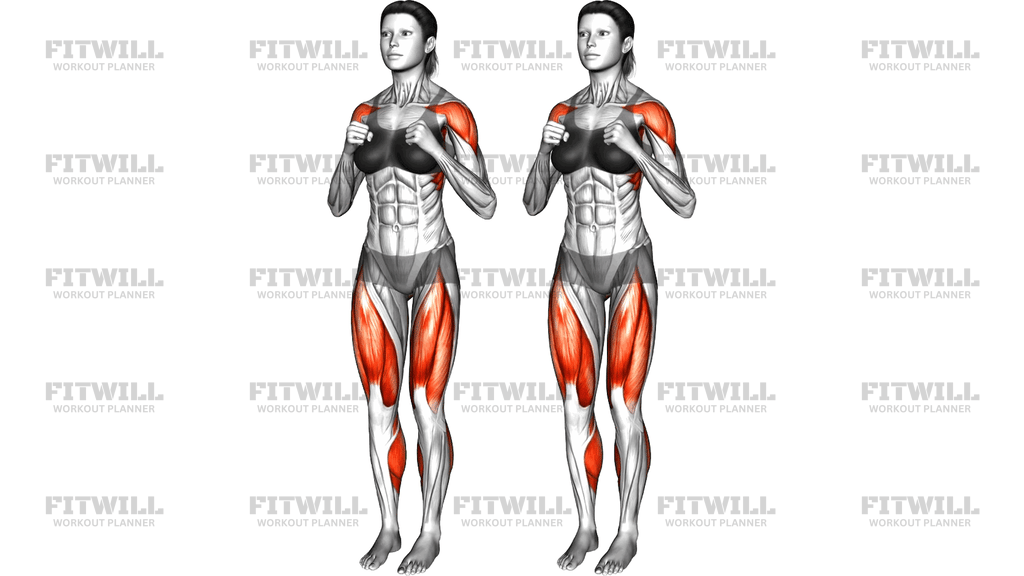
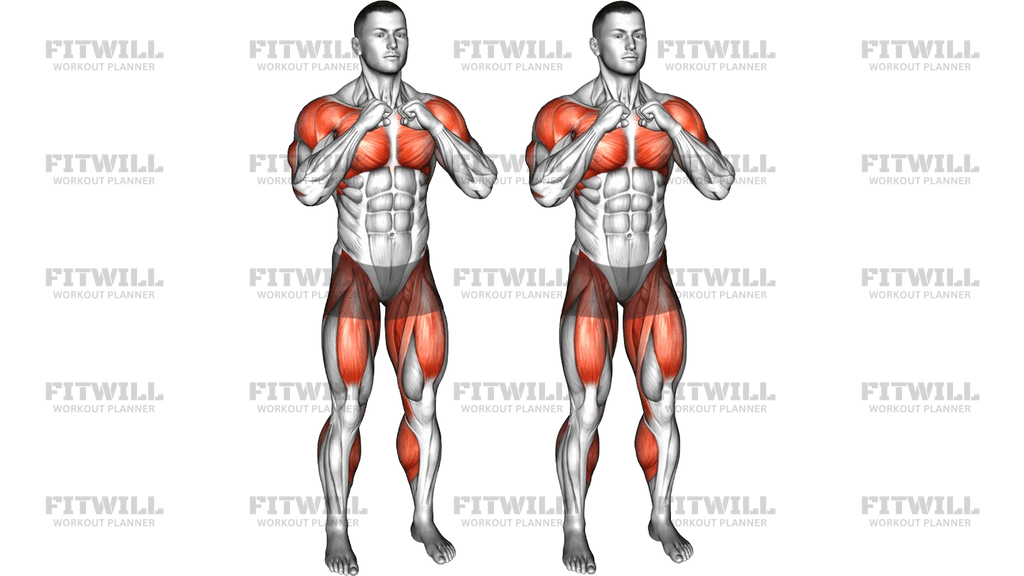
Setup matters because the exercise only looks simple when the posture is organized. Stand tall, place your weight over one foot, and keep the standing foot planted from heel to forefoot. Bring the opposite knee up under control, keep the chest lifted, and let the hands stay in a guarded position near the chest instead of swinging wildly. A clean start makes it easier to repeat the same rep on both sides.
During the rep, drive the knee upward, add a small twist through the ribcage toward that knee, and keep the pelvis level. The twist should be noticeable but not forced. If the lower back arches or the standing hip collapses inward, the range is too big or the pace is too fast. Lower the lifted leg slowly, re-center, and then switch sides with the same level of control.
High Knee Twist is useful as a warm-up drill, a conditioning finisher, or a rhythm-based core and hip exercise. It is especially helpful when you want to raise the heart rate without jumping or heavy impact. Keep the movement crisp, breathe out on the drive, and scale the height or tempo down if the balance, hip flexor, or low back stops feeling clean and controlled.
[ Workout Log & Planner ]
Put your next workout in Fitwill
Keep your plan and training log ready when you are.


Instructions
- Stand tall with your feet under your hips and your hands in front of your chest like a light guard.
- Shift your weight onto one foot and keep that support foot grounded through the heel, big toe, and little toe.
- Drive the opposite knee upward until the thigh is near hip height or as high as you can control without leaning back.
- Add a small twist through the ribcage toward the lifted knee while keeping the pelvis mostly square and level.
- Keep the standing knee softly bent so the ankle, knee, and hip can absorb the weight shift.
- Hold the top position for a brief beat if you want more core demand, then lower the leg with control.
- Return the torso to center before the next rep, rather than letting the twist unwind all at once.
- Alternate sides at a steady rhythm or do all reps on one side before switching if you are practicing balance.
- Breathe out on the knee drive and twist, then inhale as you lower and reset.
Tips & Tricks
- Keep the twist small enough that your ribs move more than your hips; forcing the pelvis to rotate usually turns the drill into a wobble.
- Use the lifted knee to create the twist, not a big arm swing or a yank from the shoulders.
- If balance is shaky, touch a wall or rack with one fingertip so you can keep the knee path clean.
- Think of stacking ribs over pelvis on every rep so the low back does not arch when the knee rises.
- Point the lifted foot naturally instead of hard-flexing it; excessive ankle tension can make the hip flexor feel cramped.
- Lower the raised leg slowly to make the standing glute and calf do more work.
- Shorten the range before you speed up the cadence if you want this to feel more like cardio.
- Stop the set when the standing foot starts rolling in, because that usually means the balance demand has outrun your control.
Frequently Asked Questions
What muscles does High Knee Twist work?
It mainly trains the quads, hip flexors, glutes, calves, and core. The obliques and standing-side stabilizers help control the twist and keep the body tall.
Is High Knee Twist good for beginners?
Yes, if you keep the knee height modest and use a small twist. Beginners often do best with a slow march version before adding speed.
Where should my hands go during High Knee Twist?
Keep your hands in front of your chest or in a light guard. They should help you stay organized, not pull the knee up or swing the torso around.
How far should I twist my torso?
Twist only a little, usually just enough to feel the trunk working without letting the hips open up. If the pelvis spins, the range is too big.
What is the biggest mistake in High Knee Twist?
The most common mistake is leaning back or throwing the knee up so high that the standing side collapses. That usually steals work from the core and hip stabilizers.
Can I do High Knee Twist without jumping?
Yes. This version is commonly done as a controlled march or step drill, which is easier on the joints and better for balance practice.
How do I make High Knee Twist harder?
Raise the knee a little higher, pause at the top, or increase pace only after each rep stays stable and quiet.
What should I feel in my working side?
You should feel the standing foot, calf, glute, and the lifted-side hip flexors working, with a strong effort through the front of the core as you twist.
Should High Knee Twist cause pain?
No. Effort and mild balance challenge are normal, but pinching in the hip, sharp low-back tension, or dizziness means you should stop and reduce the range.