High Knee Butt Kicks
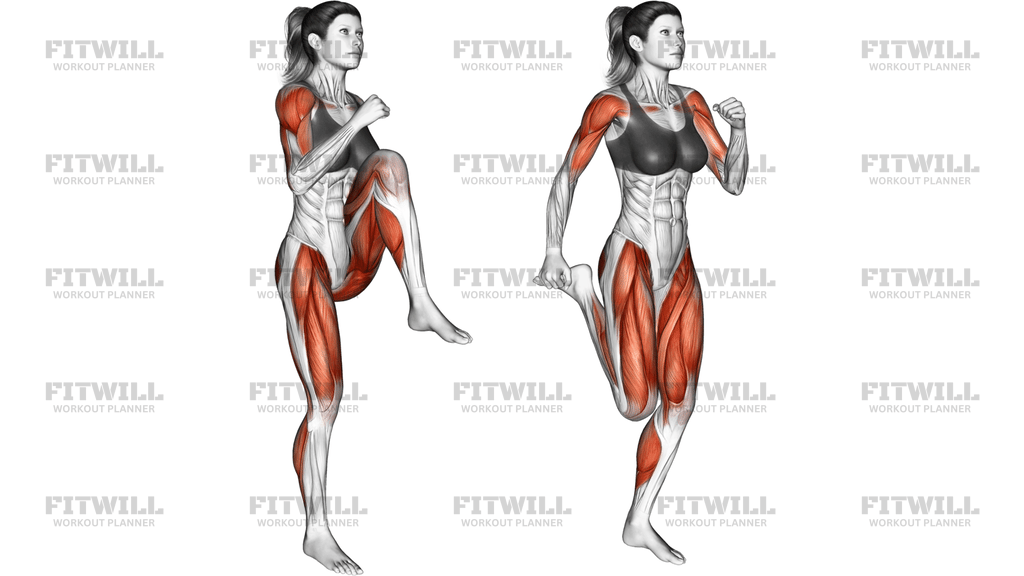
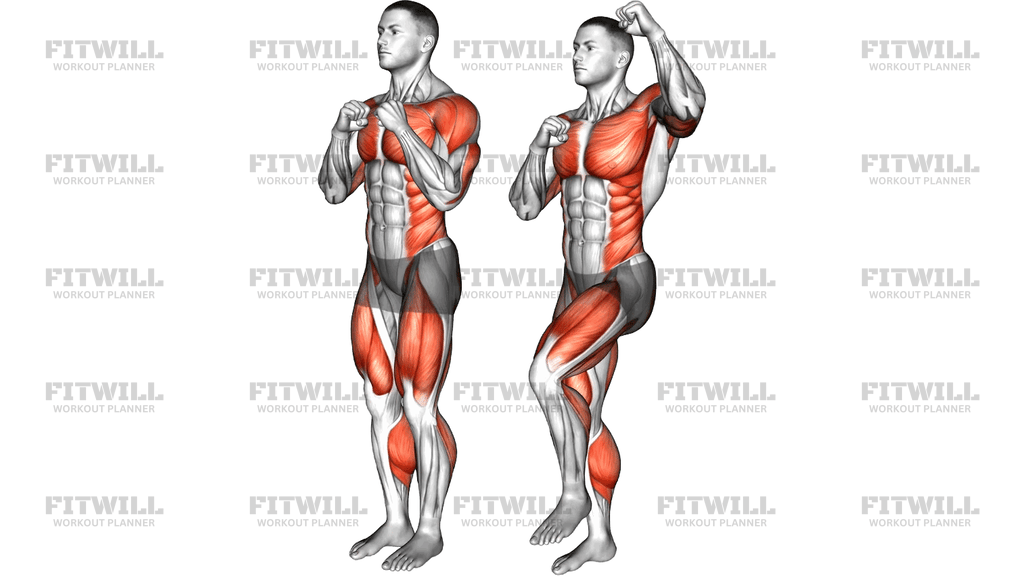
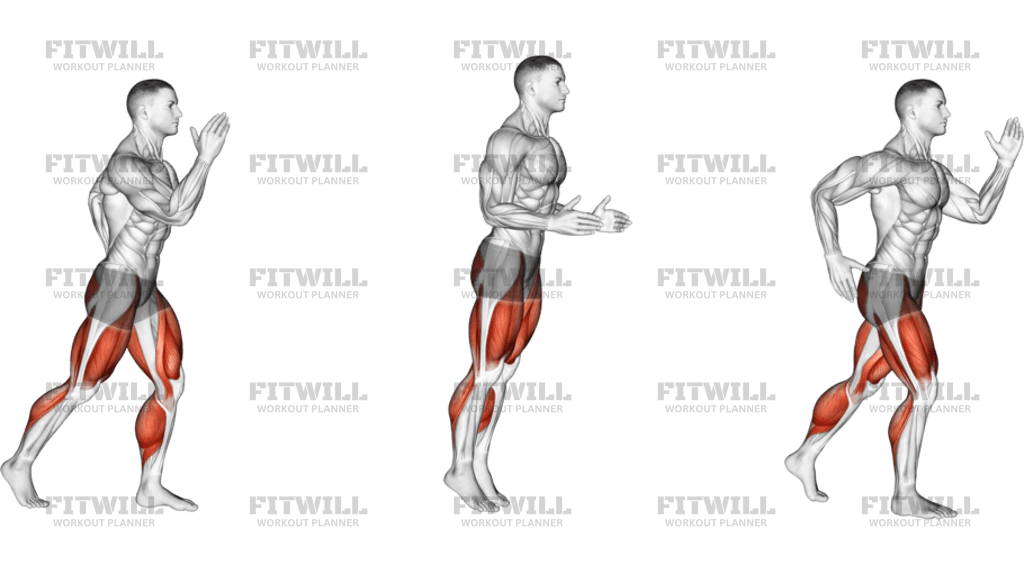
High Knee Butt Kicks is a bodyweight running drill that alternates an aggressive knee drive with a heel-to-glute recovery. It is useful as a warm-up, conditioning drill, or coordination primer because it raises heart rate without any equipment and teaches quicker leg turnover than a lazy jog in place. The movement is especially helpful when you want a more athletic rhythm before sprinting, agility work, or leg training.
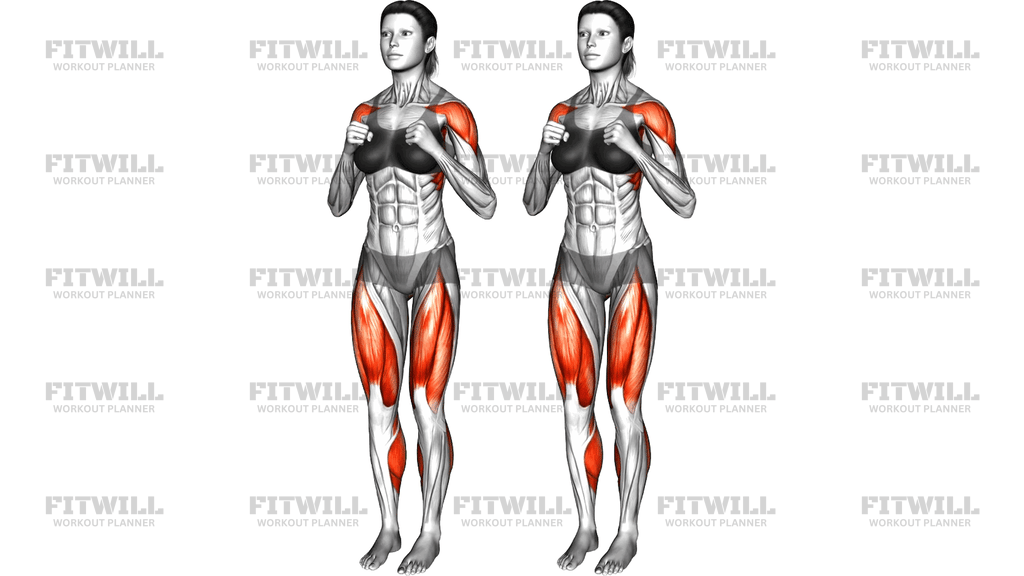
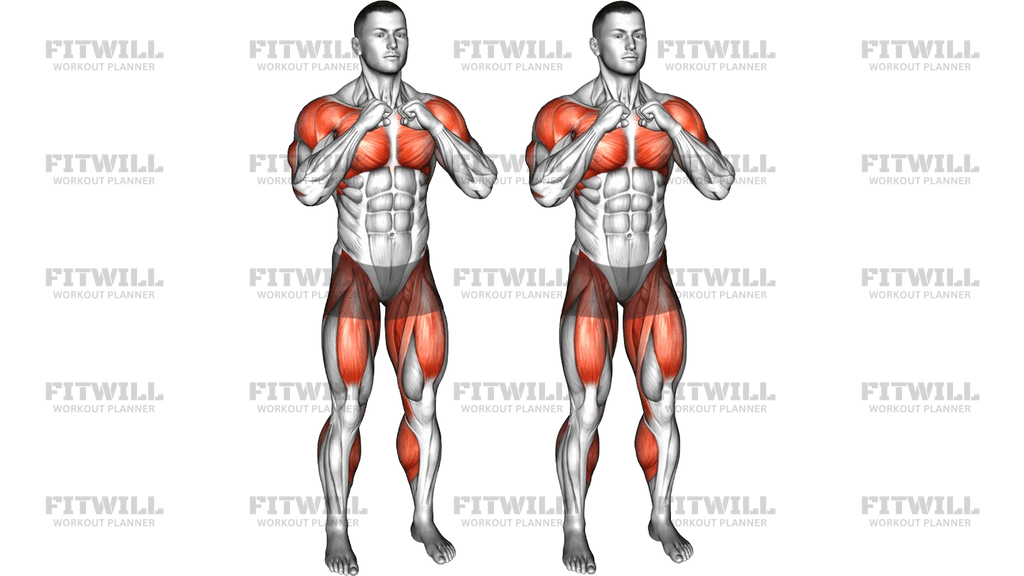
The drill emphasizes the quads and hip flexors during the knee drive, while the glutes, hamstrings, calves, and core help control the switch from one side to the other. Your arms should move like a relaxed run so the torso stays balanced and the lower body can work without extra twisting. Done well, High Knee Butt Kicks builds rhythm, posture, and lower-body readiness at the same time.
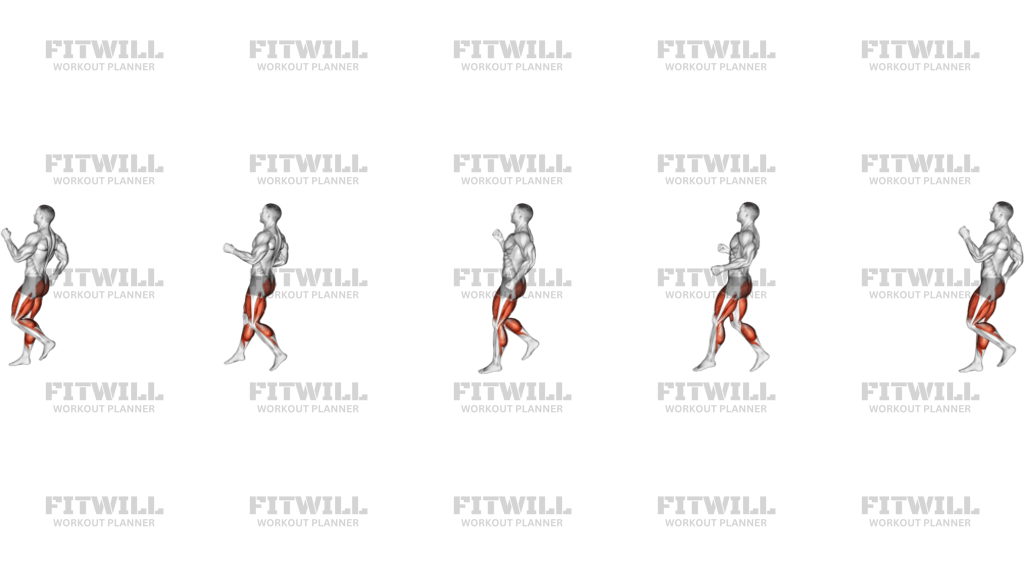
Start standing tall with your feet under your hips and your ribs stacked over your pelvis. Drive one knee up toward hip height while the opposite heel folds toward the glute, then switch sides in a quick but controlled rhythm. Keep each landing light under your center of mass, stay on the balls of your feet, and avoid leaning back just to make the knees look higher.
A clean rep looks springy, not sloppy. If you are using the drill as a warm-up, keep the range moderate and the cadence smooth; if you want conditioning, shorten ground contact and move faster without letting the knees cave inward or the heels slap down. Slow the drill if your low back starts to arch, your hip flexors cramp, or your feet get loud and heavy.
High Knee Butt Kicks works well before running, sport practice, circuits, or leg sessions because it wakes up the hips and legs without any setup time. Beginners can scale it to a marching version before moving into a faster run-in-place pattern, while more advanced lifters can use it for longer intervals or sharper turnover. The goal is an upright, coordinated drill that feels fast but still under control from the first step to the last.
[ Workout Log & Planner ]
Put your next workout in Fitwill
Keep your plan and training log ready when you are.


Instructions
- Stand tall with your feet under your hips and your elbows bent like a relaxed running position.
- Stack your ribs over your pelvis and brace lightly so your torso stays upright as you start moving.
- Drive one knee up toward hip height while the opposite heel travels toward your glute.
- Let the opposite arm swing forward with the lifted knee so your arms and legs stay coordinated.
- Land lightly on the ball of the supporting foot under your hips instead of reaching forward.
- As soon as the first foot touches down, switch sides and bring the other knee up while the first heel moves back.
- Keep the cadence quick but smooth, with short ground contact and quiet feet.
- Breathe steadily through the drill, then slow to a march or stop in place when your posture or rhythm starts to break down.
Tips & Tricks
- Keep your torso stacked over your hips; leaning back to chase a higher knee usually shifts the work into the low back.
- Think up-and-switch rather than jump-and-kick so the drill stays springy instead of turning into a noisy bounce.
- Let the heel come toward the glute from knee flexion, not from throwing the foot backward behind your body.
- Keep the lifted knee in front of you; letting it cross inward can twist the pelvis and make the drill sloppy.
- Use a shorter stride if your feet start slapping the floor or if the drill turns into a forward reach.
- If your hip flexors cramp, lower the knee height slightly and smooth out the tempo before speeding up again.
- Match the arm swing to the legs so the upper body helps rhythm instead of fighting it.
- For conditioning, increase time or cadence before you try to make the range bigger.
- A flat, supportive shoe usually feels better than training barefoot if the calves or feet get irritated.
- Switch to a marching version if you cannot keep the landings quiet and light.
Frequently Asked Questions
What muscles does High Knee Butt Kicks work?
It mainly trains the quads and hip flexors during the knee drive, with the glutes, hamstrings, calves, and core helping control the alternating leg action and posture.
Is High Knee Butt Kicks a warm-up or a cardio exercise?
Both. It works well as a dynamic warm-up before running or leg training, and it can also be used as a short conditioning interval when you want to raise your heart rate.
Should I do High Knee Butt Kicks in place or move forward?
In place is the easiest way to keep the rhythm and control. Once that feels smooth, you can travel forward if you have room and your landings stay light.
How high should my knees go in High Knee Butt Kicks?
Aim for a strong drive toward hip height without leaning back. If that throws off your balance, use a slightly lower knee and keep your torso taller.
What is the most common mistake in High Knee Butt Kicks?
The most common mistake is turning it into a sloppy bounce with loud landings. Keep the steps quick, the arms coordinated, and the torso stacked so the drill stays efficient.
Can beginners do High Knee Butt Kicks?
Yes. Beginners can start with a marching version or a slower alternating pattern before moving to a faster run-in-place cadence.
How do I make High Knee Butt Kicks harder?
Use faster turnover, longer intervals, or a more athletic arm drive. You can also travel forward or add the drill to a circuit once the rhythm stays clean.
Should High Knee Butt Kicks hurt my knees or hips?
No. You should feel a brisk warm-up and some muscular work, not sharp pain. If the hips pinch or the knees feel irritated, shorten the range and slow the cadence.