Incline Push-Up Depth Jump
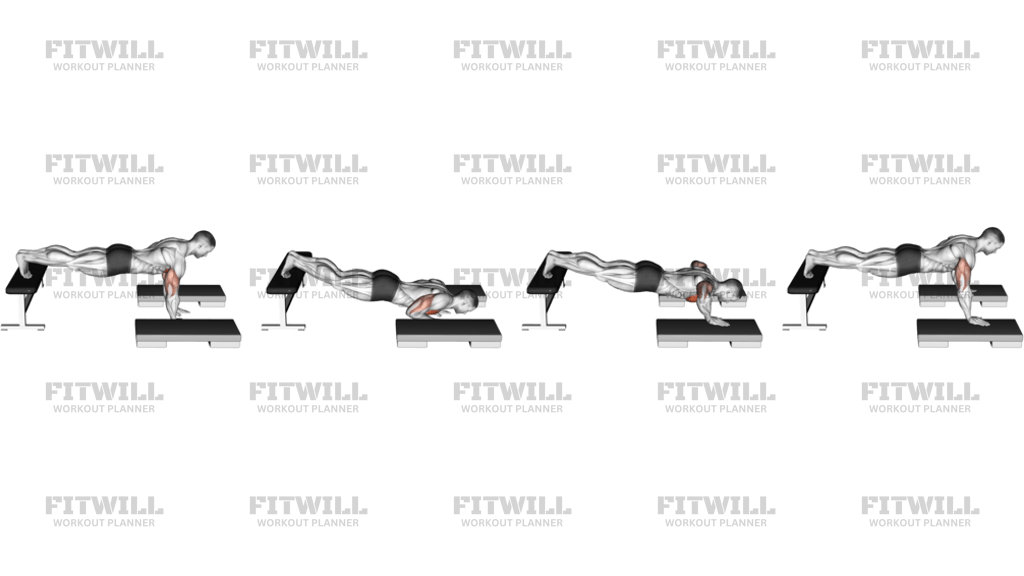
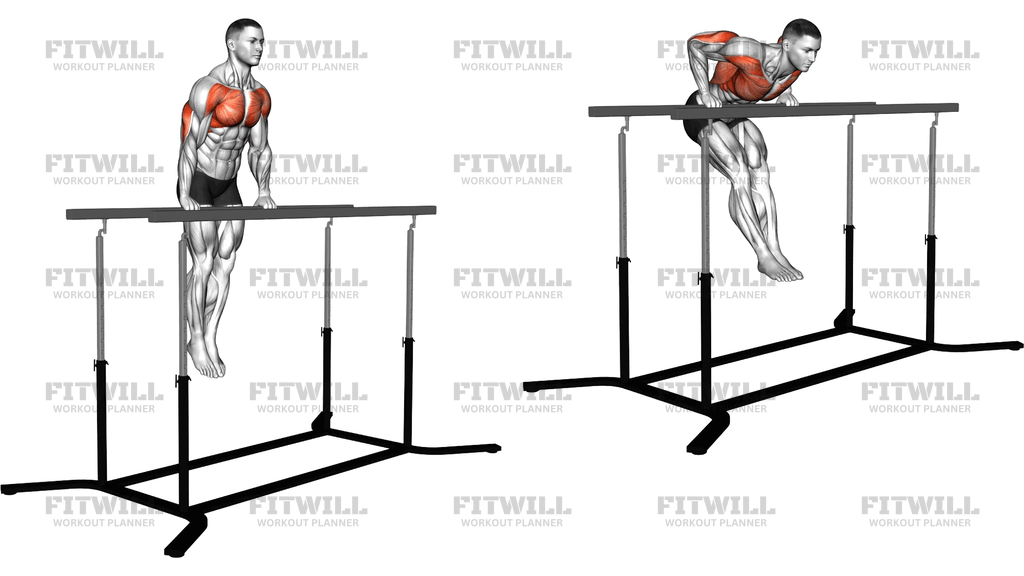
Incline Push-Up Depth Jump is an elevated bodyweight pressing drill that loads the chest, triceps, front shoulders, and core while reducing the amount of bodyweight you must push compared with a floor push-up. The small image shows the hands supported on a sturdy bench or box, which shortens the press and makes the bottom position easier to control. That setup matters: if the height, hand placement, or body line is sloppy, the exercise turns into a loose upper-body shrug instead of a clean push.
The main training effect comes from pressing the body away from the support with a rigid trunk and a controlled shoulder path. The chest works hardest through the bottom half of the rep, the triceps finish the press, and the shoulders help guide the line of force. In the plyometric version implied by the name, the rep should stay sharp and explosive rather than grindy. You are trying to build power off the bench, not chase fatigue with bouncing reps.
Set your hands a little wider than shoulder width on the bench, stack the shoulders over the wrists, and walk the feet back until the body forms a straight line from head to heels. Lower the chest toward the front edge of the bench with the elbows angled slightly back, then drive the hands into the support and press as fast as you can without losing the brace. If you are performing the jump-style variation, let the hands briefly unweight and land back softly with bent elbows.
This exercise fits best as a power-focused upper-body accessory, a conditioning drill, or a progression toward harder plyometric push-up work. It is also useful when a floor push-up is too demanding but you still want a pressing pattern that rewards speed and control. Keep the range smooth, keep the landing quiet, and stop the set as soon as the hips sag, the shoulders shrug, or the wrists start taking over the rep.
[ Workout Log & Planner ]
Put your next workout in Fitwill
Keep your plan and training log ready when you are.


Instructions
- Place your hands on a sturdy bench or box at about shoulder width and step your feet back until your body makes a straight line from head to heels.
- Stack your wrists under your shoulders, keep your feet about hip width apart, and squeeze your glutes so your low back stays neutral.
- Brace your ribs down before each rep so the chest, hips, and head rise and lower as one unit.
- Lower your chest toward the front edge of the bench by bending your elbows slightly back instead of flaring them straight out.
- Keep your head in line with your spine and let your shoulder blades move naturally as you descend.
- Reach the bottom with control, staying high enough that your shoulders remain stable and your hands stay fully planted.
- Drive the bench away from you and press explosively; in the jump-style version, let your hands briefly leave the support and then recontact softly.
- Land with soft elbows, reset your brace, and repeat for the next rep without bouncing or twisting.
Tips & Tricks
- Choose a bench height that lets you keep a straight line; if the support is too high, the press becomes awkward and unstable.
- Use the heel of the palm on the edge of the bench so the wrist stays stacked instead of folding back into the fingers.
- Think chest toward the bench edge, not head toward the floor, so you do not dump the neck forward.
- Keep the elbows at roughly 30 to 45 degrees from your torso; a wide flare usually makes the shoulders feel pinched.
- If the goal is power, stop the set when the press speed drops or the hand pop gets sloppy.
- Quiet landings tell you the force is under control; loud slaps usually mean you are falling into the rep.
- A lower incline makes the exercise harder, but only reduce the height after you can keep the same torso line and hand path.
- If your wrists bother you, try push-up handles or a slightly softer surface before abandoning the movement.
Frequently Asked Questions
What muscles does Incline Push-Up Depth Jump work?
It mainly works the chest, triceps, front shoulders, serratus anterior, and core. The elevated hand position reduces the load a bit, but the trunk still has to stay rigid.
How do I set up my hands on the bench?
Place your hands slightly wider than shoulder width with the heel of each palm near the bench edge. Keep your wrists under the shoulders so the press line stays clean.
Is this easier than a floor push-up?
Usually yes, because the incline shortens the lever and reduces how much bodyweight you have to press. The explosive version can still feel demanding if you try to move fast and land softly.
What is the biggest mistake with the incline and landing?
Letting the hips sag on the way down or slamming the hands back into the support on the way up. Both usually mean the torso lost its brace.
Do my feet stay on the floor?
In the common incline version, yes. Your feet stay planted while the hands press against the elevated support and the body moves as one rigid line.
How can I make the exercise harder?
Lower the support, add a clean hand pop at the top, or slow the descent while keeping the same straight body line. Do not make it harder by cutting the range short.
Can I use this if my wrists hurt?
Sometimes, but start with a lower incline, keep more weight in the heel of the palm, or use push-up handles. If the wrist still complains, switch to a regular incline push-up first.
How many reps should I do?
Use short, crisp sets of 3 to 8 reps for the explosive version, or slightly longer sets of 8 to 15 reps if you are treating it as a controlled pressing drill.