Suspension Chest Press
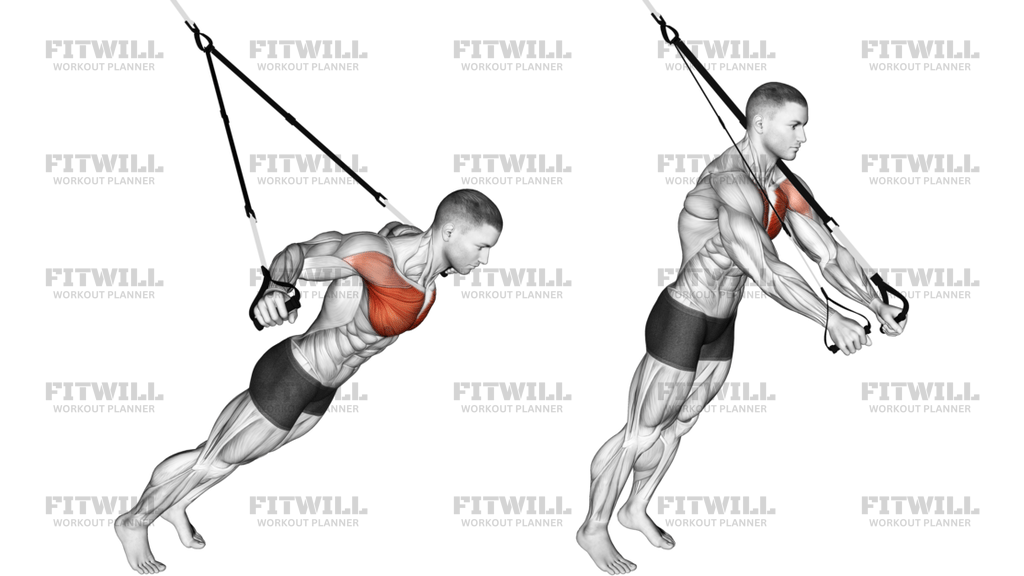
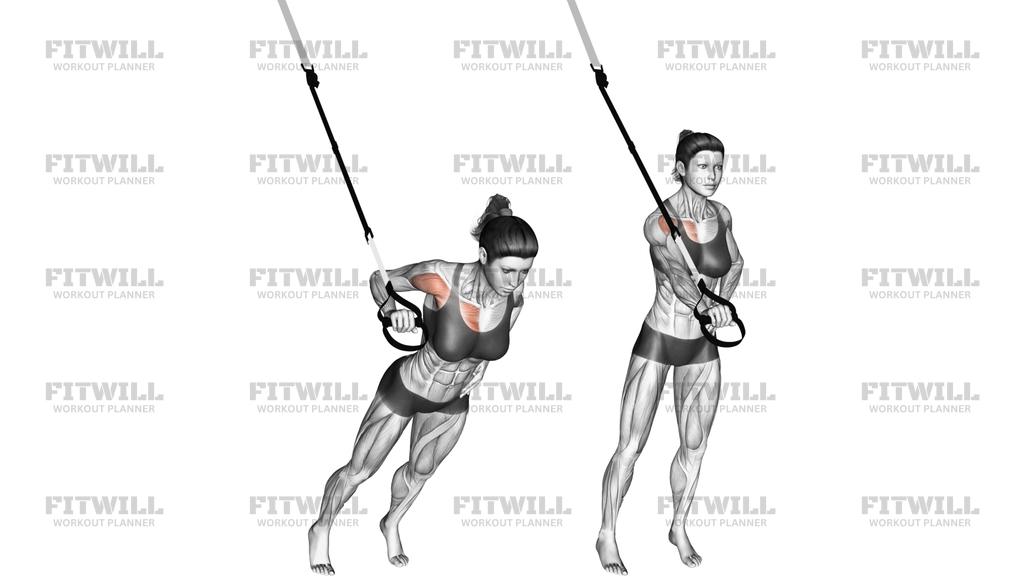
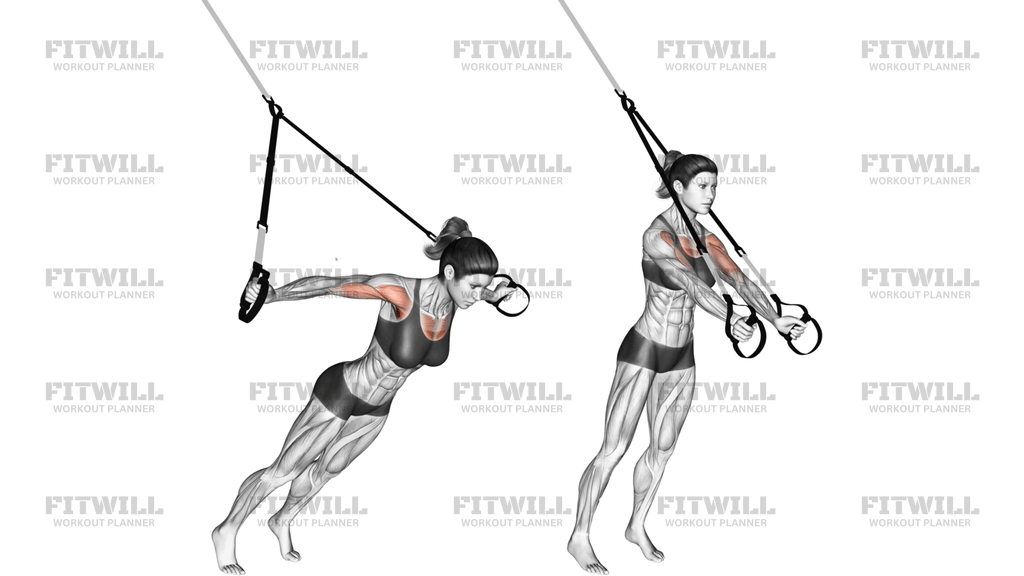
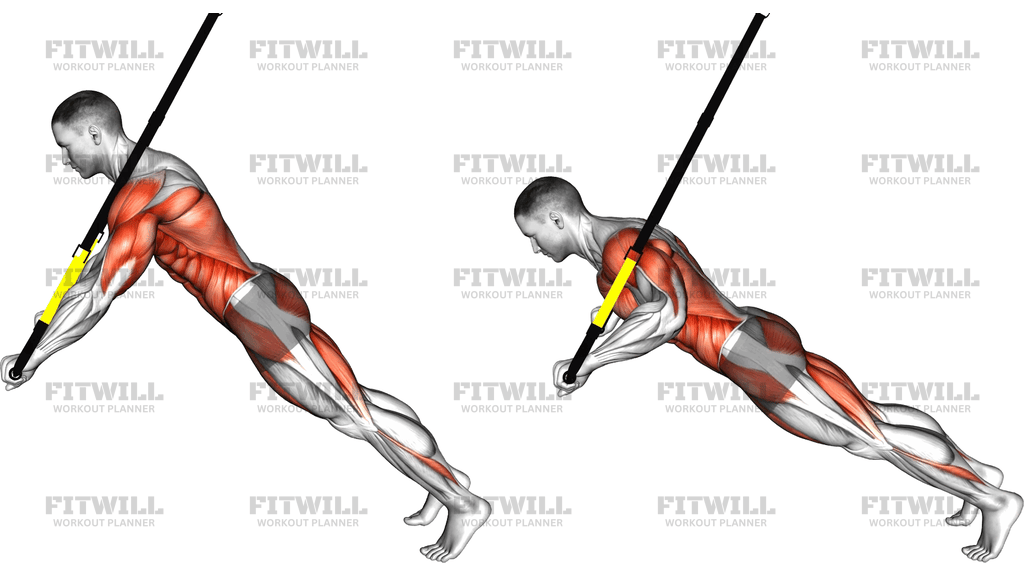
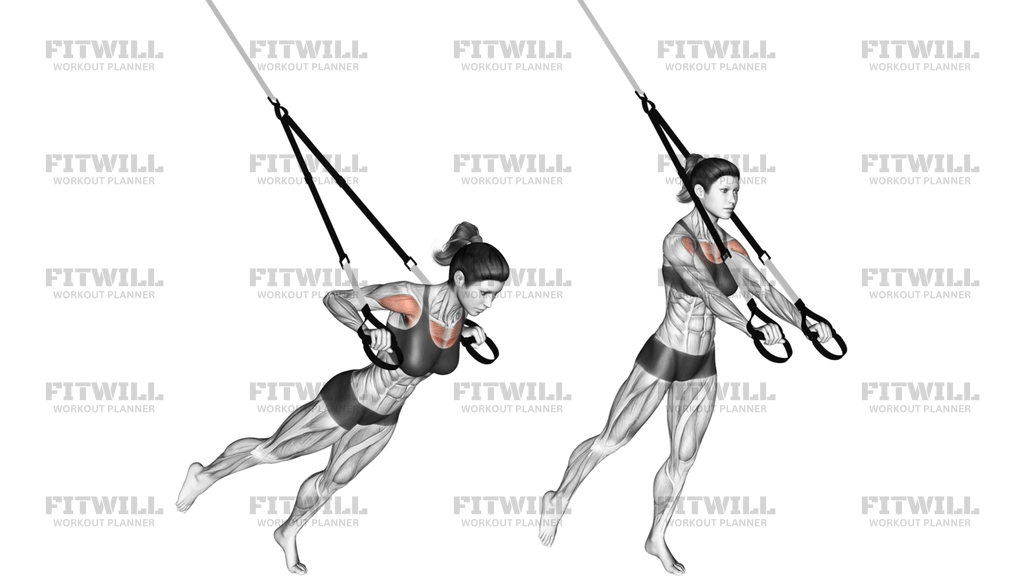
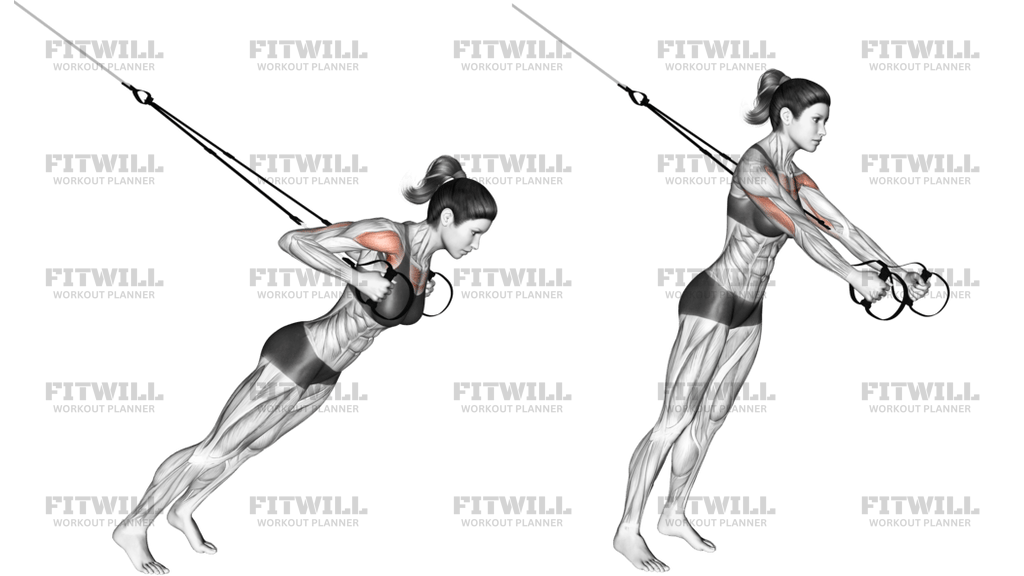
Suspension Chest Press is a bodyweight pressing exercise performed with suspension straps anchored overhead. You lean your body forward, hold the handles, and press your hands away from your chest while keeping your body in a long plank line. The exercise looks simple, but the loading changes quickly with body angle, so the setup determines how much of your own bodyweight you press on every rep.
The main training emphasis is the chest, especially the pectoralis major, with the front deltoids, triceps, and trunk muscles helping keep the body rigid. The suspension straps add an extra stability demand that makes the press feel less fixed than a machine or bench press. That is useful for building pressing control, shoulder awareness, and ribcage position at the same time.
A good rep starts before the arms move. Set the straps to equal length, face the anchor, and walk your feet back until your body is angled enough that you can hold a straight line from head to heels. If the shoulders drift forward or the lower back arches, the load is too aggressive. The handles should stay level with one another, the wrists should stay neutral, and the elbows should track at a moderate angle instead of flaring straight out.
From the start, keep the chest proud without overextending the spine, then press the handles forward in a smooth arc until the elbows are almost straight. Control the return by letting the elbows bend and the chest travel between the handles without collapsing at the shoulders. Because the straps move, any twisting, hip swing, or shrugging will be obvious; the goal is to keep the torso quiet while the arms do the work.
This exercise fits well in accessory work, upper-body circuits, warmups, or any session that needs pressing volume without a fixed bar path. It is also easy to scale: stepping the feet farther back increases difficulty, while standing more upright reduces it. Keep every rep pain-free, and if the front of the shoulder feels pinched, shorten the range and reduce the lean until you can press smoothly with full control.
[ Workout Log & Planner ]
Put your next workout in Fitwill
Keep your plan and training log ready when you are.


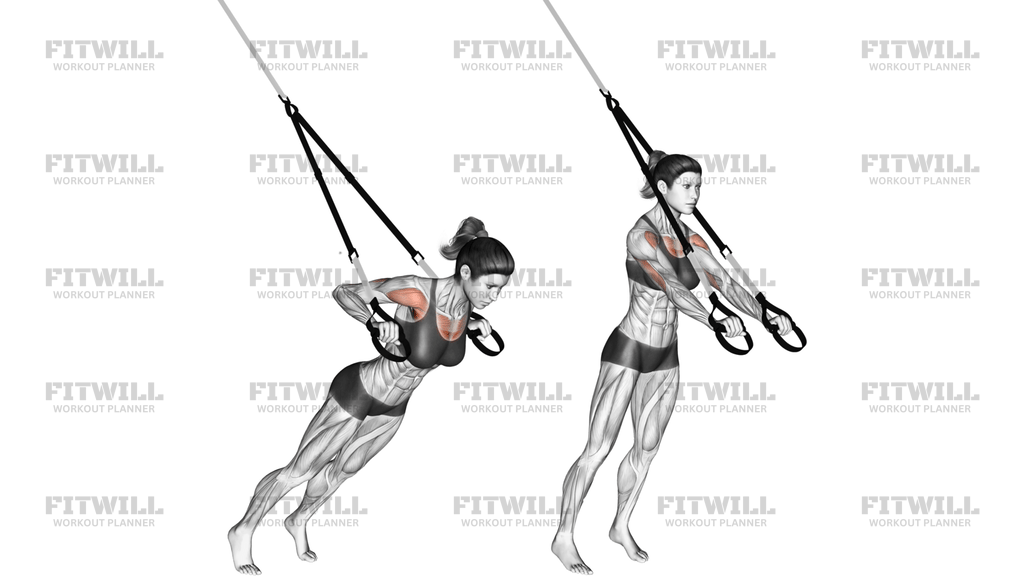
Instructions
- Set both suspension straps to the same length and stand facing the anchor with the handles at about chest height.
- Walk your feet back until you are leaning forward with a straight line from head to heels and your heels lifted or lightly grounded.
- Hold the handles with neutral wrists and bring your hands beside the lower chest, elbows bent and slightly below shoulder height.
- Brace your abs and glutes so your ribs stay stacked over your pelvis before you begin the press.
- Exhale and press the handles forward in a smooth arc until your arms are almost straight without locking the elbows hard.
- Keep your shoulders down and away from your ears as the handles travel forward, and avoid letting the chest collapse between the straps.
- Pause briefly at the extended position, then inhale as you bend the elbows and lower under control to the starting position.
- Keep your torso quiet, reset tension in the straps, and repeat for the planned number of reps.
Tips & Tricks
- The farther you walk your feet back, the more bodyweight you have to press, so use a shorter lean when you want cleaner reps.
- Keep the straps even; if one side is longer, your torso will twist and one shoulder will work harder than the other.
- Aim for a slight elbow tuck instead of flaring the upper arms straight out to the sides.
- Do not shrug at the top of the press; the neck should stay long and the shoulder blades should feel set.
- If your lower back arches, shorten the lever by standing more upright and squeeze the glutes harder.
- Keep pressure through the whole hand so the wrists do not collapse backward into the handles.
- Lower slowly enough that the straps stay under tension instead of swinging loose at the bottom.
- Stop the set when you can no longer keep the body in one straight line or the handles start wobbling side to side.
Frequently Asked Questions
What muscles does Suspension Chest Press work most?
It mainly trains the chest, especially the pectoralis major, with help from the front shoulders, triceps, and core.
How is this different from a push-up?
The pressing pattern is similar, but the suspension handles add more shoulder and trunk stability work and make the resistance easier to scale by changing body angle.
Where should the handles be at the start?
Start with the handles beside the lower chest or mid-chest, not up near the shoulders, so the press begins from a stable elbow angle.
Can beginners use this exercise?
Yes. Beginners usually do best by standing more upright and shortening the range until they can control the straps without shaking.
What is the most common form mistake?
Letting the hips sag or the ribs flare is the biggest problem, because it turns the movement into an unstable back extension instead of a clean chest press.
How do I make the exercise harder?
Walk your feet farther back so your body is more horizontal, or slow the lowering phase to keep the straps under tension longer.
Should my elbows lock out at the top?
No. Finish with the arms long but not aggressively locked, so the shoulders stay organized and the straps do not yank you forward.
What should I do if I feel the front of my shoulders?
Shorten the range slightly, reduce the lean, and keep the elbows a bit closer to the torso so the press stays smooth and pain-free.