Jump Squat
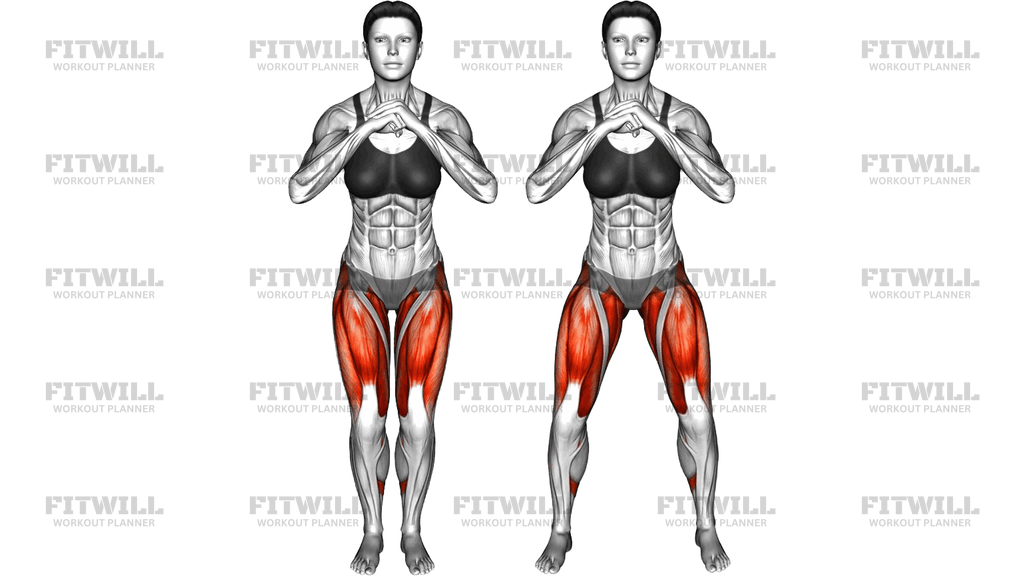
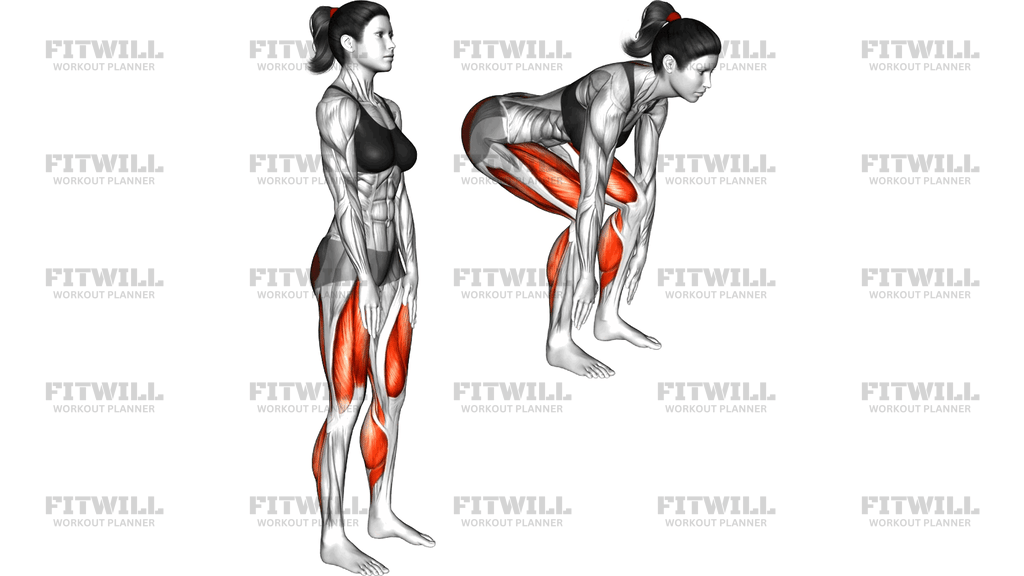
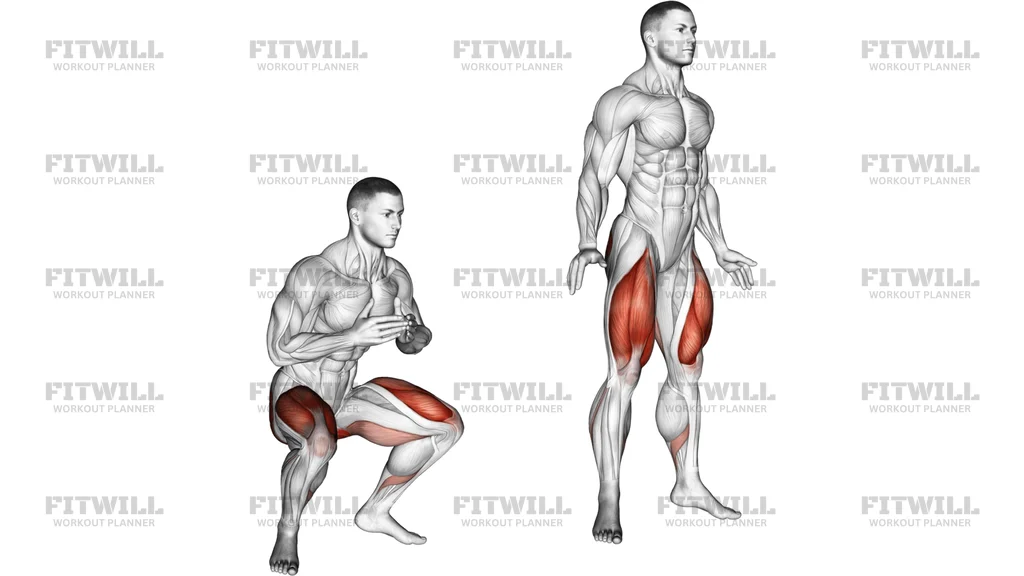
Jump Squat is a bodyweight plyometric squat that trains lower-body power, coordination, and landing control. The image shows a shoulder-width stance, the hands held together in front of the chest, a deep squat on the way down, and an explosive drive upward into a tall standing position. That setup matters because the exercise depends on a quick change of direction: if the feet, knees, and trunk are not organized before takeoff, the jump becomes noisy, shallow, and hard to control.
The main emphasis is on the quads, with the glutes and calves contributing to the jump and the landing. The front-loaded hand position helps keep the torso balanced without needing external load, so you can focus on speed, posture, and soft contact. Used correctly, the movement builds useful athletic qualities for sprinting, court sports, field work, and general power training, while still being simple enough to fit into a warmup or plyometric block.
Good repetitions start from a stable stance with the ribs stacked over the pelvis, then a controlled squat to load the legs. From the bottom, drive through the whole foot, extend the hips and knees together, and leave the floor only as much as you can land under control. The landing should be quiet and absorbable, with the knees tracking in line with the toes and the hips folding back to catch the body before the next rep.
This is not a max-height jump contest. The quality goal is crisp takeoff, balanced posture, and a repeatable landing pattern. When fatigue starts to shorten the jump or collapse the knees inward, the set is done. Keep the reps explosive but submaximal enough that each landing looks the same as the last one.
Jump Squat works best when you want power, conditioning, or lower-body reactivity without equipment. It is also useful as a teaching drill for athletes who need to coordinate a squat with a jump and stick the landing. If the ankles, knees, or back feel irritated, reduce jump height, slow the tempo, or use a non-jumping squat variation until the landing mechanics are solid.
[ Workout Log & Planner ]
Put your next workout in Fitwill
Keep your plan and training log ready when you are.


Instructions
- Stand with your feet about shoulder-width apart and your hands clasped in front of your chest.
- Keep your chest tall, ribs stacked over your pelvis, and weight centered through the whole foot.
- Sit your hips back and bend your knees to lower into a controlled squat.
- Reach the bottom position with your thighs close to parallel or as low as you can control.
- Drive through your feet and explode upward, extending your hips, knees, and ankles together.
- Leave the floor with only enough force to stay sharp and balanced in the air.
- Land softly on the balls and midfoot, then let the knees and hips absorb the impact.
- Immediately sink into the next squat or finish the set if your landing gets heavy or unstable.
Tips & Tricks
- Keep the hands fixed at the chest so they do not swing and add fake momentum.
- Push the floor away evenly with both feet; do not let one knee cave inward more than the other.
- Land quietly. A loud landing usually means the hips are not absorbing the force.
- Use a jump height you can repeat for every rep instead of chasing maximum height.
- Keep the torso slightly leaned but not folded; collapsing forward turns the movement into a sloppy squat.
- If your heels pop up early on the way down, reduce depth until the full foot stays connected.
- Exhale as you jump, then reset your brace before the next descent.
- Stop the set when the landing starts to drift, because the power benefit drops once the contacts get messy.
Frequently Asked Questions
What muscle does Jump Squat target most?
The quads are the main driver, with the glutes and calves helping produce the jump.
Can beginners perform this exercise?
Yes, if they can squat and land quietly. Beginners should keep the jump small and focus on control.
How should my hands be positioned during the jump squat?
Hold your hands together in front of your chest, like the image, so your upper body stays balanced without swinging.
How deep should I squat before jumping?
Lower as far as you can while keeping the feet planted and the knees tracking cleanly over the toes.
Should I try to jump as high as possible?
No. Aim for a crisp, repeatable jump with a soft landing rather than maximum height every rep.
What is the most common mistake in this exercise?
The most common mistake is landing hard with the knees collapsing inward or the torso folding forward.
Where does Jump Squat fit best in a workout?
It fits well in a warmup, plyometric block, or short conditioning circuit before fatigue makes the landings sloppy.
What should I do if my knees or ankles feel irritated?
Reduce jump height, shorten the range, or switch to a fast bodyweight squat until the landing mechanics feel smooth again.