Kettlebell Alternating Press
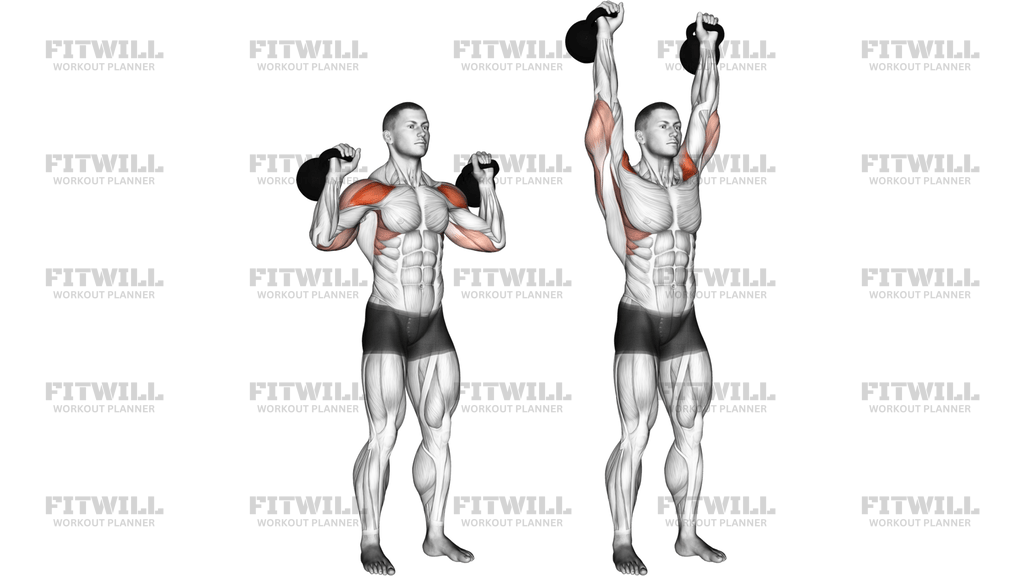
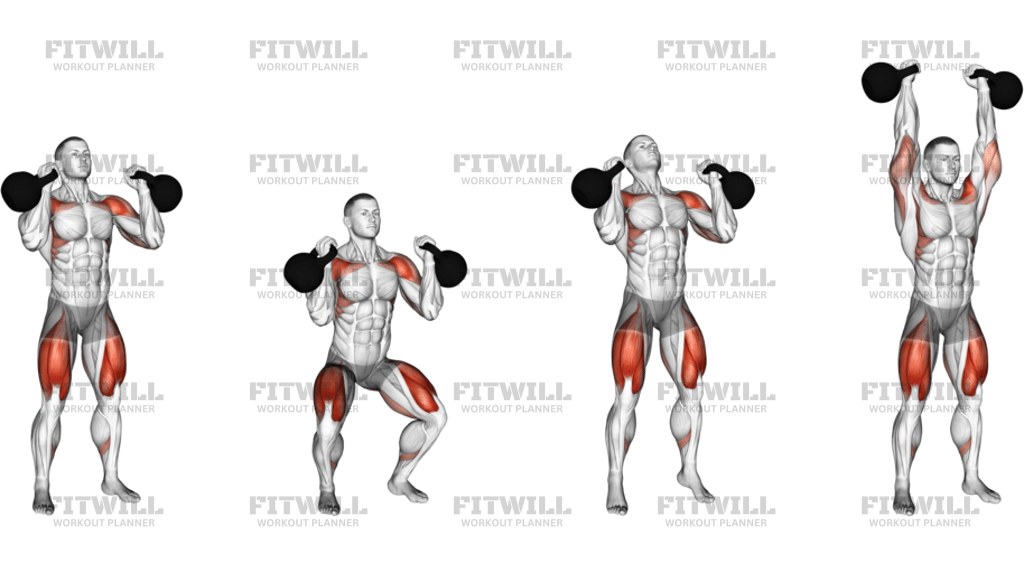
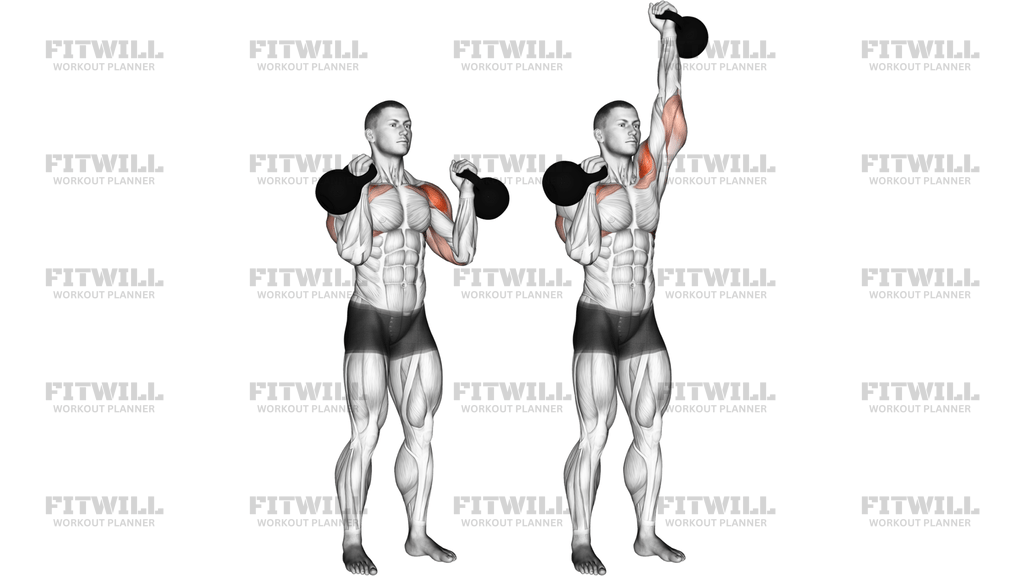
Kettlebell Alternating Press is a standing single-arm overhead press pattern performed with two kettlebells in the front-rack position. One bell stays parked at the shoulder while the other arm presses overhead, then the sides alternate for the next rep. The movement is built to train shoulder strength, arm lockout, and trunk control without turning the set into a full-body heave.
The main load is on the delts and triceps, with the upper back, rotator cuff, and core helping keep the ribs down and the torso from leaning away from the working side. In anatomy terms, the primary work centers on the Deltoids, with support from Trapezius, Rhomboids, and Triceps brachii. Because the kettlebell sits slightly off-center, this exercise also challenges anti-rotation and side-to-side stability.
The setup matters more here than on a simple machine press. Stand tall with both feet planted, rack each kettlebell at shoulder height, and keep the forearms vertical before you start pressing. The wrist should stay stacked over the elbow, the elbow should stay close enough to the body to avoid flaring, and the non-working bell should remain quiet in the rack so it does not pull the torso off line. If the start position is sloppy, the press becomes a lean, shrug, or twist.
Each repetition should feel like a clean path from shoulder to overhead and back to the rack. Press one kettlebell until the arm reaches full lockout beside the ear, pause briefly to show control, then lower it under control before or as you switch to the other side. Keep the ribs from popping up, keep the glutes and legs quiet, and avoid bouncing through the knees unless the variation specifically calls for it. The goal is a smooth alternating rhythm, not a race.
This exercise fits well in shoulder-focused strength work, upper-body accessory blocks, or conditioning sessions where you want a simple press with a stability challenge. It is useful when you want to build pressing tolerance while teaching clean overhead position and bracing under asymmetrical load. Beginners can use it if the rack position is comfortable and the weight stays light enough to press without side bending, but the exercise still rewards patient tempo and strict control at every repetition.
[ Workout Log & Planner ]
Put your next workout in Fitwill
Keep your plan and training log ready when you are.


Instructions
- Stand tall with both feet about hip-width apart and rack a kettlebell at each shoulder, palms facing in and wrists stacked over the elbows.
- Set your ribs down, squeeze your glutes lightly, and keep your chin tucked so your head does not drift forward as you press.
- Choose one side to start and keep the opposite bell quiet in the rack while you prepare to press.
- Press the working kettlebell straight up in a slight arc until the biceps is close to the ear and the elbow reaches full extension.
- Pause briefly overhead without leaning away from the working side or letting the ribcage flare.
- Lower the kettlebell back to the same shoulder under control, keeping the forearm vertical on the way down.
- Once the first side is back in the rack, press the other kettlebell overhead with the same path and tempo.
- Continue alternating sides for the planned number of reps, breathing out on each press and inhaling as you return to the rack.
Tips & Tricks
- Keep the non-working kettlebell parked at the shoulder instead of letting it drift forward or drag the torso off balance.
- If your lower back arches as you press, reduce the load and shorten the set before compensation shows up.
- A vertical forearm in the rack makes the press cleaner; if the kettlebell sits too far in front of the shoulder, reset before the next rep.
- Pressing slightly back rather than straight out helps the bell finish over the midfoot instead of in front of your face.
- Do not slam into lockout; finish the rep with the elbow straight and the shoulder active, not jammed upward.
- Keep the pace even on both sides so one arm does not become the fast side and take over the set.
- If the rack position irritates your wrist or forearm, lower the weight and adjust the bell angle before adding reps.
- Stop the set when you need to sway, dip the knees, or tilt the torso to get the bell overhead.
Frequently Asked Questions
What muscle does Kettlebell Alternating Press target most?
The delts are the main movers, with the triceps, upper back, and core helping keep each side stable through the press.
Can beginners perform this exercise?
Yes, if the rack position feels comfortable and the load is light enough to press without leaning, twisting, or over-arching the low back.
What should the kettlebells look like in the starting rack position?
Each bell should sit at shoulder height with the forearm vertical, the wrist stacked over the elbow, and the non-working side staying quiet in the rack.
How do I know if I am pressing with good form?
The kettlebell should travel from shoulder to overhead without the ribs flaring, the torso leaning, or the head jutting forward.
Should I lock out each rep overhead?
Yes. Finish with the elbow straight and the bell stacked over the shoulder, then lower it back to the rack under control before switching sides.
What is the most common mistake in the alternating pattern?
Many lifters rush the switch and let the resting bell drag the torso off center; both bells should stay organized and the body should stay tall.
Does this work the core too?
Yes. Because each press shifts the load to one side, the obliques and deep trunk muscles work to keep the torso from bending or rotating.
What can I use instead if the rack position bothers my wrist?
Try a lighter kettlebell, a strict single-arm dumbbell press, or a half-kneeling press if you need a less demanding setup.