Kettlebell Lateral Raise
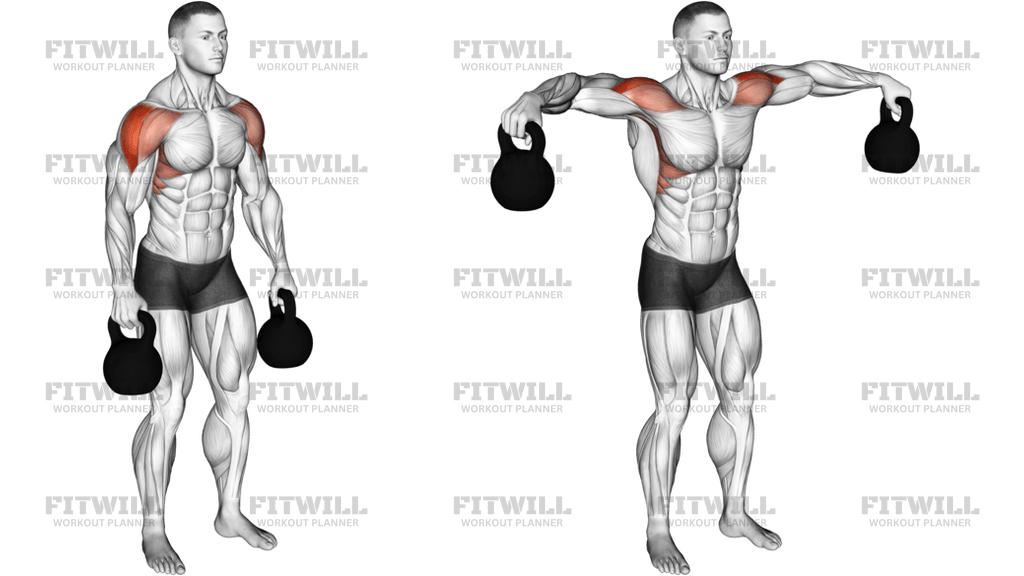
Kettlebell Lateral Raise is a single-joint shoulder exercise that builds lateral deltoid strength, shoulder control, and clean upper-body positioning with one kettlebell. It is a simple-looking movement, but the load wants to drift, swing, and turn into a shrug if you rush it. The value of the exercise comes from keeping the arm path strict so the side of the shoulder does the work instead of the traps and torso.
The exercise is especially useful when you want shoulder work that is lighter on joint stress than heavy pressing and easier to keep precise than fast ballistic lifts. The kettlebell creates an off-center load, which makes the raise more demanding on grip, shoulder stability, and trunk control. That offset loading is part of the training effect, but only if the torso stays quiet and the arm rises under control.
Start from a tall stance with the kettlebell hanging at your side, shoulder blades settled, ribs stacked over the pelvis, and a soft bend in the elbow. Lift the bell out to the side in the same general plane as your body, not forward in front of you, and stop when the upper arm reaches about shoulder height or just below if the shoulder starts to shrug. The finish should feel like the side delt is still holding the arm up, not like the neck is taking over.
Lower the kettlebell slowly to the start and reset each rep instead of bouncing into the next one. That controlled return is where many people lose the position and let the bell pull the shoulder downward. Use a load that lets you keep the wrist, elbow, and shoulder stacked without leaning, twisting, or using leg drive. This exercise works well as accessory shoulder training, warm-up activation, or part of a moderate-rep upper-body session, especially when the goal is cleaner shoulder shape and better strict control rather than maximal load.
Fitwill
Log Workouts, Track Progress & Build Strength.
Achieve more with Fitwill: explore over 9600 exercises with images and videos, access built-in and custom workouts, perfect for both gym and home sessions, and see real results.
Start your journey. Download today!




Instructions
- Stand tall with your feet about hip-width apart and hold one kettlebell at your side with a neutral grip.
- Keep your chest lifted, ribs stacked over your pelvis, shoulders level, and the non-working arm relaxed by your side.
- Set a soft bend in the working elbow and slightly turn the palm so the bell hangs comfortably without twisting your torso.
- Brace your midsection before the first rep so your body does not drift as the bell leaves your side.
- Raise the kettlebell out to the side until your upper arm reaches about shoulder height or slightly below if needed.
- Lead the lift with the elbow and keep the wrist, elbow, and shoulder moving together instead of swinging the hand upward.
- Pause briefly at the top without shrugging the shoulder toward your ear.
- Lower the kettlebell slowly back to your side under control and reset the shoulder before the next rep.
- Exhale as you lift, inhale as you lower, and repeat for the planned number of repetitions before switching sides.
Tips & Tricks
- Keep the kettlebell slightly in front of the body line if that feels cleaner, but do not let the arm drift into a front raise.
- If the top of the rep turns into a shrug, the bell is too heavy or you are lifting higher than your shoulder can control.
- A small bend in the elbow is enough; bending harder turns the movement into a different shoulder drill.
- Do not lean away from the working arm to fake extra range; the torso should stay nearly vertical.
- Keep the neck long and relaxed so the upper traps do not take over the set.
- Use a slower lowering phase than lifting phase to keep tension on the lateral delt.
- If the kettlebell feels awkward in the wrist, reduce load before you change the path of the rep.
- Stop the set when the bell starts swinging away from the shoulder and the rep stops looking strict.
Frequently Asked Questions
What does the Kettlebell Lateral Raise mainly train?
It mainly trains the lateral deltoids, with the upper traps and forearm muscles helping stabilize the bell.
Should I hold the kettlebell in one hand or two?
This version is usually done one arm at a time. The free arm stays relaxed while you raise and lower the working side.
How high should I lift the kettlebell?
Lift until the upper arm is about level with the shoulder, or slightly lower if your shoulder starts to shrug or the torso begins to sway.
Why does this exercise feel harder than a dumbbell lateral raise?
The kettlebell sits differently in the hand and creates a slightly awkward off-center load, which can make shoulder control and grip stability work harder.
Can beginners use this exercise?
Yes, as long as the kettlebell is light enough to keep the torso still and the shoulder from shrugging at the top.
What is the most common form mistake?
The most common mistake is turning the raise into a shrug or swing, which shifts work away from the side delt.
Should my palm face down at the top?
Not necessarily. Keep a natural wrist position and let the kettlebell move in the cleanest path for your shoulder instead of forcing the hand to rotate.
Where does this fit in a workout?
It works well as accessory shoulder work, as part of an upper-body session, or in a warm-up when you want light lateral delt activation.