Kettlebell Double Snatch
Kettlebell Double Snatch is a two-kettlebell power lift that takes the bells from a hanging hinge position to a full overhead lockout in one explosive motion. It trains shoulder strength, upper-back stability, hip drive, grip, and coordination at the same time, so the movement is as much about timing and body position as it is about force. When the setup is right, the bells stay close to the body, the hips do the work, and the arms finish the rep instead of muscling it through.
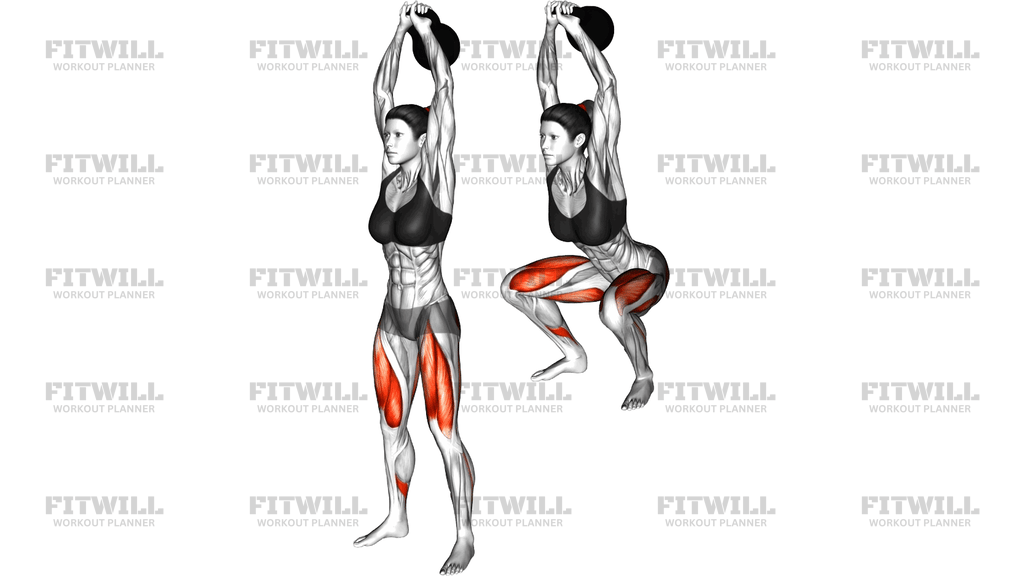
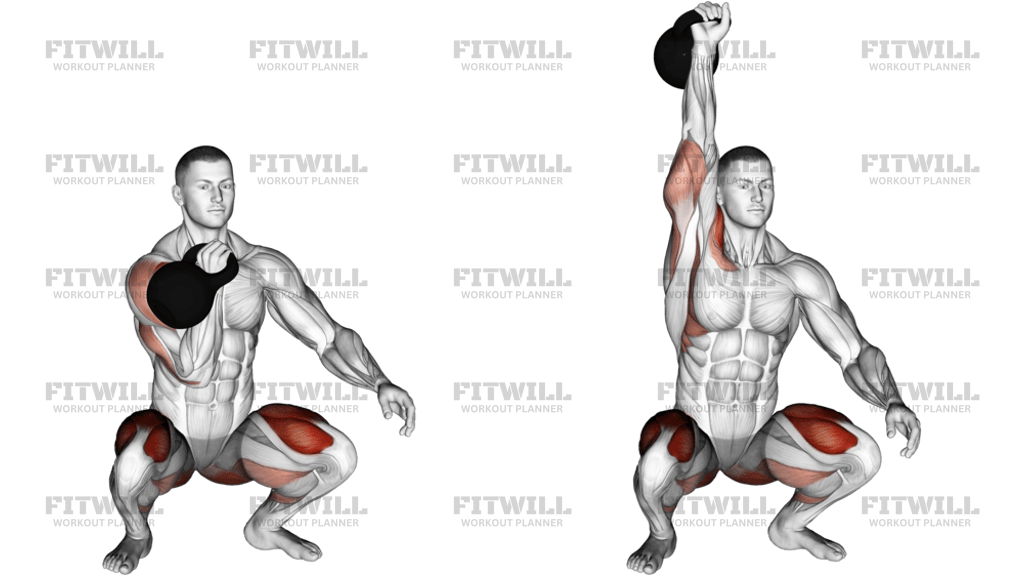
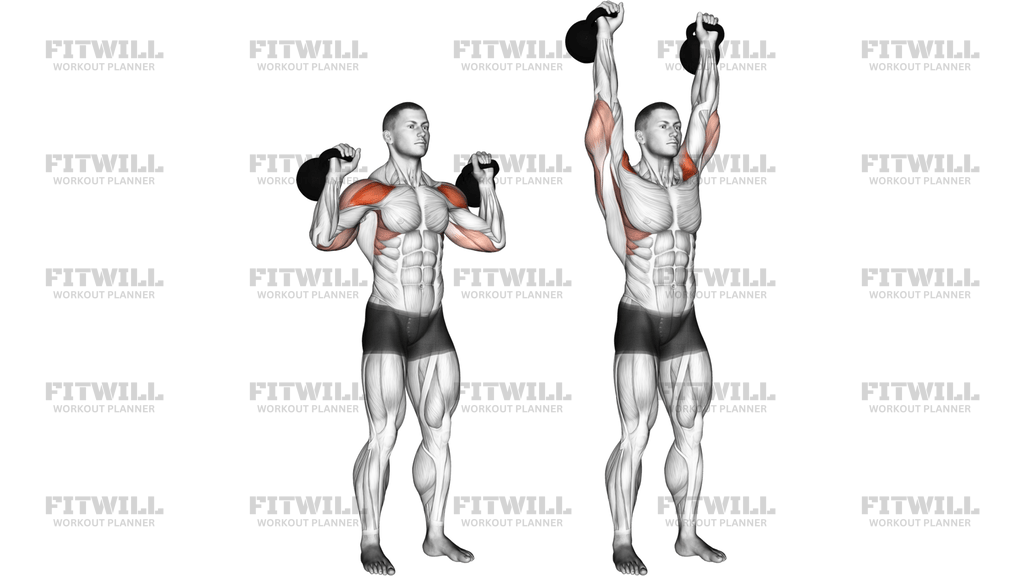
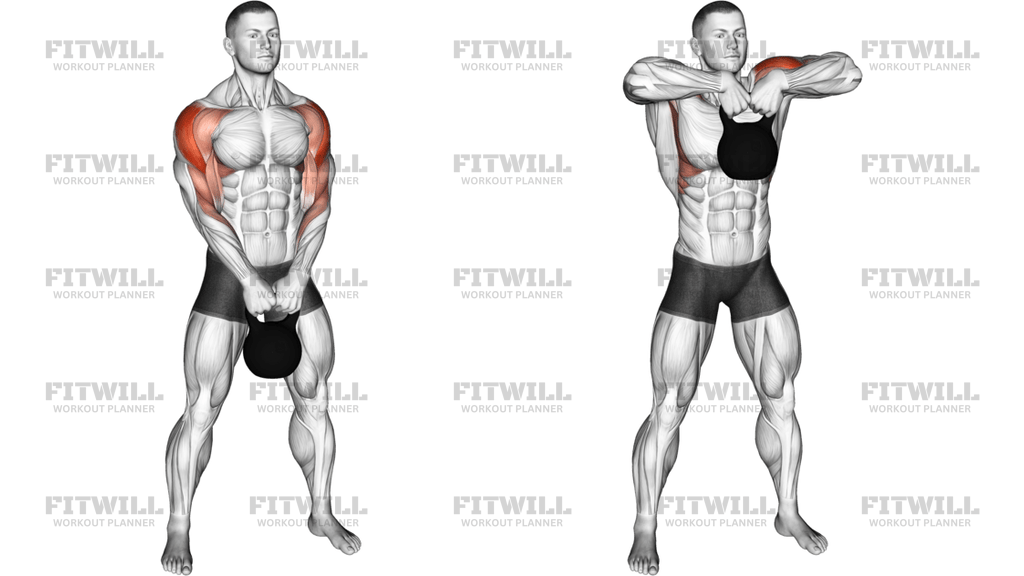
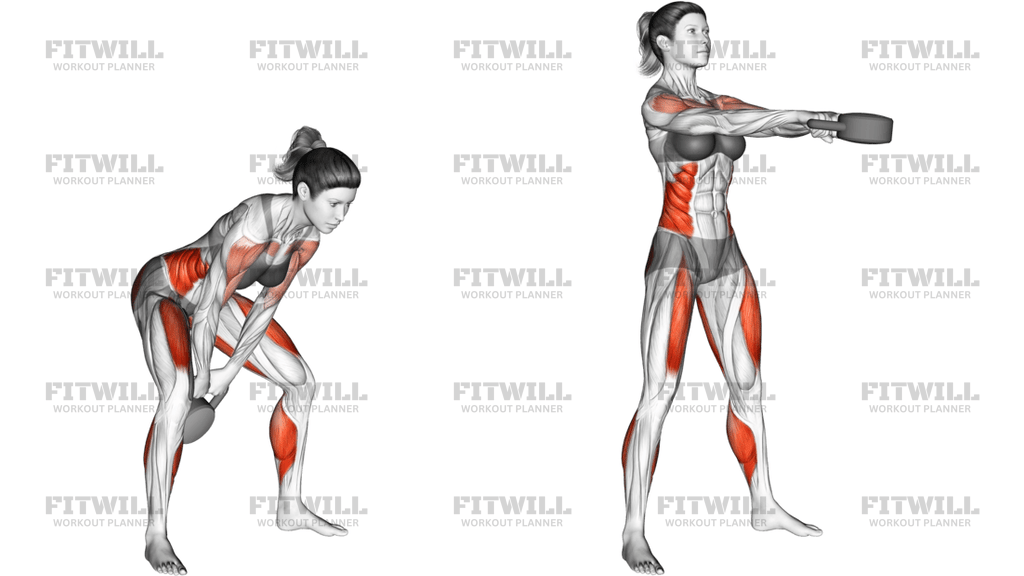
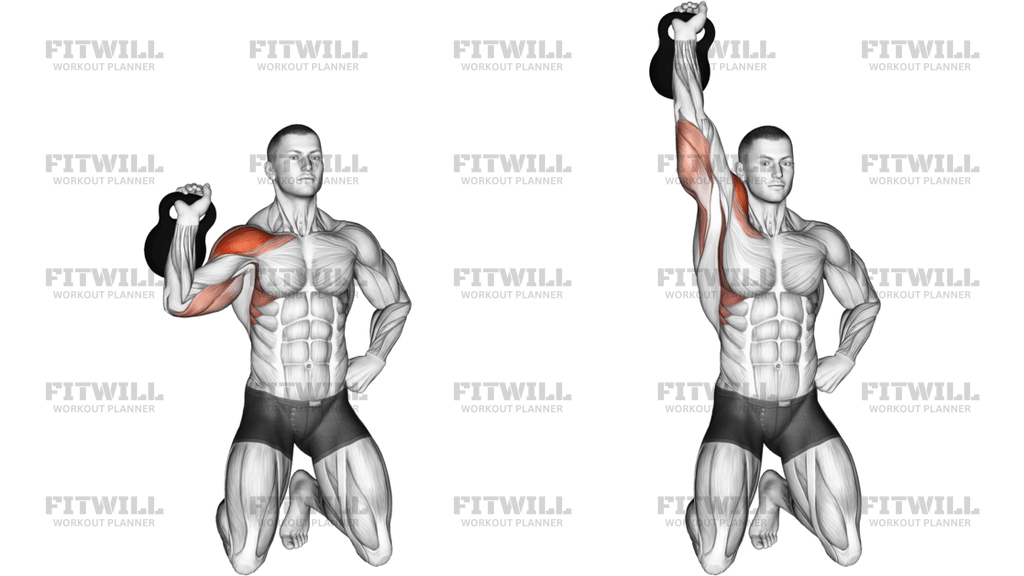
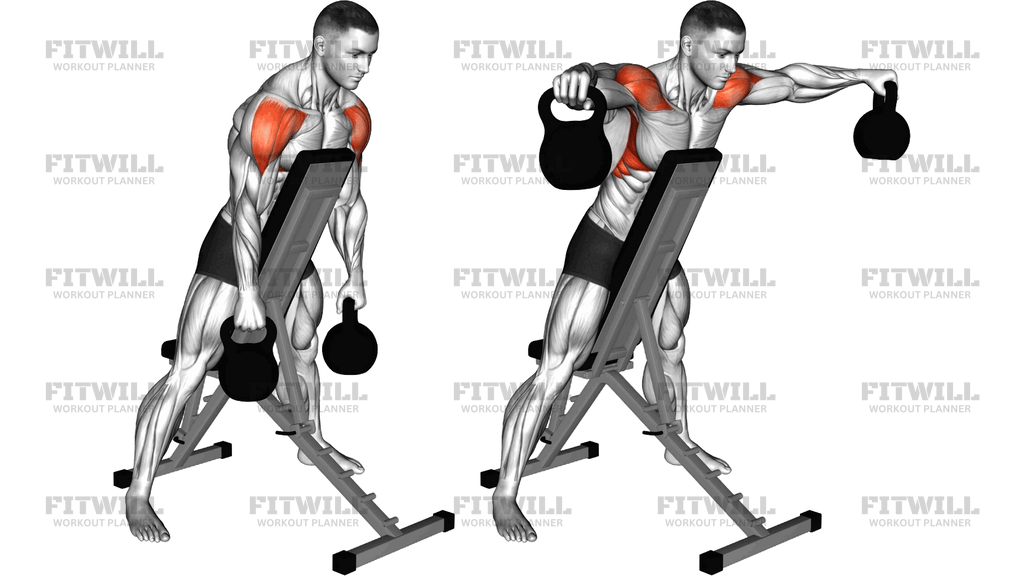
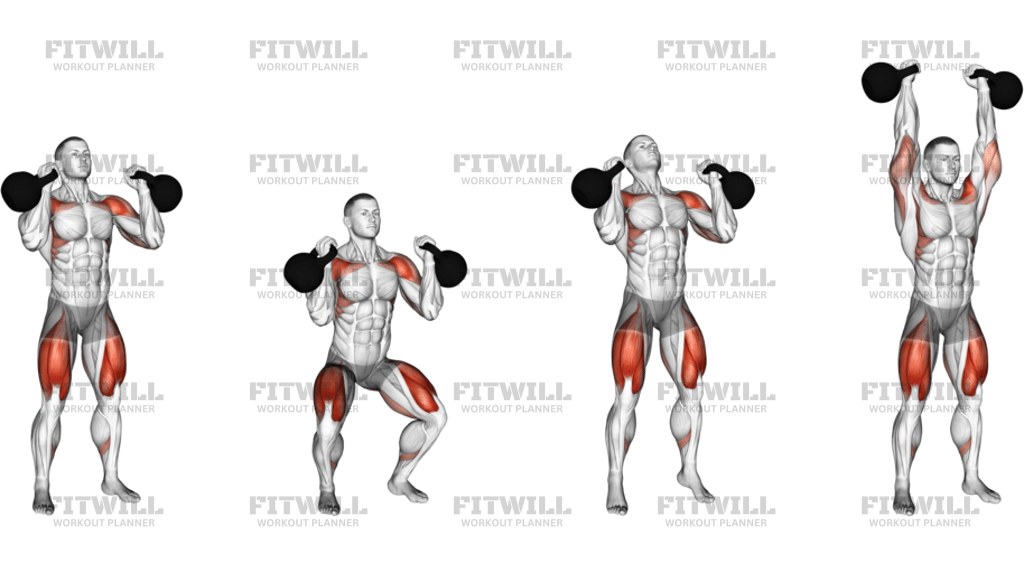
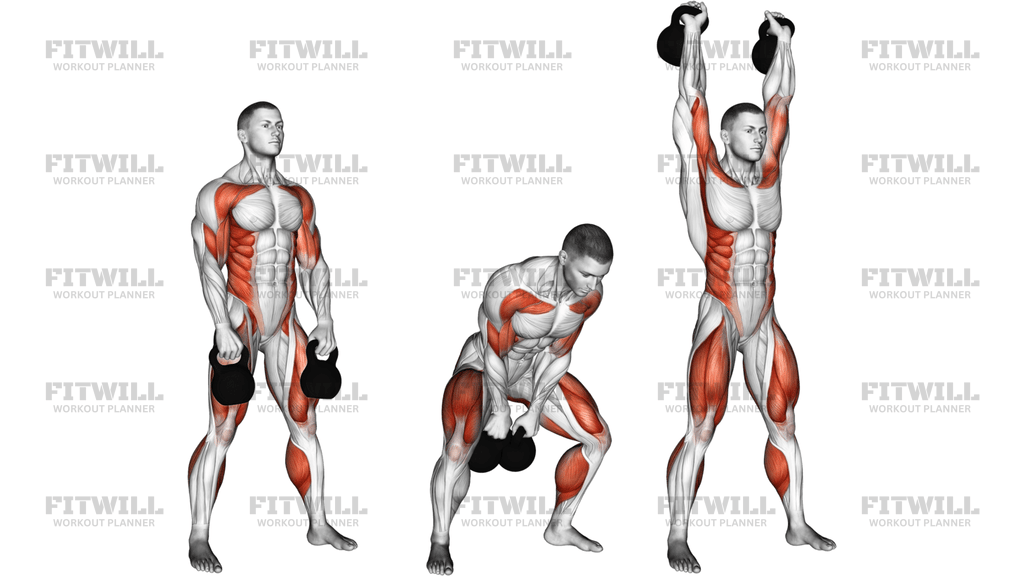
The image shows a classic ballistic kettlebell pattern: the lifter starts in an athletic stance with both bells in front of the body, hinges back to load the hips, then snaps tall and sends the bells upward on a tight path. The hands rotate around the handles as the weights rise, and the rep ends with both arms straight overhead, shoulders stacked, and the torso braced so the low back does not overarch. That stacked finish is the key difference between a clean snatch and a sloppy pull.
Because the load is overhead, the exercise rewards good shoulder mechanics and punishes drifting ribs, loose core tension, or a swing that travels too far away from the body. A good rep uses hip extension to create speed, then lets the kettlebells “float” long enough for the hands to turn over and punch to lockout. The descent should be just as controlled: guide the bells back down close to the body, absorb them with a hinge, and reset for the next repetition without losing posture.
Kettlebell Double Snatch fits well in advanced kettlebell strength work, power training, or conditioning blocks where crisp technique matters more than maximal load. It is especially useful when you want overhead volume without a strict press, but it is not a beginner-friendly exercise unless the athlete already owns a clean hinge, swing, and single-kettlebell snatch pattern. Use a load that lets the bells stay close, the shoulders stay organized, and the finish remain stable from the first rep to the last.
[ Workout Log & Planner ]
Put your next workout in Fitwill
Keep your plan and training log ready when you are.


Instructions
- Stand with your feet about hip-width apart and place a kettlebell in each hand just in front of your shins.
- Hinge at the hips, soften your knees, and let the bells swing back between your thighs while your chest stays proud and your back stays flat.
- Brace your midsection and keep the bells close to your body as you drive your hips forward to start the pull.
- Explode to a tall standing position, then let the bells float upward instead of curling them with your arms.
- As the kettlebells rise, keep your elbows close and rotate your hands around the handles so the bells do not crash into your forearms.
- Punch both arms straight overhead and finish with locked elbows, biceps near your ears, and ribs stacked over your pelvis.
- Squeeze your glutes and keep your neck relaxed so the overhead position stays steady instead of leaning back.
- Lower the bells under control, guide them back down close to your body, and hinge again as they pass through the swing position.
- Breathe sharply on the drive up, then reset your brace before each next rep.
Tips & Tricks
- Start lighter than you think; the double overhead finish makes this much harder to control than a standard swing.
- Keep the kettlebells traveling close to the thighs and torso so the hip snap, not the arms, creates the height.
- If the bells bang into your wrists or forearms, you are turning the handles over too late or pulling them too far away from the body.
- At lockout, the shoulders should feel active but not shrugged up into your ears.
- Do not chase height by leaning back; a hard glute squeeze and stacked ribs are safer than a bigger arch.
- Use a crisp exhale at the moment of hip extension to help brace the trunk and keep the rep explosive.
- If the lower back feels it more than the hips and shoulders, the hinge is probably too shallow or the load is too heavy.
- Treat each descent as part of the rep: guide the bells down instead of letting them yank you out of position.
Frequently Asked Questions
What muscles does the Kettlebell Double Snatch work?
It strongly trains the shoulders, traps, upper back, core, glutes, and grip, with the hips providing most of the power.
Is this the same as a kettlebell press?
No. The bells should be driven overhead by hip power and a fast turnover, not pressed one shoulder at a time.
How do I know the bells are close enough to my body?
They should skim the line of the thighs and torso on the way up, not swing forward in a wide arc.
Why do my forearms get beat up during the turnover?
Usually the bells are turning over too late or too far from the body. Keep the pull tighter and punch the handles through sooner.
Can beginners use this exercise?
Only after they can hinge well and control a lighter kettlebell swing or single snatch. It is a technical, explosive movement.
What is the biggest form mistake?
Most people either overuse the arms or lean back at the top. The rep should finish with stacked ribs and a tall lockout, not a backbend.
Should I lower the bells one at a time or together?
Lower them under control along the same close path they took up, then hinge to absorb the load before the next rep.
When is this exercise most useful?
It works well in power, conditioning, or advanced kettlebell training blocks when you want full-body output with overhead demand.