Kettlebell Seated Press
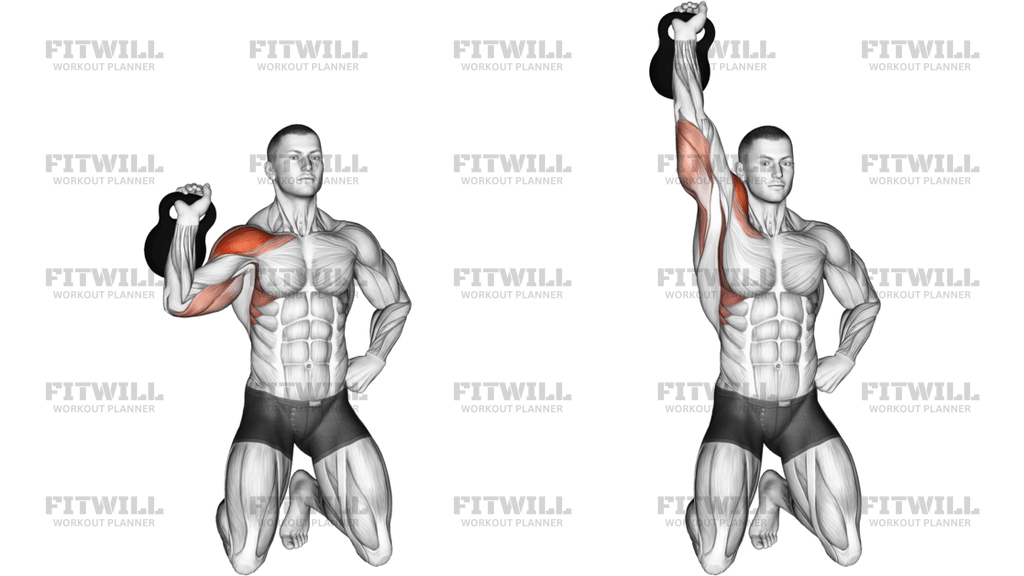
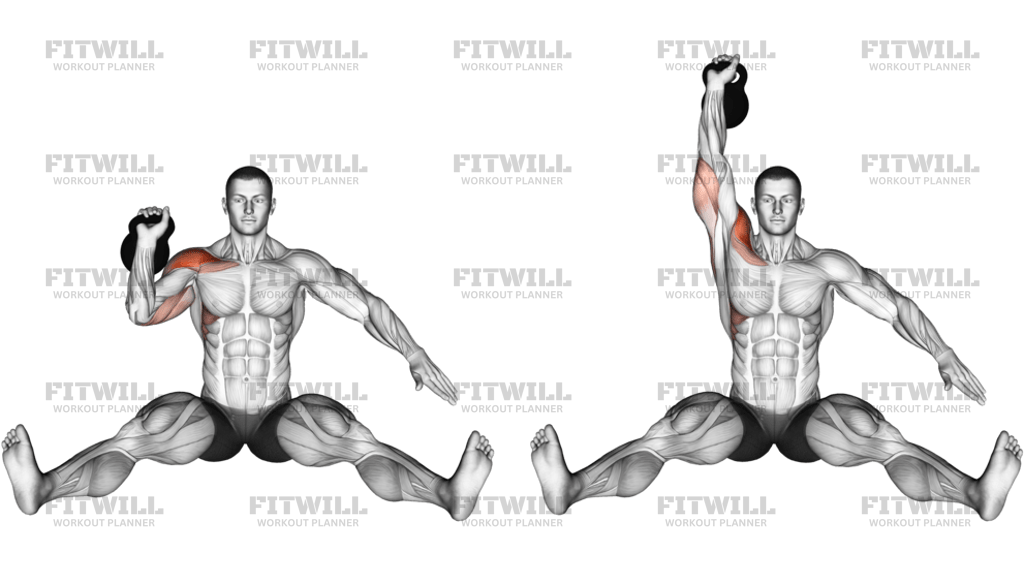
Kettlebell Seated Press is a single-arm overhead press performed from a seated floor position. With the hips fixed on the ground and the legs spread for balance, the exercise removes leg drive and forces the shoulder, upper back, and trunk to do the work of getting the kettlebell overhead.
That seated setup matters because it changes the press into a more honest upper-body lift. The Deltoids do the main work, while the Trapezius, Rhomboids, and Triceps brachii help stabilize the shoulder and finish the lockout. The torso also has to resist leaning or twisting, which makes this a useful option when you want pressing strength without lower-body momentum.
The best version starts with the kettlebell parked at shoulder height in the rack position, forearm vertical, and the elbow close enough to the body that the shoulder can press in a straight line. From there, the kettlebell should travel slightly back and up so it finishes stacked over the shoulder, ribs down, neck relaxed, and wrist neutral. A strong rep looks smooth rather than explosive.
This movement is often used for shoulder strength, overhead stability, and controlled accessory work. It is also a good choice when you want to clean up pressing mechanics, because the seated position makes cheating more obvious. Light to moderate loads usually work best, especially if your goal is to keep every rep crisp and symmetrical on both sides.
If the image or setup looks unusual, the key point is still the same: keep the seat stable, press with one arm at a time, and do not let the torso kick or the lower back arch to finish the rep. The exercise should feel like a strict overhead press, not a push from the hips.
Fitwill
Log Workouts, Track Progress & Build Strength.
Achieve more with Fitwill: explore over 9600 exercises with images and videos, access built-in and custom workouts, perfect for both gym and home sessions, and see real results.
Start your journey. Download today!




Instructions
- Sit on the floor with one leg or both legs opened wide for balance and plant both sit bones firmly on the ground.
- Hold one kettlebell in one hand at shoulder height in the rack position, with the forearm vertical and the elbow slightly in front of the torso.
- Set the free arm out to the side for balance and keep your chest tall without leaning back.
- Brace your midsection before the press so your ribs stay down and your torso does not rotate.
- Drive the kettlebell upward in a smooth line until the elbow straightens and the bell finishes stacked over the shoulder.
- At the top, keep the wrist neutral and the biceps close to the ear without shrugging hard or tipping the body.
- Lower the kettlebell with control back to the shoulder, following the same path and resisting the urge to drop it.
- Reset the rib cage and breath before the next rep, then repeat for the planned number of repetitions on that side before switching hands.
Tips & Tricks
- If your torso leans back to start the press, the bell is probably too heavy or the rack position is too low.
- Keep the elbow slightly in front of the ribs so the shoulder can press in a cleaner overhead path.
- A neutral wrist helps the kettlebell sit quietly over the forearm instead of folding backward under load.
- Pressing slightly back, not just straight up, usually gives a better lockout position over the shoulder joint.
- Do not let the non-working side collapse; the free arm and trunk should help you stay square on the floor.
- A long exhale as the bell passes the forehead can help keep the ribs from flaring and the lower back from arching.
- Use a lighter kettlebell if the top position turns into a shrug or if you cannot lower the bell under full control.
- If your hips start shifting on the floor, shorten the set before compensation turns the press into a twist.
Frequently Asked Questions
What muscle does Kettlebell Seated Press target most?
The Deltoids are the main target, with the triceps, upper back, and shoulder stabilizers helping finish the press.
Why do I sit on the floor for this press?
The seated floor position removes leg drive and makes the shoulder and trunk do the work instead of using momentum.
Should the kettlebell start at my shoulder or lower?
Start with the bell in the rack at shoulder height, with the forearm vertical and the elbow tucked close enough to stay stable.
What is the biggest form mistake on this exercise?
Leaning back or twisting the torso to finish the rep is the most common error and usually means the load is too heavy.
Can I do Kettlebell Seated Press with both hands at once?
This version is best done one arm at a time so each shoulder has to press and stabilize without help from the other side.
How high should the kettlebell finish?
At the top, the bell should be stacked over the shoulder with the elbow straight and the biceps close to the ear.
Is a floor straddle required?
No, but a wide seated base like the image uses can make it easier to stay upright and keep the torso from tipping.
What should I use if the seated press feels awkward?
Use a lighter kettlebell, reduce the range of motion briefly, or switch to a stricter seated overhead press variation until the path feels smooth.