Kettlebell Half Kneeling Shoulder Press
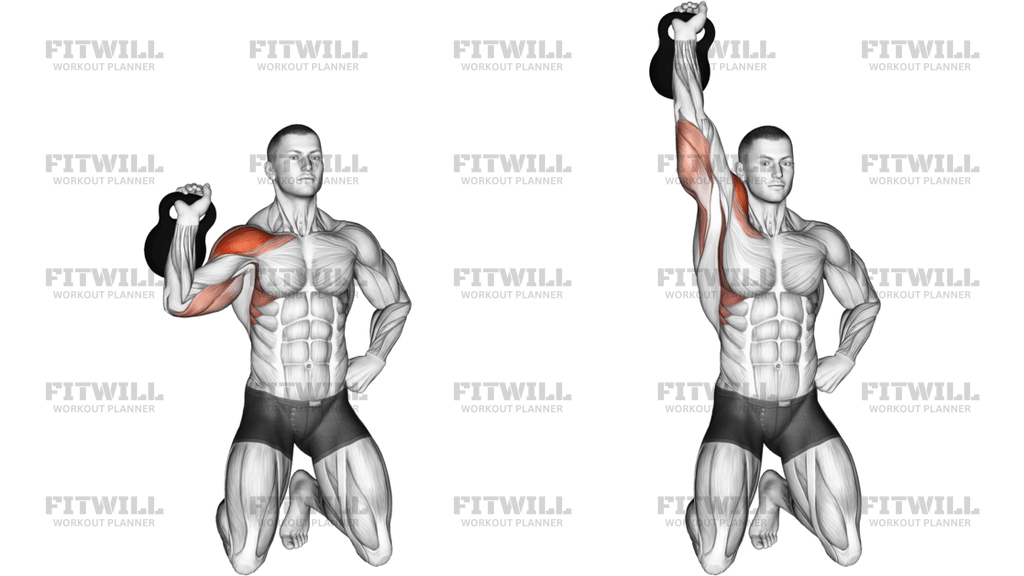
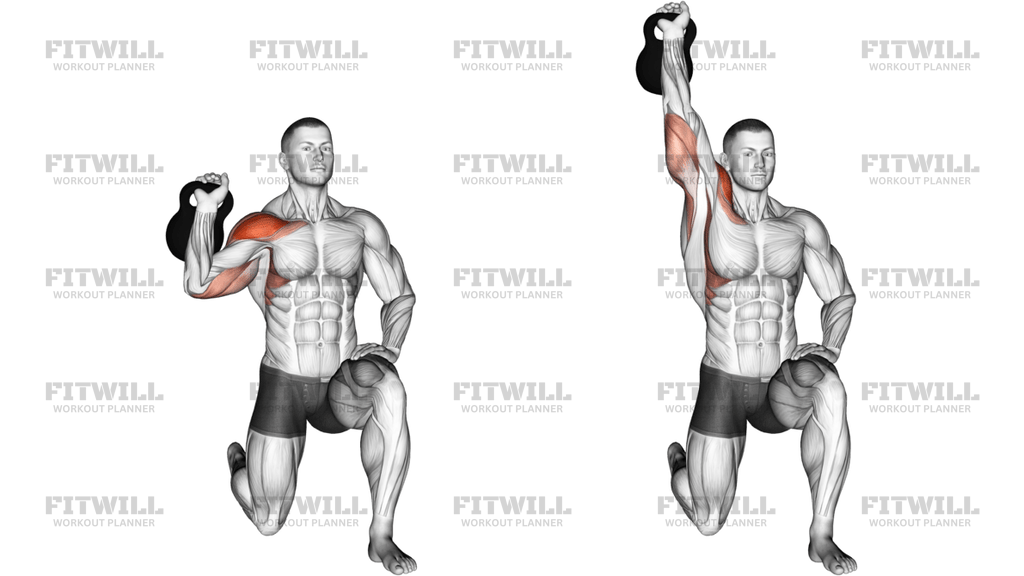
Kettlebell Half Kneeling Shoulder Press is a single-arm overhead press that uses a half-kneeling base to make the shoulder work harder without help from leg drive. In the image, the same-side knee is down, the opposite foot is planted, and the kettlebell starts in a front-rack position at shoulder height before being pressed overhead. That setup turns a simple press into a cleaner test of shoulder strength, trunk control, and side-to-side stability.
The main load is on the delts, with triceps, upper traps, rhomboids, and other upper-back stabilizers helping the bell travel smoothly overhead. The kneeling position also asks the core and glute on the down-knee side to keep the ribs stacked over the pelvis. If that position collapses, the press usually turns into a back arch or a sideways lean, which is exactly what this variation is meant to expose and clean up.
A good rep starts with the bell racked close to the shoulder, wrist stacked over elbow, forearm vertical, and the torso tall. Keep the front foot flat, the down-knee glute lightly engaged, and the hips square before you press. From there, drive the kettlebell slightly up and back so it clears the face, then finish with the arm locked out overhead and the biceps close to the ear without shrugging the shoulder toward the ear.
The return should be just as controlled as the press. Lower the bell to the rack with the forearm still vertical, the ribs down, and the pelvis steady instead of chasing a faster descent. That slower lowering phase makes the shoulder work through a cleaner range and gives you useful feedback if the bell starts drifting forward, the elbow opens too early, or the torso starts twisting toward the pressing side.
Kettlebell Half Kneeling Shoulder Press is useful as a strength accessory, a shoulder-stability drill, or a unilateral movement when you want pressing volume without using momentum. It fits well in upper-body sessions, core-focused work, and warm-ups for heavier overhead lifting. Beginners can use it with a light bell and a short pause overhead, but the position has to stay crisp; if the low back arches or the torso leans away from the bell, the set is too heavy for the goal of this exercise.
[ Workout Log & Planner ]
Put your next workout in Fitwill
Keep your plan and training log ready when you are.


Instructions
- Kneel with the same-side knee on the floor and the opposite foot planted in front, then hold the kettlebell in a front-rack position at the working-side shoulder.
- Keep the front foot flat, the torso tall, and the hips square to the front before you start the press.
- Stack the wrist over the elbow, keep the forearm vertical, and brace your abs without flaring the ribs.
- Squeeze the glute on the down-knee side so the pelvis stays level as you begin the press.
- Press the kettlebell up and slightly back in a smooth line so it clears your face without drifting forward.
- Finish with the elbow locked out overhead, the biceps near the ear, and the shoulder not shrugged up toward the neck.
- Lower the kettlebell under control back to the shoulder rack while keeping the torso still.
- Reset the rack position before the next rep and breathe out as you press, then inhale on the way down.
Tips & Tricks
- Keep the down-knee-side glute tight so the low back does not arch when the bell leaves the shoulder.
- Think about pressing the kettlebell through a narrow window beside your face, not straight in front of it.
- If the elbow drifts behind the rib cage in the rack, reset the bell closer to the shoulder before pressing.
- Use the front foot as an anchor; if the foot rolls or the knee caves in, the torso usually follows.
- Stop just short of a hard shrug at the top so the upper trap does not take over the rep.
- Lower the bell slowly enough that you can feel the lat and upper-back control the return.
- A lighter bell with a strict pause overhead is better than a heavier bell that makes you lean away from the press.
- Put a pad under the down knee if floor pressure distracts you from keeping the torso stacked.
Frequently Asked Questions
What muscle does Kettlebell Half Kneeling Shoulder Press target most?
The delts are the main target, especially the front and middle portions of the shoulder. Triceps and upper-back stabilizers help finish and steady the press.
Can beginners perform this exercise?
Yes, beginners can use it if they start light and keep the torso stacked. The half-kneeling position reduces momentum, so it is easier to learn than a standing press.
Why is the same-side knee down in Kettlebell Half Kneeling Shoulder Press?
That position matches the image and makes it easier to keep the hips square while pressing. It also helps you feel whether the working-side rib cage wants to flare or rotate.
Where should the kettlebell sit before I press?
It should rest in a front-rack position at the shoulder with the wrist stacked over the elbow. If the bell is floating forward, the press usually turns into a lean-back rep.
Should I lean back to get the kettlebell overhead?
No. A small amount of rib movement is a sign the load is too heavy or the rack position is off. Keep the ribs down and press the bell around the face instead.
Can I do Kettlebell Half Kneeling Shoulder Press if my shoulder feels tight overhead?
Usually yes with a lighter bell and a shorter, pain-free range, but only if the movement feels smooth. If the shoulder pinches at the top, switch to a landmine press or tall-kneeling press instead.
What are the most common mistakes in the half-kneeling setup?
Letting the front knee drift, letting the pelvis twist, and losing the vertical forearm in the rack are the big ones. Those errors usually lead to a weak press and a low-back arch.
How many reps should I use for this press?
Most people do best with 6-10 controlled reps per side. Use the lower end for strength and the higher end when you want more shoulder control and stability work.